

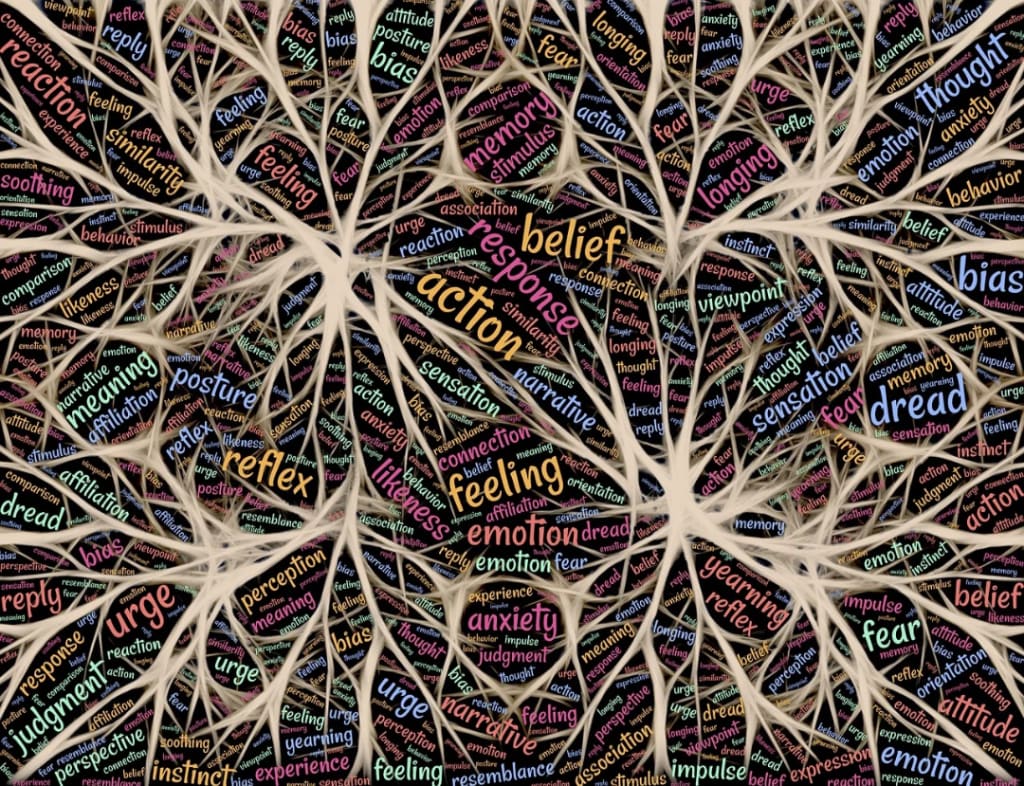
Love is a complex mix of emotions, behaviors, and beliefs associated with strong feelings of affection, warmth, protection, and respect for another person. It can take many forms—romantic, platonic, familial, or self-love—and is often expressed through care, commitment, and deep connection. Love can inspire joy and growth, but it can also involve vulnerability and risk.
philosophical, psychological, or poetic

Philosophically, love has been explored for centuries by thinkers who see it as both a personal experience and a profound existential phenomenon. A few major perspectives are as follows: 1. Plato (Platonic love) – Plato viewed love as a ladder of ascent: starting with physical attraction, it moves toward appreciation of the soul, then to the beauty of ideas, and finally to the love of the Form of Beauty itself—pure and abstract.
2. Aristotle viewed love—especially philia, or friendship—as the recognition of one's own virtue by the other. True love is a deep friendship between people who wish good for each other for the sake of the other, not for utility or pleasure alone.
3. St. Augustine – He distinguished between carnal love (cupiditas) and spiritual love (caritas). For him, true love was love directed toward God and expressed through charity and selflessness.
4. Schopenhauer – He held a view that was more pessimistic. He thought that romantic love was a trick of nature and an illusion made by the will to reproduce. 5. Kierkegaard – He emphasized love as a duty rooted in Christian ethics, defining true love as unconditional and self-giving, regardless of the recipient’s worth.
6. Simone de Beauvoir – She explored love in terms of existential freedom and reciprocity, arguing that authentic love occurs when both people respect each other’s freedom and individuality.
Philosophically, love raises profound questions about selfhood, meaning, freedom, and what it means to live a good life.

Psychologically, love is understood as a complex emotional and cognitive experience that involves attachment, intimacy, care, and commitment. Psychologists break it down into components and theories to explain how love works in the mind and behavior. Here are some key perspectives:
1. Sternberg’s Triangular Theory of Love
Psychologist Robert Sternberg proposed that love consists of three core components:
Intimacy (emotional closeness)
Passion (physical attraction and arousal)
Commitment (the decision to stay together long-term)
Different kinds of love are the result of different combinations of these factors, such as: Romantic love (intimacy + passion)
Companionate love (intimacy + commitment)
Consummate love (intimacy + passion + commitment)
2. Theory of Attachment Developed by John Bowlby and later expanded by Mary Ainsworth, this theory suggests that our early relationships with caregivers shape how we love as adults. Common attachment styles include:
Secure: Comfortable with intimacy and independence
Anxious: Craves closeness but fears abandonment
Avoidant: Values independence, avoids closeness
Fearful-avoidant: A mix of both anxiety and avoidance
3. Biological Perspective
Love involves neurochemicals like:
Dopamine: Linked to pleasure and reward (early infatuation)
Oxytocin and vasopressin: Associated with bonding and long-term attachment
Serotonin: Affects mood and obsession
4. Behavioral and Social Learning Theories
Love is also learned through observation, reinforcement, and cultural norms. Our expectations and expressions of love are shaped by the society and family systems we grow up in.
Psychologically, love is both a feeling and a set of actions that reinforce emotional connection, trust, and mutual support.

Love is frequently portrayed in poetry as a mysterious force that is both tender and fierce, fleeting and eternal. It transcends logic, shaping hearts with beauty, longing, joy, and pain. Here's a poetic take:
---
Love is.... a whisper in the silence,
a flame in the cold,
the trembling of hands
that dare to reach and hold.
It is
the echo in a name,
a glance that speaks like song,
a storm that breaks the stillness—
yet makes the soul feel strong.
It lives
in letters never sent,
in sunsets watched alone,
at midnight, in shared laughter, and paths where hearts have grown.
---
Poets through time—like Rumi, Shakespeare, Pablo Neruda, and Emily Dickinson—have all captured love as both the ache and the ecstasy of human connection.
About the Creator
Newb
who am I ?
Joker 🃏
Keep reading
More stories from Newb and writers in Motivation and other communities.
I Didn’t Burn Out From Working Too Hard — I Burned Out From Caring Too Much
I didn't burn out from working too hard. Nah, the real reason I got burned out was caring too much. "I always thought burnout was about working too much, but it's actually way more nuanced." "Working for extended periods." Deadlines, ugh. Always on the go. Nah. That wasn't me, for real. I actually didn’t burn out from work itself. I just ran out of steam trying to care anymore. I just cared too much, you know? It all comes down to doing things right. It's tough when you really don't want to let folks down. Being the strong one means you're always there for everyone else, never really showing your own struggles. You just deal with stuff without making a big deal out of it. It felt pretty cool at first. Folks counted on me. They really put their trust in me. They needed me. I liked that. I just really enjoyed feeling important. Needed. Useful. But over time, caring slowly started to feel more like carrying a burden. I really felt the weight of everyone else's stress on my shoulders. Other people's expectations feel a bit like carrying baggage that isn't yours. Other people's problems. And I never stopped to check myself. I was really tired when I agreed to that. I showed up empty-handed. I really just ignored all the signs because I didn't want to upset anyone. I figured that made me tough. It didn't. The burnout didn't hit like a bomb. It just kind of snuck in. Quiet. It's really slow. You know that feeling when you wake up, and you're just... wiped? Like you haven't slept at all, even though you just spent hours in bed. It's a bummer, really, to start the day already feeling completely drained. Ugh, it's those tiny annoying things that just get under your skin, right? Things I really liked: It just didn't hit the same way, you know? Some days, even brushing my teeth felt like a huge effort. My least favorite part was probably the constant feeling of needing to be ready for anything. It’s hard to just relax when you’re always anticipating the next challenge. No one could see it. My life looked good. That's the main idea. Normal. "Inside?" Empty. I'm not sad. Not angry. Just done. That's the sort of emptiness you feel when you pour all your energy into everyone else and leave nothing for yourself. Being there for everyone else, always, but never really for yourself. Then someone hit me with a question I couldn’t dodge: When was the last time you did something just for you? And in that moment, when the unexpected happened, I just froze. I just couldn't recall. That really caught me off guard. I realized I only made room for others, never for me. I used to think that being selfless meant I was strong. "Rest = lazy" is definitely not true. "Boundaries = failure." I just kept going. Never paused. Didn't check in. Burnout doesn't really announce itself, does it? It whispered. "I just don't care about the stuff I used to anymore." Not 'cause I didn't wanna. I just didn't have anything left to give, you know? That really startled me. So I started doing something weird. It was uncomfortable. That really freaked me out. I just started saying no. Quiet. Not rude, just straightforward. Just being honest. No. I'm not able at this moment. No. I really need a break. No. I don't have it today. It just felt bad from the start. It felt like I was blowing some test I didn't even know I was taking. "Everyone would just think I was weak." But the world didn’t fall apart that day. Folks got used to it. A few of them understood. Some just didn't get it. And you know what? That was fine. I figured out that being caring doesn't mean you have to destroy yourself in the process. It's about knowing your limits. It's really about valuing yourself. You can be kind without getting drained. It’s possible to support others without sacrificing your own well-being. It's totally possible to care deeply about things without letting it drain all your energy. Burnout really showed me something important: You know, rest isn't something you have to earn. It's not a prize for working hard. It's okay to slow down; nobody needs your permission. It's totally okay to not give everyone all of yourself. When that heavy feeling creeps in, it can make everything feel a bit much. I paused. I'm here. I asked: “I wonder if I have enough energy for this.” It's like, when you give too much of yourself, and totally forget your own needs, that's not healthy. That's not strength. You know, that really sounds like self-neglect. I'm not going to mix those up anymore. It's true, we often put others first and forget about ourselves. Remember, you deserve care and attention too.
By Beshoy Zayer6 days ago in Motivation


Comments
There are no comments for this story
Be the first to respond and start the conversation.