
How to Free Yourself of Irrational Guilt and Unwanted Shame
A proven scientific method to stop beating yourself up over what wasn’t your fault

You’ve had a rough day.
It started on the morning commute. You had to slam on your brakes, and poured coffee all over yourself.
Your boss gave you contradictory instructions, then he got mad when you couldn’t read his mind. The printer jammed, and you wasted half an hour trying to tease your printout free of it. When you finally got it out, it looked like your kid’s homework after the dog chewed on it.
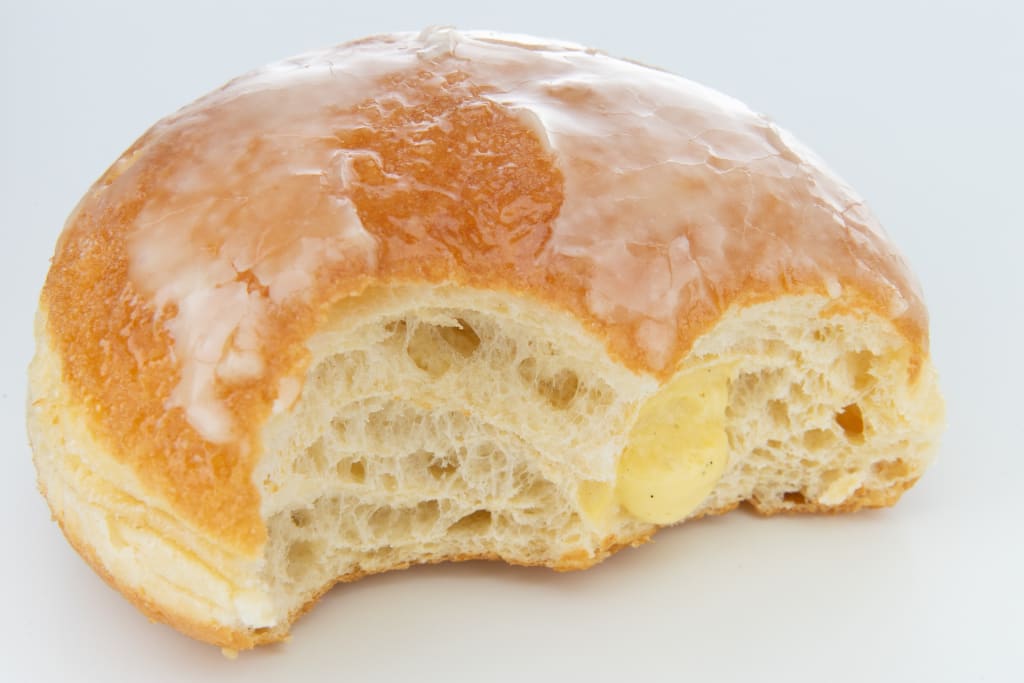
On the way home, you take a detour past Krispy Kreme. You deserve some hot, sugary comfort food!
It lifts your mood, briefly. But then the guilt sets in.
You’ve destroyed your diet.
Since you can’t stay on a diet anyway, you may as well forget about the healthy salad you were planning for dinner. Order a burger and fries, and maybe a shake while you’re at it. You can eat it in your car, and no one needs to know.
But you know.
And you hate yourself.
That’s the cycle of guilt. We’re all familiar with it.
Your willpower is low, and you do something you shouldn’t. In the moment, you feel better. But then guilt, regret, and shame pile on. And that just leads to doing even more things you shouldn’t.
The slippery slope of compounded errors
That slippery slope is a common human experience.
Dan Ariely is a professor of psychology and behavioral economics at Duke University. His experiments show that people who leap from “I did a bad thing” to “I’m a bad person” will do more bad things.
It’s the belief in our own goodness that prevents us from doing something we know we shouldn’t. It’s not wanting to avoid the guilt and shame we know will come after the fact.
So maybe we shouldn’t jump to thinking we’re bad (or have no willpower, or are lazy, or whatever negative label we put on it).
Just ask David Burns, MD, a professor of psychiatry at Stanford Medical School. In his book, Feeling Good: The New Mood Therapy, he says:
You automatically assume that because you’re feeling guilty, you must have fallen short in some way and that you deserve to suffer. You reason, “I feel bad, therefore I must be bad.” This is irrational because your self-loathing does not necessarily prove that you did anything wrong. Your guilt just reflects the fact that you believe you behaved badly.
So am I saying you shouldn’t feel bad about eating that donut?
Not at all!
But guilt isn’t the way to go about it. Guilt makes you feel that you did something bad, so you are a bad person.
A more useful emotion is remorse. That lets you feel bad about the thing you did, while still believing you’re an overall good person.
Self-compassion and self-acceptance
Kristin Neff, Ph.D, in her book Self-Compassion, says:
When our sense of self-worth stems from being a human being intrinsically worthy of respect — rather than being contingent on obtaining certain ideals — our sense of self-worth is much less easily shaken.
In other words, we are a good person because we try to be a good person. When we fail at attaining our ideals, that makes us human. It doesn’t make us bad.
But how do we do stop blaming ourselves? How do we avoid the guilt — which makes us more likely to slip up again? How do we focus on the specific behavior, so we can fix it?
The answer comes from psychologist Albert Ellis.
He doesn’t have the name recognition of Sigmund Freud among average people. But psychologists voted Ellis the 2nd most influential psychologist of all time. Freud only came in 3rd.
Ellis created something called the ABC model. (It is sometimes called the ABCD model or ABCDE model.) The ABC model became the basis for what is now known as Cognitive Behavior Therapy.
The gist of this model is that we all have irrational beliefs about the world working the way we want.
They’re irrational because we can’t control the world. No one can.
When we replace these irrational beliefs with rational ones, we feel better.
Adversity
A stands for Adversity. (It’s sometimes also called the Activating Event.) It’s the thing that did not go the way you wanted.
In our example above, it was spilling the coffee, the unreasonable boss, the printer jam, and the donut.
Beliefs
B stands for Beliefs. You believed the driver ahead of you was an idiot, and shouldn’t have made you slam on your brakes. The lid on the coffee cup should have prevented spills. You shouldn’t have to go to work wearing stained clothes… And on and on. Until you end up with you should have more willpower. And breaking your diet once means you’re incapable of staying on a diet, and a bad person.
Did you notice the word that showed up in almost every belief? “Should”. You believe the world should be a certain way.
You can’t control the world. So expecting it to conform to your beliefs about how it should operate is irrational.
The other type of irrational belief is an absolute belief. This is when you believe something always or never happens. It’s also called black and white thinking.
With black and white thinking, you believe that if something happens once, it must always be that way. If you slip up on your diet once, you are always going to break your diet.
This is also an irrational belief. After all, you stayed on your diet right up until the point you didn’t. So by that logic, if you stayed on your diet for one day, you would always stay on your diet.
Clearly both beliefs cannot be true. So it’s irrational.
What is upsetting is not the adversity itself. It’s the conflict between our beliefs (how the world should be), and the way it actually is.
Consequences
C stands for Consequences. The consequences are what you do in response to the conflict between the world as it is and as you believe it should be. They are also the feelings you have as a result of those beliefs.
So your guilt is not the inevitable follower to eating that donut.
You ate the donut. You believe you should not have eaten the donut. These two things are in conflict. The consequence is guilt.
You can change that belief — for example, you believe avoiding donuts is good, but sometimes you can eat one. And the adversity will no longer be in conflict with your belief.
Poof! The guilt is gone.
The guilt was a consequence of the adversity (eating the donut) and your belief about it.
But guess what? Eating the donut was also a consequence, of your bad day and your beliefs about it.
That means that next time, you can avoid eating that donut.
How? The crucial next step: D.
Dispute
D stands for Dispute. This is where you dispute your beliefs. Looked at in the cold light of reason, are they really how the world works?
Let’s start with the idiot driver.
If you believe the driver is an idiot, then he’s pretty likely to do idiotic things. So the only reason you had to slam on your brakes was because you were giving him the usual space between cars. If you’d treated him as an idiot from the get go, you’d have been further back, and wouldn’t have slammed on your brakes. Your belief was not rational.
What about the coffee?
Coffee lids are designed to prevent accidental spills while carrying coffees. They’re meant to come off easily so you can add sugar, creamer, and other taste enhancers. If the lid is too tight, you’ll actually spill the coffee when you’re trying to get the lid off. The pressure of slamming on your brakes caused the lid to pop off. (And, if you were trying to drink it while driving, you probably squeezed it, as well.) That’s how it’s designed. Your belief was not rational.
And so it goes, all the way to the final belief. You’re incapable of staying on a diet, and are a bad person.
You slipped up once, with a single donut. You could probably make up for the calories by not adding sugar and milk to your coffees tomorrow. Maybe do an extra 15–20 minutes on the treadmill. It’s hardly the end of your diet. And look at all the good decisions you made today about breakfast and lunch! Your belief is not rational.
And we covered the idea that one bad act made you a bad person earlier. It’s definitely not rational.
Effects
E stands for Effects. This is where you look at the new beliefs, and figure out what to do when you’re in a similar situation. These are new consequences, based on your new, rational beliefs.
You’ve already figured out most of the effects in your disputes.
Stay further back from idiot drivers (and assume they’re all idiots). Don’t drink your coffee while driving. If you know you’ve had a bad day, take the longer route home that is more scenic and soothing. It also goes nowhere near donuts or fast food. Have a “comfort food” like peanut butter and celery sticks that is still within your diet.
And use the ABC method to avoid blaming yourself.
Conclusion
Guilt is when you feel you are a bad person because you did something you wished you hadn’t. This actually makes you more likely to do something bad in the future.
Remorse is when you feel bad about the thing you did, without the negative self-judgment.
You can use self-compassion to recognize that messing up is part of being human. It does not make you a bad (or lazy, or stupid, etc.) person.
To address the the thing you did which you wish you didn’t, use the ABC method. Realize that Adversity happened, and will happen in the future. Your Beliefs about that adversity are in conflict with the reality of the world. This led you to unreasonable Consequences, such as feeling guilty.
Dispute the validity of your Beliefs. Then create Effects, which are new Consequences based on your new Beliefs.
Forgive yourself for messing up, and know that you’ll do better next time.
Ready to have a better tomorrow?
I’ve created a guide to help you increase your confidence and improve your life. If you follow these tips, you will level up your life very quickly!
About the Creator
Jennifer Dunne
Novelist turned blogger, sharing stories of hope, self-improvement, and productivity, as well as a bit of fantasy and whimsy. Visit me at: http://grftnd.jennifermdunne.com
Keep reading
More stories from Jennifer Dunne and writers in Motivation and other communities.
Triumph Over Adversity
The Oprah Winfrey is not only a biography of a billionaire media mogul, but a text on the power of resilience to overcome seemingly insurmountable odds.2+1 her story is a lesson to any person who may be going through seemingly impossible times.
By Edward Smithabout 20 hours ago in Motivation
The Devil's Cut
“Comrade, finally you’re awake.” The voice was smooth, sensual. A flickering incandescent bar was all that lit the white, sterile room. All Vladimir remembered was everything going black. He tried to move his arms and found them strapped to the gurney.
By Matthew J. Fromm5 days ago in Fiction


Comments
There are no comments for this story
Be the first to respond and start the conversation.