
Cristiano Ronaldo vs. the World: How Critics Became His Fuel
Use storytelling moments like getting benched, called overrated, or mocked for crying—and how he always responded with power.

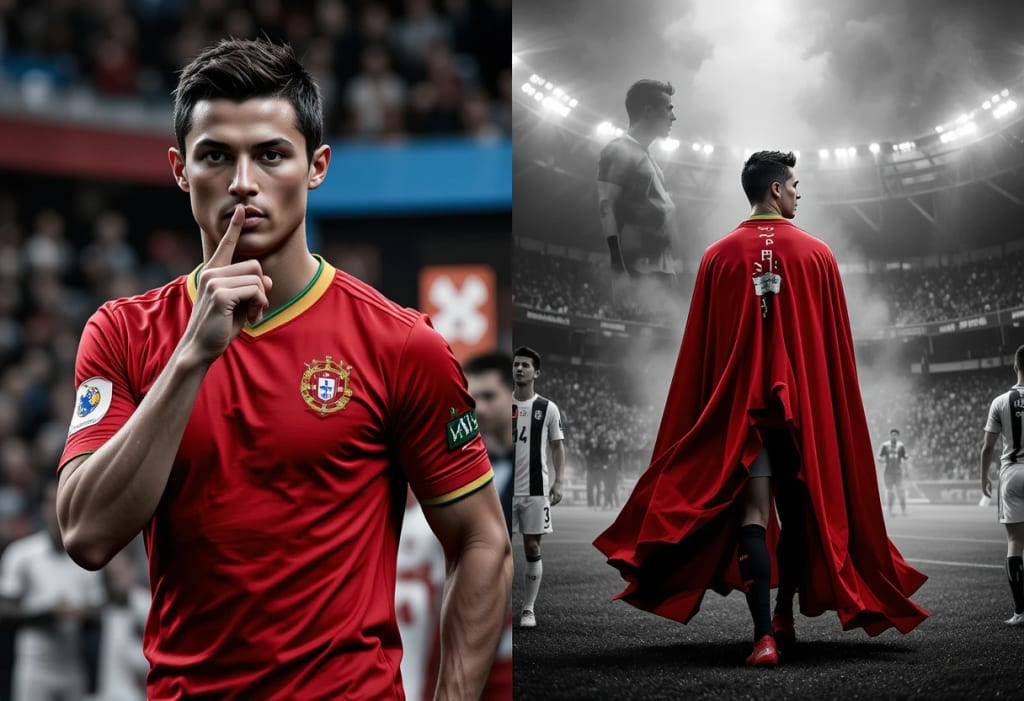
Cristiano Ronaldo vs. the World: How Critics Became His Fuel
Genre: Opinion / Motivational
Cristiano Ronaldo has never been everyone's favorite. He was never the golden boy that always fit the mold, nor the one the media protected like fragile glass. From his early days in Portugal to his worldwide dominance, one constant has followed him like a shadow: doubt. Yet if there's one thing Ronaldo has mastered more than the step-over or the knuckleball free kick, it's turning criticism into fuel.
This is the story of how the world’s most scrutinized footballer thrived in a career that could’ve easily been buried under headlines, jeers, and unfair comparisons.
The Tears That Started It All
It began when he was just a boy. A skinny teenager from Madeira, bursting with raw talent and too many stepovers, joined Manchester United in 2003. In one of his first games, he was mocked for being a “show pony”—all flash, no substance. His tears on the field during the 2004 Euro final when Portugal lost to Greece were branded as weakness. The world watched and whispered: He’s too emotional. He won’t last.
But Ronaldo didn’t just last. He evolved. He trained harder than anyone at United. Teammates would recall him arriving early, staying late, turning his body into a machine. Critics mocked his tricks—so he added power. They said he couldn’t finish—so he became a goal scorer. By 2008, he won his first Ballon d’Or, led United to a Champions League title, and silenced every doubter from the previous five years.
He didn’t cry that night. He roared.
Madrid and the Shadows of Greatness
When Ronaldo signed for Real Madrid in 2009 for a world-record fee, people said he’d never live up to the price tag. He was entering the territory of legends—Zidane, Raúl, Ronaldo Nazário. And to make matters worse, Lionel Messi was already dazzling the world at Barcelona. Critics scoffed: He’s good, but he’s not Messi.
So how did he respond?
He became Real Madrid’s all-time top scorer. 450 goals in 438 games. Four Champions League titles. He didn’t just live up to the price tag—he made it feel like a bargain. He turned El Clásico into a global war, not just a match, scoring in iconic moments and celebrating with a finger to his lips or his famous “Siiuuu” that echoed in rival stadiums.
Every time the world tried to put him second, he redefined what it meant to be first.
Benched and Doubted at the Euros
Fast forward to Euro 2016. Portugal were not favorites. Ronaldo, now 31, was seen by many as past his prime. He dragged his team through tough games, scored crucial goals, and even when injured in the final, stayed on the sidelines coaching and motivating like a man possessed. Portugal won their first-ever international trophy, and even though he didn’t finish the final on the pitch, the victory had his fingerprints all over it.
They said he wasn’t a leader. He showed them he was the soul of a nation.
The Juventus Chapter: “He’s Done”
When Ronaldo moved to Juventus in 2018, pundits claimed he was leaving Madrid because he couldn’t handle competition. Others said he was past it—33 years old, slowing down.
What did he do?
He scored 101 goals for Juventus. Won two Serie A titles. Became the fastest player in their history to reach 100 goals. And who can forget his hat-trick against Atlético Madrid in the Champions League, after losing the first leg 2-0? He told reporters before the second leg, “Wait for the comeback.” And then he delivered it himself.
Age? Just a number. Critics? Just more fuel.
Mocked for Returning to Manchester
When he returned to Manchester United in 2021, some said it was just nostalgia. They laughed at the move. “He’s just a brand now,” they claimed. He responded by scoring 24 goals in all competitions, dragging a dysfunctional team to respectability. In a team without structure, he was still the standard.
But when he was benched under a new manager, mocked for leaving early or not starting, people claimed he was finished, that his ego had finally caught up to him.
So he left. And still didn’t break.
The World Cup and the Global Stage
By 2022, Ronaldo was no longer untouchable. The media turned on him. His interviews were dissected like crime scenes. When Portugal benched him in the World Cup, headlines celebrated it more than the goals themselves. His tears—again—were on full display.
But here’s the thing about Ronaldo: he never lets a chapter be the whole book. He moved to Al Nassr, and many scoffed again. “It’s just for money. It’s the end.”
Instead, he became the most followed athlete in the world, brought global attention to Saudi football, broke records, and proved that even in a league outside of Europe, he remained a global force.
Legacy Fueled by Doubt
Cristiano Ronaldo is not perfect. He’s been called arrogant, dramatic, even divisive. But that’s the price of greatness—the world tries to mold you into something palatable, and if you refuse, they criticize. He never tried to be perfect for them. He tried to be better for himself.
Criticism didn’t kill his fire. It lit it.
He is living proof that belief in yourself can override the world’s disbelief. That hard work can outlast headlines. And that even when they laugh at your tears, your legacy can be built from every moment they doubted your strength.
Final Whistle
Ronaldo’s career is not just a highlight reel of goals. It’s a lesson in resilience. In a world that tried to define him with every stumble, he replied with flight.
So the next time they say you can’t, remember Cristiano Ronaldo. And make their doubt your power.
About the Creator
Keep reading
More stories from waseem khan and writers in Motivation and other communities.
How Sustainable Water Systems Strengthen Rural Communities
Clean and reliable water remains one of the strongest drivers of rural development. When communities gain access to sustainable water systems, daily life improves in visible and lasting ways. Health outcomes rise, economic activity expands, and social stability grows. Sustainable water infrastructure does more than deliver water. It supports empowerment, resilience, and long-term progress for rural communities.
By Baitulmaal8 days ago in Motivation



Comments
There are no comments for this story
Be the first to respond and start the conversation.