
Behind the Smiles: What Students Carry
A Story of Quiet Struggles, Hidden Strength, and the Unseen Side of Youth

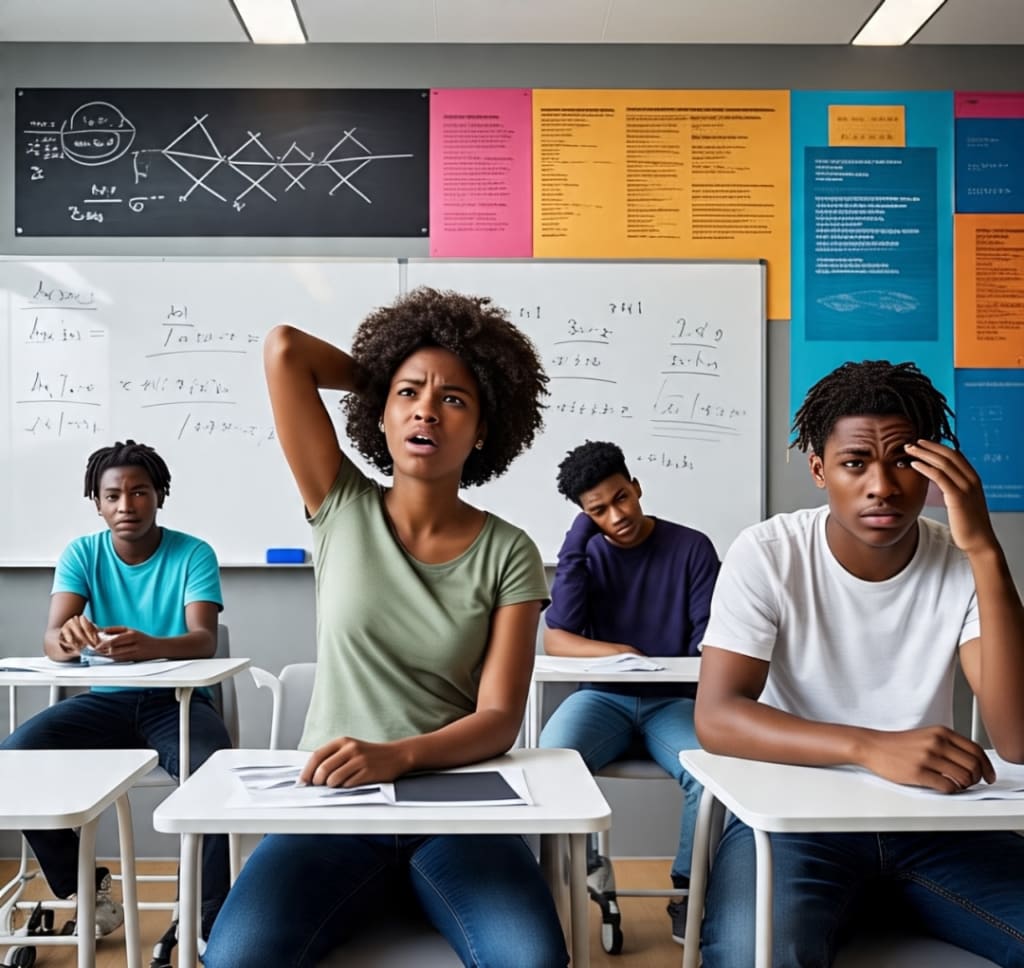
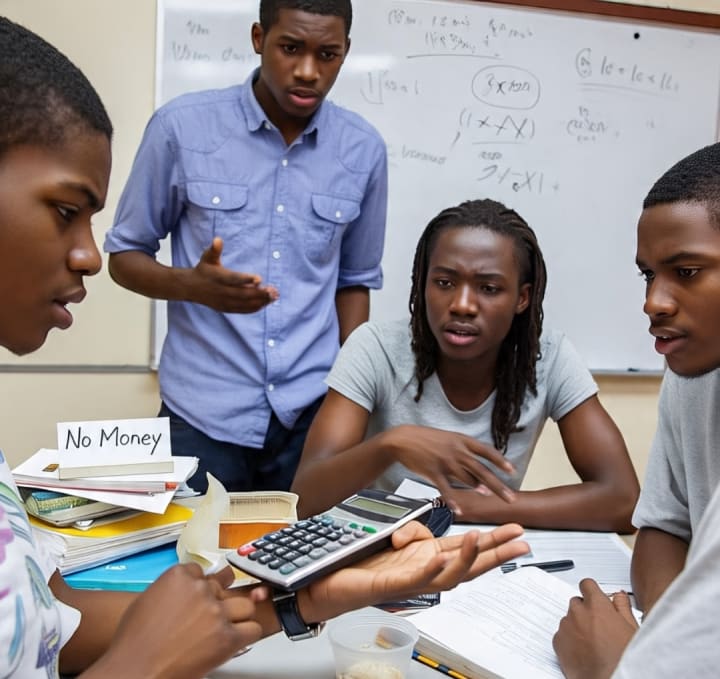
It was just another Wednesday morning when Ms. Rivera walked into her homeroom class. The students sat scattered in their usual places — eyes glazed, some on their phones, others staring out the window. From the outside, it looked like any other high school class. But Ms. Rivera had been teaching long enough to know better.
Each face held a story, and each story carried weight.
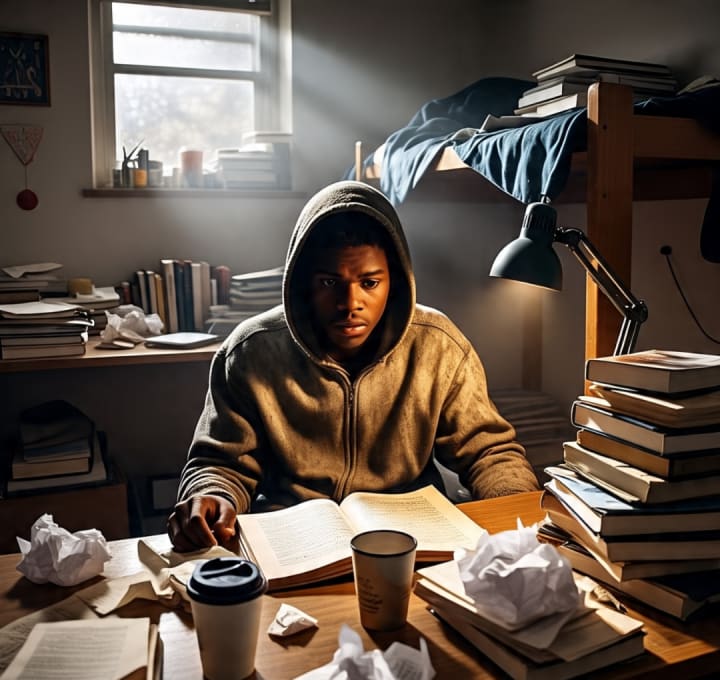
She looked over at Jordan, seated at the back. His hoodie was pulled tight over his head, and he scribbled absentmindedly in his notebook. Jordan was 17, smart, and reserved. Most teachers marked him as “quiet but capable.” What they didn’t see was that he stayed up most nights taking care of his younger siblings while his mom worked double shifts at the hospital. He’d become a second parent before he finished being a kid himself.
Then there was Maya, always arriving with a bright smile, her laughter echoing in the hallways. She was popular, active in drama club, and always the first to volunteer. But no one knew she cried herself to sleep at night, battling the voice in her head that told her she wasn’t good enough. Her grades had started to drop, but she covered it with jokes and charm.
Daniel sat by the window, staring out as if he could escape through the glass. His father had left two years ago, and his mother had fallen into a depression so deep it left Daniel to figure out life alone. He came to school every day, not to learn — but because school was the only place with structure, with rules, with people who looked him in the eyes.
And then there was Lila — quiet, polite, a straight-A student. She never missed a deadline. She never made a fuss. But perfection was her shield. Every grade below 95 felt like failure. Her anxiety was invisible but exhausting. Every compliment added more pressure. She didn't need to be told she was doing well — she needed someone to ask, "Are you okay?"
Ms. Rivera sighed gently, walking to the whiteboard. “Today,” she said, “we’re going to do something a little different.”
She handed out blank sheets of paper. “I want you to write anonymously. Write about something you’re dealing with. No names. No pressure. Just honesty.”
The room went quiet.
Pens began to scratch. Some students frowned, some hesitated. But slowly, something shifted.
One by one, the papers were folded and dropped into a box.
Ms. Rivera sat at her desk that night reading each one, tears slipping quietly down her cheeks.
"I’m tired all the time. My mom is sick, and I don’t know if she’ll get better."
"I wish I could tell someone how lonely I feel, even in a crowded room."
"I’m scared I won’t get into college and everything I’ve worked for will mean nothing."
"I miss my dad. He used to help me with math. Now I don’t care about math anymore."
"Sometimes I fake being okay because I don’t want to worry anyone."
There was heartbreak in those pages, but also a strange kind of hope — a silent plea to be seen, to be heard, to not carry it all alone.
The next morning, Ms. Rivera stood at the front of the class again. “You’re all going through more than most people know,” she said softly. “And I want you to understand something: your struggles do not make you weak. They make you human. And none of you are alone.”
She paused. “This class is not just about subjects. It’s about life. About growing. And I want you to know — if you ever need to talk, really talk, my door is open.”
Something changed that day. It wasn’t dramatic. No confessions or grand speeches. But in the days that followed, students lingered a little longer after class. Some started looking out for each other more. Jordan helped Daniel with a history project. Maya confided in Lila, who surprisingly understood exactly what she was feeling. Small ripples, quiet shifts — but real.
Because once you know that everyone’s fighting a battle, it’s harder to judge. Easier to care.
The Lesson:
Students are often seen as carefree — their problems brushed aside as “just a phase.” But beneath the surface, they carry burdens adults forget to imagine: pressure, fear, grief, identity, uncertainty. The truth is, school is not just a place for learning equations or grammar. It’s where students wrestle with who they are, who they want to be, and whether they’re enough.
This story is not just about students and their problems — it’s a reminder that behind every smile, every silence, and every joke, there might be a story waiting to be heard.
If you are a student: you matter, your feelings are valid, and you are not alone.
If you are a teacher, parent, or mentor: pause, ask, and listen. Your kindness can be the difference between someone feeling invisible or understood.
Moral of the Story:
Everyone is carrying something. The greatest gift we can give — in schools, in life — is compassion.
About the Creator
Salman khan
Hello This is Salman Khan * " Writer of Words That Matter"
Bringing stories to life—one emotion, one idea, one truth at a time. Whether it's fiction, personal journeys.
Keep reading
More stories from Salman khan and writers in Motivation and other communities.
I Fulfilled My Mother’s Dreams, Not My Own
I used to believe that love meant sacrifice. That if I gave enough of myself away, it would somehow turn into happiness—for everyone involved. So when my mother talked about her dreams, the ones life never let her finish, I listened. And slowly, without realizing it, I picked them up and carried them as if they were my own.
By Imran Ali Shahabout 22 hours ago in Motivation



Comments
There are no comments for this story
Be the first to respond and start the conversation.