
A Diary from the Edge of Sanity
How I found clarity, courage, and calm in the moments when life felt too loud.

When the Mind Feels Like a Storm
There was a time when my thoughts felt like a crowded room—everyone shouting, no one listening. Nothing was technically “wrong,” yet everything felt like it was slipping through my fingers. I woke up tired, went to bed wired, and spent my days somewhere between holding it together and quietly falling apart.
It wasn’t dramatic enough to call a crisis, but it wasn’t calm enough to call peace either.
It felt like standing on the edge of something—maybe sanity, maybe exhaustion—and hoping the ground didn’t crumble beneath me.
In the middle of all that noise, I picked up an old notebook and wrote three simple words:
“I feel overwhelmed.”
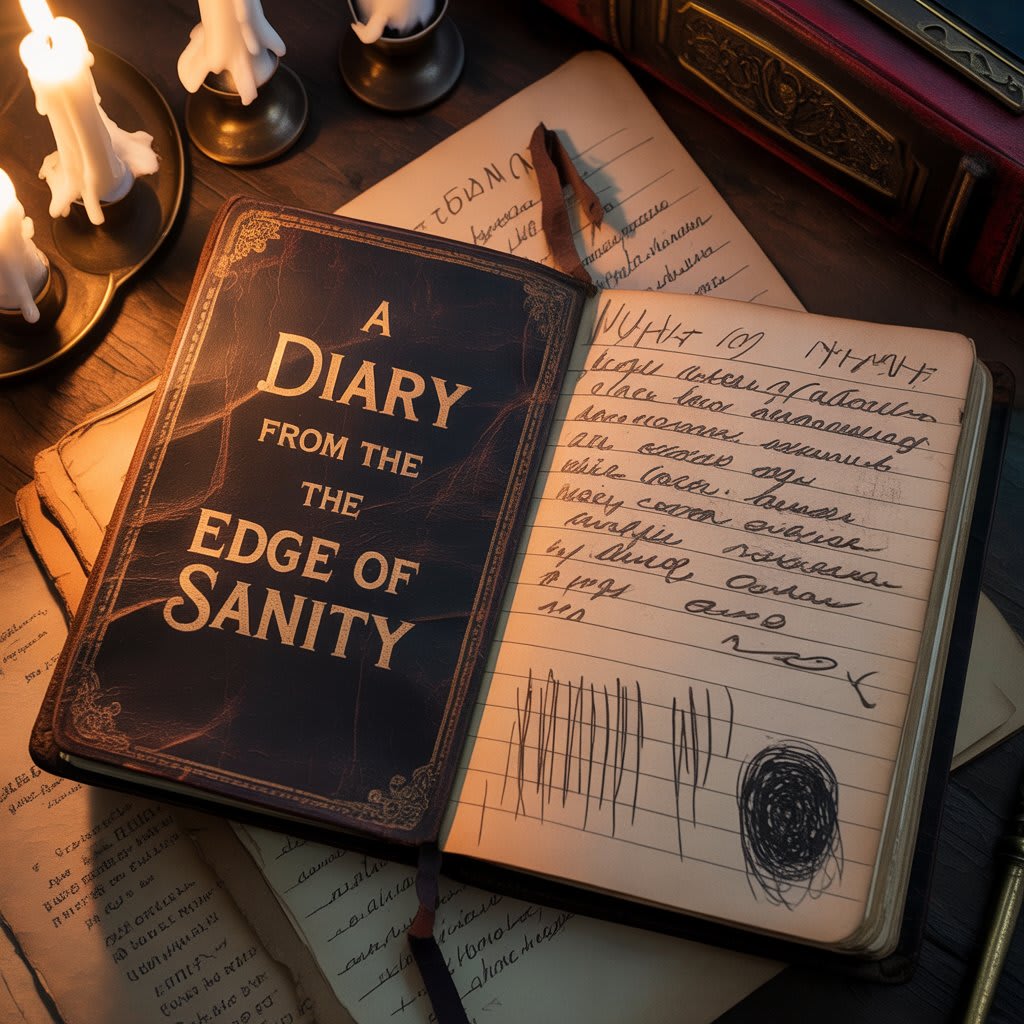
That was the first entry in what would become my diary from the edge of sanity—my way of navigating the mess, finding meaning in the confusion, and discovering that even the edge can be a place to rebuild your life.
The Quiet Slide Toward “Too Much”
People think losing your balance mentally happens in one dramatic moment. But for me, it was slow. A gradual slide.
It started with small things:
forgetting appointments, zoning out mid-conversation, feeling irritated over nothing, crying over commercials that weren’t even sad. Then came the bigger signs—feeling disconnected, losing interest in things I normally loved, waking up with a heaviness I couldn’t explain.
But because I was still functioning—still working, still smiling, still doing what I needed to—I convinced myself I was fine.
I told people I was tired, stressed, busy. All technically true, but not the truth that mattered.
Deep down, I was afraid to say the real words:
“I feel like I’m barely holding myself together.”

The Day I Finally Wrote It Down
One afternoon, after a long week that felt like a long year, I sat on my bedroom floor. Not because it was some symbolic, dramatic moment, but because I didn’t know where else to sit. Everything around me felt too loud—my room, my phone, even my own thoughts.
I opened a notebook I hadn’t touched in months. The pages were blank, quiet, safe.
And for some reason, writing felt easier than speaking.
Entry One:
I feel overwhelmed. I don’t know why. I don’t know how to fix it. But I needed to say it somewhere.
It was only one sentence, but it felt like opening a window in a stuffy room.
The next day, I wrote another entry. And another. Some were long. Some were messy. Some were just bullet points of things that made me anxious or tired or afraid.
Slowly, the edge didn’t feel like a cliff. It felt like a place I could stand without falling.
Learning to Understand My Own Mind
My diary became my mirror—showing me things I hadn’t slowed down enough to see.
I realized most of my stress came from commitments I didn’t even want, from expectations I never questioned. I was carrying old fears like they were responsibilities. I was saying yes to things that didn’t feel right, and saying no to myself more often than anyone else.
Reading my own words felt like listening to a friend who had been trying to get my attention for years.
Some entries made me laugh. Some made my stomach twist. Some made me pause and whisper, “I didn’t know I felt that.”
But the biggest lesson was this:
You can’t heal what you refuse to acknowledge.
And for the first time in a long time, I was acknowledging everything.
Small Changes That Saved Me
I didn’t transform my life overnight. I didn’t suddenly become calm, organized, or perfectly stable.
But I did make small changes.
I started saying no—politely, but firmly—to things that drained me.
I took short walks, even when I didn’t feel like moving.
I set boundaries, even the uncomfortable ones.
I talked to one trusted friend who didn’t judge, fix, or dismiss—just listened.
I celebrated tiny victories, like getting out of bed on a difficult morning or making myself a healthy meal.
And every night, I wrote just a little. Not because I had to, but because it helped me create space between myself and the noise in my head.
The diary became proof that progress wasn’t loud or dramatic. It was gentle. Steady. Human.
Finding Calm in the Middle of Chaos
One entry changed everything for me. It wasn’t poetic or insightful. It was simple:
“I survived today.”
Somehow, reading that made me realize how strong I had been without noticing. I wasn’t falling apart—I was fighting to stay together. And that mattered.
I stopped seeing myself as someone standing on the edge. I started seeing myself as someone building a bridge back to solid ground.
It wasn’t about escaping the noise. It was about learning to turn the volume down.
And slowly, unbelievably, the storms in my mind softened. The world didn’t feel so overwhelming. I felt more present, more patient, more like myself.
I didn’t magically stop having hard days—but I stopped feeling powerless against them.
The Moment I Realized I Was Healing
Months later, I flipped back to the first page of my diary. The shaky handwriting. The exhausted words. The fear I could feel between every line.
Then I turned to a recent entry:
“I’m doing better. I’m proud of myself. I’m finding peace again.”
And it hit me.
Healing doesn’t announce itself. It sneaks up quietly—through small decisions, tiny acts of self-kindness, and honest conversations with yourself.
It’s not a straight line. It’s a collection of moments when you choose not to give up on yourself.
My diary wasn’t just a place for messy thoughts—it was a roadmap back to myself.
Conclusion: Writing from a Place of Strength
If you ever find yourself standing on the edge—of burnout, fear, exhaustion, or simply too much—know this:
You are not alone. You are not broken. You are not failing.
Sometimes your mind is just asking for attention in the only way it knows how.
You don’t need a perfect plan. You don’t need to fix everything at once. And you definitely don’t need to hide your struggles to appear strong.
Start with honesty.
Start with one sentence.
Start with the truth you’ve been avoiding.
A diary may not solve everything, but it might become the safe place where you finally hear yourself again.
And from that place, healing becomes possible.
----------------------------------
Thank you for reading...
Regards: Fazal Hadi
About the Creator
Fazal Hadi
Hello, I’m Fazal Hadi, a motivational storyteller who writes honest, human stories that inspire growth, hope, and inner strength.
Keep reading
More stories from Fazal Hadi and writers in Motivation and other communities.
I Thought I Was Falling Behind in Life
I used to think I was falling behind in life, but it turns out I was just on my own timeline. It felt like I was always playing catch-up. "Way behind." Running a little behind. It felt like everyone else understood something I didn't get.
By Beshoy Zayera day ago in Motivation




Comments
There are no comments for this story
Be the first to respond and start the conversation.