
Your Body’s Hidden Sense: How Proprioception Influences Balance and Everyday Movement
Understanding body awareness and barefoot walking for long-term stability

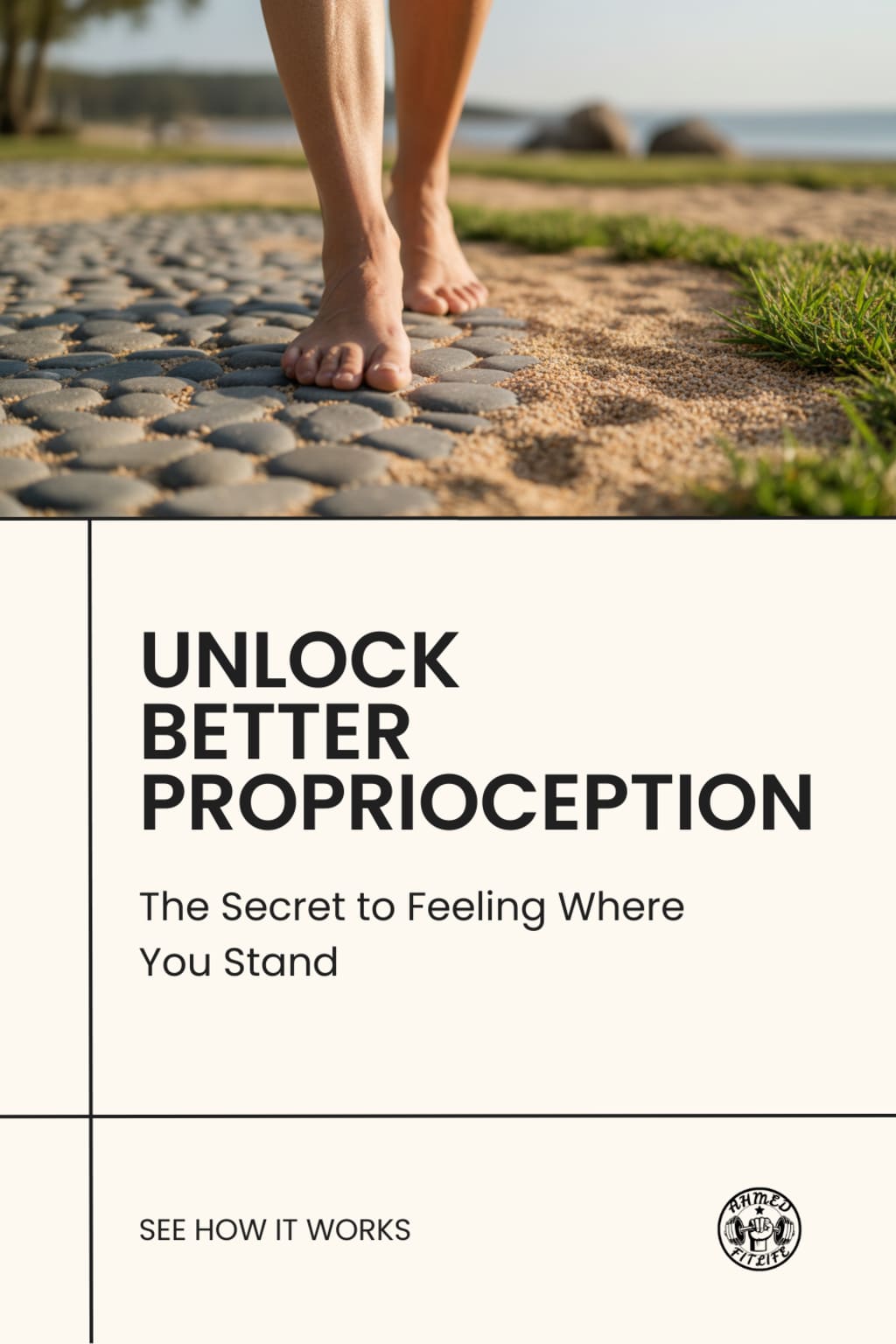
The Sense That Keeps You Steady: Understanding Proprioception and Everyday Balance
How body awareness and sensory-based movement support confident, stable motion.
Most people don’t think about balance until it starts to feel unreliable. A missed step, a sudden wobble, or hesitation on uneven ground can raise an important question: what is proprioception, and why does it matter so much for movement?
Proprioception is the body’s internal guidance system. It allows you to sense where your limbs are, how much pressure your feet apply to the ground, and how your weight shifts during movement—all without needing to look. When proprioception functions well, movement feels automatic. When it weakens, balance often becomes uncertain.
Why Proprioception Is Central to Balance
Every step you take depends on sensory signals traveling from your muscles, joints, and feet to your brain. This constant feedback helps your nervous system adjust posture, speed, and direction in real time.
When proprioceptive feedback declines, the brain receives less accurate information. This can disrupt timing and coordination, making everyday activities—like walking across a room or stepping off a curb—feel more demanding than they used to.
This is why balance challenges aren’t always solved through strength training alone. Without restoring sensory clarity, movement remains imprecise.
Body Awareness: The Missing Link in Stability
Body awareness refers to your ability to sense your position and movement without relying on vision. It’s a skill that develops through consistent sensory engagement rather than physical exertion.
When awareness is high, you instinctively adjust your posture and weight. When it’s low, movements become cautious or stiff as the brain seeks extra confirmation through visual cues.
Improving body awareness helps the nervous system respond more efficiently, reducing the need for conscious correction during movement.
The Feet and Sensory Feedback
The feet are among the most sensitive parts of the body. They contain thousands of receptors that detect pressure, texture, and motion. These signals are essential for balance and coordination.
One reason people experience barefoot walking benefits is that removing thick soles allows these receptors to engage fully. Barefoot standing or slow indoor walking increases sensory input, helping the brain interpret movement more accurately.
This doesn’t require long walks or outdoor terrain. Even brief periods of barefoot contact on safe indoor surfaces can enhance foot awareness.
How Modern Movement Reduces Sensory Input
Many modern habits reduce proprioceptive stimulation:
Long periods of sitting
Limited movement variety
Supportive footwear worn constantly
Minimal exposure to textured surfaces
Over time, this reduces sensory feedback and weakens the connection between the feet and the brain. The result is often subtle at first—slower reactions or reduced confidence—before balance issues become more noticeable.
Movement Therapy as a Sensory Practice
Unlike conventional fitness routines, movement therapy emphasizes awareness over intensity. Movements are slow, deliberate, and designed to re-engage the nervous system rather than exhaust the muscles.
Movement therapy encourages:
Controlled transitions between positions
Attention to foot placement
Balanced weight distribution
Calm, steady breathing
These elements help retrain proprioception by improving how sensory information is processed.
Everyday Proprioception Exercises
Effective proprioception exercises often blend seamlessly into daily life. Examples include:
Standing with feet hip-width apart and slowly shifting weight
Walking heel-to-toe while focusing on foot contact
Pausing during movement to notice posture
Standing on a folded towel to challenge balance gently
These exercises stimulate sensory receptors without overloading the nervous system.
Why Subtle Practice Produces Lasting Results
Proprioception improves through repetition, not intensity. Gentle, consistent stimulation allows the nervous system to refine movement patterns over time.
As sensory clarity improves, people often notice:
Smoother walking
Better posture
Faster balance reactions
Reduced reliance on visual focus
These improvements contribute to greater confidence and comfort during everyday movement.
Rebuilding Trust in Your Movement
One of the most important outcomes of improved proprioception is trust. When the body reliably senses and responds to movement, fear diminishes. Steps feel steadier. Transitions feel controlled.
This trust is built gradually through awareness-based movement rather than forceful exercise.
Conclusion
Understanding what is proprioception changes how we approach balance. Stability isn’t just about strength—it’s about sensory awareness and how effectively the nervous system processes information.
Through improved body awareness, thoughtful movement therapy, attention to barefoot walking benefits, and consistent proprioception exercises, balance can be supported at any stage of life.
Movement becomes safer, smoother, and more confident—not by pushing harder, but by listening better.
About the Creator
AhmedFitLife
Helping You Reclaim Balance, Energy & Focus Naturally
Hi, I’m Ahmed, Discover Neuro-Balance Therapy! 🌿 Reduce stress, boost focus, and restore balance with this easy, guided tool. Feel better, naturally: Neuro-Balance Therapy
Keep reading
More stories from AhmedFitLife and writers in Longevity and other communities.
The Overlooked Role of Sensory Input in Balance and Movement Stability
Why Balance Is a Sensory Skill—Not Just a Strength Issue How sensory-motor awareness influences stability. Most people assume balance problems come from weak muscles or lack of exercise. While strength plays a role, balance is actually driven by something much deeper: how well your body senses itself in space.
By AhmedFitLifeabout 11 hours ago in Longevity
Day 4 of Quitting
If this is how sobriety feels, maybe it’s better to go through life a little buzzed… this, along with other hits like, I want to kill myself, I wish I was dead, and I’m going to throw myself off a bridge have been the only thoughts on rotation these past few days. I promise myself that if, in a month, I still feel like this (‘this’ meaning despondent, full of rage, and simultaneously numb) I can go back to smoking. Until mid-February though? Nicotine is off the table.
By sleepy drafts18 days ago in Longevity
Home Healthcare Market Trends, Size & Forecast 2025–2033 | Renub Research
Introduction: Healthcare Is Moving Home Healthcare delivery is undergoing a fundamental shift. Hospitals and long-term care facilities, once the default destinations for medical treatment, are increasingly being replaced by patient-centric home healthcare models. With populations aging rapidly, chronic diseases on the rise, and healthcare costs escalating worldwide, home healthcare has emerged as a practical, efficient, and humane alternative.
By Sushant. Renub Research2 days ago in Longevity
Affection and Healing for Yourself
During the night of the last quarter moon, I gathered my ritual supplies. I carefully handled the chunk of black tourmaline that would protect me from your overall negative and narcissistic energy. I carefully walked the house with my stick of selenite in hand, asking the universe to cleanse our working space.
By Alisha Wilkins ✒️🦋🖋️6 days ago in Fiction


Comments
There are no comments for this story
Be the first to respond and start the conversation.