
Home Healthcare Market Trends, Size & Forecast 2025–2033 | Renub Research
How Technology, Aging Populations, and Policy Support Are Redefining Healthcare at Home


Introduction: Healthcare Is Moving Home
Healthcare delivery is undergoing a fundamental shift. Hospitals and long-term care facilities, once the default destinations for medical treatment, are increasingly being replaced by patient-centric home healthcare models. With populations aging rapidly, chronic diseases on the rise, and healthcare costs escalating worldwide, home healthcare has emerged as a practical, efficient, and humane alternative.
According to Renub Research, the global home healthcare market was valued at US$ 382.5 billion in 2024 and is projected to reach US$ 777.46 billion by 2033, expanding at a CAGR of 8.20% from 2025 to 2033. This strong growth reflects a deep transformation in how societies view long-term care, recovery, and health management—one that prioritizes comfort, autonomy, and technology-enabled solutions.
Global Home Healthcare Industry Overview
Home healthcare refers to medical and non-medical services provided at a patient’s residence to maintain or restore health. These services range from professional nursing, physical and occupational therapy, wound care, and chronic disease management to daily assistance such as bathing, cooking, and mobility support.
Unlike traditional institutional care, home healthcare offers personalized, cost-effective, and emotionally supportive care. Patients remain in familiar surroundings, families stay involved, and healthcare systems benefit from reduced hospital congestion. With the addition of telemedicine, remote patient monitoring, and connected medical devices, home care today delivers outcomes once only possible in hospitals.
This model has become especially vital for elderly individuals, patients with long-term conditions, and those recovering from surgery or hospitalization.
Why the Home Healthcare Market Is Growing Rapidly
1. Aging Global Population
Aging is one of the most powerful forces driving home healthcare demand. According to the Population Reference Bureau (PRB), nearly 10% of the world’s population was aged 65 or older in 2024, a figure expected to rise steadily over the next decade.
Older adults often require ongoing support rather than acute care, making home-based services the preferred option. Home healthcare enables seniors to maintain independence while receiving consistent medical attention, reducing the need for nursing homes or repeated hospital admissions.
2. Rising Burden of Chronic Diseases
Chronic diseases such as diabetes, cardiovascular disorders, COPD, neurological conditions, and kidney diseases are increasing globally. These conditions require long-term monitoring, medication management, and lifestyle support—ideal use cases for home healthcare.
For instance, cardiovascular disease remains one of the leading causes of death worldwide, with the CDC estimating that one person dies every 33 seconds from heart disease in the U.S. alone. Managing such conditions at home through remote monitoring and regular nursing visits helps reduce complications and hospital readmissions.
3. Technological Advancements Transforming Care
Technology has revolutionized the home healthcare landscape. Wearable sensors, smart monitoring devices, telemedicine platforms, and electronic health records now allow clinicians to track patient health in real time, intervene early, and personalize care plans.
In 2024, Royal Philips partnered with smartQare to integrate continuous monitoring solutions for patients both inside and outside hospitals. Similarly, Pylo Health launched advanced LTE-enabled devices that enable remote blood pressure and weight monitoring, even in areas with limited connectivity.
These innovations not only improve outcomes but also lower healthcare costs, making home care attractive for patients, providers, and insurers alike.
4. Favorable Government Policies and Initiatives
Governments worldwide are actively promoting home healthcare to reduce strain on hospitals and control costs. In March 2024, Colombia’s health ministry invested over US$ 354 million to expand home-based elderly care services. In India, the Digital Doctor Initiative and Ayushman Bharat Scheme are improving access to telemedicine and home diagnostics, particularly in rural areas.
Such initiatives, combined with expanding insurance coverage for home healthcare services, are accelerating market adoption globally.
Challenges in the Home Healthcare Market
Despite strong growth, the industry faces several hurdles.
Regulatory and Compliance Complexities
Home healthcare providers must comply with strict regulations, including licensing, accreditation, and data privacy laws. These requirements vary by region and demand ongoing training, documentation, and audits, increasing operational costs—especially for small and mid-sized agencies.
Reimbursement and Funding Limitations
Inconsistent reimbursement policies and complex billing systems continue to challenge providers. Government programs such as Medicare and Medicaid often have strict eligibility rules and low payment rates, limiting profitability and slowing expansion, particularly in underserved areas.
Regional Market Insights
United States: Leading the Global Market
The U.S. remains one of the most advanced home healthcare markets, driven by policy reforms and technological adoption. In 2023, CMS introduced new codes for remote patient monitoring and telehealth reporting, standardizing digital care delivery.
Companies like Hinge Health have expanded hybrid care models that combine digital therapy with in-home physical visits, reflecting the future direction of personalized healthcare.
India: Rapid Growth Through Digital Health
India’s home healthcare market is expanding quickly due to an aging population, increasing chronic disease burden, and strong government support. Telemedicine platforms are bridging gaps in rural healthcare access, while private investments are enhancing service quality and efficiency.
Affordable pricing, growing health awareness, and digital adoption make India one of the most promising emerging markets for home healthcare.
United Kingdom: Personalized Care Gains Momentum
The UK home healthcare market is growing steadily as the National Health Service encourages care outside hospitals. In December 2022, Nurseplus launched its “Care at Home” service, offering customized daily, weekly, or live-in care plans for long-term patients.
With increasing demand for flexible and comfortable care options, the UK is embracing home-based models at scale.
United Arab Emirates: Tech-Enabled Expansion
The UAE home healthcare market is expanding rapidly, supported by an aging population, chronic disease prevalence, and smart healthcare initiatives. In October 2024, Manzil Healthcare Services partnered with Spectator Healthcare Technology to deliver tech-enabled home services across the UAE, Saudi Arabia, and Qatar.
These collaborations highlight the region’s shift toward premium, technology-driven home care solutions.
Home Healthcare Market Segmentation
By Component
Services
Equipment
Services currently dominate the market due to high demand for nursing, therapy, and personal care. However, equipment demand is growing rapidly with increased use of remote monitoring devices and wearable technologies.
By Indication
Neurological & Mental Disorders
Diabetes & Kidney Disorders
Cancer
Respiratory Disease & COPD
Mobility Disorders
Cardiovascular Disorders & Hypertension
Wound Care
Maternal Disorders
Others
Chronic disease management remains the largest segment, while maternal and post-surgical care are emerging rapidly.
By Geography
The market is analyzed across 25 countries, including:
North America: U.S., Canada
Europe: UK, Germany, France, Italy, Spain, Belgium, Netherlands, Turkey
Asia Pacific: China, Japan, India, Australia, South Korea, Southeast Asia
Latin America: Brazil, Mexico, Argentina
Middle East & Africa: UAE, Saudi Arabia, South Africa
North America leads in market share, while Asia-Pacific is expected to witness the fastest growth through 2033.
Competitive Landscape: Key Players Shaping the Industry
Leading companies are focusing on technology integration, partnerships, and service expansion. Major players analyzed by Renub Research include:
3M Healthcare
Apple Inc.
Arkray, Inc.
B. Braun Melsungen AG
Becton, Dickinson and Company
F. Hoffmann-La Roche AG
Fresenius SE & Co KGaA
Hollister Inc.
Each company is evaluated across company overview, key personnel, recent strategies, and sales analysis, highlighting intense competition and continuous innovation in the sector.
Future Outlook: What Lies Ahead for Home Healthcare
The future of home healthcare is digital, decentralized, and deeply personalized. AI-powered monitoring, predictive analytics, and integrated care platforms will redefine patient management. Hospitals will increasingly function as acute care hubs, while homes become long-term treatment centers.
With rising healthcare costs, staff shortages, and patient preference for comfort, home healthcare is no longer an alternative—it is becoming the standard.
Final Thoughts
The global home healthcare market is on a clear upward trajectory, supported by demographic shifts, technological innovation, and supportive policies. From US$ 382.5 billion in 2024 to a projected US$ 777.46 billion by 2033, the industry’s growth reflects a global commitment to more accessible, affordable, and humane healthcare.
As governments, providers, and technology firms continue to collaborate, home healthcare will play a defining role in shaping the next decade of global health systems.
Source: Renub Research – Home Healthcare Market Report 2025–2033
About the Creator
Sushant. Renub Research
I’m Sushanta Halder, Digital Marketing Manager at Renub Research with 15+ years in SEO, content, PPC & lead generation. Passionate about data-driven growth strategies.
Keep reading
More stories from Sushant. Renub Research and writers in Longevity and other communities.
Global Home Infusion Therapy Market Size and Forecast 2025–2033: Healthcare Moves Closer to Home
Introduction: A New Era of Care Beyond Hospital Walls Healthcare delivery is undergoing a fundamental shift. As hospitals face increasing pressure from rising patient volumes, workforce shortages, and cost constraints, more care is being transferred into the home. One of the fastest-growing segments of this transformation is home infusion therapy, a model of care that enables patients to receive intravenous medications, fluids, and nutrition in the comfort of their own homes.
By Sushant. Renub Research3 days ago in Longevity
Day 4 of Quitting
If this is how sobriety feels, maybe it’s better to go through life a little buzzed… this, along with other hits like, I want to kill myself, I wish I was dead, and I’m going to throw myself off a bridge have been the only thoughts on rotation these past few days. I promise myself that if, in a month, I still feel like this (‘this’ meaning despondent, full of rage, and simultaneously numb) I can go back to smoking. Until mid-February though? Nicotine is off the table.
By sleepy drafts16 days ago in Longevity
Japan Orthopedic Prosthetics Market Size and Forecast 2025–2033
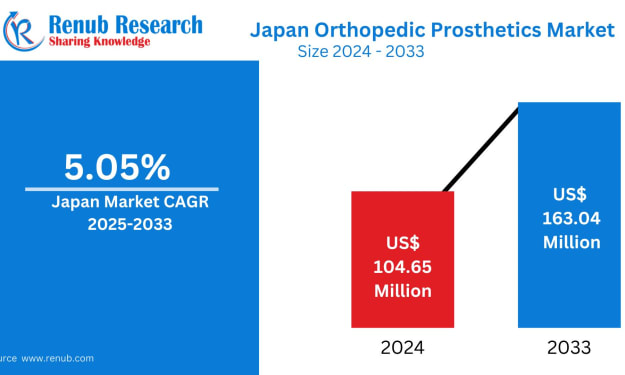
Japan Orthopedic Prosthetics Market Overview Japan’s orthopedic prosthetics market is entering a new phase of steady and technology-driven expansion, shaped by demographic shifts, healthcare modernization, and rising awareness of mobility restoration solutions. According to Renub Research, the Japan Orthopedic Prosthetics Market is expected to reach US$ 163.04 million by 2033, up from US$ 104.65 million in 2024, growing at a CAGR of 5.05% from 2025 to 2033.
By Renub Research5 days ago in Longevity



Comments
There are no comments for this story
Be the first to respond and start the conversation.