
Why Is Emotional Intelligence Important in the Workplace?
identify, understand, manage, and harness their own emotions


Emotional intelligence (EI) is an individual's ability to recognize and manage their emotions, as well as the emotions of others. In the workplace, emotional intelligence is critical to success because it enables employees to communicate effectively, build relationships, manage conflicts, and make informed decisions. This review will explore the importance of emotional intelligence in the workplace and highlight its essential aspects.
Firstly, emotional intelligence is critical for building and maintaining relationships in the workplace. People who are high in emotional intelligence are better equipped to form and sustain healthy relationships with their colleagues. They are more likely to be empathetic, considerate, and understanding of others' emotions, which fosters a positive and supportive work environment. When employees work well together, they are more productive and creative, leading to increased job satisfaction and motivation.
Secondly, emotional intelligence is essential for effective communication in the workplace. People with high emotional intelligence are better able to understand and express their emotions in a way that is clear and concise. They are also better listeners, able to pick up on nonverbal cues and respond appropriately. Effective communication ensures that tasks are carried out accurately, and misunderstandings or conflicts are minimized.
Thirdly, emotional intelligence plays a significant role in effective leadership. Leaders who are high in emotional intelligence are more likely to inspire and motivate their teams, build trust and credibility, and develop strong relationships with team members. They are better able to communicate effectively and empathize with others, which enables them to create an inclusive and supportive work environment. Good leaders are essential to a successful workplace, and emotional intelligence is a crucial factor in effective leadership.
Fourthly, emotional intelligence is vital for conflict resolution in the workplace. Conflicts are inevitable in any workplace, but when managed with emotional intelligence, they can be resolved in a positive and constructive manner. Individuals with high emotional intelligence can navigate conflicts effectively, ensuring that all parties feel heard and understood. This leads to better relationships, higher job satisfaction, and increased productivity.
Fifthly, emotional intelligence is critical to decision-making in the workplace. People with high emotional intelligence can take into account the emotions and concerns of others, making decisions that are inclusive and informed. They are better able to collaborate with colleagues, resulting in a more effective decision-making process. Good decisions are crucial to the success of any organization, and emotional intelligence can play a significant role in making them.
Finally, emotional intelligence is essential for personal well-being in the workplace. People with high emotional intelligence are better equipped to manage stress and adapt to changes in the workplace. They are more likely to remain calm and focused during challenging situations, reducing the risk of burnout and other negative impacts on mental health.
Developing emotional intelligence can be a challenge, but there are several strategies that individuals can use to improve their emotional intelligence. Firstly, practicing self-awareness is essential. Understanding one's own emotions and how they impact others is the foundation of emotional intelligence. Secondly, actively listening to others and considering their emotions and perspectives is vital to effective communication and building relationships. Thirdly, practicing empathy by putting oneself in another person's shoes is a fundamental aspect of emotional intelligence. Fourthly, developing effective communication skills is essential to convey thoughts and ideas accurately and respectfully. Finally, regular reflection and evaluation of one's emotional intelligence skills are crucial to ongoing improvement.
Organizations can also play a role in promoting emotional intelligence in the workplace. Firstly, they can provide training and development opportunities for employees to improve their emotional intelligence skills. Secondly, promoting a positive work culture that values emotional intelligence can reinforce its importance and encourage its development. Thirdly, recognizing and rewarding employees who demonstrate high levels of emotional intelligence can incentivize further development and positive behavior.
In conclusion, emotional intelligence is a critical skill in the workplace. It impacts relationships, communication, leadership, conflict resolution, decision-making, and personal development.
About the Creator
Keep reading
More stories from Ch. Hashim and writers in Longevity and other communities.
Quick Bursts of Intense Physical Activity May Help You Live Longer
In recent years, there has been a growing body of research indicating that quick bursts of intense physical activity, also known as high-intensity interval training (HIIT), may be more effective in improving health outcomes and extending lifespan than traditional moderate-intensity exercise. In this review, we will explore the importance of quick bursts of intense physical activity and highlight key aspects of how it may help individuals live longer.
By Ch. Hashim3 years ago in Longevity
Day 4 of Quitting
If this is how sobriety feels, maybe it’s better to go through life a little buzzed… this, along with other hits like, I want to kill myself, I wish I was dead, and I’m going to throw myself off a bridge have been the only thoughts on rotation these past few days. I promise myself that if, in a month, I still feel like this (‘this’ meaning despondent, full of rage, and simultaneously numb) I can go back to smoking. Until mid-February though? Nicotine is off the table.
By sleepy drafts19 days ago in Longevity
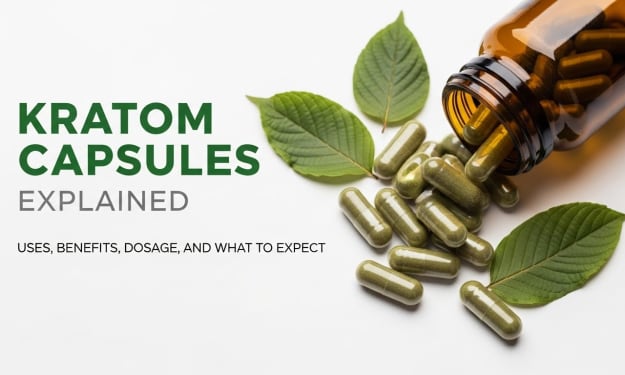
Kratom Capsules Explained. Uses, Benefits, Dosage, and What to Expect
Kratom capsules are one of the most popular ways to use kratom. Many people choose capsules because they are easy to take, taste free, and simple to measure. If you dislike the bitter flavor of kratom powder or want a cleaner option, capsules solve that problem.
By Jack Wilder7 days ago in Longevity
Affection and Healing for Yourself
During the night of the last quarter moon, I gathered my ritual supplies. I carefully handled the chunk of black tourmaline that would protect me from your overall negative and narcissistic energy. I carefully walked the house with my stick of selenite in hand, asking the universe to cleanse our working space.
By Alisha Wilkins ✒️🦋🖋️6 days ago in Fiction



Comments