
What is The Role of Alternative Medicine in Modern Society?
Find out more about role of alternative medicine today

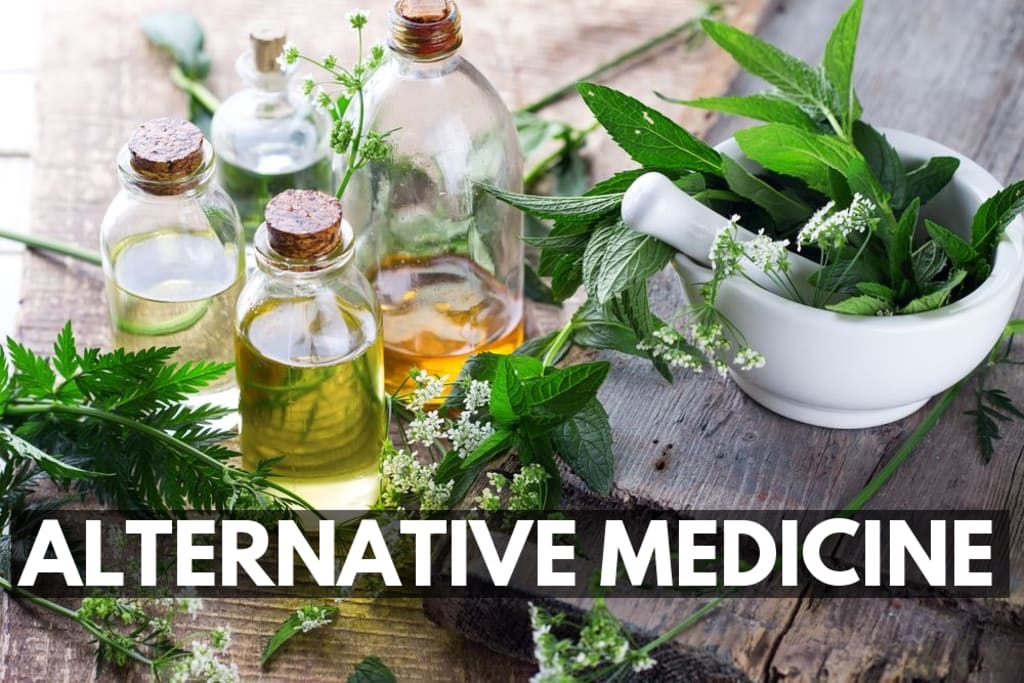
Alternative medicine is known as diagnosis, treatment and/or prevention that complements mainstream medicine by contributing to a common whole. Also satisfying a demand that mainstream does not meet, or diversifying medicine's conceptual frameworks. This involves a confusingly broad and diverse variety of procedures. It includes both diagnostic and therapeutic procedures.
Complementary and alternative medicines’ popularity
In the United Kingdom, a recent telephone survey on the use of alternative medicine yielded a one-year prevalence of 20 percent. The most common were herbalism, aromatherapy, homeopathy, acupuncture, massage, and reflexology. This level of use may seem remarkable, but it is low relative to other countries.
It is hard to interpret national variations. For others, complementary and alternative medicine will expand in the United Kingdom to match its popularity in Germany or France. Unlike the United Kingdom, proper medical physicians pursue it.
Complex reasons for the popularity
The specific reasons for complementary and alternative medicine's popularity are complex; they change with time and space, they may vary from therapy to therapy, and they differ from one person to another. For example, an AIDS patient will have different motivations than someone who is simply not well.
Reporting in the British daily press on alternative medicine is considerably more enthusiastic than that of conventional medicine. Physicians also practice alternative medicine privately. An intriguing, positive correlation exists between signs of wealth and the sales figures of complementary and alternative commercial medicine products.
Therefore, in essence, no single determinant of the current popularity of alternative medicine exists, but there is a wide range of positive and negative motivations that interact. Some of these constitute a biting critique of our modern healthcare system.
Often it is deeply felt by those who turn to alternative medicine, regardless of whether this criticism is valid or not, and mainstream medicine would be well advised to recognize it seriously.
Difficulties in research
Many suppliers of alternative medicine are told that their care defies reductionist research's “straightjacket.” They argue that it is personal, holistic, intuitive, etc. Also, in research, they call for a “paradigm shift.” These claims are typically known by a variety of misunderstandings. Often the problems can be overcome by explicitly identifying the research issue. On the other hand, by finding the research method that suits it optimally.
To test the effectiveness of complementary and alternative medicine, experimental controlled trials usually provide the least biased method for finding a reliable answer.
Although in theory there are few barriers to science, in practice there are many. Alternative medicine lacks both a history of study and research infrastructure and therefore does not attract an Alternative Medicine Practitioner. Perhaps most importantly, the orthodox mindset remains extremely (some would argue destructively) cynical and, as a result, research funding is dismal.
Opinion based medicine
Several measures show that alternative drugs are primarily focusing on opinions. In seven recent and seemingly authoritative books on the subject, the conclusion came that all the alternative therapies that are recommended for specified medical conditions are in the process of writing. That too a strictly evidence-based reference book on alternative medicine.
After contrasting the findings with the difficult evidence from systematic reviews. For asthma, Alternative Medicine Practitioner told more than 100 different complementary therapies. While systematic reviews for this indication failed to back up a single treatment. There was little agreement between the seven books. For example, one treatment for asthma is only recommendable by more than two authors.
The exceptions were acupuncture, backing by four authors, and homeopathy, backing by six authors, respectively. However, no proper evidence is supporting these interventions. Perhaps more interestingly, less than half of these led to module depression in St John's wort. That is actually successful.
Alternative medicine appears to dominate views that often contradict the existing evidence, and this illustrates the need to bring opinion into line with the evidence. Via extensive analysis and the wide dissemination of its results, the best way to accomplish this is.
Hard evidence is scarce
There will be no research if there is no money. We would be unable to find out whether complementary and alternative medicine does more good than harm if there is no testing. Yet this is the main issue in deciding its position in future health care. It is difficult to have clear answers or large generalizations.
It is important to determine each of the various techniques separately and on its own merits. Some types of alternative and complementary medicine are healthy, but others are not; some are effective, while others may be pure placebos.
Conclusion
Without appropriate evidence, one should listen less to the views of those who either openly advocate or stubbornly oppose complementary and alternative medicine. The multiple patients who use alternative and complementary medicine deserve more.
Patients and health care professionals need to know which ways are safe and effective. It can (and hopefully will) assess its future through impartial scientific assessment.
About the Creator
Trevor Derksen
Co-owner of Fast UK Meds.Buy without prescription medicine as sleeping pills, antidepressants , anxiety pills or pills for pain relief .Buy prozac, zopiclone 10mg ,xanax, diazepam, nitrazepam, soma 500mg or tramadol 100mg easy and secure.
Keep reading
More stories from Trevor Derksen and writers in Longevity and other communities.
Day 4 of Quitting
If this is how sobriety feels, maybe it’s better to go through life a little buzzed… this, along with other hits like, I want to kill myself, I wish I was dead, and I’m going to throw myself off a bridge have been the only thoughts on rotation these past few days. I promise myself that if, in a month, I still feel like this (‘this’ meaning despondent, full of rage, and simultaneously numb) I can go back to smoking. Until mid-February though? Nicotine is off the table.
By sleepy drafts12 days ago in Longevity
I Looked Strong to Everyone, but I Was Falling Apart in Silence
Everyone thought I was strong. I was the one who checked on others, met deadlines, showed up with a smile, and said, “I’m good” without hesitation. If strength had a face, people told me it looked like mine.
By Fazal Hadi2 days ago in Longevity



Comments
There are no comments for this story
Be the first to respond and start the conversation.