
The “Spike Ball” Science
Why Sensory Motor Activation May Be the Missing Link in Modern Balance Therapy


Balance is rarely lost overnight.
It fades gradually — through subtle changes in coordination, slower reaction times and decreased body awareness.
For many people, the instinctive response is to focus on muscle strengthening. While strength matters, stability depends on something deeper: sensory communication.
At the center of this process lies the sensory motor system — the neurological network that connects sensory input from the body to coordinated muscular output.
Understanding this system may change how we think about balance therapy and rehab exercises altogether.
The Foundation of Functional Movement
Every movement begins with information.
When your foot touches the ground, thousands of sensory receptors detect pressure, stretch, vibration, and texture. These signals travel along nerve pathways to the brain.
This loop happens continuously and automatically.
Without it, functional movement would be unstable and unpredictable.
The sole of the foot is particularly significant in this system. It contains high densities of mechanoreceptors responsible for fine touch and proprioception.
When these receptors are active and responsive, posture adjustments occur smoothly.
When they are under-stimulated, reaction time may slow.
Sensory Motor Decline and Instability
As individuals age or become less physically active, sensory feedback may diminish. Reduced stimulation to the feet can decrease body awareness, contributing to instability.
In rehab exercises and movement therapy, this is increasingly recognized as a sensory motor issue rather than purely muscular weakness.
Traditional strength training builds force. Sensory motor training builds coordination.
The two serve different but complementary roles.
Without adequate sensory input, even strong muscles may respond too late to prevent imbalance.
The Role of Textured Stimulation
One emerging method within balance therapy involves stimulating the plantar surface of the foot using textured tools — often referred to as “spike ball” stimulation devices.
The concept is grounded in neurophysiology.
Textured surfaces increase sensory input by activating multiple receptor types simultaneously:
Fine-touch receptors
Pressure receptors
Proprioceptors
This enhanced input travels through the sensory motor pathway, potentially improving neural clarity and muscular responsiveness.
When combined with somatic movement and guided rehab exercises, stimulation may help reinforce more efficient movement patterns.
The approach is not aggressive.
It is informational.
Somatic Movement and Neurological Awareness
Somatic movement practices emphasize internal awareness rather than external performance.
Instead of focusing on how movement looks, they focus on how movement feels.
This subtle shift directs attention inward, enhancing proprioceptive sensitivity.
When textured stimulation is paired with somatic movement exercises, individuals may experience:
Greater body awareness
Improved ankle stability
More confident stepping patterns
These improvements reflect enhanced sensory motor integration rather than brute muscular force.
Retraining the Feedback Loop
Balance therapy that incorporates sensory stimulation aims to retrain the feedback loop between the feet and the brain.
The process typically follows three stages:
Activation – Stimulating nerve endings in the feet to heighten awareness.
Integration – Performing controlled rehab exercises that challenge coordination.
Reinforcement – Repeating movements consistently to strengthen neural pathways.
Over time, this sequence may contribute to more reliable functional movement.
The nervous system adapts to repeated input. This adaptability — known as neuroplasticity.
Beyond Muscle Strength
Muscle strengthening remains important in preventing falls and supporting joint health. However, stability emerges from the cooperation between muscle force and neural timing.
Think of balance as a conversation.
The feet speak first, sending sensory information upward. The brain listens and responds. The muscles execute the response.
If the message is unclear, the response may be delayed.
Stability as a Learned Skill
Balance therapy reframes stability as a skill rather than a fixed trait.
Skills can be practiced.
By stimulating sensory receptors and incorporating targeted rehab exercises, individuals may reinforce the neural patterns that support safer movement.
Functional movement depends on this synergy between sensation and action.
It is not dramatic or flashy.
It is subtle, consistent retraining of awareness.
The Broader Implications
Improved sensory motor integration may influence more than posture.
Confidence often increases when movement feels reliable. Walking becomes less tentative. Transitions from sitting to standing feel smoother.
In this way, somatic movement and balance therapy extend beyond physical mechanics.
They reshape how individuals experience their bodies in space.
The “Spike Ball” science highlights an important truth:
Stability begins at the sensory level.
When the nervous system receives clearer signals, the body responds with greater coordination.
Balance is not simply strength.
It is communication.
And communication begins at the ground beneath your feet.
About the Creator
AhmedFitLife
Helping You Reclaim Balance, Energy & Focus Naturally
Hi, I’m Ahmed, Discover Neuro-Balance Therapy! 🌿 Reduce stress, boost focus, and restore balance with this easy, guided tool. Feel better, naturally: Neuro-Balance Therapy
Keep reading
More stories from AhmedFitLife and writers in Longevity and other communities.
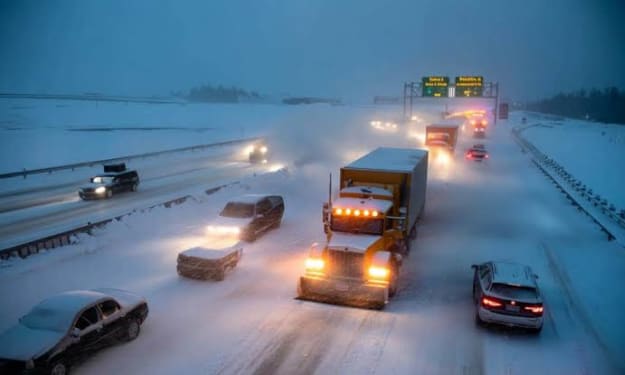
Winter Storm Warning Issued as Up to 72 Inches of Snow Could Disrupt Travel and Bring Major Routes to a Standstill
A powerful winter storm sweeping across large parts of the western and central United States has prompted emergency warnings from meteorological authorities, with forecasts predicting snowfall totals of up to 72 inches in some mountainous regions. The storm threatens to paralyze transportation networks, shut down schools and businesses, and strain emergency services as blizzard-like conditions take hold. The National Weather Service issued winter storm and blizzard warnings for multiple states, urging residents to avoid nonessential travel and prepare for extended power outages. Meteorologists say the system combines heavy moisture with plunging temperatures, creating ideal conditions for prolonged and intense snowfall. Severe Conditions Across Key Regions The storm is expected to impact major portions of the California, Nevada, Utah, and Colorado mountain corridors, where accumulations could exceed six feet in higher elevations. Lower-lying communities are forecast to receive between 12 and 24 inches of snow, accompanied by winds of up to 50 miles per hour. “These conditions are extremely dangerous for travel,” said a senior meteorologist with the National Weather Service. “Visibility will be near zero at times, and drifting snow could block highways for days.” Major interstates and mountain passes, including routes linking Denver with surrounding states, are at risk of temporary closure as snowplows struggle to keep pace with accumulation. Travel and Infrastructure Disruptions Transportation authorities warned that airports, rail services, and long-haul trucking routes could face widespread delays. Airlines have already canceled hundreds of flights in anticipation of deteriorating conditions, while Amtrak announced limited service on several western routes. Highway patrol agencies urged motorists to carry emergency kits, including food, water, and blankets, if travel is unavoidable. In some areas, authorities are considering preemptive road closures to prevent motorists from becoming stranded. Power utilities are also preparing for potential outages as heavy, wet snow and strong winds threaten overhead lines. Emergency management agencies have opened warming shelters in vulnerable communities, particularly for elderly residents and those without reliable heating. Communities on High Alert Local governments across the storm zone have activated emergency operations centers. Schools and universities announced closures, while many employers advised staff to work remotely. In rural mountain towns, residents stocked up on supplies in anticipation of isolation. “We could be snowed in for several days,” said a resident of a small Colorado community. “It’s not unusual here, but the forecast is much worse than normal.” Hospitals and first responders have increased staffing levels to handle possible accidents and medical emergencies during the storm. Climate and Weather Patterns Meteorologists link the intensity of the storm to a combination of Pacific moisture and a powerful Arctic air mass. Such systems, they say, are becoming more unpredictable in timing and scale. While winter storms are not uncommon in these regions, the projected snowfall totals place this event among the most severe in recent years. Some climatologists note that warmer atmospheric conditions can hold more moisture, which can translate into heavier snowfall when temperatures drop below freezing. Economic and Environmental Impact The storm is expected to disrupt regional commerce, particularly freight movement along major highways. Agricultural sectors may face delays in shipments, while ski resorts are preparing for both operational challenges and a surge in visitors once conditions stabilize. Ironically, while the storm poses short-term hazards, it also offers long-term benefits by replenishing snowpack critical for water supplies in drought-prone states. Reservoir managers welcomed the forecasted snowfall as a boost to spring and summer runoff. Government Response State governors in affected regions have issued emergency declarations, allowing for the mobilization of National Guard units and additional funding for snow removal and disaster response. Coordination between state transportation departments and federal agencies is ongoing to ensure critical corridors are reopened as soon as conditions permit. Public officials emphasized the importance of heeding warnings and staying off roads. “This is not a storm to underestimate,” one governor said in a statement. “We need people to take this seriously for their own safety and for the safety of first responders.” Looking Ahead Forecasters expect the storm system to linger for several days before gradually weakening as it moves eastward. Even after snowfall subsides, subfreezing temperatures could prolong hazardous conditions, with ice forming on untreated roads and sidewalks. Authorities continue to monitor developments and issue updates as conditions evolve. Residents are advised to follow official guidance, stock emergency supplies, and check on vulnerable neighbors. As one of the most intense winter storms of the season, the event serves as a stark reminder of the power of extreme weather and the importance of preparedness. With travel corridors at risk of grinding to a halt and communities bracing for isolation, the coming days will test the resilience of infrastructure and the cooperation of the public across the storm’s path.
By Fiaz Ahmed 4 days ago in Longevity
Goodbye, Mr. Duvall
It is turning out to be an interesting year. I was in the middle of teaching a class when a pop-up appeared on the screen announcing the death of Mr. Robert Seldon Duvall (yes, that was his full name). I was in the middle of a discussion on the obsession we have with winning when it comes to sports (the Winter Olympics was a theme), and I felt as though things were coming full circle. We had already lost Gene Hackman last year, and along with that titan, it feels though one particular golden age has closed off to be replaced by...?
By Kendall Defoe 5 days ago in Geeks



Comments
There are no comments for this story
Be the first to respond and start the conversation.