
Understanding Acute Upper Gastrointestinal Bleeding: Comparing Clinical Patterns and Outcomes in Elderly and Younger Adults
A prospective hospital-based study examines presentation, causes, and recovery trends across age groups

Introduction
Acute upper gastrointestinal bleeding (UGIB) remains a significant medical emergency worldwide. It refers to bleeding originating from the esophagus, stomach, or duodenum. Patients may present with vomiting blood, black tarry stools, weakness, or sudden drops in blood pressure.
Age plays an important role in how patients experience and recover from UGIB. Elderly individuals often have multiple health conditions and may use medications that increase bleeding risk. Younger adults may present differently and often have fewer chronic illnesses.
This prospective comparative study aimed to examine differences in clinical features and outcomes between elderly and younger adults admitted with acute UGIB.
Study Design and Patient Selection
The study followed a prospective design conducted in a tertiary care hospital setting. A total of 157 patients were initially screened for eligibility.
Screening and Exclusion Criteria
From the screened group:
10 patients were excluded due to lower gastrointestinal bleeding.
6 patients were excluded because of non-GI bleeding sources.
5 patients were unable to provide consent.
4 patients were excluded for other predefined criteria.
Although initial screening identified 157 individuals, final enrollment included 162 patients after further hospital admissions meeting inclusion standards during the study period. All enrolled participants met criteria for acute upper gastrointestinal bleeding.
Participants were divided into two groups:
Elderly adults (typically aged 60 years and above)
Younger adults (below 60 years)
This grouping allowed for direct comparison of clinical patterns and recovery outcomes.
Clinical Presentation
Symptoms at Admission
Common presenting symptoms included:
Hematemesis (vomiting blood)
Melena (black stools)
General weakness
Dizziness
Elderly patients were more likely to present with subtle symptoms such as fatigue and low blood pressure rather than dramatic vomiting of blood. Younger adults often reported more noticeable bleeding symptoms.
This difference highlights the importance of careful assessment in older patients, where signs may be less obvious.
Risk Factors and Comorbidities
One major difference between the two groups was the presence of underlying health conditions.
Elderly Patients
Older adults frequently had:
Hypertension
Diabetes
Chronic kidney disease
Cardiovascular disease
Many were also taking medications such as nonsteroidal anti-inflammatory drugs (NSAIDs), antiplatelet agents, or anticoagulants. These medications increase the risk of gastrointestinal bleeding.
Younger Adults
Younger patients had fewer chronic conditions. However, risk factors such as alcohol use, peptic ulcer disease, and infection with Helicobacter pylori were more commonly noted in this group.
Causes of Upper Gastrointestinal Bleeding
Endoscopy was performed to identify the source of bleeding in most patients.
Common Causes Identified
Peptic ulcer disease
Gastric erosions
Esophageal varices
Mallory-Weiss tears
Peptic ulcers were the most frequent cause in both groups. However, variceal bleeding was slightly more common among elderly patients with underlying liver disease.
Identifying the cause early helped guide treatment decisions.
Management Strategies
Treatment protocols were similar across both groups but required adjustment based on age and overall health.
Initial Stabilization
All patients received:
Intravenous fluids
Blood transfusions when necessary
Proton pump inhibitors
Patients with suspected variceal bleeding were managed with additional medications and possible endoscopic interventions.
Endoscopic Therapy
Endoscopy served both diagnostic and therapeutic roles. Techniques included:
Injection therapy
Thermal coagulation
Band ligation
Older patients sometimes required closer monitoring after procedures due to fragile health status.
Hospital Stay and Recovery
One key objective of the study was to compare outcomes.
Length of Hospital Stay
Elderly patients had longer hospital stays on average. This was often due to:
Slower recovery
Monitoring of chronic conditions
Increased risk of complications
Younger adults generally recovered faster and required shorter admissions.
Complications
Complications such as re-bleeding, infections, or cardiac events were more frequent in elderly patients.
The presence of multiple comorbidities increased vulnerability to secondary problems.
Mortality and Clinical Outcomes
Mortality rates were carefully recorded during hospitalization.
Elderly patients demonstrated higher mortality compared to younger adults. This finding aligns with global research indicating that age and comorbidities significantly influence UGIB outcomes.
However, early endoscopic intervention and structured monitoring improved survival rates in both groups.
The study reinforced the importance of timely management regardless of age.
Importance of Early Intervention
One of the major conclusions was that prompt diagnosis and stabilization can reduce complications.
For elderly patients, early recognition is especially important because symptoms may be less dramatic. Health professionals should maintain a high index of suspicion when older adults present with weakness or unexplained anemia.
Education about early symptom recognition can help reduce delayed hospital visits.
Preventive Considerations
Prevention plays an important role in reducing UGIB cases.
Medication Review
Doctors should regularly review medications in elderly patients, especially NSAIDs and blood thinners.
Treatment of Peptic Ulcer Disease
Early treatment of Helicobacter pylori infection and use of protective medications can lower risk.
Lifestyle Modifications
Reducing alcohol use and encouraging balanced nutrition may help younger adults prevent ulcer-related bleeding.
Study Strengths and Limitations
This prospective study design allowed real-time data collection and careful comparison between age groups.
However, it was conducted at a single center, which may limit generalization to other populations. Larger multicenter studies may provide broader insight.
Despite limitations, the findings contribute valuable information to clinical practice.
Implications for Clinical Practice
Healthcare providers should recognize that elderly patients with UGIB require special attention due to:
Multiple health conditions
Medication-related risks
Higher complication rates
Risk assessment tools may help predict outcomes and guide resource allocation.
Younger patients, while generally more resilient, still require careful evaluation to prevent recurrence.
Broader Public Health Perspective
Upper gastrointestinal bleeding places significant burden on emergency departments and hospital resources.
Improved awareness, early referral systems, and standardized treatment protocols can reduce hospital stay and complications.
Public education about warning signs such as black stools or vomiting blood may encourage earlier care-seeking behavior.
Conclusion
Acute upper gastrointestinal bleeding remains a serious medical condition affecting both elderly and younger adults.
This prospective comparative study highlights clear differences in presentation and outcomes between age groups. Elderly patients face higher risks of complications and longer hospital stays, largely due to underlying chronic conditions and medication use.
Younger adults typically recover faster but still require prompt diagnosis and treatment to prevent recurrence.
Early stabilization, timely endoscopy, and careful monitoring improve outcomes across all ages.
Understanding age-related differences allows healthcare providers to tailor management strategies and improve patient care.
By focusing on prevention, early recognition, and structured hospital management, the burden of acute upper gastrointestinal bleeding can be reduced for both elderly and younger populations.
About the Creator
Saad
I’m Saad. I’m a passionate writer who loves exploring trending news topics, sharing insights, and keeping readers updated on what’s happening around the world.
Why Winter in the U.S. Is Crazy This Year, in Five Charts
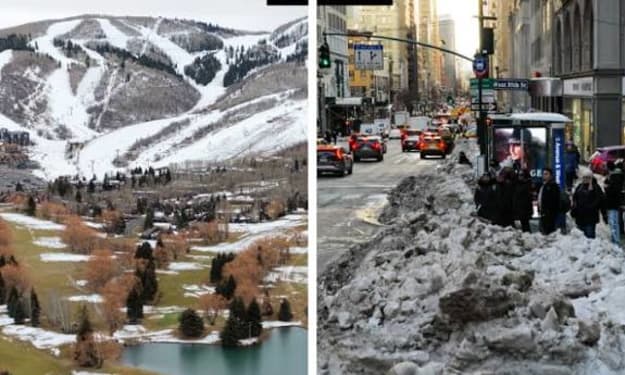
This winter in the United States has been unusual, to say the least. From record-low temperatures in the Midwest to rapid snowstorms along the East Coast, weather patterns are breaking records and creating widespread disruption. Scientists, meteorologists, and climate experts have analyzed the phenomena and identified several key drivers behind the extreme conditions. Using five informative charts, this article examines the factors contributing to one of the most unpredictable winters in recent U.S. history. 1. Temperature Anomalies Across the Country The first chart illustrates temperature deviations from the 30-year average across the continental U.S. This year, states like Minnesota, North Dakota, and Wisconsin have experienced temperatures as much as 15 degrees Fahrenheit below average. Conversely, parts of the Southwest, including Texas and Arizona, have seen milder-than-usual conditions. Experts attribute these disparities to disruptions in the jet stream, which have allowed Arctic air to plunge south while warmer air remains trapped in other regions. Dr. Laura Thompson, a climatologist at the National Oceanic and Atmospheric Administration (NOAA), explains, “The jet stream is behaving erratically this year, which is why we are seeing such stark contrasts in temperature across the country. It’s a pattern that is becoming more frequent with climate change.” 2. Snowfall Extremes A second chart tracks snowfall accumulation, highlighting areas experiencing record or near-record totals. Cities like Buffalo, New York, and Duluth, Minnesota, have seen snow totals surpassing historical averages by 50 percent. These extreme snowfalls are exacerbated by the cold air mass from the Arctic, which combines with moisture from the Great Lakes or Atlantic Ocean to produce heavy, persistent snowstorms. 3. Ice Storms and Freezing Rain The third chart focuses on ice storms and incidents of freezing rain. Several southeastern states, including Georgia and Tennessee, have reported hazardous ice accumulation this winter. Freezing rain can cause dangerous travel conditions and widespread power outages as tree limbs snap under the weight of ice. Meteorologists note that warm, moist air riding over a layer of subfreezing air at the surface contributes to these dangerous conditions, which have become more common in recent years. 4. Record Energy Demand Extreme cold weather has created surges in energy demand, particularly for heating. The fourth chart tracks electricity and natural gas consumption across the U.S., showing spikes during periods of deep freeze. In some states, utilities have issued conservation warnings to prevent blackouts. Energy experts point out that aging infrastructure struggles to keep up with the intense demand during extreme cold spells, highlighting the intersection between weather events and energy security. 5. Economic Impact The final chart examines the economic consequences of extreme winter weather. From transportation delays to increased heating costs and storm-related damage, estimates suggest that this winter could cost the U.S. economy billions of dollars. Retailers, delivery services, and public transportation systems face significant disruptions, while insurance companies are already processing claims for weather-related damage. Factors Behind the Extremes Several scientific explanations help make sense of this unusual winter. The weakening of the polar vortex—a ring of strong winds around the Arctic—has allowed frigid air to spill into mid-latitude regions. At the same time, ocean surface temperatures, influenced by phenomena like La Niña, have affected the positioning of high- and low-pressure systems across North America. These interactions produce more frequent and intense snowstorms, ice events, and rapid temperature swings. Climate change also plays a subtle but important role. While no single storm can be attributed directly to global warming, the warming Arctic has contributed to destabilizing the jet stream, creating patterns that amplify cold air outbreaks in some regions while leaving others unusually warm. Experts warn that these types of extremes are likely to become more common in coming years. Preparing for the Unexpected Residents are advised to stay informed about weather conditions, stock up on emergency supplies, and prepare for potential disruptions to travel, power, and heating. Meteorologists continue to monitor patterns closely, issuing forecasts that reflect the volatility of this winter season. Ultimately, the U.S. is experiencing a winter unlike many in living memory. The combination of Arctic air surges, jet stream anomalies, ice storms, and heavy snowfall creates challenges for communities, utilities, and businesses alike. As climate patterns continue to shift, understanding these extreme events—and preparing for them—will be critical in safeguarding lives and infrastructure. By analyzing data and observing trends through charts, it becomes clear that this winter is not just “cold” or “snowy” but part of a broader pattern of increasingly unpredictable and severe weather events in the United States.
By Fiaz Ahmed 4 days ago in Longevity
Yoga Balance and the Body’s Hidden Stability System
Walking, standing and changing direction may seem effortless, yet they depend on a sophisticated internal system that constantly monitors posture and motion. When stability begins to feel uncertain, many people assume the issue lies in weak muscles or aging joints. In reality, balance is deeply connected to sensory awareness and coordination.
By AhmedFitLife7 days ago in Longevity


Comments
There are no comments for this story
Be the first to respond and start the conversation.