
The Proprioception Advantage
Why Balance Begins in the Nervous System — Not Just the Muscles

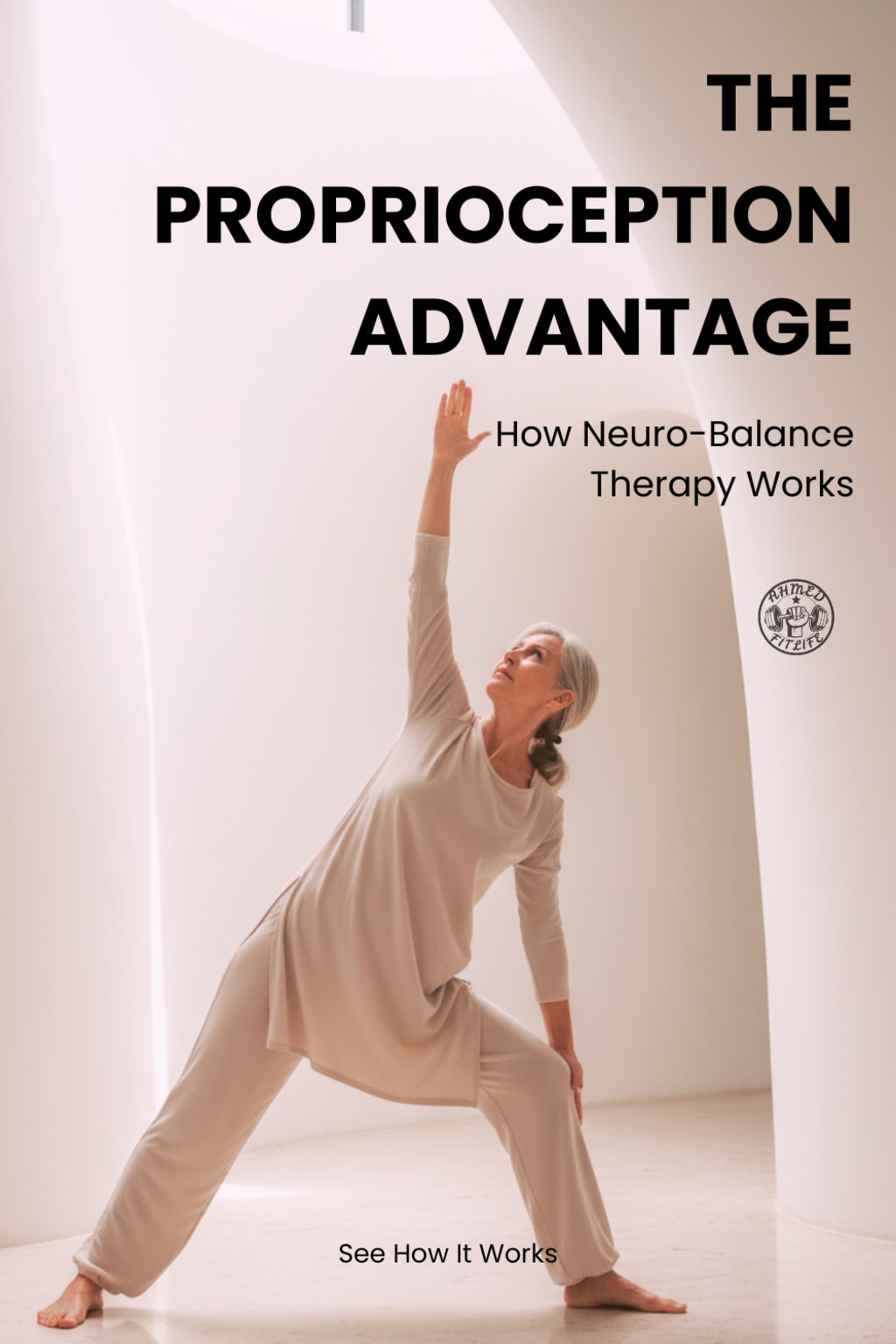
Balance is often misunderstood.
When someone feels unsteady, the common assumption is weakness. Weak legs. Weak core. Weak posture. The solution seems obvious: strengthen the muscles.
But stability is not just muscular — it’s neurological.
At the heart of coordinated, confident movement lies proprioception, the body’s internal positioning system. This often-overlooked sensory network continuously feeds information to the nervous system about where your body is in space. Without it, walking would require conscious calculation. Standing upright would feel uncertain. Even reaching for a cup would demand visual confirmation.
Proprioception works quietly in the background — until it doesn’t.
When it declines, balance can feel fragile. Movements become hesitant.
The Body’s Hidden Awareness System
Proprioception is sometimes called the “sixth sense.” Unlike sight or hearing, it doesn’t rely on external stimuli. Instead, it detects internal shifts: joint angles, muscle tension and weight distribution.
Specialized sensory receptors located in muscles, ligaments, joints and especially the feet constantly transmit data through the nervous system to the brain. This communication happens automatically and at remarkable speed.
When you step onto uneven ground, you don’t consciously think about adjusting your ankle. The nervous system handles it. When you begin to lose balance, tiny muscle corrections activate before you’re even aware of the instability.
This reflexive correction is only possible when sensory input is clear and timely.
If the signal becomes dull or delayed, the response follows suit.
That’s when balance begins to feel unreliable.
Why the Feet Matter More Than We Realize
If proprioception is the system, the feet are its foundation.
The soles of the feet are densely packed with nerve endings. Every time they make contact with the ground, they detect pressure patterns, texture changes and subtle weight shifts. That information travels upward through the nervous system, informing posture and movement adjustments.
In many ways, the feet act as antennas.
But modern lifestyles may dampen that signal. Supportive footwear, hard indoor surfaces, and limited sensory variation can reduce stimulation to these receptors over time.
This is why many physical therapy and movement therapy approaches emphasize foot activation. Gentle stimulation, controlled weight shifts and barefoot proprioception exercises are frequently used to re-engage these neural pathways.
It isn’t about abandoning support — it’s about restoring communication.
The Myth of Strength Alone
Strength training is valuable. Muscle strengthening supports joint stability and resilience. However, strong muscles without accurate sensory feedback are like a powerful engine without responsive steering.
Imagine standing on one leg. The strength in your hip matters. But what matters just as much is how quickly your nervous system detects sway and activates corrective muscles.
Balance is not static — it’s dynamic. It requires constant micro-adjustments.
Proprioception exercises target this dynamic system. Rather than focusing solely on resistance or load, they introduce controlled instability. Slow stepping patterns, deliberate shifts in weight and varied foot positioning challenge the nervous system to interpret sensory data more efficiently.
The objective is not intensity.
It’s precision.
Aging, Sensory Decline, and Fall Prevention
As the body ages, sensory receptors may become less responsive. Reaction time can lengthen. The brain may process signals slightly slower than before. These changes are subtle at first — perhaps a moment of hesitation stepping off a curb, or a need to hold onto furniture when navigating stairs.
Over time, small lapses in body awareness can increase fall risk.
This is why fall prevention strategies increasingly include proprioception training alongside strength work. In physical therapy settings, exercises are often designed to challenge coordination, not just endurance.
Examples include:
Standing on varied surfaces
Heel-to-toe walking patterns
Controlled directional stepping
Gentle foot stimulation before balance drills
These methods aim to sharpen the nervous system’s response time and enhance body awareness.
The goal is not perfection. It is adaptability.
The Nervous System’s Remarkable Plasticity
One of the most encouraging aspects of proprioception is that it is trainable.
The nervous system possesses plasticity — the ability to adapt and reorganize in response to repeated input. When sensory receptors are stimulated consistently, neural pathways can strengthen. Signals may travel more efficiently. Reactions may become quicker and more coordinated.
This is why movement therapy often prioritizes repetition with intention. Small and deliberate exercises performed regularly can gradually reinforce communication between the feet, joints, and brain.
Over time, movements that once felt unstable may begin to feel natural again.
This process does not rely on force.
It relies on information.
Movement as a Continuous Conversation
Every movement you make is a conversation between your body and your brain.
When you lean forward, receptors detect the shift in center of gravity. When you pivot, your ankles relay information about rotation and pressure.
Proprioception exercises simply make this conversation more deliberate.
By slowing movements down and introducing mindful challenges, they amplify awareness. The nervous system becomes more attentive to subtle changes. Muscles respond more cohesively.
In this way, movement becomes both therapy and teacher.
It reveals weaknesses in communication — and provides the stimulus to improve them.
Beyond Exercise: Confidence and Independence
Poor balance often affects more than physical safety. It can influence confidence.
When someone feels unsteady, they may walk less. Avoid uneven terrain. Decline social outings that require mobility. Over time, reduced movement can further limit sensory input, creating a cycle of decline.
Improving proprioception may help interrupt that cycle.
As body awareness sharpens, walking may feel more predictable. Steps may feel more secure. Confidence can gradually return.
Stability, in this sense, is not merely mechanical.
It is psychological.
When the nervous system trusts its signals, the body moves with greater assurance.
Stability Is a Skill, Not a Trait
It’s tempting to think of balance as something you either have or don’t.
In reality, it is a skill — one deeply rooted in sensory processing.
Like flexibility or strength, proprioception can improve with consistent and intentional practice. Gentle foot stimulation, slow stepping drills and balance-based movement therapy all contribute to reinforcing the nervous system’s ability to interpret and respond to change.
Stable walking does not begin with forceful effort.
It begins with awareness.
With each step, your nervous system gathers information. When that information is clear, your movements become efficient.
Proprioception reminds us that balance is not just about standing upright.
It is about staying connected — from the ground beneath your feet to the signals flowing through your nervous system — guiding every movement you make.
About the Creator
AhmedFitLife
Helping You Reclaim Balance, Energy & Focus Naturally
Hi, I’m Ahmed, Discover Neuro-Balance Therapy! 🌿 Reduce stress, boost focus, and restore balance with this easy, guided tool. Feel better, naturally: Neuro-Balance Therapy
Keep reading
More stories from AhmedFitLife and writers in Longevity and other communities.
Tourism is booming in 2026 - just not where you think
As the world enters 2026, global tourism is experiencing a significant surge, yet the hotspots capturing travelers’ attention may surprise industry observers. Traditional tourist destinations such as Paris, New York, and Tokyo are seeing steady recovery from pandemic-related declines, but a combination of shifting preferences, economic factors, and emerging travel trends has redirected much of the growth to less conventional locales. Analysts say these trends are reshaping the travel industry and redefining what it means to be a “popular” destination in the modern era. Unexpected Winners Countries and regions that were previously overlooked are now enjoying unprecedented tourist interest. Smaller cities, remote natural landscapes, and destinations offering unique cultural experiences are attracting visitors seeking alternatives to crowded landmarks and mainstream itineraries. According to recent reports from the World Tourism Organization, destinations in Southeast Asia, parts of Eastern Europe, and select islands in the Pacific have seen visitor numbers climb by double digits compared to pre-pandemic levels. Travel experts suggest that tourists are increasingly motivated by authenticity, personalized experiences, and safety. “People are looking for destinations that combine natural beauty with cultural immersion, away from the conventional tourist trail,” said a senior analyst at a global travel consultancy. “This shift is redefining tourism growth patterns.” Economic and Social Drivers Several economic and social factors are contributing to the unexpected tourism boom. Rising fuel costs and fluctuating currency exchange rates have influenced travelers to explore destinations that offer value without compromising quality. At the same time, the growing prevalence of remote work and flexible schedules has enabled longer stays in less-traditional locales, providing local economies with a boost from both spending and seasonal employment. Tourism boards in these regions have responded by investing in infrastructure, hospitality training, and marketing campaigns. Digital promotion and social media influencers have played a key role in raising awareness, with viral posts highlighting scenic landscapes, local cuisine, and cultural festivals sparking interest among international travelers. Health, Safety, and Sustainability Health and safety remain major considerations for travelers in 2026. Destinations with strong healthcare systems, low population density, and effective pandemic preparedness protocols have seen a distinct advantage in attracting visitors. In addition, sustainable tourism is becoming a priority, with eco-conscious travelers favoring destinations that prioritize environmental protection, responsible wildlife interaction, and low-impact lodging. Local governments have responded by promoting ecotourism, creating protected zones, and encouraging community-led initiatives. Travelers are increasingly seeking experiences that combine leisure with environmental awareness, creating economic opportunities while preserving natural and cultural heritage. Challenges and Opportunities While the surge in tourism brings significant benefits, it also presents challenges. Remote areas face pressure on infrastructure, housing, and public services. Rapid influxes of visitors can strain water, transportation, and waste management systems. Experts stress that careful planning and sustainable management are critical to ensuring that tourism growth does not come at the expense of local communities or ecosystems. At the same time, smaller or less-developed destinations have opportunities to diversify their economies, attract international investment, and create jobs. Local artisans, tour operators, and service providers benefit directly from the influx of tourists seeking unique experiences, fostering community engagement and cross-cultural exchange. The Future of Tourism The 2026 tourism boom illustrates that travelers’ priorities are evolving. Rather than simply visiting iconic landmarks, people are seeking immersive, personalized, and sustainable experiences. Technology, including mobile booking platforms, augmented reality tours, and virtual previews, is enabling tourists to explore and plan trips to destinations previously off the radar. As the year progresses, analysts anticipate that the tourism landscape will continue to diversify. Destinations that can balance accessibility, authenticity, and sustainability are likely to see the strongest growth. Meanwhile, traditional tourist hubs may need to adapt to shifting preferences, investing in new experiences and marketing strategies to remain competitive. In short, 2026 is a year in which tourism is booming—but not always in the cities and countries that come first to mind. The unexpected winners are rewriting the map of global travel, showing that in today’s world, adventure, culture, and sustainability can be just as important as fame and history when it comes to attracting visitors.
By Fiaz Ahmed 4 days ago in Longevity
Think for Me
"How do you calculate the circumference of a circle? Submit your answer when ready." [Pause] "Excellent! Every student was able to call up the answer electronically very quickly. If I, as a robot had feelings, I would express pride. You may break for lunch. Return to this cyber room in 45 minutes."
By Julie Lacksonen6 days ago in Humans




Comments
There are no comments for this story
Be the first to respond and start the conversation.