
The Future of Surgery: How Robotics Is Changing the Operating Room
In a world where machines assist with life-saving precision, one family's journey reveals how technology and humanity are working hand in hand.

It all started with a stomachache.
Not the kind that goes away with peppermint tea and rest, but the kind that wakes you up at 2:00 a.m. and whispers that something's wrong. Something deeper. That’s what Elena Martinez felt one rainy Wednesday night in Chicago. A 46-year-old mother of two, she brushed it off for days, busy with work, school pickups, and managing her aging father’s appointments.
But when she collapsed in her kitchen holding her side, her husband, Luis, rushed her to the emergency room. The diagnosis? A severely inflamed gallbladder, on the verge of rupturing. She needed surgery—immediately.
A Different Kind of Operating Room
Elena’s mind raced. Her sister had gallbladder surgery years ago and was laid up for weeks. She remembered the pain, the thick scar, the long recovery. With bills to pay and her kids depending on her, Elena couldn’t imagine being sidelined for that long.
That’s when the surgeon entered the room—not with a scalpel, but with a plan. Dr. Simmons, a soft-spoken yet confident physician in her early 40s, explained that Elena was an ideal candidate for robotic-assisted surgery.
"A robot?" Elena asked, startled. “You mean a machine is going to cut me open?”
Dr. Simmons smiled. “Not exactly. I’ll be guiding every move. But the robotic arms will give me precision I simply can’t match with my own hands. Smaller incisions, less pain, and most patients go home the next day.”
Skeptical but out of options, Elena nodded. “Let’s do it.”
The Surgery: Man and Machine in Harmony
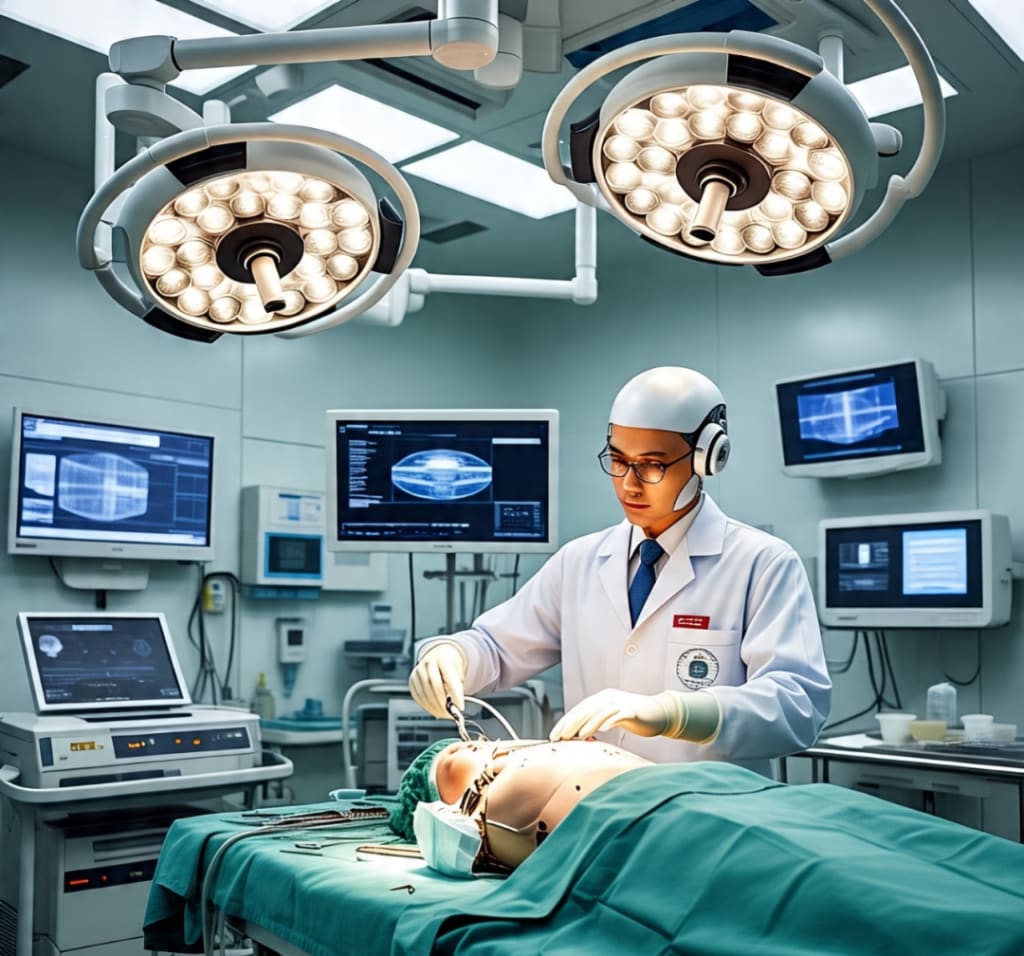
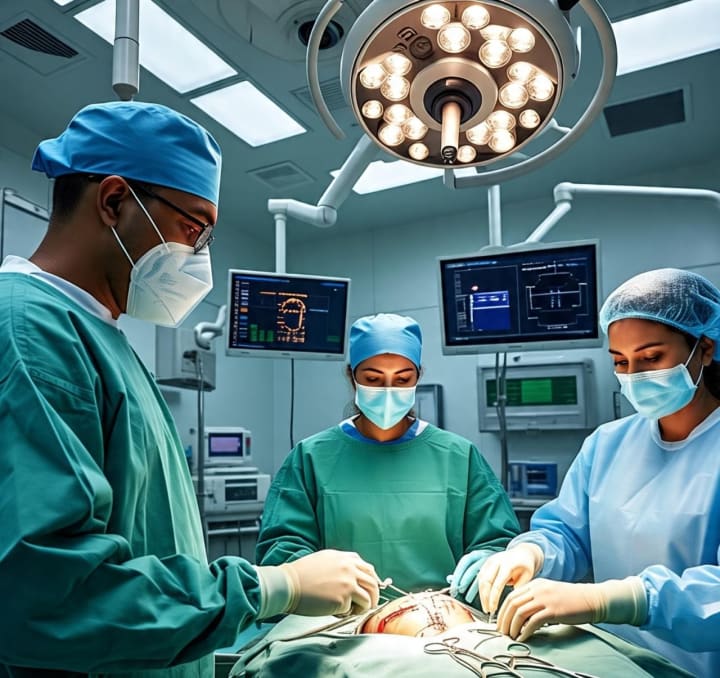
Inside the sleek, modern operating room, the atmosphere felt more like a NASA command center than a hospital. The da Vinci robotic system—a towering, multi-armed device—stood beside the operating table. Dr. Simmons didn’t even scrub in at the table. Instead, she sat at a console across the room, fingers poised over joysticks, eyes fixed on a 3D high-definition screen.
The robotic arms—equipped with tiny surgical tools—moved with astonishing finesse, guided by Dr. Simmons’ every intention. Each incision was smaller than a dime. Cameras fed real-time visuals, giving the doctor a view ten times sharper than the human eye could see.
Within 90 minutes, the gallbladder was removed, the wounds were sealed, and Elena was waking up in recovery—dazed but stable, her belly bandaged with just a few tiny strips.
Recovery and Realization
Elena was home by dinnertime the next day.
Yes, she was sore. But she wasn’t immobile, and she wasn’t broken. Within a week, she was back to making lunches, helping with homework, and walking the dog. The scar? Practically invisible. The experience? Surreal.
But the moment that changed her heart came a few weeks later at her son Marco’s science fair. He was presenting a project on robotics and proudly pointed to a diagram of a surgical robot. “This is what saved my mom,” he said, eyes shining.
As people gathered around to listen, Elena realized that her story wasn’t just medical—it was a sign of what’s possible when technology is used not to replace human care, but to enhance it.
The Big Picture: What Robotic Surgery Really Means
Elena’s experience is far from unique. Every day, more patients are receiving robotic-assisted procedures: hysterectomies, prostate surgeries, heart valve repairs, even complex cancer removals.
The benefits are clear:
Smaller incisions and less blood loss
Lower risk of infection
Faster healing and shorter hospital stays
Improved surgical precision, even in high-risk areas
But there’s something deeper at play. These machines aren’t taking away the human element—they’re making it stronger. With robotic assistance, surgeons can perform more intricate operations with less fatigue and more confidence. They’re supported, not supplanted.
And for patients like Elena, it means getting their lives back faster, with fewer complications and more dignity.
Not Just a Machine—A Partner
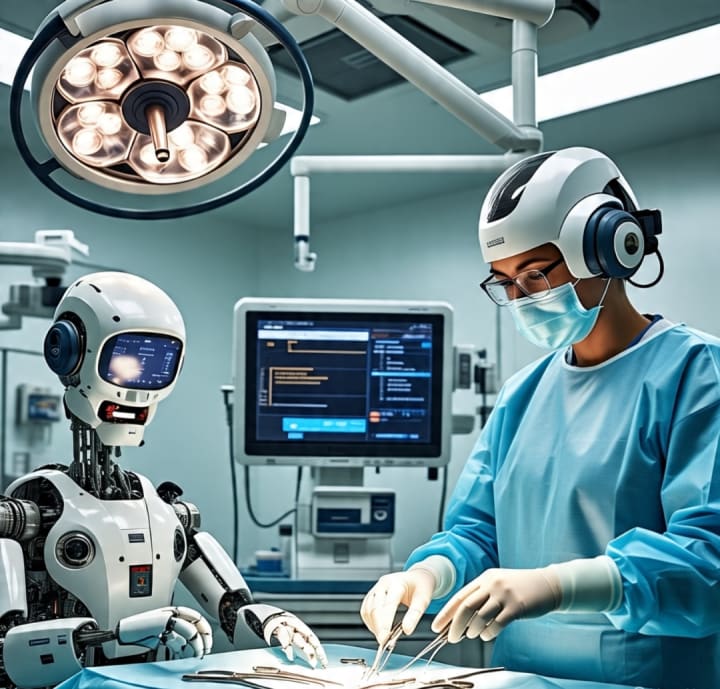
Dr. Simmons later explained it perfectly in an interview for a hospital newsletter. “I don’t think of the robot as a machine. I think of it as an extension of myself. It makes me a better surgeon, especially when the stakes are high. But it never replaces my judgment, my experience, or my responsibility.”
What struck Elena the most was this: the robot didn’t take away the human touch. Dr. Simmons still held her hand before the procedure. She still came in to check on her afterward. She still looked her in the eye and explained every step. The robot simply made her more capable, more confident, and more precise.
The Moral: Humanity and Technology Can Heal Together
We often fear technology will replace us—take our jobs, remove our value, turn us into bystanders in our own lives. But Elena’s story, and thousands like it, reveal a more hopeful truth:
When used with purpose, technology doesn’t erase the human element. It amplifies it.
Robotic surgery is a perfect example. It's not about cold steel replacing warm hands. It’s about giving those warm hands tools to heal faster, better, and safer than ever before.
In the end, what matters isn’t the machine in the room—it’s the human behind it. The doctor who trains for years. The team who guides the patient. The family who waits outside, hoping. The mother who rises from her hospital bed the next day, not as a survivor, but as a symbol of what’s possible when innovation is driven by compassion.
If you take away one lesson from Elena’s journey, let it be this:
The future isn’t something to fear—it’s something to partner with. And when heart meets machine, lives are changed, not just saved.
About the Creator
Salman khan
Hello This is Salman Khan * " Writer of Words That Matter"
Bringing stories to life—one emotion, one idea, one truth at a time. Whether it's fiction, personal journeys.
Keep reading
More stories from Salman khan and writers in Longevity and other communities.
Pain Relief Through Physio
For as long as I can remember, I carried pain like a shadow. It started subtly—an ache in my lower back after long hours at the office, a twinge in my neck during morning routines. Like many people, I brushed it off. “It’s just stress,” I told myself. Or “I probably slept wrong.” Little did I know, I was ignoring my body’s desperate call for help.
By Salman khan9 months ago in Longevity
The Best Time To Eat Breakfast for Blood Sugar and Energy
Eating breakfast within 1–2 hours of waking up can help support blood sugar and provide energy and nutrients to start your day. Eating breakfast at a consistent time is important. Changing meal times can disrupt the body’s internal clock, which helps regulate blood sugar. A balanced breakfast with complex carbs, protein, and healthy fats helps support blood sugar.
By Good health to everyonea day ago in Longevity
From ad men to mad men
It's after 2am in the morning when a local police patrol vehicle in Northern New Jersey spots a figure costumed as Quasimodo, The Hunchback of Notre Dame, proceeding southbound on the sidewalk along Lydecker Street. Though the hunchback’s costume stuffing offers added insulation, it's January, and friggin’ freezing. Carefully, the officers slow down, gently question the subject, and offer him a ride home.
By David W. Maury5 days ago in Humor


Comments
There are no comments for this story
Be the first to respond and start the conversation.