
The AI Life Coach: How Artificial Intelligence is Quietly Transforming Mental Health and Self-Care
Why Millions Are Turning to AI for Therapy, Mindfulness, and Motivation — and What You Need to Know Before You Try It

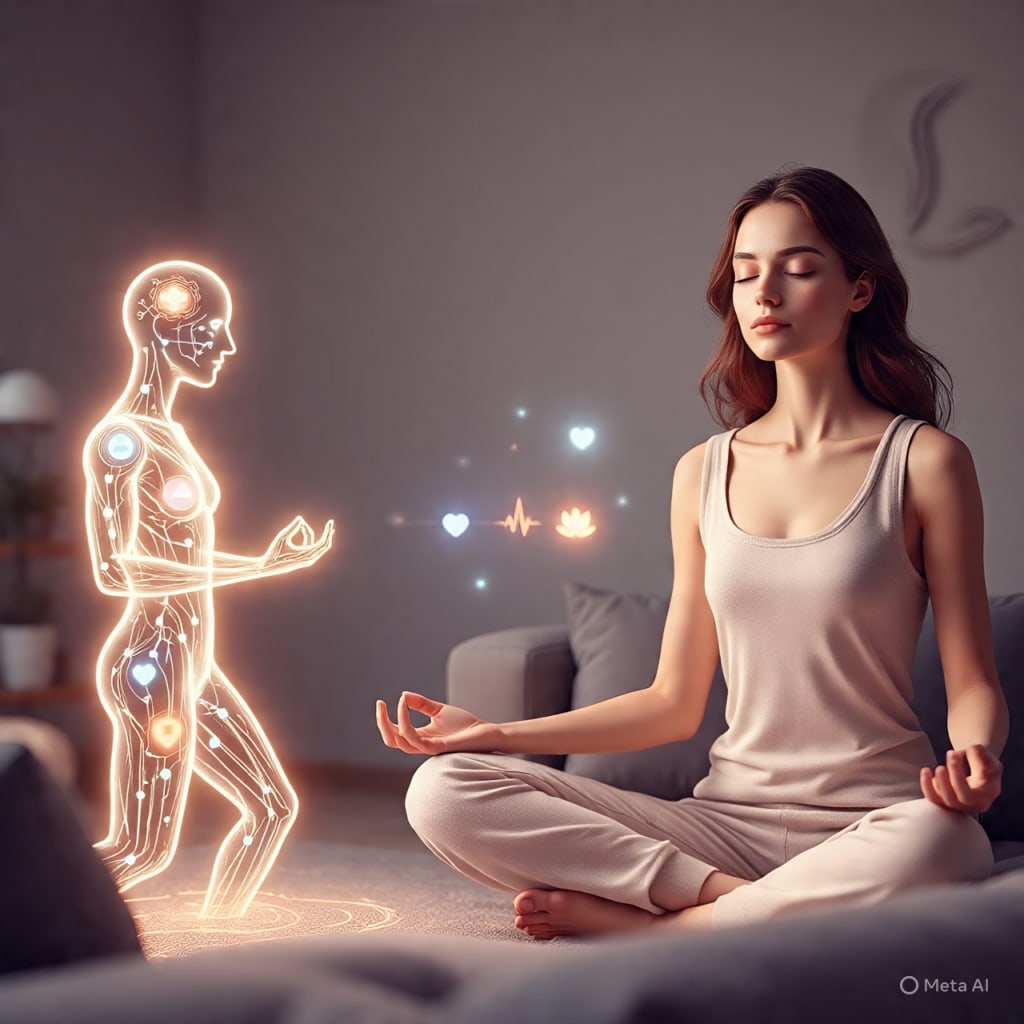
A New Kind of Therapist
Five years ago, the idea of telling your deepest fears to a robot would have sounded absurd. Today, it’s becoming normal. From AI therapy chatbots to personalized self-care apps, millions of people worldwide are turning to artificial intelligence for mental health support.
But is AI really helping? Or are we outsourcing our well-being to algorithms that don’t understand human pain?
Why AI in Mental Health Is Exploding Right Now
Three forces are driving the surge in AI-powered self-care:
1. Accessibility – Therapy is expensive and hard to access. AI apps like Woebot, Wysa, and Replika provide 24/7 conversations for free or at low cost.
2. Stigma – Many still feel shame about therapy. Talking to an AI feels safer, private, and judgment-free.
3. Personalization – Unlike static meditation recordings, AI can tailor advice based on your specific mood, history, or goals
How AI Is Helping People Every Day
Imagine this: You’re awake at 3 a.m., spiraling with anxiety. A human therapist isn’t available—but your AI coach is. Within seconds, you’re typing out your thoughts, and the AI is responding with evidence-based cognitive behavioral therapy (CBT) techniques, breathing exercises, or grounding methods.
For many, this is life-changing. According to a 2025 report from Mental Health Global Insights, over 42% of Gen Z and Millennials say they have used AI tools for self-care or therapy at least once in the past year.
Why Experts Are Cautious
But here’s the dark side. AI isn’t human—it lacks true empathy. And while algorithms can simulate compassion, they sometimes generate harmful or inappropriate responses.
Psychologists warn of three main risks:
- Over-reliance: People may skip professional help when they need it.
- Privacy concerns: Sensitive conversations stored on servers could be exposed.
- Inaccuracy: AI advice may not always be clinically safe.
Dr. Hannah Cole, a clinical psychologist, told Vocal.media:
“AI can support—but never replace—human therapy. The danger is when people believe the machine understands them at a deeper level than it really does.”
Humans + AI Healing Together
Sarah, 29 (UK): “I couldn’t afford weekly therapy. My AI app helped me track panic attacks, journal my feelings, and gave me techniques to manage stress. It didn’t solve everything, but it made me feel less alone.”
James, 41 (USA): “I lost my job, fell into depression, and didn’t want to ‘burden’ friends. Talking to an AI coach gave me courage to finally book an appointment with a real therapist.”
These testimonies highlight the hybrid model—AI as a first step, humans as the anchor.
The Business Boom: AI as a Wellness Industry
The mental health AI market is projected to hit $6.2 billion by 2027, driven by wellness startups and even big players like Apple and Google investing in AI-powered mindfulness.
But critics warn: turning therapy into a subscription model risks commodifying human struggle.
Future of AI Self-Care: Where We’re Headed
Experts predict three upcoming trends:
1. AI + Wearables – Apps connected to smartwatches detecting stress before you feel it.
2. Hybrid Therapy Models – Human therapists using AI as an assistant to monitor patients between sessions.
3. Cultural Shift – Self-care moving from a private ritual to a mainstream, tech-driven lifestyle.
The line between “AI tool” and “AI companion” is blurring fast. For some, it’s a lifeline. For others, it’s a warning.
Should You Try It?
If you’re curious, AI self-care apps can be a useful supplement—but not a replacement—for real human support.
The future of mental health may not be about choosing between AI and humans, but about combining them in smart, ethical ways.
For now, the real question isn’t “Will AI replace therapy?” but rather:
How will AI change the way we think about caring for ourselves—and each other?
About the Creator
The Narrative Hub
Your daily destination for the most compelling stories and insightful articles. At The Narrative Hub, we bring you trending topics, human experiences, and thought-provoking narratives—all in one place.
Keep reading
More stories from The Narrative Hub and writers in Longevity and other communities.
I Tried Living Without My Phone for 30 Days — The Results Changed Everything
Day 1: The Panic Sets In The first morning without my phone, I instinctively reached for it before I even opened my eyes. It wasn’t there. My brain fired a surge of anxiety—what if I missed a message? What if someone needed me?
By The Narrative Hub5 months ago in Longevity
Day 4 of Quitting
If this is how sobriety feels, maybe it’s better to go through life a little buzzed… this, along with other hits like, I want to kill myself, I wish I was dead, and I’m going to throw myself off a bridge have been the only thoughts on rotation these past few days. I promise myself that if, in a month, I still feel like this (‘this’ meaning despondent, full of rage, and simultaneously numb) I can go back to smoking. Until mid-February though? Nicotine is off the table.
By sleepy drafts12 days ago in Longevity
Foods to Avoid After Whitening Teeth
A professional teeth whitening treatment can dramatically boost your confidence, whether you’re heading to a business meeting downtown, enjoying a night out in the Blue Dome District, or getting ready for a family event in Broken Arrow. Right after whitening, however, your teeth are more porous and vulnerable to staining. What you eat and drink during the first few days plays a huge role in how long your results last.
By Good health to everyone3 days ago in Longevity


Comments
There are no comments for this story
Be the first to respond and start the conversation.