lifestyle
Living your life - the health and wellness way.
The Enduring Impact of Glucagon-Like Peptide-1 Receptor Agonists
The landscape of metabolic disease management has undergone a profound transformation with the advent of a novel class of pharmacotherapies: the glucagon-like peptide-1 (GLP-1) receptor agonists. These agents, inspired by the body's own intricate endocrine system, have rapidly ascended to prominence in the treatment of type 2 diabetes mellitus and, more recently, obesity, offering a multifaceted approach to conditions that have long presented significant therapeutic challenges. Their mechanism of action extends beyond mere glycemic control, encompassing broad metabolic, cardiovascular, and renal benefits, thereby addressing the complex pathophysiology and often devastating complications associated with these chronic conditions. This article will delve into the fundamental nature of GLP-1 and its therapeutic analogues, meticulously detailing their biochemical mechanisms, evaluating their extensive efficacy in clinical practice, and scrutinizing their comprehensive side effect profiles, with particular emphasis on potential long-term effects that may manifest subtly or in ways not immediately apparent to the patient.
By Paul Claybrook MS MBA23 days ago in Longevity
Home Healthcare Market Trends, Size & Forecast 2025–2033 | Renub Research. AI-Generated.
Introduction: The Rise of Care Beyond Hospital Walls Healthcare delivery is undergoing a profound transformation. As populations age, chronic diseases rise, and healthcare costs continue to climb, traditional hospital-centric models are increasingly being replaced by flexible, patient-centered alternatives. One of the most significant shifts is the rapid expansion of home healthcare, a sector that brings professional medical and non-medical services directly into patients’ homes.
By jaiklin Fanandish23 days ago in Longevity
The Essential Guide to Gut Health
By: Paul Claybrook, MS, MBA Gut health has emerged as a central topic in modern health research due to its far-reaching influence on nearly every system in the body. The gastrointestinal tract is not only responsible for digestion and nutrient absorption, but also serves as home to the gut microbiome—a complex community of microorganisms that plays a key role in immune regulation, metabolic function, and even mental well-being. Increasing evidence suggests that imbalances in the gut microbiome are linked to a wide range of health concerns, including chronic inflammation, digestive disorders, metabolic disease, and mood disturbances. As a result, maintaining a healthy gut is increasingly recognized as a foundational component of overall wellness rather than a narrow digestive concern. Gut health is shaped by daily choices, particularly those related to diet, physical activity, supplementation, and lifestyle habits such as sleep and stress management. Understanding how these factors interact provides individuals with practical tools for supporting digestive function and long-term health. This article explores the science behind gut health and outlines evidence-based strategies for nurturing the gut microbiome through sustainable, everyday practices.
By Paul Claybrook MS MBA25 days ago in Longevity
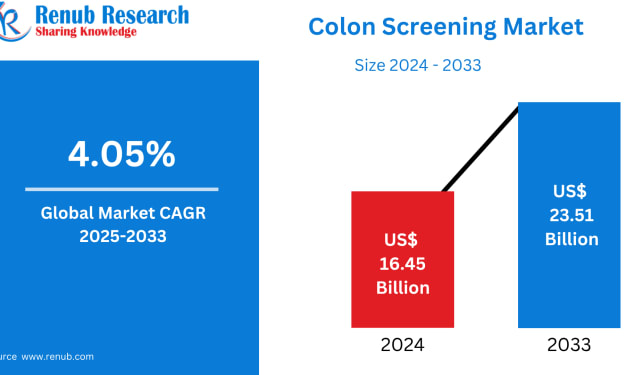
Colon Screening Market Size and Forecast (2025–2033). AI-Generated.
Introduction The global healthcare industry is increasingly shifting its focus from reactive treatment to preventive care, and colon screening has emerged as one of the most critical pillars of this transformation. With colorectal cancer ranking among the most common and deadly cancers worldwide, early detection through effective screening has become a public health priority. Advances in diagnostic technologies, expanding government screening programs, and growing public awareness are collectively reshaping the colon screening landscape.
By Renub Research26 days ago in Longevity
United States Breast Reconstruction Market Size and Forecast 2025–2033. AI-Generated.
United States Breast Reconstruction Market Overview The United States Breast Reconstruction Market is undergoing steady and meaningful growth, driven by rising breast cancer prevalence, increasing post-mastectomy reconstruction rates, and favorable reimbursement frameworks. According to Renub Research, the market is projected to expand from US$ 1.02 billion in 2024 to US$ 1.74 billion by 2033, registering a compound annual growth rate (CAGR) of 6.1% from 2025 to 2033.
By Janine Root 26 days ago in Longevity
Artificial Intelligence in Diagnostics Market Size and Forecast 2025–2033. AI-Generated.
Introduction Artificial intelligence (AI) is rapidly reshaping the global healthcare landscape, with diagnostics emerging as one of its most transformative applications. By combining advanced machine learning algorithms, deep neural networks, and vast volumes of healthcare data, AI-powered diagnostic solutions are enabling earlier disease detection, improved clinical accuracy, and faster decision-making. From radiology and pathology to cardiology and oncology, AI is no longer experimental—it is becoming an essential component of modern diagnostic workflows.
By Marthan Sir26 days ago in Longevity
Medical Devices Cuffs Market Size and Forecast 2025–2033. AI-Generated.
Global Medical Devices Cuffs Market Outlook The global Medical Devices Cuffs Market is witnessing steady and sustained growth as healthcare systems worldwide place increasing emphasis on early diagnosis, non-invasive monitoring, and preventive care. According to Renub Research, the market is expected to grow from US$ 793.55 million in 2024 to US$ 1,233.17 million by 2033, expanding at a compound annual growth rate (CAGR) of 5.02% during 2025–2033.
By Marthan Sir26 days ago in Longevity