
Artificial Intelligence in Diagnostics Market Size and Forecast 2025–2033
How AI Is Redefining Accuracy, Speed, and Decision-Making in Global Healthcare


Introduction
Artificial intelligence (AI) is rapidly reshaping the global healthcare landscape, with diagnostics emerging as one of its most transformative applications. By combining advanced machine learning algorithms, deep neural networks, and vast volumes of healthcare data, AI-powered diagnostic solutions are enabling earlier disease detection, improved clinical accuracy, and faster decision-making. From radiology and pathology to cardiology and oncology, AI is no longer experimental—it is becoming an essential component of modern diagnostic workflows.
According to Renub Research, the Artificial Intelligence in Diagnostics Market is expected to grow from US$ 1.41 billion in 2024 to US$ 6.52 billion by 2033, expanding at a robust compound annual growth rate (CAGR) of 18.55% from 2025 to 2033. This remarkable growth reflects rising healthcare demand, increasing diagnostic complexity, and the urgent need for scalable, data-driven solutions across global health systems.
Global Artificial Intelligence in Diagnostics Industry Overview
The global AI in diagnostics industry is evolving at an unprecedented pace, driven by rapid advances in machine learning, big data analytics, cloud computing, and medical imaging technologies. AI systems are increasingly capable of analyzing complex datasets—including imaging scans, laboratory results, genomics, and electronic health records (EHRs)—to assist clinicians in detecting diseases with high accuracy and consistency.
AI has shown particular promise in radiology, pathology, cardiology, neurology, and oncology, where pattern recognition and image interpretation are critical. By reducing human error and enabling early-stage diagnosis, AI technologies are improving patient outcomes while simultaneously lowering healthcare costs.
North America currently dominates the market due to its strong R&D ecosystem, advanced healthcare infrastructure, and early adoption of digital health technologies. However, Asia-Pacific is witnessing the fastest growth, supported by large patient populations, increasing healthcare digitization, and proactive government initiatives promoting AI integration.
Major industry participants—including Siemens Healthineers, Google Health, GE Healthcare, IBM Watson Health, and AliveCor—are investing heavily in AI-driven diagnostic platforms. While concerns around data privacy, ethics, and regulatory compliance persist, ongoing innovation and policy support continue to propel market expansion.
Role of Investments and Healthcare Startups
The emergence of AI-focused healthcare startups has significantly accelerated market growth. Increased venture capital funding and strategic partnerships have enabled rapid innovation and commercialization of AI diagnostic solutions.
For instance, Arterys secured USD 28 million in Series C funding in May 2020 from Temasek Holdings and Benslie Investment Group to expand its AI-powered medical imaging portfolio. Similarly, Aidoc raised USD 20 million in Series B funding in September 2020, underscoring investor confidence in AI-enabled clinical decision support systems.
Leading medical technology companies have also intensified product development. GE Healthcare introduced its AI-powered Thoracic Care Suite in June 2020, enabling faster detection of chest abnormalities. In November 2020, the U.S. FDA approved AliveCor’s Kardia AI V2, enhancing ECG-based cardiac diagnostics.
These developments highlight how AI-driven tools are rapidly transitioning from pilot projects to mainstream clinical adoption.
AI in Chronic Disease and Population Health Management
AI technologies are increasingly applied to diagnose and manage chronic diseases such as chronic kidney disease (CKD), cardiovascular disorders, diabetes, and neurological conditions.
In May 2024, Premier, Inc. and AstraZeneca launched the Uncover CKD – Care Collective initiative, leveraging Premier’s PINC AI platform. The initiative aims to identify undiagnosed CKD patients, educate healthcare professionals, and enhance disease management strategies across U.S. health systems. Such initiatives demonstrate how AI can address both clinical challenges and systemic healthcare inefficiencies.
Growth Drivers of the Artificial Intelligence in Diagnostics Market
Rising Demand for Early and Accurate Diagnosis
The global increase in chronic and life-threatening diseases—including cancer, cardiovascular disorders, and neurological conditions—has intensified the demand for early and precise diagnostic solutions. AI-powered diagnostic tools analyze medical images, lab results, and patient data with exceptional speed and accuracy, enabling clinicians to detect diseases at earlier stages.
By reducing diagnostic errors and improving consistency, AI supports timely interventions, lowers treatment costs, and enhances patient outcomes. As healthcare systems move toward precision medicine, AI-driven diagnostics are becoming indispensable.
Advancements in Artificial Intelligence and Machine Learning
Continuous advancements in machine learning, deep learning, and neural networks are significantly improving AI diagnostic capabilities. These systems can learn from vast datasets, identify subtle patterns, and generate highly accurate predictions across multiple medical specialties.
Deep learning models, in particular, have revolutionized diagnostic imaging by enabling the detection of minute abnormalities that are often difficult for the human eye to identify. Automation of routine diagnostic tasks also reduces clinician workload and enhances operational efficiency.
Rapid Growth in Healthcare Data Volume
The widespread adoption of electronic health records, wearable devices, and advanced imaging technologies has resulted in an explosion of healthcare data. While traditional systems struggle to process this volume of information, AI thrives in data-rich environments.
AI platforms integrate structured and unstructured data from multiple sources, uncover hidden insights, and continuously improve performance through learning. As healthcare digitization accelerates, the need for intelligent diagnostic systems capable of managing complex data will continue to drive market growth.
Challenges Facing the AI in Diagnostics Market
High Development and Implementation Costs
Developing and deploying AI diagnostic solutions requires significant financial investment. Costs associated with data acquisition, algorithm development, validation studies, hardware infrastructure, system integration, and regulatory compliance can be substantial.
These high upfront expenses pose challenges for small and mid-sized healthcare providers, particularly in developing regions. Ongoing maintenance, updates, and compliance requirements further add to long-term costs, limiting widespread adoption.
Resistance to Change Among Healthcare Professionals
Adopting AI-based diagnostics often requires changes to established clinical workflows. Some healthcare professionals remain skeptical of AI systems, particularly those that function as “black boxes” with limited transparency.
Concerns about over-reliance on AI, potential deskilling, and workflow disruptions can slow adoption. Addressing these challenges requires transparent algorithms, continuous training, and clear evidence of improved clinical outcomes.
Regional Market Insights
United States Artificial Intelligence in Diagnostics Market
The U.S. represents one of the largest and most advanced markets for AI in diagnostics. Strong healthcare infrastructure, significant R&D investment, and favorable regulatory support are driving adoption across radiology, pathology, genomics, and cardiology.
In October 2024, Invenio Imaging received FDA Breakthrough Device Designation for its NIO Lung Cancer Reveal module, which uses laser imaging and AI to analyze biopsy specimens. Despite data privacy and validation challenges, AI continues to play a pivotal role in transforming U.S. diagnostics.
United Kingdom Artificial Intelligence in Diagnostics Market
The UK market is expanding rapidly, supported by the National Health Service’s (NHS) commitment to AI integration. AI tools are helping address radiologist shortages, reduce wait times, and improve early disease detection.
In October 2024, Optellum secured joint funding of USD 159.95 million from the Office for Life Sciences and the National Institute for Health and Care Research to advance AI-based lung cancer detection. Public-private collaborations remain central to the UK’s AI healthcare strategy.
China Artificial Intelligence in Diagnostics Market
China’s AI diagnostics market is growing swiftly due to strong government backing and large-scale healthcare needs. Initiatives such as “Internet + Healthcare” encourage AI adoption across pathology, radiology, and genomics.
Leading companies including Tencent and Infervision are developing AI solutions to support clinicians nationwide. In July 2023, a USD 5 million AI-genomics project in Hong Kong aimed to enhance mental health diagnosis using data-driven approaches.
United Arab Emirates Artificial Intelligence in Diagnostics Market
The UAE is emerging as a regional leader in AI-driven healthcare innovation. Government initiatives like the UAE Artificial Intelligence Strategy 2031 and regulatory frameworks from the Dubai Health Authority support safe AI deployment.
Strong digital infrastructure, public-private partnerships, and investment in AI research are enabling improved diagnostic accuracy, personalized care, and enhanced patient outcomes across the UAE healthcare system.
Recent Developments in the AI in Diagnostics Industry
September 2024: Roche expanded its digital pathology platform by integrating over 20 advanced AI algorithms from eight partners, strengthening cancer diagnostics and research capabilities.
July 2024: AWS and GE HealthCare partnered to develop healthcare-specific AI foundation models, unlocking clinical data to support next-generation diagnostic and wellness solutions.
Artificial Intelligence in Diagnostics Market Segmentation
By Component
Software
Services
Hardware
By Application
Neurology
Radiology
Chest & Lung
Oncology
Cardiology
Pathology
Others
By End Use
Hospitals & Clinics
Diagnostic Laboratories
Imaging Centers
Other End Users
Competitive Landscape
Key players covered from four strategic viewpoints—overview, leadership, recent developments, and revenue analysis—include:
Siemens Healthineers
Riverain Technologies
Vuno, Inc.
Aidoc
Neural Analytics
Imagen Technologies
GE Healthcare
AliveCor Inc.
Final Thoughts
The Artificial Intelligence in Diagnostics Market is entering a transformative growth phase, driven by technological innovation, rising disease burden, and the global shift toward precision medicine. While challenges related to cost, data security, and adoption persist, continued investment, regulatory support, and clinical validation are accelerating acceptance worldwide.
With an expected market value of US$ 6.52 billion by 2033, AI-driven diagnostics will play a central role in redefining how diseases are detected, diagnosed, and managed—ushering in a new era of smarter, faster, and more personalized healthcare.
About the Creator
Marthan Sir
Educator with 30+ years of teaching experience | Passionate about sharing knowledge, life lessons & insights | Writing to inspire, inform, and empower readers.
Keep reading
More stories from Marthan Sir and writers in Longevity and other communities.
Medical Devices Cuffs Market Size and Forecast 2025–2033
Global Medical Devices Cuffs Market Outlook The global Medical Devices Cuffs Market is witnessing steady and sustained growth as healthcare systems worldwide place increasing emphasis on early diagnosis, non-invasive monitoring, and preventive care. According to Renub Research, the market is expected to grow from US$ 793.55 million in 2024 to US$ 1,233.17 million by 2033, expanding at a compound annual growth rate (CAGR) of 5.02% during 2025–2033.
By Marthan Sirabout a month ago in Longevity
Day 4 of Quitting
If this is how sobriety feels, maybe it’s better to go through life a little buzzed… this, along with other hits like, I want to kill myself, I wish I was dead, and I’m going to throw myself off a bridge have been the only thoughts on rotation these past few days. I promise myself that if, in a month, I still feel like this (‘this’ meaning despondent, full of rage, and simultaneously numb) I can go back to smoking. Until mid-February though? Nicotine is off the table.
By sleepy drafts12 days ago in Longevity
Saudi Arabia Osteoporosis Drugs Market Poised for Steady Growth Through 2033
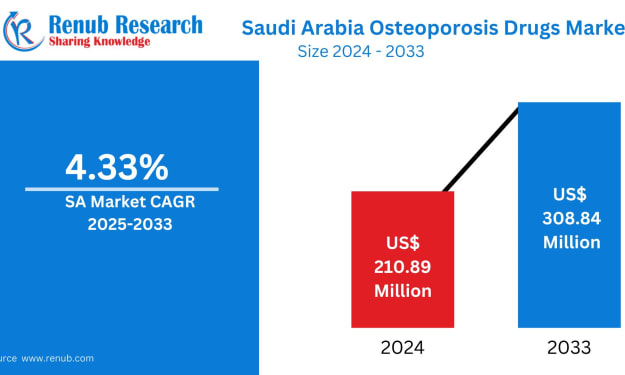
Saudi Arabia Osteoporosis Drugs Market Size and Forecast 2025–2033 The Saudi Arabia Osteoporosis Drugs Market is projected to grow from US$ 210.89 million in 2024 to US$ 308.84 million by 2033, registering a compound annual growth rate (CAGR) of 4.33% between 2025 and 2033. This steady expansion reflects the growing burden of osteoporosis, increased screening rates, rapid uptake of biologics, and government-led healthcare reforms under Vision 2030.
By Renub Researchabout 5 hours ago in Longevity
Ludacris and Nelly draw backlash over bookings at MAGA-coded music festival
Ludacris and Nelly headlining a mostly right-wing event is good for them. It’s also great for the genre of hip hop. The two rap veterans have showcased their talents on other stages. Why can’t they perform for mostly MAGA folks and grab that bag?
By Skyler Saunders4 days ago in Beat



Comments
There are no comments for this story
Be the first to respond and start the conversation.