
Sleep to Succeed: The Untapped Power of Rest in Boosting Productivity
Unlocking Peak Performance Through the Power of Quality Rest
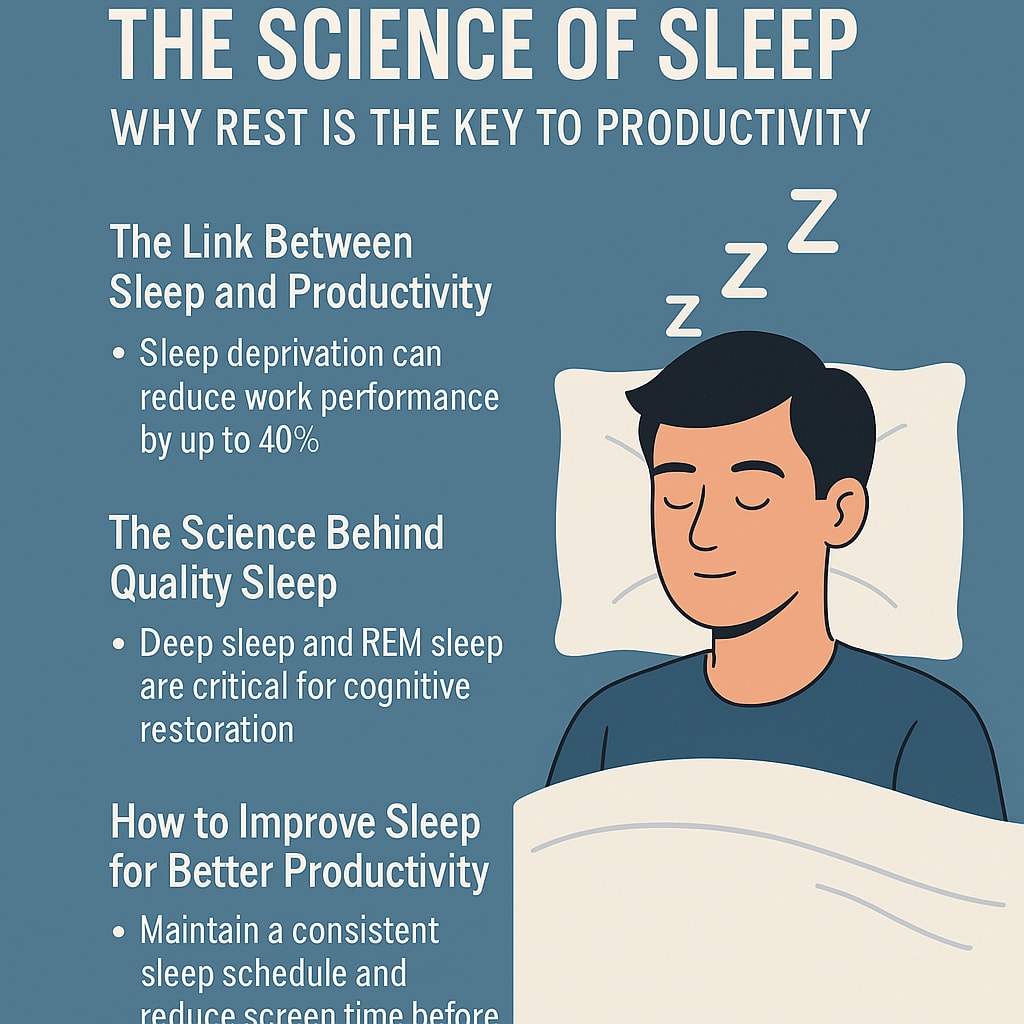
The Science of Sleep: Why Rest is the Key to Productivity
In the relentless pursuit of productivity, sleep often becomes the first casualty. Yet, contrary to popular belief, sacrificing rest doesn’t enhance performance—it undermines it. Scientific research continues to confirm that sleep is not a luxury but a biological necessity intricately tied to our ability to think clearly, make decisions, manage emotions, and maintain physical health. Let's investigate the science behind sleep and the reasons why it is essential for true productivity. The Biological Importance of Sleep
Sleep is an intricate biological process that is essential to nearly every body system. During sleep, the brain consolidates memories, clears waste products, and balances neurotransmitters. The National Sleep Foundation says that adults need 7 to 9 hours of sleep a night to work well. Yet, the Centers for Disease Control and Prevention (CDC) report that one in three adults in the U.S. does not get enough sleep.
The sleep cycle is divided into non-REM (including stages 1–3) and REM (Rapid Eye Movement) sleep. Stage 3, also known as deep sleep, is essential for physical restoration, while REM sleep improves learning, memory, and emotional processing. Each phase has a distinct function. Without adequate time in each stage, both body and mind suffer.
Sleep and Cognitive Function
A growing body of evidence shows that sleep deprivation severely impairs cognitive performance. According to a study that was published in Nature in 2000, staying awake for 17 to 19 hours causes performance problems that are equivalent to having a 0.05% blood alcohol concentration. After longer periods without sleep, reaction time, attention, and short-term memory decline significantly.
According to research from Harvard Medical School, getting enough sleep aids in creative thinking and problem-solving. It is during REM sleep that the brain connects disparate ideas and information, fostering innovation—an essential trait in a productive workforce.
Controlling one's emotions and making decisions Lack of sleep also impacts emotional stability and decision-making. A 2007 study from the University of California, Berkeley, found that sleep-deprived individuals had a 60% increase in amygdala activity, the brain region responsible for fear and emotional reactivity. Without adequate rest, people are more likely to make impulsive decisions, experience mood swings, and struggle with interpersonal relationships—all of which are detrimental in both personal and professional settings.
Physical Health and Energy Levels
Beyond the brain, sleep affects physical performance. It influences immune function, cardiovascular health, and metabolism. According to the American Academy of Sleep Medicine, people who don't get enough sleep over a long period of time are more likely to develop heart disease, type 2 diabetes, and obesity, all of which sap energy and lower productivity in the long run. A 2011 study published in Sleep journal found that athletes who increased their sleep to 9–10 hours per night improved their performance significantly, including faster sprint times and better accuracy. While not everyone is an athlete, the principle applies broadly: better sleep leads to better energy and efficiency.
Productivity in the Workplace and Sleep The economic costs of sleep deprivation are staggering. A RAND Corporation study in 2016 estimated that the U.S. loses $411 billion annually due to reduced productivity and health-related absenteeism linked to insufficient sleep. Workers who sleep less than six hours a night are 30% less productive than those who get seven to nine hours.
On the other hand, businesses that encourage good sleep habits experience increased engagement, decreased burnout, and improved performance. Recognizing the connection between alertness and innovation, Google, for example, introduced nap pods to encourage rest. Ways to Get a Better Night's Sleep Improving sleep starts with good "sleep hygiene"—habits that promote consistent, restful sleep. These are some: Maintaining a regular sleep schedule, even on weekends.
limiting screen time an hour before bed because blue light interferes with the production of melatonin. creating a quiet, cool, and dark environment for relaxation. avoiding heavy meals and caffeine before going to bed. Technology can also aid sleep tracking and improvement. Devices like smartwatches and apps like Sleep Cycle help monitor patterns and suggest improvements based on data.
Conclusion
Sleep is not a passive state of inactivity; rather, it is an essential, dynamic process that powers the body and brain. Cutting corners on rest to gain time often results in reduced efficiency, poorer decisions, and a higher risk of burnout. One of the most effective tools we have for increasing productivity, creativity, and overall well-being is consistent, high-quality sleep, according to science. Smarter sleeping ultimately leads to smarter work. For anyone aiming to perform at their best—whether in business, sports, or everyday life—prioritizing rest isn’t optional. It is crucial.
About the Creator
Keep reading
More stories from Md Nusaib Ul Islam and writers in Longevity and other communities.
The Crimson Ace
Detective Lena Ward had seen her fair share of blood, but the scene in the abandoned warehouse on 5th and Mercer chilled her more than usual. A man in his late 30s lay sprawled in a pool of crimson, a joker card placed carefully on his chest. No fingerprints, no murder weapon. Only the card and the message "TWO DOWN" carved into the concrete with what appeared to be a screwdriver. The victim, Marcus Klein, was a defense attorney known for getting high-profile criminals off the hook. Lena recognized his face instantly. Two weeks ago, the same calling card was left on the body of a corrupt judge. Same message, different number: “ONE DOWN.”
By Md Nusaib Ul Islam9 months ago in Criminal
Day 4 of Quitting
If this is how sobriety feels, maybe it’s better to go through life a little buzzed… this, along with other hits like, I want to kill myself, I wish I was dead, and I’m going to throw myself off a bridge have been the only thoughts on rotation these past few days. I promise myself that if, in a month, I still feel like this (‘this’ meaning despondent, full of rage, and simultaneously numb) I can go back to smoking. Until mid-February though? Nicotine is off the table.
By sleepy drafts17 days ago in Longevity
The Great Race for the Arctic: Why Russia, China and the US All Have It in Their Sights
The Arctic is no longer just a frozen wasteland at the top of the world. Today, it has become a hotspot for global competition, attracting the attention of some of the world’s biggest powers: Russia, China, and the United States. As melting ice opens new shipping routes and exposes untapped natural resources, these nations are racing to secure influence in a region that could shape the future of geopolitics, trade, and energy. Why the Arctic Matters The Arctic is important for several reasons: Natural Resources – The region contains vast oil and gas reserves, as well as rare minerals crucial for modern technology. Experts estimate that the Arctic could hold 13% of the world’s undiscovered oil and 30% of its natural gas. Shipping Routes – As ice melts due to climate change, new passages like the Northern Sea Route and the Northwest Passage are becoming navigable. These routes could cut travel time between Asia and Europe by weeks, offering major economic advantages. Military and Strategic Positioning – The Arctic provides a unique vantage point for monitoring global military activity. Control over the region could give nations strategic leverage in both defense and trade. The combination of resources, strategic position, and new shipping routes has made the Arctic a prize worth competing for. Russia’s Arctic Ambitions Russia has been the most active player in the Arctic for decades: It has expanded its military presence, building airfields, radar stations, and icebreakers. Russia controls a vast portion of the Arctic coastline, giving it the advantage of established ports and infrastructure. Energy companies backed by the state are investing heavily in oil, gas, and mineral extraction in the region. Russia sees the Arctic as both an economic opportunity and a security priority. Its actions signal a clear intention to assert dominance over the region before other powers can catch up. China’s Arctic Strategy China is not an Arctic nation by geography, but it has made its ambitions clear: Beijing calls itself a “Near-Arctic State”, emphasizing its interest in shipping and resource access. China is investing in scientific research, Arctic ports, and partnerships with Arctic nations. The country sees the Northern Sea Route as a potential shortcut for trade between Asia and Europe, which could reduce shipping costs and fuel consumption. China’s approach is more economic and diplomatic, relying on partnerships and research projects rather than direct territorial claims. Still, its growing presence is reshaping the Arctic’s geopolitical landscape. The United States in the Arctic The US has long been an Arctic power, primarily through Alaska. Its strategy focuses on defense, environmental monitoring, and trade routes: The US Coast Guard maintains icebreakers and patrol ships to ensure security and maintain shipping lanes. Washington emphasizes freedom of navigation, aiming to prevent any single nation from dominating Arctic waters. Military exercises and collaborations with NATO allies aim to protect strategic interests and respond to potential conflicts. The US sees the Arctic as a region of both opportunity and responsibility, balancing security, environmental concerns, and international cooperation. The Race for Control The Arctic race is about more than natural resources. It is a complex competition of economics, diplomacy, and military positioning: Russia moves aggressively, building military infrastructure and exploiting resources. China invests in research, shipping, and partnerships, gaining influence without formal territorial claims. The US maintains a defensive posture, securing its territory and ensuring freedom of navigation. This “race” is unlike traditional conflicts. It is less about open warfare and more about strategic positioning, economic investment, and diplomatic influence. Environmental and Global Concerns The Arctic is fragile and sensitive to climate change. While melting ice opens opportunities, it also poses risks to wildlife, local communities, and global weather patterns: Rising temperatures accelerate ice melt, threatening polar bears, seals, and indigenous communities. Increased shipping and resource extraction could lead to oil spills, pollution, and habitat loss. Global climate patterns, including storms and ocean currents, could be disrupted by rapid Arctic changes. Nations are under pressure to balance ambition with environmental responsibility, though economic incentives often outweigh conservation efforts. What This Means for the Future The Arctic is likely to remain a geopolitical hotspot for decades. Key developments to watch include: Expansion of shipping routes that shorten travel times and reduce costs. Increased resource extraction, including oil, gas, and rare minerals. Rising military presence, as countries protect their interests and assert sovereignty. Scientific research collaborations, which could shape policy and environmental practices. The Arctic will not just be a frozen frontier — it will be a center of economic, strategic, and environmental importance. Key Takeaways The Arctic is valuable for its resources, trade routes, and strategic position. Russia, China, and the US are all investing heavily to secure influence. The race is a mix of military, economic, and diplomatic maneuvering. Climate change both enables and threatens these ambitions. How nations navigate this competition will impact global trade, security, and the environment. Conclusion The Arctic is no longer just an icy, remote region — it has become a frontline of global strategy. Russia, China, and the United States are all jockeying for influence, using a combination of military, economic, and scientific tools. As ice melts and new opportunities emerge, the Arctic will play a critical role in global geopolitics. How these powers manage competition, environmental responsibility, and cooperation could shape the region — and the world — for generations to come. The great race for the Arctic is not a story of war, but a story of ambition, strategy, and survival at the top of the world.
By Fiaz Ahmed 2 days ago in Longevity
📢 Raise Your Voice Thread: 01/22/2026
Our “Raise Your Voice Threads” are hosted most alternating Thursdays at 12PM ET to offer creators more avenues to uncover exceptional stories on Vocal. As we are continuously searching for fresh creators and inspiring stories, this thread provides an opportunity to exchange and discuss the stories that have moved and motivated us on Vocal.
By Raise Your Voice by Vocal2 days ago in Resources



Comments
There are no comments for this story
Be the first to respond and start the conversation.