
Next-Generation Sequencing Market Size and Forecast 2025–2033
How NGS is Redefining Global Healthcare, Research, and Precision Diagnostics


The global Next-Generation Sequencing (NGS) market is entering a transformative era, fueled by rapid technological innovation, rising adoption in clinical diagnostics, and the growing global shift toward precision medicine. According to the latest Renub Research insights, the NGS market is projected to reach US$ 56.25 billion by 2033, expanding at a powerful CAGR of 18.16% from 2025 to 2033. This robust growth reflects not only the rising significance of genomics in healthcare but also the expanding use of sequencing technologies across agriculture, biotechnology, pharmaceuticals, and academic research.
NGS has moved from being a specialized, high-cost research tool to a mainstream, indispensable technology driving some of the world’s most critical scientific and medical breakthroughs. Whether in cancer diagnostics, infectious disease surveillance, genetic testing, or crop improvement, NGS continues to unlock unprecedented possibilities.
Next-Generation Sequencing Market Overview
Next-generation sequencing is a revolutionary method that enables rapid, high-throughput analysis of DNA and RNA. Unlike traditional Sanger sequencing—which decodes one fragment at a time—NGS can sequence millions of fragments simultaneously. This parallel sequencing capability dramatically reduces cost, turnaround time, and labor, while significantly increasing accuracy and scalability.
NGS technologies are now widely used in:
Clinical Diagnostics: Detecting mutations responsible for cancer, rare diseases, prenatal abnormalities, and inherited disorders.
Precision Medicine: Tailoring treatments based on patient-specific genetic signatures.
Infectious Disease Monitoring: Tracking viral mutations, including COVID-19 variants.
Biomedical Research: Supporting large-scale genomics, transcriptomics, and epigenetics studies.
Agriculture and Animal Research: Enhancing crop breeding and livestock genetics.
With its ability to decode entire genomes, NGS has become the backbone of modern biology and a central component of future healthcare innovation.
Growth Drivers of the Global NGS Market
1. Advancements in Genomic Research and NGS Technologies
Breakthroughs in sequencing chemistry, automated workflows, and high-throughput platforms are major accelerators for market growth. Technologies such as long-read sequencing, single-cell genomics, and nanopore sequencing enable researchers to study complex genomes and previously undetectable mutations.
Automation, artificial intelligence, and integrative bioinformatics are further enhancing the accuracy, speed, and usability of NGS platforms. These innovations are making NGS accessible not only to top-tier research institutions but also clinical laboratories and hospitals worldwide.
As sequencing costs continue to plummet and efficiency increases, demand for NGS in both clinical and non-clinical settings is rising sharply.
2. Rising Applications in Precision Medicine
NGS is a cornerstone of precision medicine—an approach centered on customizing treatment based on a person’s genetic makeup. In oncology, NGS supports:
Tumor profiling
Identification of actionable mutations
Selection of targeted therapies
Monitoring therapy response
Governments worldwide are investing heavily in genomic medicine programs, further accelerating the adoption of sequencing technologies. Precision medicine initiatives in the U.S., U.K., Europe, China, and the Middle East are expanding genomic testing accessibility and driving market expansion.
3. Growing Prevalence of Cancer and Genetic Disorders
As cases of cancer and inherited diseases rise globally, the demand for comprehensive genetic analysis tools intensifies. NGS enables early detection of mutations and provides deep insights into disease mechanisms, improving treatment outcomes.
NGS is increasingly used to identify biomarkers for drug development, monitor disease progression, and support companion diagnostics. With chronic and complex diseases on the rise, the global reliance on advanced sequencing technologies will continue to grow.
Next-Generation Sequencing Market by Key Segments
Reagents & Consumables Hold the Largest Share
Among all product categories, reagents and consumables represent one of the largest segments in the NGS market. These materials—including library preparation kits, sequencing reagents, and target enrichment kits—are required for every sequencing run, ensuring recurring demand.
Pharmaceutical companies, diagnostic labs, and academic institutions are scaling up sequencing projects, further boosting consumables’ market share.
Next-Generation Sequencing Diagnostic Market
The diagnostics segment plays a central role in NGS adoption, driven by its ability to identify genetic variations with high precision. Key diagnostic areas include:
Cancer screening and tumor profiling
Rare disease identification
Carrier screening
Non-invasive prenatal testing (NIPT)
Infectious disease surveillance
Clinical NGS applications are rapidly expanding as healthcare systems embrace genomic-driven decision-making. Diagnostics will remain one of the most influential segments shaping future market trajectories.
Sequencing by Synthesis (SBS) Dominates the Technology Landscape
Sequencing by Synthesis (SBS)—a foundational technology popularized by Illumina—remains the most widely used NGS method globally. Its advantages include:
Low error rates
High throughput
Cost-effectiveness
Suitability for diverse applications
As demand for large-scale genomic datasets grows, SBS is expected to retain its dominant position while coexisting with emerging technologies like nanopore sequencing and single-molecule real-time sequencing.
Academic & Clinical Research Centers: Fastest-Growing End-User Segment
Academic and clinical research institutions are rapidly expanding their use of NGS technologies. These centers rely on NGS for cancer gene discovery, tumor heterogeneity analysis, and identifying pathways associated with disease progression.
With increasing availability of research grants, partnerships with biotech firms, and government-funded genomics programs, the research sector will continue to be one of the most dynamic end-users of sequencing technologies.
Regional Insights
United States Leads the Global NGS Market
The U.S. remains the powerhouse of the global NGS industry, supported by:
A highly advanced healthcare ecosystem
Strong biotechnology and pharmaceutical industries
Significant government funding for genomics
Robust regulatory frameworks
Rapid adoption of precision medicine
A notable milestone came in September 2022 when Predicine, Inc. received U.S. FDA breakthrough device designation for its PredicineCARE™ cfDNA assay—an NGS-based tumor mutation profiling tool for liquid biopsy samples. Such innovations underscore the U.S. leadership in the NGS space.
Germany’s Rising Influence in European Genomics
Germany’s NGS market is expanding rapidly thanks to robust investments in research infrastructure, precision diagnostics, and biotechnology collaborations. German institutions are increasingly using NGS for:
Cancer genomics
Rare disease detection
Pharmaceutical R&D
As Europe accelerates genomic medicine adoption, Germany stands as one of the continent’s most influential players.
India: A Fast-Expanding NGS Market in Asia
India’s NGS market is witnessing rapid growth due to rising cases of genetic disorders, cancer, and infectious diseases. Key growth drivers include:
Expanding biotechnology ecosystem
Increasing affordability of sequencing
Government initiatives supporting genomics
Collaboration with global sequencing companies
Beyond healthcare, NGS is becoming essential to India’s agricultural and pharmacogenomics research.
UAE: A Genomics Leader in the Middle East
The UAE is emerging as a regional leader in genomics, driven by:
Strong government support for biotechnology
Advanced hospital infrastructure
High adoption of precision medicine
Growing demand for cancer and rare disease diagnostics
Global biotech partnerships and significant investments in R&D further fuel the UAE’s growing prominence in the NGS industry.
Market Segmentation Overview
Product
Instruments
Reagents & Consumables
Services
Application
Diagnostics
Agriculture & Animal Research
Drug Discovery
Personalized Medicine & Genetic Screening
Others
Technology
Sequencing by Synthesis (SBS)
Ion Semiconductor Sequencing
Single-Molecule Real-Time Sequencing
Nanopore Sequencing
Others
End-Users
Academic & Clinical Research Centers
Pharmaceutical & Biotechnology Companies
Hospitals & Clinics
Others
Regional Coverage
North America (U.S., Canada)
Europe (Germany, France, Italy, Spain, U.K., Belgium, Netherlands, Turkey)
Asia-Pacific (China, India, Japan, South Korea, Southeast Asia, Australia, New Zealand)
Latin America (Brazil, Mexico, Argentina)
Middle East & Africa (Saudi Arabia, UAE, South Africa)
Top Companies in the Global NGS Market
Illumina
Thermo Fisher Scientific
Pacific Biosciences
QIAGEN N.V.
Roche
Bio-Rad Laboratories, Inc.
Takara Bio Inc.
Hamilton Company
Geneious
BioMérieux SA
Recent Developments
Illumina, December 2023: Signed an MoU with the African Society for Laboratory Medicine to improve genomics access across Africa.
SOPHiA GENETICS & QIAGEN, March 2023: Partnered to integrate QIAseq reagent technology with the DDM platform for improved tumor analysis.
Final Thoughts
The next decade will be defined by a genomic revolution—and NGS stands at the center of it. As sequencing becomes faster, more affordable, and more accurate, its applications across healthcare, agriculture, biotechnology, and personalized medicine will continue to expand. With a projected market value of US$ 56.25 billion by 2033, NGS is poised not only to transform medical diagnostics but also to shape the future of global healthcare and scientific discovery.
From early disease detection to precision oncology and pandemic preparedness, the world is only beginning to tap into the full potential of sequencing technologies. The rapid advancements and global adoption patterns highlight one clear trend: Next-generation sequencing is becoming the foundation of modern medicine.
About the Creator
Marthan Sir
Educator with 30+ years of teaching experience | Passionate about sharing knowledge, life lessons & insights | Writing to inspire, inform, and empower readers.
Keep reading
More stories from Marthan Sir and writers in Longevity and other communities.
Saudi Arabia In-Vitro Diagnostics Market Size and Forecast 2025–2033
The Saudi Arabia in-vitro diagnostics (IVD) market is entering a dynamic phase of growth, fueled by rapid advancements in healthcare, expanding diagnostic capabilities, and increasing demand for early and precise disease detection. According to Renub Research, the Saudi Arabian IVD market is projected to reach US$ 1.68 billion by 2033, up from US$ 1.15 billion in 2024, marking a steady 4.30% CAGR between 2025 and 2033.
By Marthan Sirabout a month ago in Longevity
Day 4 of Quitting
If this is how sobriety feels, maybe it’s better to go through life a little buzzed… this, along with other hits like, I want to kill myself, I wish I was dead, and I’m going to throw myself off a bridge have been the only thoughts on rotation these past few days. I promise myself that if, in a month, I still feel like this (‘this’ meaning despondent, full of rage, and simultaneously numb) I can go back to smoking. Until mid-February though? Nicotine is off the table.
By sleepy drafts8 days ago in Longevity
More Than 5 Million Native Plants Reintroduced in Deserts Are Slowing Land Degradation and Rebooting Arid Ecosystems
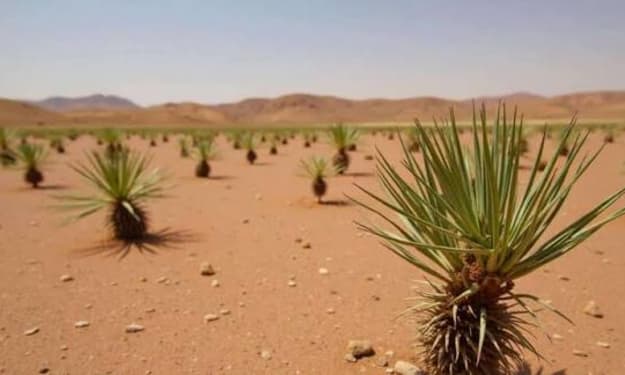
Deserts are often seen as barren, unforgiving landscapes, but they are far from lifeless. These ecosystems, while harsh, support unique biodiversity and provide critical environmental services, from carbon sequestration to regulating local climates. Yet, decades of overgrazing, unsustainable land use, and climate change have taken their toll, leaving many arid regions struggling with soil erosion, loss of native vegetation, and diminished ecological resilience. Now, a bold rewilding effort is turning the tide: over five million native plants have been reintroduced into deserts worldwide, and the early results are promising. The scale of the initiative Across regions from the deserts of the Middle East and North Africa to the arid plains of Australia and North America, conservation organizations, local communities, and governments have collaborated to replant native species that were once nearly wiped out. These plants range from hardy shrubs and grasses to iconic desert flowers, all carefully selected for their ability to survive in extreme conditions and restore ecological balance. The numbers are staggering: more than 5 million individual plants have been transplanted over the last five years, covering thousands of hectares. While this effort is labor-intensive, involving soil preparation, irrigation during establishment phases, and ongoing monitoring, the environmental payoff has been remarkable. Slowing land degradation One of the primary goals of these reintroductions is to combat land degradation, a process that affects over 40% of the planet’s land surface. In deserts, degradation is particularly acute because soil erosion occurs rapidly in the absence of stabilizing vegetation. Without plants to anchor the soil, wind and water can strip away fertile topsoil, creating a feedback loop of declining vegetation and worsening erosion. Early monitoring reports suggest that reintroduced native plants are helping to stabilize sandy soils and reduce the spread of desertification. In some areas of the Middle East, for instance, wind erosion rates have decreased by up to 30% in regions where shrubs and grasses were replanted. This stabilization not only benefits the environment but also local communities that rely on the land for grazing, agriculture, and other livelihoods. Rebooting arid ecosystems Beyond slowing soil loss, these plant reintroductions are rebooting entire desert ecosystems. Deserts are home to a diverse array of wildlife, including insects, birds, and mammals that rely on native plants for food and shelter. By re-establishing vegetation cover, these efforts have triggered a cascade of ecological benefits. In parts of the Sonoran Desert in North America, researchers observed a noticeable increase in pollinator populations, such as bees and butterflies, following the reintroduction of native flowering plants. Similarly, small mammals and reptiles that had disappeared from degraded areas are gradually returning, attracted by improved habitat structure and food availability. Climate resilience Another key advantage of reintroducing native plants is enhancing climate resilience. Many desert plants are adapted to survive extreme heat, drought, and poor soils. By re-establishing these species, ecosystems can better withstand climate-related stresses, such as prolonged droughts or extreme heatwaves. Additionally, some species improve soil moisture retention and reduce surface temperatures, creating microclimates that further support biodiversity. Community engagement and knowledge transfer What makes these rewilding efforts particularly successful is the integration of local communities. Indigenous knowledge about native species, planting techniques, and seasonal cycles has been invaluable. In some regions, schools and community groups participate in planting days, turning conservation into a source of pride and education. This engagement ensures that restored areas are maintained, monitored, and valued over the long term. Looking ahead While the reintroduction of five million native plants is a significant achievement, experts caution that long-term success requires continued investment, monitoring, and protection from overgrazing, development, and climate pressures. However, the initiative provides a compelling example of how targeted, science-backed restoration can reverse environmental damage. For arid ecosystems, these efforts are more than just planting trees and shrubs—they represent hope. They demonstrate that even the most fragile landscapes can recover when humans actively collaborate with nature, restoring not only plants but the entire web of life that depends on them. As the world grapples with climate change and land degradation, the lessons from these desert rewilding projects offer a blueprint for action: by investing in native biodiversity, we can slow degradation, rebuild ecosystems, and create landscapes that are resilient, productive, and teeming with life once again.
By Fiazahmedbrohi about 24 hours ago in Longevity



Comments
There are no comments for this story
Be the first to respond and start the conversation.