
Hoodia: Once a Miracle Now a Mirage
At one time, extracts from a South African plant were being touted as the latest and greatest appetite suppressant in existence. The weight loss industry took notice, too. But science had its say.

A Miracle from the Desert?
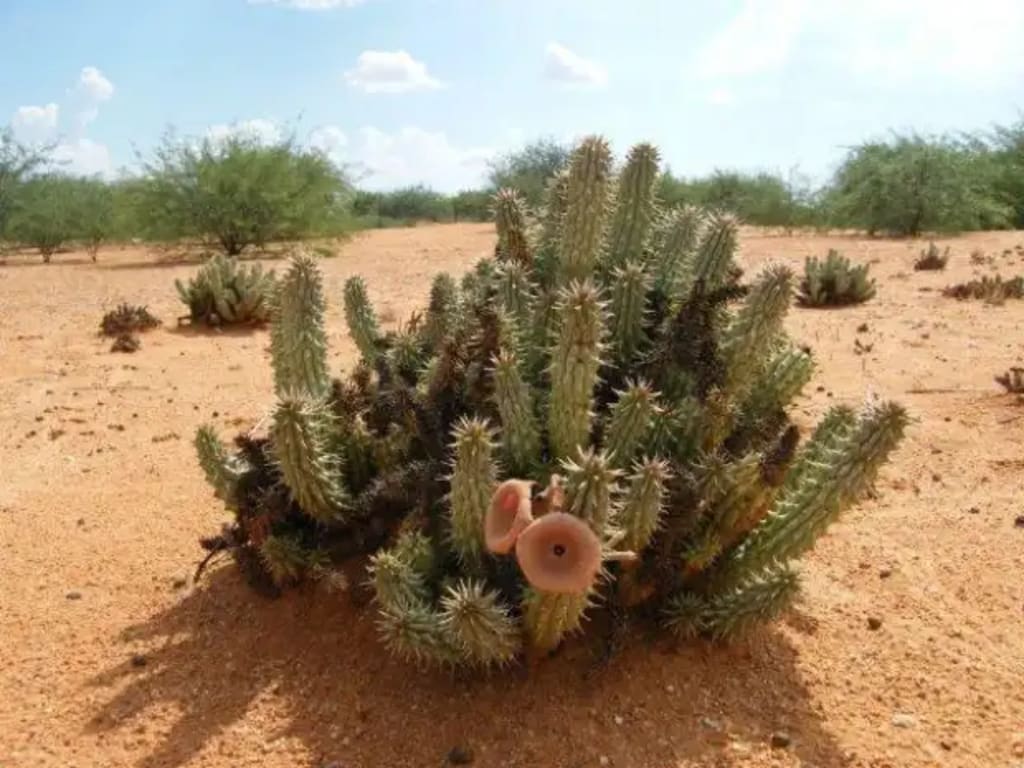
The Kalahari Desert in southern Africa is not the most hospitable place to live in. The vast region is arid and hot throughout most of the year, and the vegetation is sparse. Still, it is here where a particular plant that captured the attention of several dietary companies throughout the world.
The hoodia plant – in particular, the species hoodia gordonii – is a leafless spiny succulent that grows naturally in the desert regions of South Africa and Namibia. By appearance, the plant doesn’t appear edible or of any use.
However, dieters and researchers believed that there was something special about this plant. Hoodia - or to be precise, the dried extracts from its stems and roots - became one of several key ingredients in many popular diet pills on the market for more than a decade.
It became a media sensation. The Internet, e-mail spam, and various media reports bolstered it as a “miracle” for dieters. Health food and discount stores sold some brands at $30 to $45 per bottle. And, like many diet crazes, it had its supporters who, by word-of-mouth, touted its ability to shed the pounds.
The attention, demands, and booming sales made it appear that hoodia was the miracle plant for weight loss. However, the problem with it soon became apparent; the science wasn't adding up.
The “Science” Behind Hoodia
Why the hoopla for hoodia? It was believed by many that it could trick a person’s brain into believing they were full, thus curtailing the amount of food one eats. Hoodia had long been studied by pharmaceutical companies (such as Pfizer) for other medicinal values. But, a chance observation of how the native people of the Kalahari used it gave rise to the speculation that the plant had dietary uses.
For years, the indigenous Bushmen of the Kalahari have been observed using the plant during their long hunts deep into the desert. Anthropologists studying these people were perplexed about how they managed to hunt in this inhospitable region. The researchers soon observed them collecting the succulents on their hunting treks.
Many bushmen used it infrequently to treat indigestion and minor abrasions. However – especially during the hunts – they carved up the hoodia’s skin and consumed it. Some bushmen told the anthropologist that the plant reduced the feeling of hunger.

To date, the most significant scientific research made on hoodia was published in the September 10th, 2004 issue of Brain Research. The research was conducted by adjunct associate Brown University professor and former Pfizer researcher, David MacLean, MD.
He reported in the journal that a molecule in hoodia, P57, was the likely cause of the plant’s ability to suppress appetite. Still, the findings were inconclusive, considering no other independent research was being conducted on the matter at the time.
Media Attention
Although speculations and other minor studies have been made on hoodia since the 1970s, it was Maclean’s study that brought media attention to it.
One such exposure came from the reputable 60 Minutes, the long-running TV show. A 2004 segment on the plant - and on MacLean’s study – had a major impact on the plant’s popularity. Demand from the public spiked.
After the report, the numbers grew to over 300 U.S. dietary products using the plant.
The report had another lucrative impact. Before 2004 there were only three dietary products using hoodia. After the report, the numbers grew to over 300 U.S. dietary products using the plant.
Types of Hoodia Products
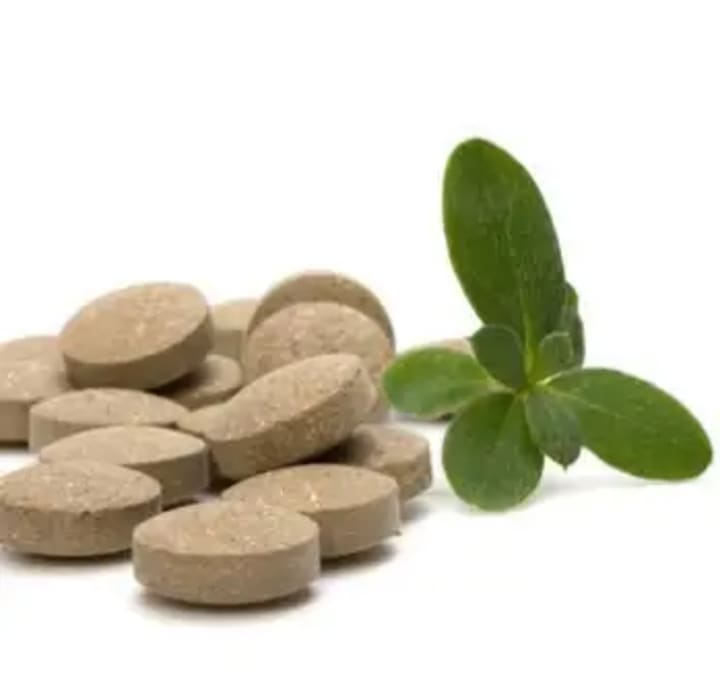
As a stand-alone dietary suppressant, hoodia came mainly in two forms:
- powder-in-capsules or
- chewable tablets.
Liquid extracts and teas were available, but were not as common as capsules and tablets.
Many hoodia products were mixed in with other herbs and minerals. This may include green tea or chromium picolinate (NCCIH, 2010).
Skeptical Media Weighs In
Since hoodia is sold as a dietary supplement, it doesn’t get the same attention from the FDA as other over-the-counter prescription medications do (WebMD, 2026). This can be a problem, especially if one is to decide which brand is the most effective or the safest.
In addition, there were reports of side effects. While minor, they can still be a hindrance to one's wellbeing. This included headaches, nausea, dizziness, and elevated blood pressure to name a few.
The website, Top Consumer Reviews.com came up with a few criteria to judge which brand was the best. They considered:
- Authenticity Guarantee: does the product come with a C.I.T.E.S (Convention on International Trade in Endangered Species of Wild Fauna and Flora) guarantee and certification of authenticity?
- Strength: How many milligrams of the natural plant are found in each product?
- Cost: Which product is cost-effective?
- Guarantee: Is the product returnable to the manufacturers if the consumer is not satisfied?
Although FDA barely regulated it in the United States, the country’s Fish and Wildlife Service, the US Department of Agriculture, and the U.S. Customs and Border Protection regulated the importation and re-exportation of the plant. Also, U.S. laws state that a CITES certificate must accompany shipments of Hoodia gordonii, and that importers must posses a permit issued by the USDA (Wikipedia, 2011).
Consumer Report (not associated with Top Consumer Reviews.com) has stated that it does not recommend any product using hoodia on the grounds that there had been a lack of sufficient studies to prove its effectiveness.
Although FDA barely regulates it in the United States, the country’s Fish and Wildlife Service, US Department of Agriculture, and the U.S. Customs and Border Protection regulate the importation and re-exportation of the plant.
The website, Diets in Review.com stated that dieters should be cautious when using it. They also stated that the lack of scientific evidence is a reason for their opinion.
Basically, the lack of scientific evidence became its downfall. While this in itself didn't remove the possibilities of this plant being beneficial. It was enough to sow doubt about another "magic" ingredient.
The Future for Hoodia
Despite lacking evidence it worked, hoodia skyrocketed to the point that it became a major South African import. Interestingly, the demand affected the supplies drastically causing them to be rise in price.
As of 2007, several independent labs began to study the plant and its effectiveness; many of these researches are still ongoing. As for now, hoodia as a dietary suppressant is still based on hearsay rather than definitive scientific studies.
Where Hoodia's Status Stands
In late 2011, the hype for hoodia had reached its zenith. Since then, the attention given to this plant and the supplements made from it has waned significantly. The biggest reason for its decline in popularity is that nobody's really sure it works. Also, in the fickle market of fad diets, something else came along and captured the dieters' attentions.
Hoodie also faced another hurtle. Due to inconclusive studies, FDA has not approved it for the United States (it should be noted that diet drug rarely, if ever get FDA approval).
All the hype didn't save hoodia from losing market value. Some products contain it, but they appear to be decreasing. This is not to say the plant is useless. After all, the bushmen of the Kalahari used them. Do they know something that modern society doesn't? It's a mystery worth examining.

About the Creator
Dean Traylor
I wrote for college and local newspapers, magazines and the Internet (30 years). I have degree in journalism, masters in special education (and credentials), and certificate in screenwriting. Also, a special ed. teacher (25 years)
Keep reading
More stories from Dean Traylor and writers in Longevity and other communities.
Fast Track one Day Detox Diet: Better Slow Down on the Detox Claim
Promise of a Quick Diet Through Detox Ann Louise Gittleman’s fad diet, The Fast Track One-Day Detox Diet, has a misleading title. The diet doesn’t take one day to complete, and it’s more about flushing “toxins” from the body. It may have short-term success as a weight loss program, but this diet depends too much on the concept of detoxification -- which has never been scientifically proven to be beneficial.
By Dean Traylor2 months ago in Longevity
After the warmest weather of the year so far, is winter finally over?
As much of the Northern Hemisphere basks in unseasonably warm temperatures, many are asking whether winter is truly coming to an end or if this is merely a brief interlude before the chill returns. Meteorologists note that while recent weeks have brought record-breaking warmth in several regions, the seasonal transition is more nuanced, and forecasts suggest that cold snaps may still make surprise appearances. Across parts of North America, Europe, and Asia, thermometers have consistently recorded temperatures above seasonal averages. In cities like New York City, Paris, and Beijing, residents have reported unusually mild weather, prompting early sightings of blooming flowers and active wildlife that typically emerge later in the season. Local authorities have even issued advisories for heat-sensitive infrastructure, such as early melting of snow and ice causing minor flooding in some urban areas. Climatologists emphasize that while short-term warmth can feel like the end of winter, it does not necessarily indicate a permanent shift. “Weather and climate are distinct concepts,” said Dr. Hannah Moore, a meteorologist at the National Weather Service. “A week or two of warm temperatures is a weather event. Winter, defined by astronomical and climatological markers, continues until the official seasonal end.” The current warm spell has been linked to several atmospheric phenomena. A persistent high-pressure system has settled over large portions of the Northern Hemisphere, drawing in warmer air from lower latitudes. At the same time, shifts in the jet stream have allowed cold Arctic air to remain farther north than usual, creating a pocket of warmth at mid-latitudes. While such patterns often produce temporary spikes in temperature, they do not necessarily mark the end of the season. Unseasonably warm conditions have significant ecological and societal impacts. Early thawing of snowpacks in mountainous regions increases the risk of spring flooding. Wildlife, particularly migratory birds and hibernating mammals, may be confused by inconsistent cues from the environment, affecting feeding and breeding patterns. Agricultural communities are also on alert, as early warmth can prompt premature growth of crops, leaving them vulnerable to potential late frosts. Despite the optimism brought by sunshine and mild days, experts caution that winter is not officially over until astronomical markers, such as the vernal equinox, are reached. Moreover, historical climate data shows that sudden cold snaps in March and even early April are not uncommon. For instance, a notable late-season cold wave in 2018 caused widespread frost damage across parts of Europe and North America, highlighting the unpredictable nature of transitional seasons. The psychological effects of early warmth are also notable. Residents often report a boost in mood and increased outdoor activity, reflecting the strong link between sunlight and human well-being. Cities have seen a surge in park attendance, cycling, and other recreational pursuits. However, meteorologists urge caution: the allure of warm weather should not lead to underestimating potential residual winter hazards, such as icy patches on roads or sudden snow flurries. Climate change adds another layer of complexity. While seasonal averages are gradually shifting upward globally, the variability from year to year remains significant. Scientists warn that interpreting a single warm spell as a permanent end to winter is misleading. Instead, it should be seen as part of broader patterns of climate variability, including more frequent temperature extremes and unusual weather events. In conclusion, while recent warmth may feel like the curtain call for winter, it is too early to declare the season officially over. Atmospheric patterns, historical precedent, and the persistence of cold pockets all suggest that winter can still make intermittent returns. For now, residents can enjoy the sunny reprieve but should remain prepared for sudden chills. Seasonal transitions are rarely linear, and this early taste of spring may merely be a preview of the warmth to come rather than a definitive end to winter’s reign.
By Fiaz Ahmed 6 days ago in Longevity
Calling vs Income
There is a tension that never quite goes away once it has been seen clearly, and it sits at the intersection of calling and survival. Some forms of work feel unquestionably meaningful, even necessary, yet remain economically fragile or entirely unsupported. Other forms of work provide stability, predictability, and income, while feeling hollow or misaligned with who a person actually is. Once this divide becomes visible, it is difficult to unsee, and even harder to navigate honestly without resentment creeping in.
By Peter Thwing - Host of the FST Podcastabout 15 hours ago in Longevity



Comments
There are no comments for this story
Be the first to respond and start the conversation.