
Forget Crunches: The Smarter Way to Strengthen Your Core (And No, We’re Not Talking About Your Romantic Heart!)
How to Build a Core Strong Enough to Keep You from Falling on Your Face—And Make Everyday Life a Whole Lot Easier!

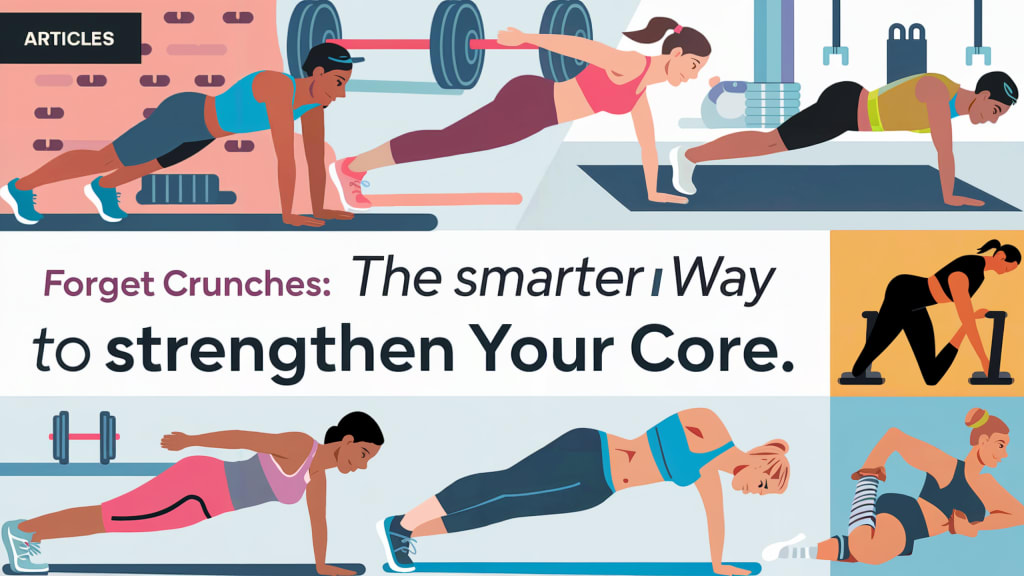
Now, listen up, ladies and gentlemen, because I’m going to tell you something that might change the way you think about those muscles that line your midsection. Yes, I’m talking about the “core muscles,” the ones that most people think of as just those six-pack abs that athletes show off when they take their shirts off in movies. Let me tell you—core muscles are much more. They’re like the hidden engine that keeps everything in place, helping you stand, walk, and even breathe without you even realizing it.
But, as with most things in life, we tend to mess up the simple things. We run after the outside and forget the substance. We want to look like those guys on magazine covers, but we ignore the fact that our core muscles keep us from falling flat on our faces when we try to tie our shoes. Yes, they are that important!
What are core muscles? Let me explain.
The core muscles aren’t just that long muscle that runs from your chest to your pelvis, which looks like a “six-pack” when you’re skinny enough to see it. No! The core muscles are a complex group of muscles that surround your entire midsection. They include your lateral abdominal muscles, your pelvic floor, your lower back, and even your diaphragm—yes, the muscle that helps you breathe! Together, these muscles form a support system that’s like a belt that keeps you from collapsing like a cardboard tower when you’re trying to lift a heavy box or even when you bend over to pick up a dropped pen.
Why are core muscles important? Because they keep you from falling flat on your face!
Let me be honest: if your core muscles are weak, you’re in trouble. Whether you’re walking, running, playing soccer, or even trying to reach the cookie jar on the top shelf, your core muscles are what keep everything in place. They keep you from collapsing like a rag doll when you try to make a move.
Take balance, for example. Have you ever tried to stand on one foot? If you feel like you’re about to fall, it’s because your core muscles aren’t strong enough to stabilize your body. Or imagine walking on an uneven surface, like a field full of potholes. If your core muscles are strong, you’ll be able to maintain your balance without tripping. But if they’re weak, you’ll find yourself on the ground looking up at the sky and wondering how that happened.
Movement in all directions: Because life isn’t a straight line
Now, listen to this: your core muscles aren’t just for stability. They’re also for flexibility and movement. Imagine trying to reach something in the back seat of your car. If your core muscles are stiff, you’ll feel like you’re trapped in a cage. But if they’re flexible and strong, you’ll be able to turn around easily and reach whatever you want without feeling like you’re about to explode.
This applies to almost everything. Whether you’re playing tennis, golfing, or even trying to lift a heavy bag, your core muscles are what allow you to move smoothly and powerfully. Without them, your movements would be limited, and you’d be more susceptible to injury. And let’s be honest, no one wants to end up in the doctor’s office because they tried to lift a cardboard box.
Plank: Because life isn’t straightforward, this exercise isn’t straightforward either!
Now, let’s talk about the exercises. Most people think that traditional crunches (the ones called “crunches”) are the only way to strengthen your abs. But let me tell you a little secret: crunches are only a small part of the story. They isolate the rectus abdominis (yes, the one that looks like a six-pack), but they ignore the rest of your core.
Instead, try the plank. This simple (but not easy!) exercise activates all of your core muscles, from your deep obliques to your obliques and lower back. Here’s how to do it:
Start on your hands and knees, with your wrists directly under your shoulders.
Step back one at a time until your legs are straight and your body forms a diagonal line from your head to your heels.
Activate your core by exhaling and moving your ribs back and down. Don’t let your hips sag or your back arch.
Hold this position for 20 to 30 seconds at first, then rest for 10 to 15 seconds between reps. Repeat two to three times.
If the traditional plank is too demanding on your wrists or shoulders, you can modify it by placing your elbows on the floor instead of your hands. If extending your legs is too hard, you can get down on your knees. The key is to keep your core engaged.
Why plank? Because it’s an all-around exercise!
Plank isn’t just a static exercise. You can add dynamic moves to it to enhance strength and flexibility. For example, you can try the “side plank” with a reach and rotation motion. This exercise challenges your balance and builds the strength of your obliques.
Core muscles aren’t just for athletes.
Finally, I want to remind you that strong core muscles aren’t just for athletes or those who want to be on magazine covers. They’re essential for everyone. Whether you’re holding your baby, trying to lift a box, or even sitting at your desk all day, your core muscles are what keep everything in place.
So, instead of spending hours in the gym, take a few minutes each day to train your core muscles. Over time, you’ll notice that you move more easily, feel less pain, and become stronger in your daily life. And that, my friends, is the real goal.
We’ve talked about core muscles in a sarcastic and wise way at the same time. Remember: life is short, so let’s make it stronger!
About the Creator
Pedro Wilson
Passionate about words and captivated by the art of storytelling.
Keep reading
More stories from Pedro Wilson and writers in Longevity and other communities.
Fish and Omega-3: The Secret to Longevity and a Sharp Mind
Since the dawn of time, fish has been a source of food and wonder for humans. Today, with all the health and environmental concerns, fish is more than a snack. It’s apparently the key to a longer life and a sharper mind. Yes, dear reader, those fatty acids called omega-3s that hide in fish meat may be nature’s secret to improving brain health.
By Pedro Wilsonabout a year ago in Longevity
Microsoft's Purposeful Marketing Deception About AI's Ability To Beat Physicians In Diagnosis
When you look at the world of scientific research... If you are not careful... You will be fooled into believing things that are not actually supported by the data.
By Dr. Cody Dakota Wooten, DFM, DHM, DAS (hc)a day ago in Longevity
🍓 8 Best Fruits for Pregnant Women
Pregnancy is a time when nutrition becomes more important than ever. What a mother eats during these months directly supports the growth and development of her baby. Among the many healthy foods recommended during pregnancy, fruits stand out as one of the easiest and most nutritious options.
By Being Inquisitive5 days ago in Longevity
Top tipple tricks
Been thinking a lot about drinking, lately. Not least because of a recent episode of over-indulgence and the inevitable after effects. Some readers may recall the earlier articles I wrote about beating the booze. Here I set out an experiment in techniques for cutting down on my alcohol intake. The experiment was successful, the techniques worked, and I have armed myself with an arsenal of weapons in the war against the demon drink. I have yet to fire the first round however. It's all a question of timing (perhaps procrastination).
By Raymond G. Taylor7 days ago in Psyche



Comments
There are no comments for this story
Be the first to respond and start the conversation.