
Concierge Medicine Market Size and Forecast 2025–2033
How Personalized Healthcare Is Reshaping the Global Medical Landscape

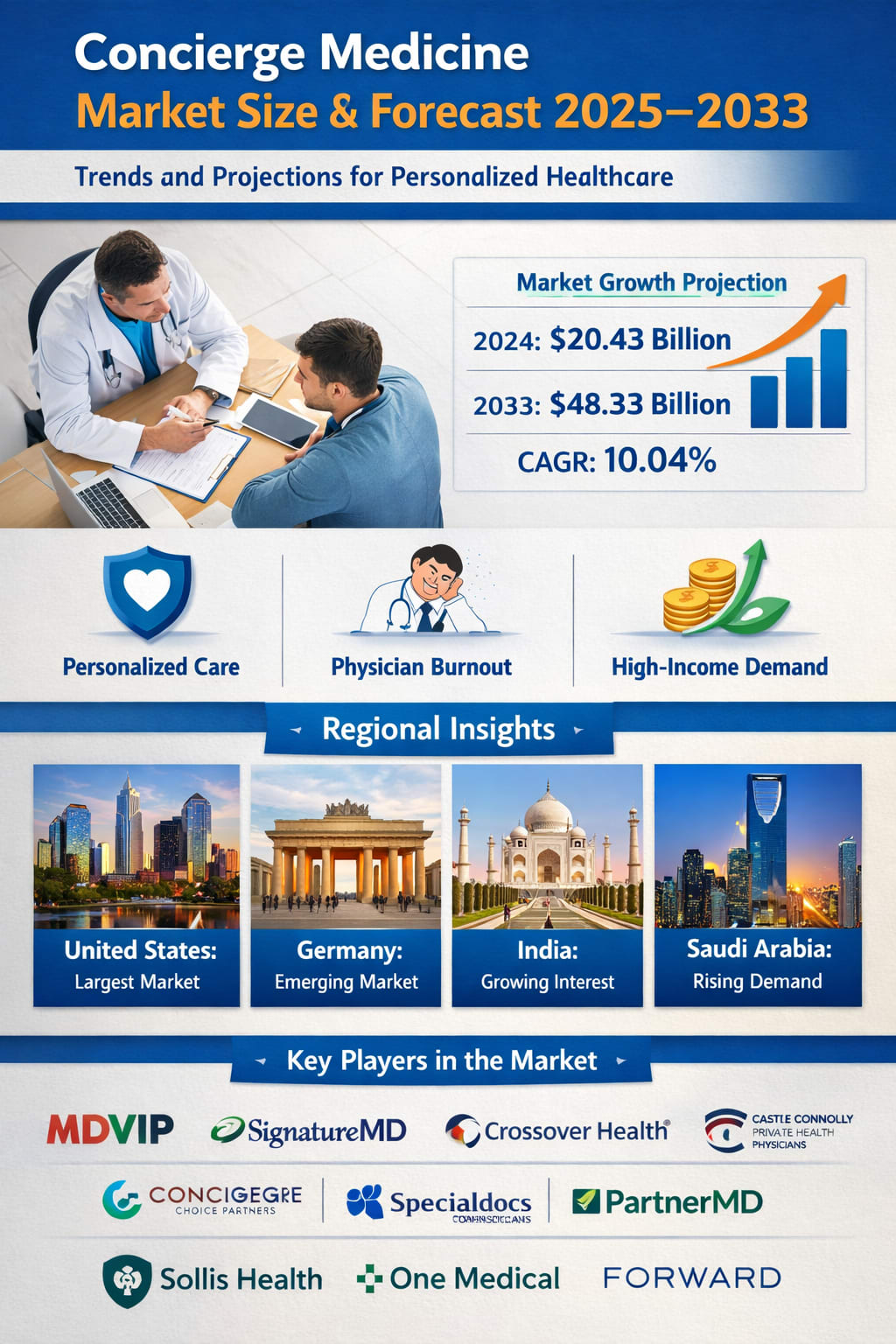
Concierge Medicine Market Outlook: A New Era of Personalized Care
The global healthcare system is undergoing a profound transformation as patients increasingly seek care that is not only effective but also personal, accessible, and proactive. In this evolving landscape, concierge medicine has emerged as one of the fastest-growing healthcare models worldwide.
According to Renub Research, the Concierge Medicine Market is expected to reach US$ 48.33 billion by 2033, up from US$ 20.43 billion in 2024, growing at a robust CAGR of 10.04% from 2025 to 2033. This rapid expansion reflects widespread dissatisfaction with conventional healthcare systems and a rising demand for individualized, physician-led care.
Concierge medicine operates on a membership or retainer-based model, allowing patients direct access to physicians, longer appointment times, same-day visits, preventive care planning, and 24/7 communication. For many patients, this model represents a return to relationship-driven medicine—one that prioritizes quality over quantity.
As healthcare systems across the world struggle with physician shortages, administrative overload, and fragmented patient experiences, concierge medicine is increasingly seen as a sustainable and premium alternative.
Global Concierge Medicine Industry Overview
The concierge medicine industry is expanding rapidly due to a growing emphasis on patient experience, preventive health, and continuity of care. Unlike traditional healthcare models that rely on high patient volumes and insurance reimbursements, concierge medicine focuses on smaller patient panels and deeper physician–patient relationships.
Patients benefit from:
Longer, unrushed appointments
Proactive health monitoring
Same-day or next-day visits
Direct physician access via phone or digital platforms
Personalized wellness and preventive care plans
Physicians, on the other hand, benefit from reduced burnout, predictable revenue streams, and greater clinical autonomy. This dual advantage is one of the primary reasons the concierge model is gaining global traction.
North America currently dominates the market, supported by a strong private healthcare system and higher disposable incomes. However, Europe, Asia-Pacific, and the Middle East are emerging as important growth regions, driven by rising health awareness and premium healthcare demand.
Digital health tools, telemedicine platforms, and remote monitoring technologies are further enhancing the scalability of concierge care, making it more accessible and efficient than ever before.
Key Factors Driving Concierge Medicine Market Growth
Growing Demand for Preventive and Personalized Medical Care
Modern healthcare consumers are no longer satisfied with short consultations and reactive treatment models. Instead, they want healthcare that is preventive, personalized, and continuous.
Concierge medicine enables physicians to focus on early detection, lifestyle modification, and long-term wellness planning. Patients with chronic diseases, high-stress lifestyles, or wellness-focused goals are especially drawn to this model, as it empowers them to take control of their health rather than simply react to illness.
As healthcare systems worldwide shift from volume-based to value-based care, concierge medicine aligns perfectly with this transition by offering measurable improvements in patient satisfaction and outcomes.
Physician Burnout and Systemic Challenges in Traditional Healthcare
Physician burnout is a global crisis. Overcrowded clinics, administrative paperwork, and time constraints are pushing many doctors to reconsider traditional practice models.
Concierge medicine offers a compelling alternative by allowing doctors to drastically reduce their patient panels, spend more time per visit, and build meaningful relationships with patients. The membership-based model also provides financial stability and reduces dependency on insurance reimbursements.
As more physicians seek sustainable practice models that prioritize care quality and work-life balance, concierge medicine continues to gain momentum as a viable solution.
Growth in High-Income and Health-Conscious Populations
The rise in affluent, health-conscious populations—especially in urban areas—has significantly boosted demand for concierge medicine. Busy professionals, executives, and retirees are increasingly willing to pay for premium healthcare that saves time and delivers personalized attention.
Rising lifestyle-related illnesses, such as diabetes, cardiovascular disease, and stress disorders, have also increased demand for proactive care. Concierge medicine appeals strongly to this demographic by offering continuity of care, advanced diagnostics, and customized wellness plans.
As disposable incomes grow in emerging economies, the concierge model is expected to expand beyond traditional high-income markets.
Challenges in the Concierge Medicine Market
High Costs and Limited Accessibility
Despite its benefits, concierge medicine remains expensive and inaccessible to much of the global population. Membership fees can range from hundreds to thousands of dollars annually and are often not covered by insurance.
This creates concerns around healthcare equity, as concierge medicine is primarily accessible to affluent individuals. Without integration into employer-sponsored health plans or insurance frameworks, widespread adoption remains limited.
Regulatory and Ethical Concerns
Concierge medicine operates in a regulatory gray area in many countries. Issues such as physician licensing, insurance compatibility, and taxation of membership fees remain unclear in several regions.
Critics also argue that reduced patient panels may worsen physician shortages in traditional healthcare systems. Ethical debates around prioritizing care based on ability to pay continue to challenge the model’s broader acceptance.
Resolving these regulatory and ethical issues will be critical for the long-term sustainability and expansion of concierge medicine.
Concierge Medicine Market Overview by Regions
United States Concierge Medicine Market
The United States remains the largest and most mature concierge medicine market globally. Rising dissatisfaction with traditional healthcare—characterized by long wait times and short visits—has driven patients toward membership-based models.
The U.S. market benefits from:
A strong private healthcare system
High physician burnout driving practice transitions
Demand from affluent individuals and professionals
Advanced digital health infrastructure
However, high costs and limited insurance coverage remain barriers to mass adoption.
Germany Concierge Medicine Market
Germany’s concierge medicine market is still in its early stages, largely due to its strong universal healthcare system. However, affluent patients and executives are increasingly turning to private concierge services to avoid long wait times and limited physician availability.
Urban centers such as Berlin, Munich, and Frankfurt are emerging hubs for premium healthcare services. While regulatory and cultural factors slow adoption, rising health awareness and medical tourism support niche growth.
India Concierge Medicine Market
India’s concierge medicine market is emerging, fueled by rising incomes, urbanization, and expanding private healthcare infrastructure. High-net-worth individuals and corporate professionals in cities like Mumbai, Delhi, and Bangalore are driving demand for personalized, convenient healthcare.
While affordability and awareness remain challenges, India’s booming digital health ecosystem and growing focus on preventive care present strong long-term growth potential.
Saudi Arabia Concierge Medicine Market
Saudi Arabia’s concierge medicine market is gaining traction, supported by the government’s Vision 2030 healthcare modernization initiative. Demand is growing among affluent citizens and expatriates seeking premium, personalized care.
Riyadh and Jeddah are the main hubs for concierge services, offering extended consultations, preventive care, and direct physician access. While regulatory hurdles and awareness remain challenges, ongoing healthcare investments signal strong future growth.
Recent Developments in the Concierge Medicine Industry
March 2025: One Medical announced a leadership change 18 months after its acquisition by Amazon, indicating a potential strategic shift in its concierge healthcare approach.
February 2025: Elite Concierge Medicine and Cort Eagle LLC signed a lease for a new 1,105-square-foot medical facility in West Orange, New Jersey, expanding access to membership-based care.
April 2024: Global law firms reported increased healthcare transactions in Asia-Pacific, reflecting growing investor confidence in premium outpatient and concierge healthcare models.
These developments highlight strong investor interest and expanding infrastructure across global markets.
Market Segmentation Overview
By Ownership
Group Practices
Standalone Practices
By Application
Primary Care
Internal Medicine
Pediatrics
Cardiology
Osteopathy
Psychiatry
Others
Regional Outlook
North America: United States, Canada
Europe: France, Germany, Italy, Spain, United Kingdom, Belgium, Netherlands, Turkey
Asia-Pacific: China, Japan, India, South Korea, Thailand, Malaysia, Indonesia, Australia, New Zealand
Latin America: Brazil, Mexico, Argentina
Middle East & Africa: Saudi Arabia, UAE, South Africa
Leading Companies in the Concierge Medicine Market
The global concierge medicine market is highly competitive and includes both standalone practices and large-scale providers. Key players include:
MDVIP
SignatureMD
Crossover Health
Castle Connolly Private Health Partners
Concierge Choice Physicians
Specialdocs Consultants
PartnerMD
Sollis Health
One Medical
Forward
Each of these companies is focusing on technology integration, geographic expansion, and enhanced patient experience to strengthen market presence.
Final Thoughts: The Future of Concierge Medicine
The concierge medicine market is no longer a niche concept—it is rapidly becoming a defining feature of modern healthcare delivery. As patients demand more personalized, accessible, and preventive care, concierge medicine offers a compelling solution to the shortcomings of traditional systems.
While challenges related to cost, regulation, and equity remain, the model’s benefits for both patients and physicians ensure continued momentum. With advancements in telehealth, digital monitoring, and preventive medicine, concierge care is poised to become an integral part of the global healthcare ecosystem.
As the market grows toward US$ 48.33 billion by 2033, concierge medicine stands as a powerful symbol of healthcare’s shift toward quality, personalization, and patient-centered care.
About the Creator
Sakshi Sharma
Content Writer with 7+ years of experience crafting SEO-driven blogs, web copy & research reports. Skilled in creating engaging, audience-focused content across diverse industries.
Keep reading
More stories from Sakshi Sharma and writers in Longevity and other communities.
Global Commercial Drone Market Size and Forecast 2025–2033
Introduction: The Rise of Commercial Drones in the Global Economy The Global Commercial Drone Market is entering a phase of rapid transformation, driven by technological innovation, expanding industrial use cases, and supportive regulatory frameworks. According to Renub Research, the market is expected to grow from US$ 29.76 billion in 2024 to US$ 68.58 billion by 2033, registering a Compound Annual Growth Rate (CAGR) of 9.72% from 2025 to 2033.
By Sakshi Sharmaabout 2 hours ago in The Swamp
Day 4 of Quitting
If this is how sobriety feels, maybe it’s better to go through life a little buzzed… this, along with other hits like, I want to kill myself, I wish I was dead, and I’m going to throw myself off a bridge have been the only thoughts on rotation these past few days. I promise myself that if, in a month, I still feel like this (‘this’ meaning despondent, full of rage, and simultaneously numb) I can go back to smoking. Until mid-February though? Nicotine is off the table.
By sleepy drafts24 days ago in Longevity
Poland’s Energy Grid Targeted by Never-Before-Seen Wiper Malware
How cyberattacks are threatening critical infrastructure and national security Poland’s energy grid has recently come under attack from a never-before-seen wiper malware, marking one of the most serious cybersecurity incidents targeting the country’s critical infrastructure. While officials report that the attack did not cause widespread blackouts, the incident underscores the growing threat of cyber warfare against essential services such as electricity, water, and telecommunications. Experts warn that attacks on energy grids are increasingly sophisticated and could have devastating consequences if preventive measures are not implemented rapidly. What Is Wiper Malware? Wiper malware is a type of malicious software designed to erase data and disrupt systems. Unlike traditional ransomware, which seeks financial gain, wiper malware is often used to sabotage infrastructure, making it particularly dangerous for utilities and national security. Key characteristics of wiper malware include: Data destruction: Deletes critical files and system backups System disruption: Can render computers or networks inoperable Stealth operations: Often hides its activity to delay detection The malware targeting Poland’s grid is reported to be novel, indicating it was designed specifically for this operation rather than reusing existing malicious tools. Details of the Attack Polish cybersecurity authorities detected unusual activity in the energy grid’s control systems, which manage electricity distribution across the country. Key points include: Malware targeted operational technology (OT) systems, which control physical infrastructure No major power outages have been reported so far, thanks to rapid containment measures Authorities are conducting a full forensic investigation to understand the malware’s origin, design, and potential impact Officials emphasize that prevention and monitoring played a critical role in minimizing the attack’s effects. Cybersecurity Experts Weigh In Experts on industrial cybersecurity warn that this incident demonstrates how critical infrastructure is increasingly vulnerable to digital attacks: Targeted design: The malware appears to be tailored for energy systems, suggesting state-sponsored or highly skilled attackers Global pattern: Energy grids, water supplies, and hospitals worldwide have been targeted in recent years Need for resilience: Authorities stress the importance of redundant systems, real-time monitoring, and cyber drills “This is a wake-up call for all countries relying on digital networks to run essential services,” said a leading cybersecurity analyst. “The potential damage could range from temporary blackouts to major national crises.” Impact on National Security Energy grids are considered critical national infrastructure, and attacks on them can have far-reaching effects: Economic disruption: Power outages could affect industries, banking, and transportation Public safety: Hospitals, traffic control, and emergency services rely on electricity Political implications: Cyberattacks may be used as tools of coercion or influence in geopolitical conflicts Poland’s government has increased cyber defense measures, coordinating with NATO allies and private sector partners to strengthen resilience and deter future attacks. Global Concerns About Cyber Warfare The attack highlights a growing trend in international cyber conflict, where digital tools are used as weapons alongside traditional military strategies. Global experts point out: Cyberattacks on energy systems are more frequent and sophisticated than ever Some malware, like the one used in Poland, is designed to avoid detection while causing maximum disruption Nations are investing heavily in cyber defense, artificial intelligence monitoring, and threat intelligence sharing In the past, similar attacks have targeted countries such as Ukraine, the United States, and Saudi Arabia, demonstrating that no nation is immune. Preventive Measures and Response Poland’s response to the malware attack includes: Isolating infected systems to prevent spread Conducting real-time scans and forensic investigations Coordinating with international cybersecurity teams for threat analysis Strengthening security protocols, employee training, and backup systems Authorities also emphasize public reassurance, stating that power supply and public safety have not been compromised despite the attack. The Road Ahead The incident in Poland underscores the urgent need for countries to: Invest in advanced cybersecurity for critical infrastructure Develop national response plans for cyber emergencies Collaborate internationally to share intelligence and mitigate threats As energy systems become increasingly digitized and interconnected, governments must balance efficiency and security to protect citizens from digital disruptions. Conclusion Poland’s energy grid attack by never-before-seen wiper malware is a stark reminder of the growing risks facing modern infrastructure. While immediate damage was contained, the event highlights the potential consequences of cyber warfare, from economic disruption to public safety risks. Experts stress that robust cybersecurity measures, international cooperation, and continuous vigilance are essential to defend critical systems. As nations digitize their energy, water, and communication networks, incidents like this serve as a wake-up call: cyber threats are no longer hypothetical—they are a present and pressing danger.
By Fiaz Ahmed 6 days ago in Longevity




Comments
There are no comments for this story
Be the first to respond and start the conversation.