
Poland’s Energy Grid Targeted by Never-Before-Seen Wiper Malware
A new malware attack highlights vulnerabilities in Poland’s energy infrastructure


How cyberattacks are threatening critical infrastructure and national security
Poland’s energy grid has recently come under attack from a never-before-seen wiper malware, marking one of the most serious cybersecurity incidents targeting the country’s critical infrastructure. While officials report that the attack did not cause widespread blackouts, the incident underscores the growing threat of cyber warfare against essential services such as electricity, water, and telecommunications.
Experts warn that attacks on energy grids are increasingly sophisticated and could have devastating consequences if preventive measures are not implemented rapidly.
What Is Wiper Malware?
Wiper malware is a type of malicious software designed to erase data and disrupt systems. Unlike traditional ransomware, which seeks financial gain, wiper malware is often used to sabotage infrastructure, making it particularly dangerous for utilities and national security.
Key characteristics of wiper malware include:
Data destruction: Deletes critical files and system backups
System disruption: Can render computers or networks inoperable
Stealth operations: Often hides its activity to delay detection
The malware targeting Poland’s grid is reported to be novel, indicating it was designed specifically for this operation rather than reusing existing malicious tools.
Details of the Attack
Polish cybersecurity authorities detected unusual activity in the energy grid’s control systems, which manage electricity distribution across the country.
Key points include:
Malware targeted operational technology (OT) systems, which control physical infrastructure
No major power outages have been reported so far, thanks to rapid containment measures
Authorities are conducting a full forensic investigation to understand the malware’s origin, design, and potential impact
Officials emphasize that prevention and monitoring played a critical role in minimizing the attack’s effects.
Cybersecurity Experts Weigh In
Experts on industrial cybersecurity warn that this incident demonstrates how critical infrastructure is increasingly vulnerable to digital attacks:
Targeted design: The malware appears to be tailored for energy systems, suggesting state-sponsored or highly skilled attackers
Global pattern: Energy grids, water supplies, and hospitals worldwide have been targeted in recent years
Need for resilience: Authorities stress the importance of redundant systems, real-time monitoring, and cyber drills
“This is a wake-up call for all countries relying on digital networks to run essential services,” said a leading cybersecurity analyst. “The potential damage could range from temporary blackouts to major national crises.”
Impact on National Security
Energy grids are considered critical national infrastructure, and attacks on them can have far-reaching effects:
Economic disruption: Power outages could affect industries, banking, and transportation
Public safety: Hospitals, traffic control, and emergency services rely on electricity
Political implications: Cyberattacks may be used as tools of coercion or influence in geopolitical conflicts
Poland’s government has increased cyber defense measures, coordinating with NATO allies and private sector partners to strengthen resilience and deter future attacks.
Global Concerns About Cyber Warfare
The attack highlights a growing trend in international cyber conflict, where digital tools are used as weapons alongside traditional military strategies.
Global experts point out:
Cyberattacks on energy systems are more frequent and sophisticated than ever
Some malware, like the one used in Poland, is designed to avoid detection while causing maximum disruption
Nations are investing heavily in cyber defense, artificial intelligence monitoring, and threat intelligence sharing
In the past, similar attacks have targeted countries such as Ukraine, the United States, and Saudi Arabia, demonstrating that no nation is immune.
Preventive Measures and Response
Poland’s response to the malware attack includes:
Isolating infected systems to prevent spread
Conducting real-time scans and forensic investigations
Coordinating with international cybersecurity teams for threat analysis
Strengthening security protocols, employee training, and backup systems
Authorities also emphasize public reassurance, stating that power supply and public safety have not been compromised despite the attack.
The Road Ahead
The incident in Poland underscores the urgent need for countries to:
Invest in advanced cybersecurity for critical infrastructure
Develop national response plans for cyber emergencies
Collaborate internationally to share intelligence and mitigate threats
As energy systems become increasingly digitized and interconnected, governments must balance efficiency and security to protect citizens from digital disruptions.
Conclusion
Poland’s energy grid attack by never-before-seen wiper malware is a stark reminder of the growing risks facing modern infrastructure. While immediate damage was contained, the event highlights the potential consequences of cyber warfare, from economic disruption to public safety risks.
Experts stress that robust cybersecurity measures, international cooperation, and continuous vigilance are essential to defend critical systems. As nations digitize their energy, water, and communication networks, incidents like this serve as a wake-up call: cyber threats are no longer hypothetical—they are a present and pressing danger.
About the Creator
Fiaz Ahmed
I am Fiaz Ahmed. I am a passionate writer. I love covering trending topics and breaking news. With a sharp eye for what’s happening around the world, and crafts timely and engaging stories that keep readers informed and updated.
Keep reading
More stories from Fiaz Ahmed and writers in Longevity and other communities.
This 7,000-Year-Old Stone Wall Found off the Coast of France May Be the Work of Hunter-Gatherers—and It’s Tearing Archaeology in Two
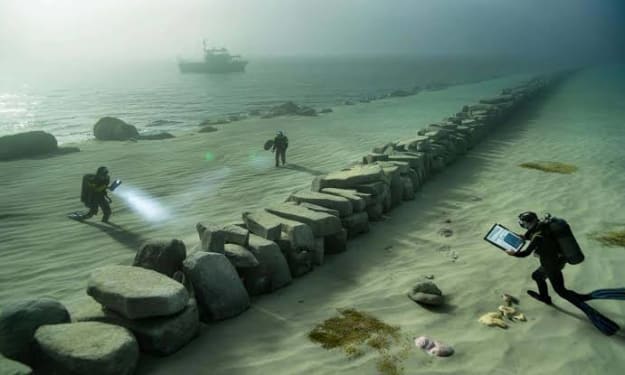
A mysterious underwater structure challenges long-held beliefs about early human societies A remarkable discovery off the coast of France is forcing archaeologists to rethink what they know about early human history. Beneath shallow coastal waters lies a 7,000-year-old stone wall, carefully arranged and stretching across the seabed. What makes this find so controversial is not just its age, but who may have built it. Some researchers believe the wall was constructed by hunter-gatherers, a claim that challenges one of archaeology’s most established ideas: that large stone structures only appeared after humans adopted farming and permanent settlements. The debate has divided experts and opened a new chapter in understanding prehistoric societies. The Discovery Beneath the Sea The stone wall was discovered off the French coastline during underwater surveys conducted by marine archaeologists. Made of stacked stones arranged in a deliberate, linear pattern, the structure clearly shows signs of human design rather than natural formation. Radiocarbon dating of nearby organic material suggests the wall dates back around 7,000 years, a time when much of today’s coastline was dry land. Rising sea levels after the last Ice Age gradually submerged the area, preserving the structure underwater for thousands of years. What archaeologists found was not random debris. The stones were placed with care, forming a barrier that appears too organized to be accidental. Why the Wall Is So Controversial The controversy centers on one major question: Who built it? Traditional archaeological thinking holds that hunter-gatherers lived in small, mobile groups. They are believed to have left behind tools, campsites, and art—but not large-scale stone constructions. Monumental building has long been associated with farming societies, which had stable food supplies and permanent settlements. If hunter-gatherers built this wall, it would suggest they were: More organized than previously believed Capable of long-term planning Able to coordinate labor for large projects This challenges the idea that agriculture was required for complex construction. Arguments Supporting the Hunter-Gatherer Theory Some archaeologists argue that the evidence strongly supports hunter-gatherer involvement. Timing At the time the wall was built, farming had not yet fully spread to the region. This makes agricultural builders unlikely. Location The wall sits in what was once a coastal landscape, rich in marine life. Hunter-gatherers often lived near coastlines, relying on fishing and foraging. Purpose Researchers suggest the wall may have been used to trap fish, manage tidal flows, or mark territory. Such uses align well with hunter-gatherer lifestyles, especially coastal communities known for complex fishing techniques. Supporters argue that hunter-gatherers have long been underestimated, and this discovery may reveal a more sophisticated social structure than previously acknowledged. Skepticism Within the Archaeological Community Not all experts are convinced. Critics argue that labeling the wall as hunter-gatherer work may be premature. Some key objections include: The structure could be younger than estimated, built later by early farming groups Natural processes might have influenced the wall’s shape There is limited evidence of nearby settlements linked directly to the structure Skeptics warn against rewriting history based on a single find, urging further excavation and analysis before drawing major conclusions. Why This Debate Matters This discovery goes beyond a stone wall—it strikes at the heart of how archaeologists understand human development. If hunter-gatherers built the structure, it would mean: Social complexity existed earlier than thought Large cooperative projects did not depend on farming The transition from foraging to farming was more gradual and diverse It would also add to a growing list of discoveries worldwide suggesting that prehistoric societies were far more adaptable and innovative than once believed. Rising Seas and Lost Histories The find also highlights the importance of underwater archaeology. As sea levels rose after the Ice Age, many ancient coastal settlements were submerged and forgotten. Experts believe countless sites like this remain hidden beneath the oceans. These drowned landscapes could hold key evidence about early human life, migration, and innovation. Advances in sonar mapping and diving technology are now allowing researchers to explore these areas more thoroughly, potentially uncovering more discoveries that challenge existing narratives. What Comes Next Researchers plan to: Conduct deeper surveys around the wall Search for tools, campsites, or organic remains Use improved dating techniques to confirm the structure’s age Until more evidence is collected, the debate is likely to continue. Some archaeologists see the wall as proof of early human ingenuity, while others remain cautious. What is certain is that the discovery has already changed the conversation. Conclusion The 7,000-year-old stone wall off the coast of France is more than an underwater curiosity—it is a challenge to long-held assumptions about early human societies. Whether built by hunter-gatherers or early farmers, the structure reveals that prehistoric people were capable of greater planning and cooperation than once believed. As archaeology continues to move beyond land-based discoveries, finds like this remind us that history is not fixed. Sometimes, a single wall beneath the sea is enough to divide experts—and bring us closer to understanding our shared past.
By Fiaz Ahmed about 6 hours ago in Longevity
Day 4 of Quitting
If this is how sobriety feels, maybe it’s better to go through life a little buzzed… this, along with other hits like, I want to kill myself, I wish I was dead, and I’m going to throw myself off a bridge have been the only thoughts on rotation these past few days. I promise myself that if, in a month, I still feel like this (‘this’ meaning despondent, full of rage, and simultaneously numb) I can go back to smoking. Until mid-February though? Nicotine is off the table.
By sleepy drafts18 days ago in Longevity
Hoodia: Once a Miracle Now a Mirage
A Miracle from the Desert? The Kalahari Desert in southern Africa is not the most hospitable place to live in. The vast region is arid and hot throughout most of the year, and the vegetation is sparse. Still, it is here where a particular plant that captured the attention of several dietary companies throughout the world.
By Dean Traylor7 days ago in Longevity


Comments
There are no comments for this story
Be the first to respond and start the conversation.