
Global Commercial Drone Market Size and Forecast 2025–2033
How Commercial Drones Are Redefining Agriculture, Infrastructure, Logistics, and Public Safety Worldwide


Introduction: The Rise of Commercial Drones in the Global Economy
The Global Commercial Drone Market is entering a phase of rapid transformation, driven by technological innovation, expanding industrial use cases, and supportive regulatory frameworks. According to Renub Research, the market is expected to grow from US$ 29.76 billion in 2024 to US$ 68.58 billion by 2033, registering a Compound Annual Growth Rate (CAGR) of 9.72% from 2025 to 2033.
Once limited to aerial photography and surveillance, commercial drones have evolved into indispensable tools across agriculture, infrastructure inspection, energy, logistics, security, and disaster management. Businesses worldwide are adopting drones to cut costs, improve safety, collect real-time data, and increase operational efficiency. As regulations mature and automation accelerates, drones are becoming a core component of modern industrial ecosystems.
Global Commercial Drone Market Outlook
A commercial drone, also known as an Uncrewed Aerial Vehicle (UAV), is an aircraft that operates without a human pilot onboard and is designed for professional and industrial applications. These drones are equipped with advanced cameras, LiDAR, GPS, sensors, AI-powered software, and autonomous navigation systems that enable them to perform complex tasks efficiently.
Unlike consumer drones, commercial drones are purpose-built for business applications such as crop analysis, site surveying, pipeline inspection, emergency response, and parcel delivery. Their ability to collect high-resolution data from difficult-to-access areas has made them essential across multiple industries.
North America, Europe, and Asia-Pacific currently dominate drone adoption due to high technological readiness and proactive regulatory reforms. However, emerging economies in Latin America, the Middle East, and Africa are quickly catching up as governments recognize the strategic value of drones in national development.
Key Growth Drivers in the Commercial Drone Market
Technological Advancements and Innovation
Continuous innovation is at the heart of commercial drone market growth. Advances in battery technology, obstacle avoidance systems, AI-driven flight control, and high-resolution imaging have significantly expanded drone capabilities. Modern drones now offer longer flight times, heavier payload capacity, and improved safety, making them suitable for large-scale industrial operations.
AI and machine learning integration allows drones to autonomously detect anomalies, analyze data, and optimize routes. In August 2024, U.S.-based Rotor Technologies unveiled the world’s two largest commercial drones—Airtruck and Sprayhawk, derived from the Robinson R44 helicopter airframe—designed for cargo lifting and agricultural spraying. Such breakthroughs are redefining what commercial drones can achieve.
Rising Demand in Agriculture and Infrastructure
Agriculture remains one of the most impactful sectors for drone adoption. Farmers increasingly rely on drones for crop health monitoring, precision spraying, irrigation analysis, and yield estimation. These applications reduce resource waste and boost productivity, especially in large-scale farms.
Similarly, infrastructure projects benefit immensely from drone-based surveying and inspection. Drones enable faster site assessments, progress tracking, and safety monitoring at construction sites, bridges, railways, and pipelines. In July 2025, DJI launched its Agras T100, T70P, and T25P drones globally, featuring fully autonomous agricultural operations and industry-standard safety systems—highlighting the accelerating adoption in both farming and infrastructure sectors.
Supportive Government Regulations
Governments worldwide are building structured regulatory frameworks to support commercial drone operations. Authorities such as the FAA (United States) and EASA (Europe) have simplified licensing processes and clarified airspace rules, enabling broader industrial adoption.
By 2025, France had fully integrated EU drone directives, introducing CE classifications and stricter safety standards while allowing increased commercial use. These harmonized regulations reduce uncertainty, encourage investment, and foster long-term market growth across regions.
Challenges in the Commercial Drone Market
Regulatory and Airspace Restrictions
Despite progress, inconsistent drone regulations across countries remain a major challenge. Some regions still enforce strict no-fly zones, weight limits, and pilot certification requirements, complicating cross-border operations. Privacy and security concerns also slow adoption, particularly in urban and residential areas. Until global regulatory alignment improves, large-scale deployment may remain fragmented.
High Initial Investment and Maintenance Costs
Commercial-grade drones require substantial upfront investment. Hardware costs, software subscriptions, operator training, insurance, and maintenance add to the total cost of ownership. For small and medium enterprises, these expenses can delay adoption unless clear returns on investment are demonstrated. However, as prices decline and leasing models expand, these barriers are expected to ease.
Market Segmentation Analysis
2 Kg – 25 Kg Commercial Drone Segment
This weight category dominates the market due to its versatility. Drones in this range offer the ideal balance between payload capacity and flight duration, making them suitable for mapping, inspection, surveillance, and delivery. Regulatory approval is easier in most countries, making this the most widely adopted segment globally.
Commercial Drone Software Market
Software has become the backbone of drone operations. Advanced platforms manage flight control, data processing, AI analytics, and cloud-based storage. As industries increasingly rely on data-driven decisions, drone software is evolving into a high-growth sub-market, significantly contributing to overall revenue.
Rotary Blade Commercial Drone Market
Rotary blade drones lead commercial usage due to their vertical take-off and landing (VTOL) capabilities, stable hover, and maneuverability in confined spaces. They are ideal for infrastructure inspection, agriculture, and public safety applications. Their operational flexibility continues to drive strong demand globally.
Semi-Autonomous Commercial Drone Market
Semi-autonomous drones offer a blend of automation and human control, making them attractive to businesses transitioning toward fully autonomous systems. These drones reduce pilot fatigue, enhance safety, and ensure operational consistency, particularly in agriculture, real estate, and media industries.
Key Application Areas Driving Market Expansion
Mapping and Surveying
Drone-based mapping is faster, safer, and more cost-effective than traditional surveying methods. Equipped with LiDAR, thermal, and multispectral sensors, drones deliver high-precision geographic data for mining, urban planning, and infrastructure monitoring.
Delivery and Logistics
Drones are transforming last-mile delivery by enabling fast, contactless transportation of small packages. Companies like Amazon and UPS are expanding drone fleets to improve efficiency in urban and rural areas. As regulations evolve, drone logistics will play a key role in future supply chains.
Security and Law Enforcement
Law enforcement agencies increasingly deploy drones for surveillance, crowd control, disaster response, and search-and-rescue operations. Thermal imaging and real-time video feed capabilities make drones invaluable tools for public safety, driving consistent market growth in this segment.
Regional Insights: Commercial Drone Market by Country
United States
The U.S. leads the global commercial drone market due to strong innovation, clear regulations under FAA Part 107, and high industrial demand. Silicon Valley startups, defense contractors, and logistics giants continue to push the boundaries of drone technology.
Germany
Germany’s market is driven by infrastructure inspection, agriculture, and smart city projects. Strong engineering expertise and EASA-backed regulations have positioned Germany as a European hub for advanced drone manufacturing and software development.
India
India is emerging as one of Asia’s fastest-growing commercial drone markets. Government initiatives like Digital Sky and Production Linked Incentives (PLI) have accelerated adoption across agriculture, mining, and infrastructure. Startups and domestic manufacturers are playing a critical role in market expansion.
Brazil
Brazil’s vast agricultural landscape makes it a high-potential drone market. Drones are widely used for crop monitoring, spraying, and land surveys. Regulatory improvements by ANAC are further boosting commercial drone adoption across the country.
Saudi Arabia
Saudi Arabia’s Vision 2030 strategy has fueled major investments in drone technology. Drones are being deployed for oil & gas inspection, smart city development, and public safety. Mega-projects like NEOM are accelerating demand for advanced UAV solutions.
Competitive Landscape: Key Players in the Global Commercial Drone Market
The market is highly competitive, with global and regional players focusing on innovation, partnerships, and product launches. Each company has been evaluated across five viewpoints: overview, key personnel, recent developments, SWOT analysis, and revenue analysis.
Key Players Include:
Aeronavics Ltd.
AeroVironment Inc.
Autel Robotics
Delair
Insitu Inc. (The Boeing Company)
Leptron Unmanned Aircraft Systems Inc.
PrecisionHawk Inc.
SenseFly (AgEagle Aerial Systems)
Skydio Inc.
Yuneec International
Final Thoughts: The Future of Commercial Drones Is Just Taking Off
The commercial drone market is no longer an emerging trend—it is a foundational technology reshaping how industries operate. From farms and factories to cities and disaster zones, drones are delivering efficiency, safety, and data-driven insights at unprecedented scale.
With Renub Research forecasting the market to reach US$ 68.58 billion by 2033, the next decade will witness deeper integration of drones into global business operations. As AI, automation, and regulatory support advance, commercial drones will become essential infrastructure for the digital economy.
For businesses, governments, and innovators alike, the sky is no longer the limit—it’s just the beginning.
About the Creator
Sakshi Sharma
Content Writer with 7+ years of experience crafting SEO-driven blogs, web copy & research reports. Skilled in creating engaging, audience-focused content across diverse industries.
Keep reading
More stories from Sakshi Sharma and writers in The Swamp and other communities.
Global Combine Harvesters Market Size & Forecast 2025–2033
Introduction The global agriculture sector is undergoing a powerful transformation, driven by mechanization, technology adoption, and the urgent need to increase food production. At the center of this transformation stands the combine harvester—a machine that has revolutionized how crops are harvested worldwide.
By Sakshi Sharmaabout 4 hours ago in Trader
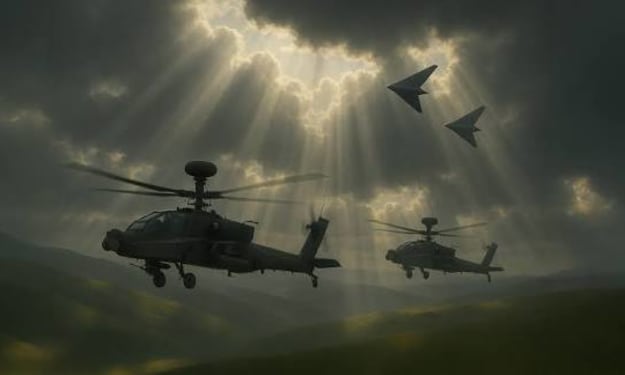
UK Selects Firms for Apache Wingman Drone Programme
New collaboration aims to enhance military capability with autonomous drone support The United Kingdom has officially announced the selection of companies to participate in its Apache wingman drone programme, a significant step in modernizing the nation’s defense capabilities. The programme is designed to pair autonomous drones with manned helicopters, providing advanced support for reconnaissance, surveillance, and combat missions. The move reflects a broader trend in modern warfare, where unmanned systems are increasingly integrated with traditional platforms to improve efficiency, flexibility, and safety on the battlefield. What Is the Apache Wingman Drone Programme? The Apache wingman programme is part of a UK initiative to create loyal wingman drones capable of operating alongside manned Apache helicopters. These drones are designed to fly in coordination with pilots, sharing data, detecting threats, and even carrying out precision strikes if needed. Unlike conventional drones, wingman drones are specifically intended to augment human operators rather than replace them. By providing additional surveillance, electronic warfare capabilities, and combat support, these drones increase the operational effectiveness of manned aircraft while reducing risk to personnel. Selected Firms and Their Roles The Ministry of Defence (MoD) has not disclosed all details publicly, but several leading aerospace and defense companies have been chosen to contribute to the programme. Their responsibilities include: Designing autonomous flight systems for seamless integration with Apache helicopters Developing AI-enabled decision support to assist pilots during high-intensity missions Testing payloads such as sensors, communications, and potentially weapon systems Ensuring cybersecurity and resilience in contested environments Officials emphasized that collaboration between government and private industry is crucial to deliver cutting-edge technology efficiently while maintaining strict safety and compliance standards. Why This Programme Matters The Apache wingman initiative addresses several modern military challenges: Force Multiplication – Wingman drones allow fewer human pilots to cover more territory and engage multiple threats simultaneously. Risk Reduction – Drones can take on the most dangerous tasks, such as scouting hostile areas or confronting anti-aircraft threats, reducing the exposure of pilots. Rapid Adaptability – Autonomous systems can respond quickly to changing battlefield conditions, relaying intelligence to manned aircraft and command centers. Technological Edge – Integrating AI-driven drones ensures the UK remains competitive in an era where unmanned platforms are increasingly central to military strategy. Military analysts note that programmes like Apache wingman are part of a global shift toward human-machine teaming, which combines the judgment and adaptability of humans with the speed and precision of autonomous systems. How Wingman Drones Operate Wingman drones are designed to operate in tightly coordinated formations with manned helicopters. Using secure communications networks, the drones can: Scan areas ahead for threats or targets Share real-time intelligence with the pilot and command centers Execute defensive maneuvers automatically if danger is detected Conduct electronic warfare tasks such as jamming enemy radar Operators maintain control over key decisions, especially those involving the use of weapons. This approach ensures that while drones act autonomously, human oversight remains central, addressing ethical and operational concerns. Global Context and Comparisons Several countries, including the United States, Australia, and Germany, are exploring similar “loyal wingman” programmes. These initiatives reflect a strategic interest in combining manned and unmanned platforms to strengthen airpower while managing operational risk. The UK’s programme demonstrates that it is committed to maintaining technological parity with allies and potential adversaries. By investing in domestic firms and fostering innovation, the country hopes to reduce dependency on foreign systems and retain control over critical defense technologies. Ethical and Strategic Considerations While wingman drones offer clear military advantages, they also raise important questions: Autonomy and decision-making – How much independence should drones have in high-risk situations? Civilian safety – Ensuring systems can distinguish between combatants and non-combatants is critical. International regulations – Emerging norms around autonomous weapons are still evolving, requiring careful oversight. The UK Ministry of Defence has stated that all operations will comply with international humanitarian law and that human pilots will retain authority over lethal engagements. Next Steps for the Programme The selected firms will now enter a phase of design, development, and testing, with milestones including prototype flights, system integration, and operational evaluation. The MoD anticipates that the programme will continue to expand over the coming years, with additional drones and updated capabilities being introduced as technology advances. Military analysts suggest that the Apache wingman programme could serve as a model for future UK air combat systems, integrating AI, robotics, and human-machine teaming across other platforms as well. Conclusion The UK’s Apache wingman drone programme represents a major step forward in modern military strategy. By combining autonomous drones with manned helicopters, the country is investing in flexibility, efficiency, and safety for future combat operations. While technical, ethical, and operational challenges remain, the programme highlights a global trend toward human-machine collaboration in defense. For the UK, the selected firms’ contributions could pave the way for a new generation of advanced air combat systems, ensuring the nation remains at the forefront of military technology.
By Fiaz Ahmed 7 days ago in The Swamp
Trump Seeks a Softer Tone as Minneapolis Shooting Backlash Intensifies
In the latest chapter of a political and social crisis gripping Minneapolis and much of the United States, former President Donald Trump and his administration are facing unprecedented backlash over the fatal shooting of a civilian by federal immigration agents. At the center of the controversy is the death of Alex Pretti, a 37‑year‑old registered nurse, whose killing has triggered widespread condemnation, political criticism from both sides of the aisle, and mounting pressure on Trump to recalibrate his approach. �
By Ayesha Lashari4 days ago in The Swamp



Comments
There are no comments for this story
Be the first to respond and start the conversation.