
Benefits of Spending Time in Nature for Mental Well-Being
Reconnecting with Nature, Reconnecting with Yourself


Ever feel like the weight of the world is crushing you? Like your thoughts are a tangled mess, and you just can't seem to find a moment of peace? You're not alone. In today's fast-paced world, mental well-being can often take a backseat. But what if the solution was simpler than you thought? What if it was as close as your nearest park or forest? Let's dive into the incredible benefits of spending time in nature for your mental health.
Reducing Stress and Anxiety
First off, spending time in nature is a powerful stress reliever. Specifically, when you step outside and immerse yourself in greenery, your body's stress response begins to calm down. Indeed, studies have shown that exposure to natural environments lowers cortisol levels, the hormone associated with stress. Furthermore, the simple act of breathing fresh air can significantly reduce anxiety. In addition, the natural sounds of birds chirping, leaves rustling, and water flowing act as a soothing balm for a troubled mind. You'll find yourself feeling more relaxed and grounded. Therefore, if you're feeling overwhelmed, try taking a walk in a park or sitting under a tree.
Boosting Mood and Emotional Resilience
Moreover, nature has a remarkable ability to uplift your mood. Consequently, exposure to sunlight increases serotonin production, a neurotransmitter that plays a crucial role in regulating mood and happiness. Additionally, the visual beauty of nature, with its vibrant colors and intricate patterns, can trigger positive emotions. For instance, a breathtaking sunset or a field of wildflowers can evoke feelings of awe and wonder. Subsequently, these experiences can lead to a greater sense of emotional resilience, helping you better cope with life's challenges. Thus, make it a point to regularly connect with nature to cultivate a more positive outlook.
Enhancing Cognitive Function
Furthermore, spending time in nature can sharpen your cognitive abilities. For example, research indicates that nature walks can improve attention span and memory. In particular, the "attention restoration theory" suggests that natural environments allow your brain to recover from mental fatigue. As a result, you'll find yourself more focused and productive after spending time outdoors. Also, nature provides a break from the constant stimulation of technology, allowing your mind to rest and recharge. Therefore, if you need a mental boost, ditch the screen and head outside. Spending time outdoors can be incredibly beneficial.
Promoting Mindfulness and Connection
Additionally, nature encourages mindfulness. For instance, when you're surrounded by the sights, sounds, and smells of the natural world, you're more likely to be present at the moment. Nature provides a sensory-rich experience that grounds you in the present. Moreover, spending time in nature can foster a deeper connection with yourself and the world around you. Subsequently, you may feel a greater sense of belonging and interconnectedness. Thus, take time to truly observe and appreciate the natural beauty around you. For example, try a mindful walk or a nature meditation. This connection to nature is a powerful tool for wellness.
Cultivating Well-Being: Embracing Nature's Healing Touch
Ultimately, the benefits of nature therapy and simply getting outside are undeniable. By prioritizing time in nature, you're investing in your mental well-being. Ultimately, it's about recognizing that we are part of nature, not separate from it. Therefore, let's make a conscious effort to reconnect with the natural world and reap the incredible rewards it has to offer. Finally, by embracing nature's healing touch, you can cultivate a more balanced, joyful, and resilient life.
Frequently Asked Questions
Q: I'm super busy. How much time in nature do I need to see benefits?
A: You don't need to become a full-time nature enthusiast! Even short bursts can make a difference. Studies suggest as little as 20-30 minutes a few times a week can significantly reduce stress and boost your mood. Think of it like a quick mental health recharge.
Q: I live in a city. Are there still benefits if I can't get to a "real" forest?
A: Absolutely! City parks, gardens, and even just a few trees on your street can have a positive impact. It's about connecting with any bit of green space you can find. Even looking at pictures of nature can provide some benefits!
Q: I'm not a big "outdoorsy" person. What if I don't like hiking or camping?
No worries! Spending time in nature doesn't have to be an extreme adventure. It can be as simple as:
- Take a walk in your neighborhood park.
- Sitting on a bench and reading a book under a tree.
- Have a picnic in your backyard.
- Gardening or tending to houseplants.
- Just sitting outside and listening to the birds.
Q: Can spending time in nature help with anxiety or depression?
A: While nature isn't a replacement for professional help, it can be a powerful tool in managing anxiety and depression. The calming effects of nature can reduce stress hormones, and exposure to sunlight can boost serotonin, which plays a role in mood regulation. It's best to use it in conjunction with other treatments.
Q: I work from home and rarely leave the house. How can I incorporate nature into my routine?
A: Great question! Here are a few ideas:
Take your lunch break outside.
- Open your windows to let in fresh air and natural light.
- Place plants around your workspace.
- Go for a walk before or after work.
- Try to find a park within walking distance you can go to on breaks.
Q: Does the type of nature I experience matter?
A: Generally, any form of nature is beneficial. However, research suggests that "wilder" environments, like forests or natural parks, may have a greater impact on stress reduction. But again, any contact is good contact.
Q: Can kids benefit from spending time in nature too?
A: Absolutely! Kids can benefit even more! Nature helps with their cognitive development, reduces stress, and encourages physical activity. It also fosters a sense of wonder and curiosity.
Q: What about spending time in nature during the winter?
A: Even in winter, you can reap the benefits. Bundle up and enjoy a walk in the snow, or simply observe the winter landscape from a window. The fresh, cold air can be invigorating, and the quiet beauty of winter can be very calming.
Q: Can I combine exercise and nature?
A: Yes, combining physical activity and nature is a fantastic way to boost both your physical and mental health. Go for a run or bike ride in a park, or try outdoor yoga.
About the Creator
A wildflower in California reveals a newly documented evolutionary process
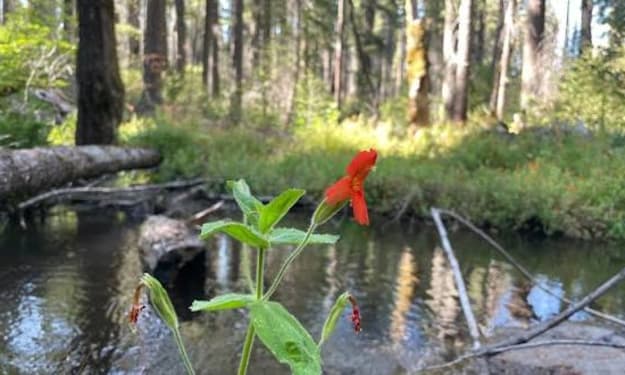
In a remarkable breakthrough for evolutionary biology, researchers studying wildflower populations in California have documented one of the clearest cases yet of rapid genetic evolution occurring in nature. The findings, centered on the bright red scarlet monkeyflower (Mimulus cardinalis), reveal how some plant populations were able to adapt and recover following the region’s most severe drought in over a millennium — providing tangible evidence of an evolutionary process known as evolutionary rescue. The scarlet monkeyflower, a wildflower native to moist areas along streams and springs in California, has long been familiar to botanists and hikers alike for its vivid blooms and distinctive habitat. However, during the early 2010s, California experienced an unprecedented megadrought that lasted several years, killing hundreds of millions of trees and dramatically altering the ecological landscape. While many plant species suffered catastrophic declines, some populations of Mimulus cardinalis showed a surprising resilience. Scientists from multiple institutions undertook a long‑term study to understand how this wildflower weathered such extreme conditions. Over eight years, researchers tracked 55 populations of the monkeyflower across its natural range, closely monitoring their numbers and health. They also conducted whole‑genome sequencing to observe genetic changes over time, looking for evidence that natural selection had acted on specific traits. The results were illuminating. At sites where populations had nearly collapsed — with numbers dropping by as much as 90% — genetic analysis revealed consistent shifts in allele frequencies across the genome. These shifts were not random; they were associated with traits that likely enhanced drought tolerance, enabling some individuals to survive and reproduce where others perished. As these “advantaged” genotypes became more common, the population as a whole began to recover, a hallmark of what biologists call evolutionary rescue. Evolutionary rescue occurs when the genetic variation present within a population allows it to adapt fast enough to avoid extinction under sudden environmental stress. While theoretical models have long predicted such processes, direct evidence in the wild—especially involving plants—has been limited. This study is among the first to document genomic changes in natural plant populations that are clearly linked to a major environmental crisis. For decades, evolutionary biologists have debated how quickly natural selection can operate in real‑world scenarios. Classic case studies like Darwin’s finches in the Galápagos have demonstrated adaptive changes in beak shape over a few generations. But plant studies have often lagged behind, in part because many species have long lifecycles or reproduce clonally, making rapid evolution harder to detect. The California wildflower case breaks new ground by combining long‑term fieldwork with cutting‑edge genomic analysis. Researchers noted that the recovery of the monkeyflower populations did not happen overnight — it took roughly two to three growing seasons for numbers to rebound significantly. Yet in evolutionary terms, this pace is considered rapid. The drought likely imposed intense selective pressure, filtering out less drought‑tolerant genotypes and leaving behind a smaller cohort better suited to the harsh conditions. As these were the individuals contributing more seeds to the next generation, their genetic traits spread through the population. The implications of this research extend beyond wildflowers. As climate change accelerates and extreme weather events become more frequent, scientists are increasingly interested in how species will respond — whether through behavioral changes, migration, or evolutionary adaptation. Cases like Mimulus cardinalis suggest that some species may harbor the genetic diversity necessary to adapt swiftly when environments change dramatically. However, not all species will be so fortunate, and the mechanisms of evolutionary rescue are still not fully understood. “This is one of the clearest cases we've seen where a wild plant species shows genomic evidence of adapting to extreme environmental stress,” said one of the study’s lead authors. “It gives us hope that under certain conditions, natural selection can work fast enough to help populations persist — but it also raises many questions about the limits of such adaptation.” The study’s methods also signal a new era in ecological research. By combining consistent field monitoring with high‑resolution genetic data, scientists can now track evolution as it happens rather than inferring processes from fossils or distant historical records. This “real‑time” view of evolution may become vital for conservation efforts, helping biologists identify which populations are most at risk and which may have the inherent capacity to adapt. For conservationists, the findings underscore both the resilience and vulnerability of natural ecosystems. While some populations like the scarlet monkeyflower demonstrate extraordinary adaptive potential, others with limited genetic diversity may face a greater threat of decline or extinction as climates shift. Understanding the genomic underpinnings of adaptation could therefore inform strategies to protect biodiversity in a warming world. As research progresses, scientists hope to explore similar evolutionary dynamics in other species and regions. The California wildflower study stands as a testament to the power of modern genomics and long‑term ecological research — and a reminder that evolution, far from being a slow, imperceptible force, can sometimes unfold before our eyes.
By Fiaz Ahmed 2 days ago in Longevity



Comments
There are no comments for this story
Be the first to respond and start the conversation.