
Why You Crave Junk Food When You’re Stressed
What Your Body Is Really Asking For


Have you ever noticed that during stressful weeks — especially around exams or deadlines — your cravings for junk food suddenly increase? Chips, sugary drinks, chocolate, instant noodles, and fast food start looking far more tempting than usual.
This is not simply a lack of discipline. In many cases, your body is responding to stress in a very biological way.
Understanding why these cravings happen can help you manage them better without feeling guilty.
Stress Changes Your Hormones
When you experience stress, your body releases a hormone called cortisol. Cortisol helps your body deal with pressure, but it also affects appetite.
Higher cortisol levels can increase hunger and make your brain search for quick sources of energy, particularly foods high in sugar, fat, or salt.
These foods provide fast calories that the body can use quickly. That’s why stressful situations often trigger cravings for highly processed snacks.
Unfortunately, the relief is usually temporary.
Sugar and the Temporary “Comfort” Effect
Sugary foods can briefly increase serotonin and dopamine levels in the brain. These chemicals are linked to feelings of pleasure and relaxation.
This is why eating something sweet can feel comforting when you’re overwhelmed or anxious.
However, this effect does not last long. Once blood sugar drops again, energy levels fall and mood may worsen. This cycle often leads to repeated cravings.
Over time, this pattern can leave students feeling both physically tired and emotionally frustrated.
Irregular Eating Makes Cravings Worse
Another factor is irregular meal timing.
Many students skip meals during busy days, then suddenly eat large portions later. When the body goes too long without food, blood sugar levels fall, which can trigger strong cravings for fast energy foods.
Regular meals help stabilize blood sugar and reduce the intensity of these cravings.
Including protein, complex carbohydrates, and fiber in meals can help keep you satisfied for longer.
Emotional Eating Is Very Common
Food is not only fuel — it is also connected to emotions. When people feel stressed, overwhelmed, lonely, or tired, eating can become a way to cope with those feelings.
This behavior is often called emotional eating.
It doesn’t mean someone lacks willpower. It simply means the brain is looking for comfort or relief.
Recognizing emotional eating patterns can help you respond more mindfully.
Smarter Ways to Handle Stress Cravings
Instead of trying to eliminate cravings completely, it’s more realistic to manage them with small adjustments.
Here are a few helpful strategies:
• Eat regular balanced meals throughout the day
• Include protein sources such as eggs, tofu, fish, or beans
• Drink enough water, as dehydration can sometimes mimic hunger
• Keep healthier snack options available, such as fruit, nuts, or yogurt
• Take short breaks during stressful study sessions
These small habits can help reduce extreme hunger and make food choices feel more balanced.
Balance Matters More Than Perfection
It’s important to remember that enjoying comfort foods occasionally is completely normal. Food should not become a source of guilt or anxiety.
What matters most is your overall eating pattern, not a single snack or meal.
When your body receives consistent nourishment, it becomes easier to manage cravings and maintain steady energy levels.
Stress is a natural part of student life, but understanding how your body reacts to it can help you respond in healthier ways.
Sometimes your body isn’t asking for junk food — it’s simply asking for fuel, rest, and a little care.
About the Creator
Being Inquisitive
As a nutrition student, I blog about food, mental wellness, and student health. Beyond nutrition, I also share thoughts on university life. It can be a way to share your passion and interests and to engage with like-minded individuals.
Keep reading
More stories from Being Inquisitive and writers in Longevity and other communities.
Healthy Eating on a Student Budget: A Realistic Weekly Guide
Being a student in Malaysia often comes with tight budgets, packed schedules, and unpredictable class timetables. But eating healthy food on a student budget in Malaysia doesn’t have to be impossible. With a little planning, local ingredients, and RM-based budgeting, you can enjoy cheap healthy meals in Malaysia while supporting your energy, focus, and overall health.
By Being Inquisitive5 days ago in Longevity
How China Is Challenging the U.S. to Become the Next Great Space Power
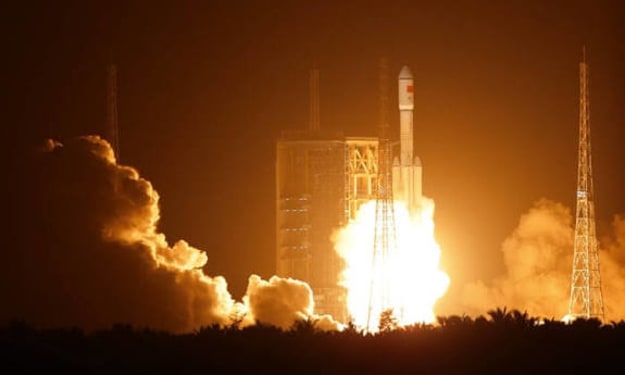
As Beijing’s space ambitions expand, Washington faces an intensifying geopolitical and technological rivalry in orbit and beyond. In the early decades of the 21st century, the United States long stood unchallenged as the dominant space power — a position built on decades of NASA leadership, unmatched launch capability, and a vibrant commercial space economy. But today, a determined China is mounting one of the most consequential strategic challenges in space since the Cold War, pushing to rival — and ultimately surpass — the U.S. in space influence, technology, and strategic advantage. National Strategy and Long‑Term Vision China’s leaders have openly signaled their ambition to become a global space powerhouse. Official space policy documents and state planning envision a broad array of capabilities — from heavy‑lift rockets to lunar exploration — aimed at reshaping the space order that has been U.S.‑dominated for decades. According to analyses of government planning, Beijing intends to establish a full suite of launch vehicles, satellites, and space infrastructure that could surpass current international norms by mid‑century. Underpinning this vision is a belief among Chinese space officials that self‑reliance and indigenous innovation are key to international competitiveness. Recent reports in state media emphasize that China’s aerospace industry is pushing far beyond imitation toward original technological breakthroughs in areas like rocket manufacturing, intelligent space systems, and advanced materials — all with the strategic goal of securing leadership in space. Commercial Space: From Government Giants to Private Innovators China’s rapid ascent isn’t limited to state space agencies. A growing ecosystem of private space companies — much like the commercial boom seen in the U.S. — has taken root, focusing on reusable rockets, satellite networks, and novel space services. A recent South China Morning Post report highlights Beijing’s push to encourage private innovation within its space sector, supporting technologies such as reusable launch vehicles, space debris monitoring, extraterrestrial resource utilization, and even in‑space biomanufacturing — fields long dominated by U.S. firms such as SpaceX or Blue Origin. This commercial expansion broadens China’s capabilities and compresses the technological gap with the U.S., challenging American assumptions that commercial innovation is exclusively an American forte. It also signals a shift in global space economics, where China may soon contend for commercial markets once dominated by Western companies. Military and Strategic Dimensions Alongside civil and commercial ambitions, China’s space strategy has clear military implications. U.S. strategic assessments note Beijing’s efforts to build counterspace capabilities — systems designed to deter, deny, or degrade another nation’s satellite operations — a key advantage in future conflicts. China has already deployed anti‑satellite weapons, jamming technologies, and sophisticated ground‑to‑space radar systems that could threaten U.S. space assets in a crisis. For the United States, which relies heavily on space systems for communication, navigation, and battlefield awareness, these capabilities represent a serious strategic challenge. Beijing’s ability to field space and counterspace technologies could blunt some of Washington’s military advantages in the Asia‑Pacific region and beyond. Lunar and Deep Space Objectives China’s Chang’e lunar exploration program is another marker of its space ambitions. With a series of increasingly complex robotic missions and plans for an International Lunar Research Station by the 2030s, Beijing aims to be a leading voice in lunar science and development — directly challenging the U.S. Artemis program and international partnerships spearheaded by NASA. � Wikipedia Missions like the strategically significant Queqiao‑2 communications relay satellite, which supports lunar missions over long distances, further demonstrate China’s growing sophistication in deep space operations and infrastructure deployment. U.S. Response: Maintaining Leadership Recognizing the challenge, U.S. policymakers are pushing legislative and strategic initiatives designed to preserve American competitiveness in space. A newly passed NASA authorization package includes provisions aimed at reinforcing U.S. lunar presence, strengthening Earth orbit assets, and countering Chinese influence in space science and technology — signaling a bipartisan consensus on the gravity of the space rivalry. A New Era of Cosmic Competition The emerging science and technological competition between China and the United States in space is unlike anything seen since the original Moon race. Today’s contest spans not only national prestige but military advantage, commercial opportunity, and scientific discovery. As each side pursues its vision of space dominance, the outcome will shape global power structures for decades to come — affecting diplomacy, security, and economic leadership both on Earth and beyond. If you’d like alternative versions, transcripts, or a set of headline + subtitle options for this topic, just let me know!
By Fiaz Ahmed 2 days ago in Longevity
3 Things to Do Before Bed for Better Blood Sugar, According to Dietitians
KEY POINTS To keep your blood sugar from spiking in the morning, what you do the night before matters. Eating a balanced snack, limiting screens and gently moving all support healthy blood sugar. Other ways to help your morning blood sugar include reducing alcohol and managing stress.
By Good health to everyone4 days ago in Longevity
The Piggy Project
I’ve had so many names in this life I lose track of which ones were ever really mine and which ones I wore because someone needed me to. Some were handed to me before I had words to refuse them, before I knew what they meant, before I knew I could say no. Most weren’t meant to hurt. That doesn’t mean they didn’t leave marks. Marks that told me who I belong to, who I am by way of who claims me, recognizes me in the good and bad, who walks beside me.
By Fatal Serendipity5 days ago in Confessions



Comments
There are no comments for this story
Be the first to respond and start the conversation.