
Australia Diagnostic Imaging Market Size and Forecast 2025–2033
Rising Demand for Early Diagnosis, AI-Driven Imaging, and Government Digital Health Initiatives Accelerate Market Expansion


Australia Diagnostic Imaging Market Overview
The Australia Diagnostic Imaging Market is projected to grow from US$ 733.95 million in 2024 to US$ 1,160.25 million by 2033, expanding at a CAGR of 5.22% during 2025–2033. This steady growth is being fueled by technological advancements in imaging equipment, rising prevalence of chronic diseases, increasing emphasis on early diagnosis, and strong government support for digital healthcare infrastructure.
Diagnostic imaging is a critical pillar of Australia’s healthcare system, enabling accurate disease detection, monitoring, and treatment planning. Services such as X-ray, CT scans, MRI, ultrasound, and nuclear imaging are widely used across public and private healthcare settings. With an aging population and rising burden of non-communicable diseases, imaging services have become indispensable for both preventive and curative care.
The market is also benefiting from the integration of AI-assisted imaging, 3D visualization, cloud-based data sharing, and tele-radiology solutions, which are transforming diagnostic accuracy and workflow efficiency. Medicare reimbursement for imaging procedures further strengthens demand, making diagnostic services accessible to a broad population base. Despite workforce shortages and regulatory complexities, the industry is positioned for sustained expansion through innovation and policy support.
Australia Diagnostic Imaging Industry Outlook
Australia’s diagnostic imaging industry operates within a highly regulated and quality-driven environment under the Diagnostic Imaging Accreditation Scheme (DIAS), ensuring patient safety and clinical effectiveness. The industry includes large corporate networks such as I-MED Radiology Network, Sonic Healthcare, and Capitol Health, alongside independent regional providers.
Urban centers like Sydney, Melbourne, and Brisbane dominate imaging service availability, offering advanced MRI, PET-CT, and AI-enabled diagnostic solutions. However, rural and remote regions continue to face challenges in access and staffing. To address this gap, the Australian government is promoting mobile imaging units, tele-radiology services, and digital health connectivity through My Health Record.
The increasing adoption of precision medicine is reshaping diagnostic imaging, especially in oncology, neurology, and cardiology, where imaging data plays a vital role in tailoring treatment strategies. The combination of strong demand fundamentals, technological progress, and healthcare funding ensures long-term growth for Australia’s diagnostic imaging market.
Key Factors Driving the Australia Diagnostic Imaging Market Growth
Rising Prevalence of Chronic and Age-Related Diseases
Australia’s aging population is a major growth driver for diagnostic imaging services. Chronic diseases such as cancer, cardiovascular disorders, musculoskeletal conditions, diabetes, and neurological illnesses require frequent imaging for early detection, monitoring, and treatment evaluation. Older patients undergo imaging procedures more often, increasing the overall demand across hospitals and diagnostic centers.
In oncology, imaging plays a central role in screening, tumor staging, and therapy monitoring. Cardiovascular imaging is essential for identifying blockages, structural abnormalities, and post-treatment assessment. As lifestyle-related diseases rise, imaging services remain at the core of preventive healthcare, making this segment one of the strongest demand contributors.
A notable development occurred in March 2025, when Body Vision Medical received TGA approval for its LungVision AI-powered intraoperative imaging system, marking a major step forward in early lung cancer detection in Australia. Such innovations highlight the increasing importance of AI-driven imaging solutions in disease diagnosis.
Strong Government Support and Medicare Reimbursement
Government funding and reimbursement policies significantly support the diagnostic imaging market. Medicare covers a wide range of imaging services, reducing out-of-pocket expenses and promoting early diagnosis. Bulk-billing initiatives further improve access for elderly populations and patients in rural areas.
The Australian government has also introduced new Medicare item numbers for advanced imaging procedures, encouraging adoption of modern diagnostic technologies. Funding for digital infrastructure upgrades, equipment modernization, and cybersecurity compliance has improved operational efficiency and data security across imaging facilities.
This strong public support ensures a stable revenue stream for imaging providers while improving healthcare accessibility nationwide.
Integration of Precision Medicine and Advanced Imaging
Diagnostic imaging is increasingly integrated with precision medicine, where treatments are tailored based on individual patient characteristics. Technologies such as PET-CT, functional MRI, and molecular imaging allow clinicians to detect diseases at the cellular level and monitor treatment responses in real time.
Imaging data is now combined with genetic testing, pathology, and electronic health records to support personalized care. This integration has accelerated investments in AI algorithms, machine learning tools, and cloud-based imaging platforms, improving diagnostic accuracy while reducing reporting time.
Radiologists are collaborating more closely with oncologists, cardiologists, and neurologists, positioning diagnostic imaging as a central decision-making tool in modern healthcare delivery.
Challenges in the Australia Diagnostic Imaging Market
Regulatory Burden and Accreditation Compliance
While DIAS ensures high standards of care, compliance requires continuous documentation, audits, and staff training, which can be resource-intensive, especially for smaller providers. Regular equipment calibration, policy updates, and quality assurance measures increase operational costs.
As imaging technologies evolve rapidly, providers must constantly upgrade systems and retrain staff to meet updated regulatory requirements. Maintaining compliance remains a key challenge for independent and regional imaging centers.
Digital Health Integration and Cybersecurity Risks
Integration with My Health Record and other digital health systems offers improved care coordination but requires significant investment in IT infrastructure. Many providers still use legacy systems that struggle with interoperability.
Additionally, imaging data is highly sensitive, requiring robust cybersecurity protocols, encryption, and secure transmission systems. Compliance with data protection laws adds cost and complexity, particularly for smaller clinics with limited technical expertise.
Australia Diagnostic Imaging Market Overview by States
New South Wales Diagnostic Imaging Market
New South Wales (NSW) leads the diagnostic imaging market due to its large population and advanced healthcare infrastructure. Sydney hosts numerous private and public imaging centers equipped with cutting-edge MRI, CT, and nuclear imaging systems. Integration with digital health platforms is improving workflow efficiency and report sharing across care providers. However, rural NSW still faces workforce shortages and limited service availability, driving investment in tele-radiology and mobile imaging solutions.
Victoria Diagnostic Imaging Market
Victoria has a well-developed diagnostic imaging ecosystem supported by strong public and private healthcare systems. Melbourne is home to advanced imaging facilities, including PET-CT and AI-enabled MRI systems. While urban access is excellent, rural Victoria continues to experience staffing challenges. Government investments in healthcare infrastructure and regional service expansion are improving statewide imaging access.
Queensland Diagnostic Imaging Market
Queensland’s diagnostic imaging market is expanding rapidly due to population growth and healthcare infrastructure development. Urban centers such as Brisbane and Mackay are adopting AI-assisted CT and MRI systems to enhance diagnostic accuracy. Regional hospitals are extending service hours and leveraging tele-radiology to improve accessibility. Despite progress, workforce shortages remain a challenge in remote areas.
Market Segmentation Analysis
By Product
X-Ray
CT
Ultrasound
Nuclear Imaging
Others
By Application
Orthopedics
Cardiovascular
Neurology
Pelvic & Abdomen
Oncology
By End User
Hospitals
Diagnostic Centers
Others
By States
New South Wales
Victoria
Queensland
Western Australia
South Australia
Australian Capital Territory
Tasmania
Northern Territory
Competitive Landscape and Company Analysis
The Australian diagnostic imaging market is highly competitive, with global and domestic players focusing on technology innovation, network expansion, and AI integration.
Key Companies Covered
FUJIFILM VisualSonics Inc.
Canon Medical Systems Corporation
Bruker Corporation
PerkinElmer Inc.
Hitachi
Hologic
RadNet
Koninklijke Philips
These companies invest heavily in R&D, digital imaging platforms, AI-assisted diagnostics, and cloud-based image management systems. Strategic partnerships with hospitals, acquisitions of regional imaging centers, and service diversification are common growth strategies.
Future Outlook of the Australia Diagnostic Imaging Market
The future of diagnostic imaging in Australia is shaped by AI, automation, and personalized medicine. AI-driven imaging tools will continue to reduce reporting times, improve accuracy, and optimize radiology workflows. Tele-radiology and mobile imaging units will bridge the urban-rural healthcare gap, ensuring equitable access.
Government investment in digital health, combined with Medicare reimbursement stability, will support long-term industry growth. As healthcare shifts toward preventive and personalized models, diagnostic imaging will remain at the center of clinical decision-making.
Final Thoughts
The Australia Diagnostic Imaging Market is on a strong growth trajectory, supported by rising healthcare demand, technological innovation, and robust government backing. With a projected market size of US$ 1.16 billion by 2033, the industry is evolving rapidly to meet the needs of an aging population and increasingly complex disease landscape.
While challenges such as workforce shortages, regulatory compliance, and digital integration persist, continued investments in AI, tele-radiology, and precision imaging technologies will ensure sustainable growth. Diagnostic imaging will remain a cornerstone of Australia’s healthcare system, driving better patient outcomes and more efficient care delivery in the years ahead.
About the Creator
Marthan Sir
Educator with 30+ years of teaching experience | Passionate about sharing knowledge, life lessons & insights | Writing to inspire, inform, and empower readers.
Keep reading
More stories from Marthan Sir and writers in Longevity and other communities.
Saudi Arabia Generic Drugs Market Size and Forecast 2025–2033
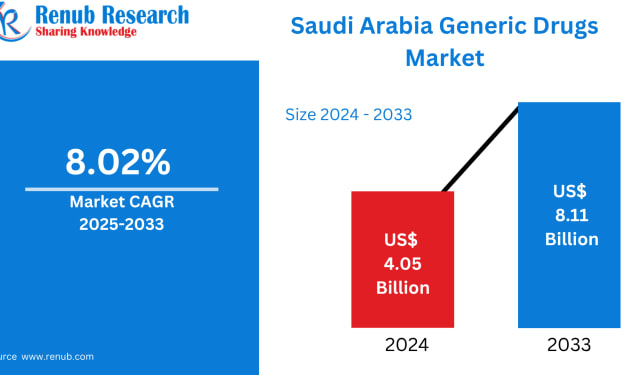
Saudi Arabia Generic Drugs Market Outlook The Saudi Arabia Generic Drugs Market is anticipated to grow to US$ 8.11 billion by 2033 from US$ 4.05 billion in 2024, expanding at a CAGR of 8.02% during 2025–2033. This growth is attributed to rising healthcare needs, proactive government efforts to curb pharmaceutical expenditure, and increasing awareness of cost-effective medication alternatives. Expanding domestic pharmaceutical manufacturing and regulatory support for generics are further strengthening the market’s long-term outlook.
By Marthan Sir5 days ago in Longevity
Day 4 of Quitting
If this is how sobriety feels, maybe it’s better to go through life a little buzzed… this, along with other hits like, I want to kill myself, I wish I was dead, and I’m going to throw myself off a bridge have been the only thoughts on rotation these past few days. I promise myself that if, in a month, I still feel like this (‘this’ meaning despondent, full of rage, and simultaneously numb) I can go back to smoking. Until mid-February though? Nicotine is off the table.
By sleepy drafts13 days ago in Longevity
How I Learned to Love My 600 Square Foot Apartment (And Make It Work!)
When "Cozy" Really Means "Tiny" When I first moved into my urban apartment three years ago, I stood in the middle of my 600 square feet and had a minor panic attack. Where would everything go? How could I fit a living room, bedroom, office, and dining area into what felt like a glorified closet?
By Usman Animaker5 days ago in Longevity


Comments
There are no comments for this story
Be the first to respond and start the conversation.