
Saudi Arabia Generic Drugs Market Size and Forecast 2025–2033
Affordable Medicine Takes Center Stage as Saudi Arabia Accelerates Healthcare Transformation


Saudi Arabia Generic Drugs Market Outlook
The Saudi Arabia Generic Drugs Market is anticipated to grow to US$ 8.11 billion by 2033 from US$ 4.05 billion in 2024, expanding at a CAGR of 8.02% during 2025–2033. This growth is attributed to rising healthcare needs, proactive government efforts to curb pharmaceutical expenditure, and increasing awareness of cost-effective medication alternatives. Expanding domestic pharmaceutical manufacturing and regulatory support for generics are further strengthening the market’s long-term outlook.
In an era where healthcare affordability and accessibility are becoming global priorities, Saudi Arabia’s pharmaceutical sector is undergoing a strategic transformation. Generic medicines—once perceived as secondary to branded drugs—are now emerging as a cornerstone of national healthcare policy. As the Kingdom works to modernize healthcare under Vision 2030, generic drugs are not only reducing treatment costs but also ensuring consistent access to essential therapies across public and private healthcare systems.
Saudi Arabia Generic Drugs Market Overview
Generic drugs are bioequivalent medications containing the same active ingredients, dosage strength, dosage form, and route of administration as their branded counterparts, but offered at significantly lower prices. Regulatory authorities only approve generics after strict bioequivalence testing, ensuring that they provide identical therapeutic outcomes. By reducing pharmaceutical costs, generics play a crucial role in expanding healthcare access and improving long-term sustainability.
In Saudi Arabia, the acceptance of generic medicines has grown rapidly over the past decade. The government’s objective of reducing dependency on imported branded drugs while optimizing healthcare expenditure has encouraged broader adoption of generics in public hospitals, insurance plans, and private clinics. The Saudi Food and Drug Authority (SFDA) has simplified approval processes and improved regulatory clarity, making the market more attractive to both local and international manufacturers. At the same time, growing awareness among patients and physicians about the safety and efficacy of generics is reshaping prescribing behavior.
As chronic diseases continue to rise and healthcare demand expands, generic medicines are positioned as a reliable and affordable alternative that aligns with national cost-containment goals. This structural shift places Saudi Arabia among the most promising pharmaceutical markets for generic drug development in the Middle East.
Growth Drivers in the Saudi Arabia Generic Drugs Market
Government Support and Cost Containment Initiatives
Healthcare affordability remains a strategic priority for Saudi Arabia. The government actively promotes generic drug usage to reduce pharmaceutical spending while maintaining quality of care. The SFDA has streamlined regulatory approval pathways, encouraged technology transfer, and promoted local manufacturing through policy reforms. Generic drugs are increasingly prioritized in public healthcare facilities and insurance reimbursement frameworks.
A notable regulatory step was the SFDA’s release of the draft initiative titled “Procedure to deal with patents when registering generic products in SFDA” in June 2022. By clarifying patent-related registration procedures, the authority created a more transparent environment for generic manufacturers, boosting investor confidence and accelerating market entry for new products. These initiatives continue to attract foreign pharmaceutical players seeking long-term participation in Saudi Arabia’s evolving healthcare ecosystem.
Increasing Incidence of Chronic Diseases
Saudi Arabia faces one of the highest rates of chronic diseases in the Middle East, including diabetes, cardiovascular disorders, respiratory illnesses, and obesity-related conditions. These diseases require long-term medication, making affordability a critical factor for both patients and healthcare providers.
In April 2025, Saudi Arabia reported a chronic disease prevalence of 32.15%, with diabetes mellitus, hypertension, and obesity ranking among the leading contributors to healthcare expenditure. Generic drugs provide an economically sustainable solution for managing such conditions without compromising clinical outcomes. As physicians increasingly prioritize treatment continuity and patient compliance, generics are becoming the preferred option for long-term therapy.
Expansion of Local Manufacturing Capabilities
Vision 2030 places strong emphasis on domestic pharmaceutical production to reduce import dependence and strengthen national healthcare security. Saudi Arabia has invested in modern manufacturing plants, biotech partnerships, and regulatory infrastructure to foster local drug development.
In January 2024, the Kingdom announced a national biotech strategy aimed at transforming Saudi Arabia into a global biotech hub within 16 years. This initiative is accelerating the development of high-quality generic and specialty pharmaceutical products. Local production not only shortens supply chains but also improves price stability, quality oversight, and regional export potential—positioning Saudi Arabia as a competitive pharmaceutical manufacturing center in the Middle East.
Challenges in the Saudi Arabia Generic Drugs Market
Public Perception and Brand Loyalty
Despite their proven effectiveness, generic drugs still face skepticism among some patients and healthcare professionals. Long-standing trust in international branded pharmaceuticals often leads to continued preference for originator drugs. Cultural perceptions regarding quality and efficacy, combined with physician familiarity with established brands, can slow the transition to generics.
Overcoming this barrier requires ongoing public education, physician engagement, and policy reinforcement. Government-led awareness campaigns emphasizing regulatory standards, bioequivalence, and cost benefits are essential to accelerating broader market acceptance.
Regulatory and Quality Control Complexity
Although the SFDA has simplified many processes, generic drug approval remains highly regulated. Manufacturers must demonstrate bioequivalence, comply with international Good Manufacturing Practices (GMP), and undergo rigorous inspections. These requirements demand significant technical expertise and financial resources, which can be challenging for smaller or emerging pharmaceutical firms.
In addition, maintaining consistent quality while preventing counterfeit products remains a key operational challenge. As the market grows, regulators and manufacturers must continue strengthening supply chain transparency and post-market surveillance to protect consumer confidence.
Market Segmentation Analysis
Saudi Arabia Simple Generic Drugs Market
Simple generics include drugs with straightforward formulations and conventional delivery mechanisms. They dominate the Saudi market due to ease of manufacturing, relatively lower regulatory complexity, and widespread usage in common therapeutic areas such as pain management, infections, and hypertension. Public hospitals and government healthcare programs extensively utilize these drugs, reinforcing their role in national cost-containment strategies. For new market entrants, simple generics offer a low-risk pathway to establish brand presence with minimal R&D investment.
Saudi Arabia Specialty Generic Drugs Market
Specialty generics target complex, high-cost treatments such as oncology, autoimmune disorders, and rare diseases. This segment is gaining momentum as the government seeks alternatives to expensive imported biologics. Although manufacturing requires advanced technological capabilities and regulatory expertise, specialty generics offer higher margins and significant healthcare savings. Collaborations between domestic manufacturers and global pharmaceutical firms are accelerating innovation in this space, positioning specialty generics as a strategic growth pillar.
Saudi Arabia Oral Generic Drugs Market
Oral dosage forms—tablets, capsules, and syrups—remain the most widely used drug delivery method due to convenience and patient compliance. Saudi Arabia’s robust manufacturing infrastructure supports large-scale oral drug production, making it cost-efficient for both producers and consumers. As outpatient care expands and chronic disease management becomes more prevalent, oral generics continue to capture a substantial share of prescriptions.
Saudi Arabia Respiratory Generic Drugs Market
Environmental factors such as dust exposure and smoking contribute to high rates of asthma and chronic obstructive pulmonary disease (COPD) in Saudi Arabia. Demand for affordable inhalers and respiratory therapies is rising rapidly. Although regulatory complexity and device design challenges exist, increasing health awareness and reimbursement support are expanding access to respiratory generics. Metered-dose inhalers, dry powder inhalers, and nebulized formulations are key growth areas.
Saudi Arabia Oncology Generic Drugs Market
Cancer treatment costs place significant financial pressure on healthcare systems. The oncology generics segment is growing as biosimilars and complex generics enter the market at reduced prices. Government healthcare funding, insurance coverage, and early-diagnosis initiatives are driving adoption. Hospitals increasingly incorporate oncology generics into treatment protocols, ensuring equitable access to advanced care regardless of patient income levels.
Saudi Arabia Online Generic Drugs Market
Digital healthcare transformation has accelerated the rise of online pharmacies and e-prescription platforms. Consumers benefit from price transparency, home delivery, and easy access to prescription generics. COVID-19 further normalized digital healthcare services, and with high smartphone penetration and a young population, online distribution is gaining traction—particularly in major cities such as Riyadh and Jeddah.
Regional Market Insights
Western Saudi Arabia Generic Drugs Market
Western Saudi Arabia, encompassing Jeddah, Mecca, and Medina, represents a major demand center due to population density and a strong healthcare infrastructure. Seasonal influxes of pilgrims drive periodic surges in pharmaceutical demand. Government investments in hospitals and manufacturing zones have improved generic drug availability, making the region a strategic growth hub aligned with national healthcare objectives.
Eastern Saudi Arabia Generic Drugs Market
Eastern regions including Dammam and Khobar benefit from industrial development, efficient logistics, and expanding healthcare facilities. Rising chronic disease prevalence, coupled with improved insurance coverage, is increasing generic drug utilization in both public and private hospitals. Proximity to ports and distribution networks enhances supply efficiency, supporting sustained market growth.
Market Segmentation Overview
By Type:
Simple Generics
Specialty Generics
Biosimilars
By Route of Administration:
Oral
Injections
By Therapeutic Area:
Infectious Diseases
Respiratory
Musculoskeletal Disorders
Oncology
Central Nervous System (CNS)
Cardiovascular
Others
By Distribution Channel:
Online Pharmacies
Retail Pharmacies
Hospital Pharmacies
By Region:
Northern and Central Region
Western Region
Eastern Region
Southern Region
Key Players Analysis
Major companies operating in the Saudi Arabia generic drugs market include:
Teva Pharmaceutical Industries Ltd.
Viatris Inc.
Sandoz Group AG
Sun Pharmaceutical Industries Ltd.
Cipla Ltd.
Aurobindo Pharma Ltd.
Lupin Ltd.
Hikma Pharmaceuticals PLC
STADA Arzneimittel AG
Dr. Reddy’s Laboratories Ltd.
Each company has been evaluated across five viewpoints: Overview, Key Personnel, Recent Developments, SWOT Analysis, and Revenue Analysis. Strategic partnerships, local manufacturing investments, and portfolio diversification remain central to competitive positioning.
Final Thoughts
Saudi Arabia’s generic drugs market is transitioning from a cost-saving alternative to a strategic healthcare pillar. With the market projected to grow from US$ 4.05 billion in 2024 to US$ 8.11 billion by 2033 at a CAGR of 8.02%, generics are reshaping pharmaceutical consumption across the Kingdom.
Government-led reforms, expanding local manufacturing, and rising chronic disease prevalence are creating a robust foundation for sustained growth. While challenges such as brand loyalty and regulatory complexity persist, continuous policy refinement and public awareness initiatives are accelerating market acceptance.
As Vision 2030 drives healthcare modernization, generic drugs will remain essential to achieving affordability, accessibility, and system-wide efficiency. For pharmaceutical manufacturers, investors, and healthcare providers alike, Saudi Arabia’s generic drugs market offers not only strong financial prospects but also a pivotal role in delivering inclusive, sustainable healthcare for the nation’s future.
About the Creator
Marthan Sir
Educator with 30+ years of teaching experience | Passionate about sharing knowledge, life lessons & insights | Writing to inspire, inform, and empower readers.
Keep reading
More stories from Marthan Sir and writers in Longevity and other communities.
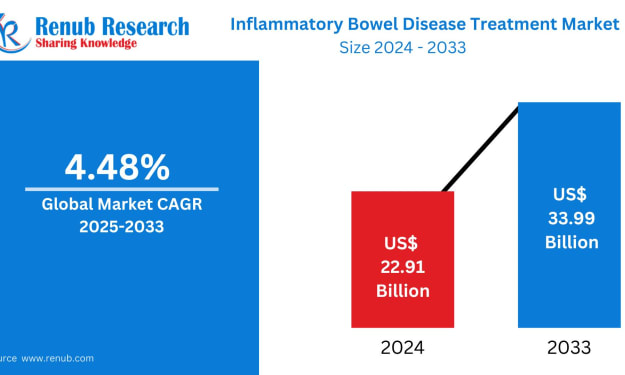
IBD Treatment Market Forecast and Size 2025–2033
Global IBD Treatment Market: Size, Growth, and the Forces Shaping the Next Decade The inflammatory bowel disease (IBD) treatment market is on a steady upward trajectory as innovation, awareness, and healthcare access converge across regions. Based on Renub Research estimates, the global IBD treatment market is expected to increase from approximately USD 22.91 billion in 2024 to about USD 33.99 billion by 2033, expanding at a CAGR of 4.48% between 2025 and 2033. This growth reflects the rising prevalence of IBD worldwide, the ongoing shift toward biologics and targeted therapies, and a broader push for early diagnosis and long-term disease management.
By Marthan Sir4 days ago in Longevity
Day 4 of Quitting
If this is how sobriety feels, maybe it’s better to go through life a little buzzed… this, along with other hits like, I want to kill myself, I wish I was dead, and I’m going to throw myself off a bridge have been the only thoughts on rotation these past few days. I promise myself that if, in a month, I still feel like this (‘this’ meaning despondent, full of rage, and simultaneously numb) I can go back to smoking. Until mid-February though? Nicotine is off the table.
By sleepy drafts11 days ago in Longevity
Bacterial Skin Infections
Introduction: When it comes to skin irritation, not every one of them is a simple rash. There are some bacteria that can enter the skin through tiny cuts and hair follicles. These bacteria include Staphylococcus aureus (Staph) or Streptococcus pyogenes (Strep) that can cause infections ranging from irritation and bothersome to dangerous.
By benjamin taylor5 days ago in Longevity
The Devil's Cut
“Comrade, finally you’re awake.” The voice was smooth, sensual. A flickering incandescent bar was all that lit the white, sterile room. All Vladimir remembered was everything going black. He tried to move his arms and found them strapped to the gurney.
By Matthew J. Fromm4 days ago in Fiction



Comments
There are no comments for this story
Be the first to respond and start the conversation.