
Are Seed Oils Really Bad for You? Experts Reveal the Truth Behind the Hype
Between Scientific Claims and Environmental Concerns: What You Need to Know About the Oils You Cook With

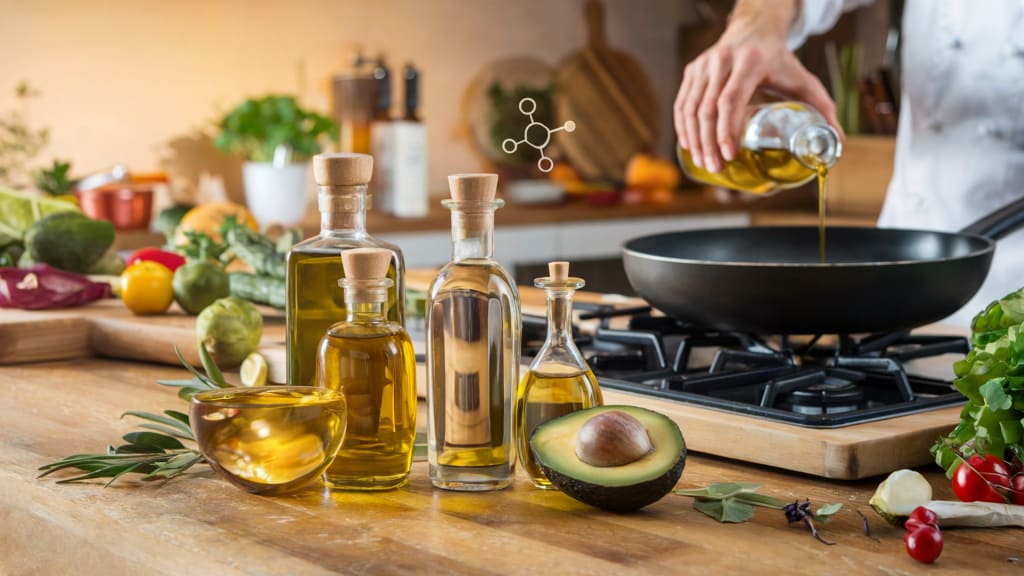
Are seed oils bad for you? Experts say we're missing the bigger picture.
Whether you prefer cooking with beef tallow or olive oil, nutritionists emphasize that choosing the healthiest cooking oil is less important than the meals you prepare with them.
If you scroll through TikTok or listen to a popular podcast, you might hear that certain types of cooking oils derived from seeds pose a significant threat to your health and the planet.
On the other hand, could the right olive oil be a miracle cure? And if you're concerned about the environment, you may have heard that you should avoid palm oil at all costs.
When it comes to health risks, many experts say the real problem is not always the oils themselves but the foods in which they are found. And when it comes to which oil is the most sustainable—well, that's complicated too.
How seed oil fears took over the internet
Since 2020, seed oils have been targeted by online bloggers and "food influencers" for their alleged toxicity. Critics insist that what they call the "hateful eight"—canola, corn, cottonseed, soybean, sunflower, safflower, grapeseed, and rice bran oils—cause inflammation and disease.
Some health influencers have even argued that animal-derived fats like beef tallow are healthier alternatives and easier for our bodies to digest.
The conversation about these oils and fats reached a broader audience after Robert F. Kennedy Jr. became President-elect Donald Trump's nominee to lead the Department of Health and Human Services. Kennedy has claimed that Americans are being "unknowingly poisoned" by seed oils.
As their name suggests, seed oils are extracted from the seeds of plants.
Sunflower, sesame, and canola oils are all seed oils. In contrast, olive and avocado oils are extracted from the whole fruits of their respective plants.
One concern raised by opponents is the use of a hydrocarbon called hexane during the production process.
After seeds are cracked, cooked, and dried, they are soaked in hexane, which extracts much of the oil. Hexane is made from crude oil, and when inhaled, it can cause numbness in the hands and feet. Studies on rodents have shown that prolonged exposure causes nerve damage, but research has yet to demonstrate any long-term human health risks.
Most hexane in oils is either recovered or lost to evaporation, but small amounts may remain. The European Union sets a maximum residue limit of 1 milligram of hexane per kilogram of cooking oil, but the U.S. Food and Drug Administration's listing of acceptable hexane limits in foods does not cover cooking oils.
Other concerns about omega-6 fatty acids
Another concern raised by seed oil critics is the presence of omega-6 fatty acids, particularly linoleic acid. Seed oils may contain between 40 and 70 grams of linoleic acid per 100 grams of oil, while olive oil generally contains less than 10 grams.
Critics argue that the issue with linoleic acid is that it can metabolize in the body into arachidonic acid, a fatty acid with unclear health effects.
What does the science say?
Seed oils do contain higher amounts of omega-6 fatty acids than olive or avocado oil, and they have higher ratios of omega-6 to omega-3, the latter often touted as the "good" fatty acid.
However, the impact of omega-6 fatty acids on the human body is not yet fully understood.
Judy Simon, a registered dietitian nutritionist at the University of Washington Medical Center, explains, "We have research showing that there is no relationship between omega-6 and inflammation, and in fact, arachidonic acid is also a building block for components that fight inflammation."
Indeed, a major 2017 study found that increased dietary intake of linoleic acid does not significantly affect inflammation. Other studies have found that linoleic acid consumption is associated with a reduced risk of cardiovascular disease and type 2 diabetes.
Furthermore, the American Heart Association notes that "the body needs" omega-6 fatty acids and that they help "reduce bad cholesterol, lowering the risk of heart disease and strokes."
There is also a wealth of evidence showing that the unsaturated fats in oils are less harmful to heart health than the saturated fats in beef tallow and lard.
Which oil is best for the planet?
Because production methods can vary significantly by producer, pinpointing one oil or fat as the most sustainable is complex, but research highlights some broad trends.
Palm oil, though not often used as a single ingredient by home cooks, is ubiquitous in packaged foods and soaps, and its production has led to the destruction of pristine rainforests and wetlands. However, a 2020 study found that coconut oil was equally, if not more, unsustainable by some metrics, adding that the public largely underestimated its impact.
Then there's the stark difference between livestock and crop production, with the greenhouse gas emissions, water usage, and pollution caused by livestock far surpassing the environmental footprint of vegetable crops.
One study compared five popular vegetable oils—from their cultivation as crops to the production process.
It found that rapeseed oil—produced from the rapeseed plant and similar to species like mustard and cabbage—had the lowest overall environmental impact.
Which oils are the healthiest?
The American Heart Association recommends replacing animal fats and tropical vegetable oils (such as palm and coconut oil) with non-tropical vegetable oils.
Research has also shown that olive oil contains elevated amounts of polyphenols, compounds with antioxidant properties. Studies show that the extra steps taken to produce extra-virgin olive oil yield oils with the highest polyphenol content.
But experts say concerned individuals should focus on their diets as a whole.
Megan Hollendonner, a clinical dietitian at University Hospitals Cleveland Medical Center, says, "We're cooking with these oils, not drinking them."
More importantly, she adds, is what we cook with them: because they are cheap and versatile, seed oils are the oils of choice in fast and processed foods, the consumption of which continues to rise.
These ultra-processed foods can harm the body and the brain, and research suggests they are as addictive as cigarettes.
Experts say that unhealthy food consumption, rather than seed oils specifically, is the real health issue consumers need to be wary of.
Simon says that when asked what the best oil to use is, she generally replies that if you can afford it, opt for avocado and extra-virgin olive oil, "because they are the highest in omega-3s and have been shown to have great health benefits."
That doesn't mean, she clarifies, that other oils are unhealthy; in fact, she says she has been "shocked" by the level of opposition to seed oils.
As for beef tallow: Simon points out that it also contains a form of linoleic acid, as well as heart-unhealthy saturated fats.
Eric Decker of the Center for Agriculture, Food, and the Environment at the University of Massachusetts Amherst notes that he has a slide showing how food trends come in cycles, as evidenced by the movement in favor of once-popular, then-shunned animal fats. He says this is an inevitable consequence of focusing not on the big picture but on its individual components.
"When people talk about being healthy, they should be talking about diet and lifestyle," says Decker. "They shouldn't be talking about individual foods, let alone ingredients in individual foods."
After all, he observes, "Even water will kill you if you drink too much of it."
About the Creator
Pedro Wilson
Passionate about words and captivated by the art of storytelling.
Keep reading
More stories from Pedro Wilson and writers in Longevity and other communities.
Chili Peppers: A Fiery Friend with Amazing Benefits!
If chili peppers were a person, they’d be that little guy sitting in the corner of a saloon, looking innocent in their bright red or green coat. But don’t let their appearance fool you—this little troublemaker can set your mouth on fire and wake you from your deepest slumber.
By Pedro Wilsonabout a year ago in Longevity
Day 4 of Quitting
If this is how sobriety feels, maybe it’s better to go through life a little buzzed… this, along with other hits like, I want to kill myself, I wish I was dead, and I’m going to throw myself off a bridge have been the only thoughts on rotation these past few days. I promise myself that if, in a month, I still feel like this (‘this’ meaning despondent, full of rage, and simultaneously numb) I can go back to smoking. Until mid-February though? Nicotine is off the table.
By sleepy drafts10 days ago in Longevity
Foods to Avoid After Whitening Teeth
A professional teeth whitening treatment can dramatically boost your confidence, whether you’re heading to a business meeting downtown, enjoying a night out in the Blue Dome District, or getting ready for a family event in Broken Arrow. Right after whitening, however, your teeth are more porous and vulnerable to staining. What you eat and drink during the first few days plays a huge role in how long your results last.
By Good health to everyonea day ago in Longevity


Comments (1)
Good to know!