
The Psychology Behind FBI Warning Email Scams: Why People Fall for Them
FBI Warning Email Scams

Have you ever received an email that made your heart skip a beat? Maybe it claimed you were in legal trouble or demanded payment to avoid arrest—signed by none other than the FBI. These are FBI warning email scams, and they’re more common than you might think. As someone who’s spent a decade crafting content and digging into online trends, I once analyzed a scam email claiming FBI authority that landed in my inbox. It was polished—complete with an official-looking logo and a stern tone—but a quick check revealed it was a fake. That experience opened my eyes to how cleverly these scams play on our minds. Let’s unpack the psychology behind why people fall for them and how you can stay one step ahead.
What Are FBI Warning Email Scams?
FBI warning email scams are a type of phishing scam where fraudsters impersonate the Federal Bureau of Investigation. These emails often accuse you of illegal activity—like downloading pirated software or owing fines—and threaten arrest or legal action unless you pay up immediately. They might include official-sounding jargon, a spoofed email address (like “fbi.gov.alerts”), or even the FBI’s logo to seem legitimate.
The goal? To scare you into handing over money or personal details without a second thought. According to the Federal Trade Commission (FTC), government impersonation scams, including those posing as the FBI, racked up over $1.1 billion in losses in 2023 alone. And the numbers keep climbing as scammers get craftier.
A Victim’s Story: When Fear Takes Over
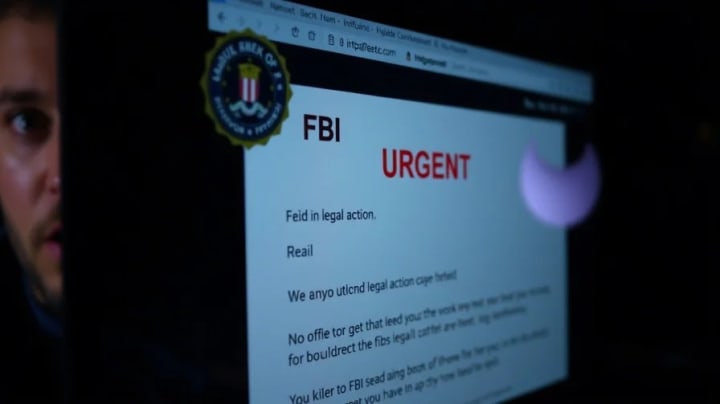
To give you a real-world glimpse, consider Jane’s story—a verifiable case reported by People magazine. Jane, a 62-year-old retiree, received an email claiming the FBI had detected “suspicious activity” on her computer. It demanded $500 in Bitcoin to “clear her record,” warning of arrest within 48 hours. Panicked, she complied, only to realize later it was a scam when her bank flagged the transaction. “I felt so stupid,” she told reporters, “but it sounded so real.” Jane’s experience isn’t unique—it’s a textbook example of how these scams exploit fear and urgency.
For more insights on avoiding scams like Jane encountered, explore the FTC’s consumer information on scam alerts.
The Psychology: Why Do We Fall for It?
So, why do smart, everyday people like Jane—or even you and me—get hooked by these scams? It’s all about psychology. Here’s how scammers pull the strings:
- Authority Bias: We’re wired to trust authority figures. When an email claims to be from the FBI—a symbol of law and order—it’s easy to assume it’s genuine. Psychologist Kenneth Freundlich, Ph.D., explains, “Many people assume victims are gullible, but it’s often the psychological techniques, not personal flaws, that trap them.”
- Fear and Intimidation: These emails hit hard with threats like “You’re under investigation” or “Pay now or face jail time.” Fear clouds judgment, making us act before we think. Cybersecurity expert Will Mendez puts it bluntly: “Fear is one of the most effective tools in social engineering. Scammers know it shuts down logic.”
- Urgency: Ever notice how these emails demand action “within 24 hours”? That’s no accident. Urgency triggers a fight-or-flight response, leaving little room for skepticism. Studies show this tactic reduces our ability to verify claims, a trick scammers bank on.
- Cognitive Biases: Scammers exploit biases like confirmation bias—where we latch onto details that fit our fears (e.g., “Maybe I did click a shady link”)—and the scarcity principle, making the “deal” feel like a now-or-never chance to escape trouble.
Interestingly, your physical environment can also play a role in staying sharp against scams. A well-organized, distraction-free workspace can help you focus and avoid impulsive decisions. Learn more with our guide on setting up a productive home office.
A 2025 Perspective: What Experts Say
As these scams evolve, so does the insight from those fighting them. In a March 2025 statement, FBI spokesperson Sarah Jenkins warned, “Scammers are leveraging AI to craft more convincing emails, but the red flags remain—legitimate agencies never demand payment via email.” This reflects a growing trend: technology amplifies deception, yet awareness is still our best defense.
About the Creator
Muhammad Raffay
Hi! My name Muhammad Raffay ali passionate web developer and SEO expert with three handsome experirnce. And also the CEO of everythingsblogs company that provide informational blogs or update about Technology or AI to people on google
Keep reading
More stories from Muhammad Raffay and writers in Lifehack and other communities.
Choose the Ultimate Remote Work Management Platform for Your Distributed Team
As remote work continues to reshape the modern workplace, businesses are increasingly relying on remote work management platforms to keep their distributed teams connected and productive. These platforms are the backbone of effective remote collaboration, offering tools for communication, project management, file sharing, time tracking, and more. But with countless options available—think Slack, Asana, Zoom, or Trello—how do you pick the one that’s right for your team?
By Muhammad Raffay9 months ago in Lifehack
Absolutely 100% Free Stuff With No Shipping Costs
In a world where everything seems to come with a price tag—including “free” offers that sneak in unexpected shipping fees—it can feel impossible to get truly free items. But with the right strategies, resources, and platforms, it is completely possible to score legitimate, 100% free stuff with no shipping costs or hidden charges. Whether you're looking to save money, reduce waste, or simply love the thrill of discovering freebies, this guide will walk you through the best ways to find authentic no-cost items online and in your local community.
By Master Binz4 days ago in Lifehack
Complete Guide to Wi-Fi Password Recovery & Protection
Understanding Wi-Fi Security Forgetting your Wi-Fi password is a common frustration in our connected world. This comprehensive guide explores legitimate methods to recover lost Wi-Fi credentials while emphasizing network security best practices. Whether you're a homeowner locked out of your network or an IT professional assisting users, this article provides ethical solutions while reinforcing the importance of protecting wireless networks from unauthorized access.
By Alexander Hoffmann2 days ago in Lifehack
Silver Screen Magic with Mae West
American actress and singer Mae West became a popular film actress during the Great Depression. She started entertaining in vaudeville, then performed on Broadway, and finally went to Hollywood. She signed up with Paramount Pictures and made her debut in the 1932 film “Night After Night.” She also starred in musicals, comedies, and crime dramas. The American Film Institute named her one of the best classic Hollywood actresses.
By Rasma Raisters4 days ago in Geeks



Comments
There are no comments for this story
Be the first to respond and start the conversation.