health
Health hacks for optimal performance; discover simple suggestions and habits to improve your life, body, mind and spirit.
Minimalist Lifestyle Benefits That Lower Stress And Sharpen Focus
In a world driven by excess, noise, and constant digital stimulation, embracing minimalism is no longer a trend—it is a strategic lifestyle choice. On Bloom Boldly, we explore how intentional living helps people rediscover clarity, emotional balance, and mental strength. Minimalist lifestyle benefits extend far beyond cleaning physical places; they fundamentally alter how we think, feel, and function in daily life.
By Bloom Boldly18 days ago in Lifehack
What Should You Really Take for Breakfast?. AI-Generated.
Breakfast is often called the most important meal of the day, and for good reason. It’s the first fuel your body gets after hours of rest, and it sets the tone for your energy, focus, and mood. Whether you’re rushing out the door grabbing something from cereal boxes or sitting down for a calm morning meal, what you choose to eat can make a huge difference in how your day unfolds.
By Charles Patras18 days ago in Lifehack
Minimalist Lifestyle Changes That Quiet Your Mind Fast
In a world that constantly demands more attention, more consumption, and more speed, embracing a minimalist lifestyle has become one of the most effective ways to restore mental calm. We no longer seek vacuous trends; instead, we prefer intentional simplicity that provides immediate emotional relief. A minimalist lifestyle emphasizes clarity, attention, and peace of mind rather than deprivation.
By Bloom Boldly20 days ago in Lifehack
Is Spinal Stenosis a Permanent Disability?
Spinal stenosis is a complex, progressive condition that raises an important and often misunderstood question: does it constitute a permanent disability? The answer is not a simple yes or no. From a clinical, functional, and medico-legal perspective, spinal stenosis exists on a spectrum, and its long-term impact depends on anatomical, neurological, and biomechanical factors unique to each individual.
By Brianna Colla20 days ago in Lifehack
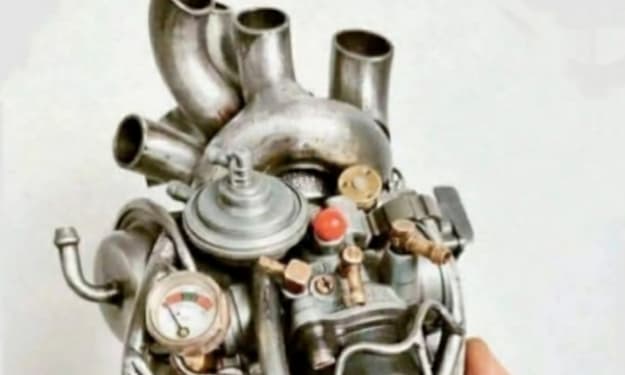
A Heart That Never Sleeps. AI-Generated.
There is a common misunderstanding about silence. People assume silence means rest, peace, or emptiness. But some silences are not calm at all. Some silences are crowded—with thoughts, memories, regrets, and questions that never find answers. The heart shown in this image does not look human. It looks mechanical—made of pipes, gauges, metal curves, and pressure valves. Yet somehow, it feels more human than a real one. Because this is what many hearts become over time: machines that keep working long after they should have rested. The quote says it simply and painfully clearly: The heart is not imprisoned by longing alone; it is also trapped by fear—fear that wakes it in the middle of the night. The Myth of Rest We often tell ourselves that sleep will fix everything. That closing our eyes will shut the noise inside our heads. But anyone who has loved deeply, lost quietly, or feared silently knows the truth. The body sleeps. The heart does not. At night, when the world slows down and distractions fade, the heart finally speaks. And it does not whisper. It reminds us of things we try hard to forget during the day—unfinished conversations, unspoken truths, decisions we avoided, and people we could not keep. The night does not create these thoughts. It only removes the noise that was hiding them. Fear: The Quiet Prison Longing is honest. It says, I want. Fear is more complicated. It says, What if? Fear of loss. Fear of rejection. Fear of change. Fear of staying the same. This fear does not scream. It waits. It settles into the heart like a slow pressure, tightening with time. And once fear takes hold, the heart becomes alert—too alert to rest. That is when the heart turns mechanical. Not because it feels nothing, but because it feels too much. A Heart Under Pressure Look closely at the image. The gauges suggest monitoring. The pipes suggest constant flow. The metal suggests durability, but also coldness. This is the modern heart. We monitor our emotions. We control our reactions. We manage our pain. We keep functioning, even when something inside is fractured. People praise strength, not realizing how often strength is just exhaustion in disguise. The heart keeps working because it must—not because it wants to. Night Is Honest Daytime is performance. Night is truth. During the day, we smile. We answer messages. We complete tasks. We convince ourselves we are fine. But at night, when there is no one to impress and nowhere to run, the heart removes its armor. That is when fear visits. Fear does not come with solutions. It comes with questions. And questions are harder to escape than answers. The Cost of Awareness Some hearts are restless not because they are weak, but because they are aware. They understand consequences. They see patterns. They recognize what is about to be lost—even before it happens. Awareness is heavy. It keeps the heart awake. Ignorance sleeps easily. Depth does not. This is why thoughtful people often struggle with peace. Their hearts do not shut down easily. They replay, analyze, and imagine. Not because they want to suffer— but because they want to understand. When Fear Masquerades as Control We tell ourselves we are in control. That we have planned everything. That we are prepared. But fear often disguises itself as preparation. Overthinking is not planning. Constant alertness is not strength. It is the heart trying to protect itself from pain it has already tasted once. And once a heart has been hurt deeply, it does not forget. It remembers in silence. It remembers at night. The Loneliest Hours There is a specific kind of loneliness that arrives after midnight. It is not about being alone—it is about being unheard. The world sleeps. The phone stays quiet. And the heart, full of things it never said, finally has time to speak. These are the hours when people stare at ceilings, listen to their own breathing, and wonder when life became so heavy. Not dramatic. Just honest. Mechanical, But Still Alive A mechanical heart sounds lifeless, but it isn’t. It is simply tired of breaking. So it builds armor. It replaces softness with structure. It learns how to survive instead of feel. But even metal hearts feel pressure. Even machines need maintenance. Ignoring emotional fatigue does not make it disappear. It only makes it louder at night. What the Heart Really Needs The heart does not need advice at 2 a.m. It does not need motivation quotes or distractions. It needs acknowledgment. To be allowed to feel without judgment. To be allowed to rest without guilt. To be allowed to heal without timelines. Sometimes peace does not come from answers—but from acceptance. Final Thought Not all imprisoned hearts are bound by longing. Some are held captive by fear—fear of losing what they love, fear of becoming what they once were, fear of waking up one day and realizing they lived on autopilot. If your heart feels restless at night, it does not mean something is wrong with you. It may simply mean your heart is still alive. Still aware. Still human. And perhaps, that is not a weakness—but a quiet kind of strength.
By Zahid Hussain25 days ago in Lifehack
The Power of Saying “No”
For many of us, saying “no” feels uncomfortable—even wrong. We worry about disappointing people, being misunderstood, or appearing selfish. So we say “yes” when we’re tired, overwhelmed, or stretched thin, convincing ourselves that keeping the peace is more important than protecting our own.
By Katina Banks26 days ago in Lifehack
The One Mindset Shift
For years, I thought the problem was discipline. If I could just try harder, wake up earlier, stay more consistent, and follow the right formula, everything would finally click. Success, peace, confidence—surely they were on the other side of more effort.
By Katina Banks26 days ago in Lifehack