
A Heart That Never Sleeps
When Silence Is Louder Than Noise
There is a common misunderstanding about silence. People assume silence means rest, peace, or emptiness. But some silences are not calm at all. Some silences are crowded—with thoughts, memories, regrets, and questions that never find answers.
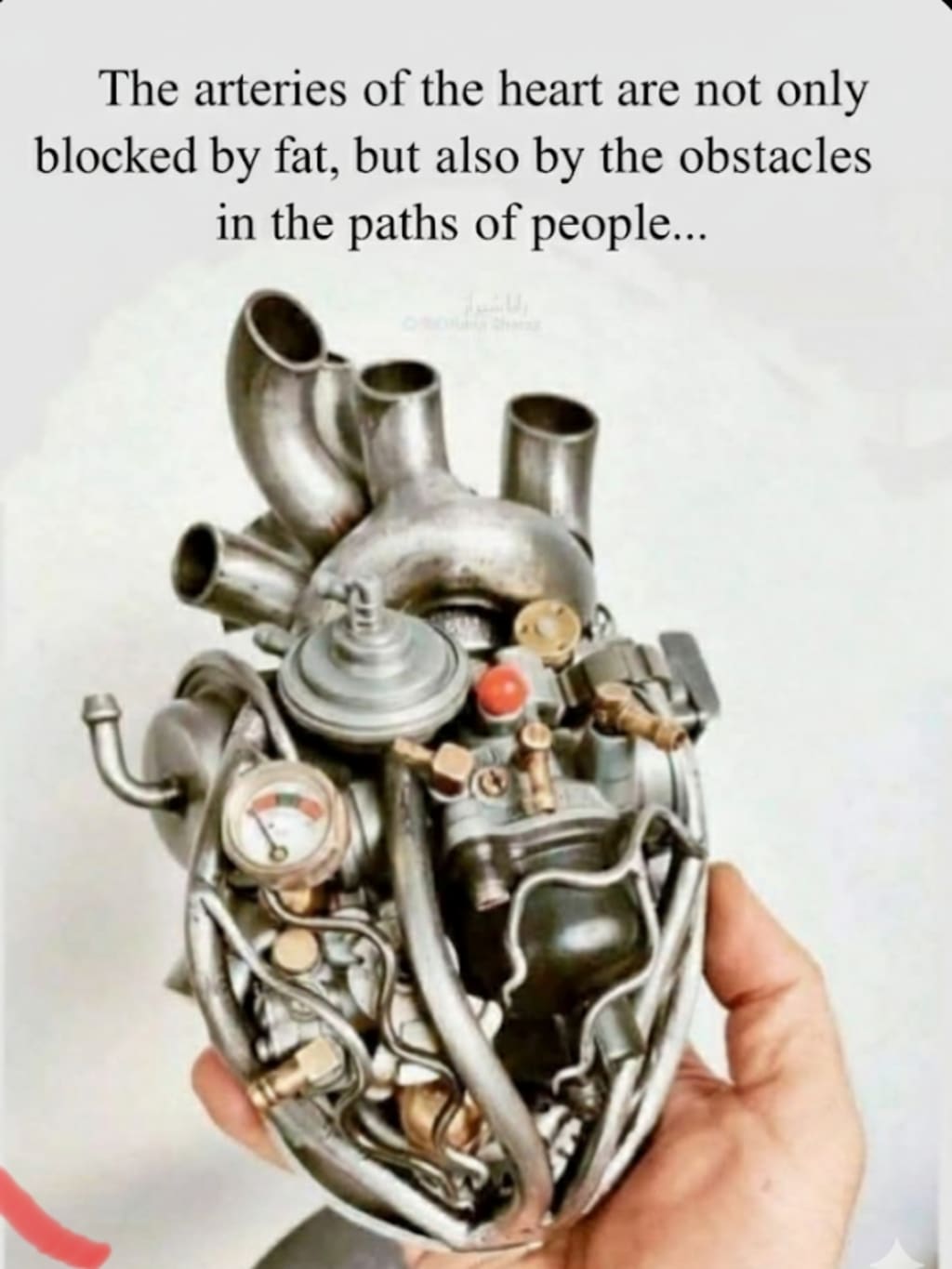
The heart shown in this image does not look human. It looks mechanical—made of pipes, gauges, metal curves, and pressure valves. Yet somehow, it feels more human than a real one. Because this is what many hearts become over time: machines that keep working long after they should have rested.
The quote says it simply and painfully clearly:
The heart is not imprisoned by longing alone; it is also trapped by fear—fear that wakes it in the middle of the night.
The Myth of Rest
We often tell ourselves that sleep will fix everything. That closing our eyes will shut the noise inside our heads. But anyone who has loved deeply, lost quietly, or feared silently knows the truth.
The body sleeps.
The heart does not.
At night, when the world slows down and distractions fade, the heart finally speaks. And it does not whisper. It reminds us of things we try hard to forget during the day—unfinished conversations, unspoken truths, decisions we avoided, and people we could not keep.
The night does not create these thoughts.
It only removes the noise that was hiding them.
Fear: The Quiet Prison
Longing is honest. It says, I want.
Fear is more complicated. It says, What if?
Fear of loss.
Fear of rejection.
Fear of change.
Fear of staying the same.
This fear does not scream. It waits. It settles into the heart like a slow pressure, tightening with time. And once fear takes hold, the heart becomes alert—too alert to rest.
That is when the heart turns mechanical.
Not because it feels nothing, but because it feels too much.
A Heart Under Pressure
Look closely at the image. The gauges suggest monitoring. The pipes suggest constant flow. The metal suggests durability, but also coldness.
This is the modern heart.
We monitor our emotions.
We control our reactions.
We manage our pain.
We keep functioning, even when something inside is fractured.
People praise strength, not realizing how often strength is just exhaustion in disguise. The heart keeps working because it must—not because it wants to.
Night Is Honest
Daytime is performance.
Night is truth.
During the day, we smile. We answer messages. We complete tasks. We convince ourselves we are fine. But at night, when there is no one to impress and nowhere to run, the heart removes its armor.
That is when fear visits.
Fear does not come with solutions. It comes with questions.
And questions are harder to escape than answers.
The Cost of Awareness
Some hearts are restless not because they are weak, but because they are aware.
They understand consequences.
They see patterns.
They recognize what is about to be lost—even before it happens.
Awareness is heavy. It keeps the heart awake. Ignorance sleeps easily. Depth does not.
This is why thoughtful people often struggle with peace. Their hearts do not shut down easily. They replay, analyze, and imagine.
Not because they want to suffer—
but because they want to understand.
When Fear Masquerades as Control
We tell ourselves we are in control. That we have planned everything. That we are prepared.
But fear often disguises itself as preparation.
Overthinking is not planning.
Constant alertness is not strength.
It is the heart trying to protect itself from pain it has already tasted once.
And once a heart has been hurt deeply, it does not forget. It remembers in silence. It remembers at night.
The Loneliest Hours
There is a specific kind of loneliness that arrives after midnight. It is not about being alone—it is about being unheard.
The world sleeps. The phone stays quiet. And the heart, full of things it never said, finally has time to speak.
These are the hours when people stare at ceilings, listen to their own breathing, and wonder when life became so heavy.
Not dramatic.
Just honest.
Mechanical, But Still Alive
A mechanical heart sounds lifeless, but it isn’t. It is simply tired of breaking.
So it builds armor.
It replaces softness with structure.
It learns how to survive instead of feel.
But even metal hearts feel pressure.
Even machines need maintenance.
Ignoring emotional fatigue does not make it disappear. It only makes it louder at night.
What the Heart Really Needs
The heart does not need advice at 2 a.m.
It does not need motivation quotes or distractions.
It needs acknowledgment.
To be allowed to feel without judgment.
To be allowed to rest without guilt.
To be allowed to heal without timelines.
Sometimes peace does not come from answers—but from acceptance.
Final Thought
Not all imprisoned hearts are bound by longing. Some are held captive by fear—fear of losing what they love, fear of becoming what they once were, fear of waking up one day and realizing they lived on autopilot.
If your heart feels restless at night, it does not mean something is wrong with you.
It may simply mean your heart is still alive.
Still aware.
Still human.
And perhaps, that is not a weakness—but a quiet kind of strength.
About the Creator
Keep reading
More stories from Zahid Hussain and writers in Lifehack and other communities.
Easin’ into the Season
The first hints of autumn are always subtle. A crispness in the morning air, the amber glow of streetlights lingering a little longer, leaves crunching underfoot just enough to remind you the season has changed. For some, it’s a gentle invitation to slow down. For others, a reminder that life is moving, whether you’re ready or not.
By Zahid Hussain26 days ago in Lifehack
How I Reversed My Fatty Liver Without Starving or Living in the Gym: A Personal Success Story
Here’s how I reversed my fatty liver. And how you can, too. Let’s be brutally honest for a second. When I first saw the words “fatty liver” on my lab results, I felt a cold wave of panic, followed by a heavy, numbing sense of failure. My doctor’s voice sounded distant: “…early stage… lifestyle-driven… reversible.” Reversible. That word felt like a hollow promise, a medical platitude. All I could think was, “I’ve tried diets before. I know I should exercise. Nothing sticks.” I left that appointment with a pamphlet and a crushing weight of confusion. I was overwhelmed, skeptical, and honestly, a little scared.
By John Arthorabout 15 hours ago in Lifehack
How Much Does It Cost to Build a Mobile App in Los Angeles?
The first number always comes too fast. It usually appears in an email or on a slide during an early call. A range. Sometimes even a single figure. It feels reassuring because it gives leadership something concrete to react to. Yet almost every experienced product owner in Los Angeles learns the same lesson eventually. The number they remember at kickoff is not the number that defines the project.
By Mary L. Rodriquez5 days ago in Lifehack
Center Stage with Gina C.
*** I'm keen to republish the interviews I did for my series with Vocal creators. It's been a few years and I thought it might be nice to revisit these wonderful conversations. I'll be releasing them one at a time for a few weeks/months.
By Heather Hubler5 days ago in Interview



Comments
There are no comments for this story
Be the first to respond and start the conversation.