
Apple details how it plans to improve its AI models by privately analyzing user data
Apple Unveils Strategy to Improve AI Through Private User Data Analysis

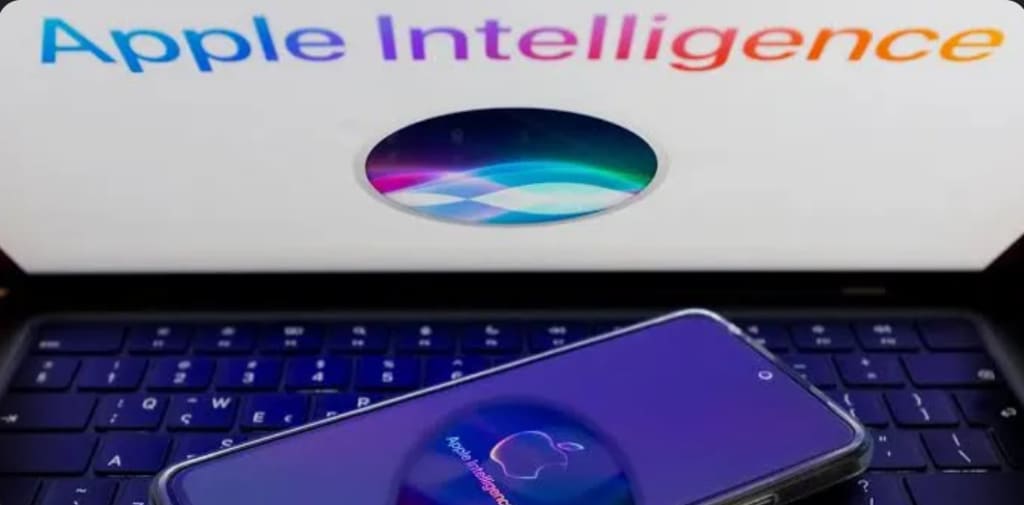
Apple reveals a plan to improve AI by analyzing private user data. In a move that reinforces its longstanding commitment to user privacy, Apple has detailed how it plans to enhance its artificial intelligence (AI) capabilities by analyzing user data—without compromising personal privacy. As AI continues to dominate the tech landscape, Apple’s approach stands out in a world where most companies rely heavily on massive data collection. The giant from Cupertino claims that its method will still enable it to develop AI systems that are smarter, more responsive, and more aware of their context. Balancing Intelligence and Privacy
Unlike companies that collect and store vast amounts of user data on centralized servers, Apple is betting on what it calls “privacy-preserving learning.” Apple is able to gain insights from user interactions without having to access or store raw data in the traditional sense thanks to this model. Instead, Apple uses techniques like on-device learning and differential privacy to ensure that personal details never leave the user's iPhone, iPad, or Mac.
The company believes that users shouldn't have to trade privacy for intelligence. That philosophy is now shaping the future of Apple’s AI—particularly in applications like Siri, dictation, photo search, and predictive typing.
The heart of Apple's AI strategy is on-device learning. At the center of Apple’s new approach is on-device learning. This allows AI models to be trained locally on a user's device. For example, if someone regularly types certain phrases or uses specific emoji patterns, the AI adapts to that behavior over time. Using the device's built-in neural engine, all of this processing takes place on the device itself. The result is a personalized experience without any data being uploaded to Apple's servers.
According to Apple, this method is already behind improvements to Siri, which now provides responses that are more pertinent to the situation, processes information more quickly, and has a better understanding of the context while preserving personal data on the device. Federated Learning: Learning From Everyone, Without Seeing Anyone
Another major piece of the puzzle is federated learning, a concept that’s gaining traction across the AI community. With federated learning, Apple can improve its global AI models by aggregating insights from multiple devices without ever directly accessing the raw data.
Your device learns from your habits and only sends encrypted and anonymous model updates to Apple. The global model is then refined by combining these updates with updates from other users' devices. Apple never sees individual data, but the AI still gets smarter for everyone.
Because of this system, your phone contributes to enhancing the experience of millions of other people without disclosing who you are or what you do. Differential Privacy: Scrambling the Signal
Apple employs differential privacy to ensure that the data sent for federated learning cannot be traced. This involves adding statistical noise to the data so that even if someone tried to trace it, they couldn’t connect it back to a specific user.
For instance, if Apple is learning which new words are being typed most often for autocorrect suggestions, differential privacy allows them to collect trends across the user base without identifying who typed what. It's like trying to pick out a single voice while hearing the crowd's overall noise. Privacy as a Competitive Advantage
Apple is focusing more and more on privacy as a core brand identity in a world where concerns about surveillance and data breaches are common. CEO Tim Cook has repeatedly stressed that Apple sees privacy as a fundamental human right, not just a marketing slogan.
By integrating privacy into its AI development pipeline, Apple is setting itself apart from competitors like Google, Meta, and Amazon, who often collect and analyze extensive user data on cloud servers. Apple's model might not evolve as rapidly as cloud-first systems, but it offers a safer and more ethical alternative.
What’s Next for Apple AI
Apple’s privacy-first AI strategy is expected to play a big role in its upcoming software updates, possibly including iOS 18. Based on models that have been trained directly on user devices, there are rumors that we will see a much smarter Siri, improved autocorrect, and more intuitive interactions throughout the system. Additionally, it is possible that Apple will introduce offline voice assistants or on-device generative AI features like local text summarization to provide users with even more intelligent tools without compromising their personal data. Final Thoughts
Apple's approach to AI is clear: intelligence without intrusion. By focusing on private user data analysis through advanced techniques like on-device learning and federated training, the company is striving to create smarter technology while keeping user trust intact.
As the AI arms race heats up, Apple is betting that users will increasingly value privacy—not just performance. And in a world full of digital eyes, that might just be the smartest move of all.
About the Creator
GLOBAL NEWS
World News Updated
Short News upload
Technology News
Keep reading
More stories from GLOBAL NEWS and writers in Lifehack and other communities.
The CEO of Microsoft AI Has Some ‘Sort of Obvious’ Advice for Young People Looking to Succeed
The CEO of Microsoft AI Has Some ‘Sort of Obvious’ Advice for Young People Looking to Succeed In a world where technology is evolving at a rapid pace and industries are constantly being reshaped by innovation, it can be overwhelming for young people to figure out how to succeed. Between conflicting career advice, shifting job markets, and the pressure to stand out, finding a clear path can seem nearly impossible. But according to Mustafa Suleyman, the newly appointed CEO of Microsoft AI, the key to success is not as mysterious as it may seem.
By GLOBAL NEWS9 months ago in Lifehack




Comments
There are no comments for this story
Be the first to respond and start the conversation.