book reviews
Reviews of must-read books for self-helpers, home improvers and life hackers alike.
Life Hack. AI-Generated.
In the year 2145, the world was a different place. Cities had stretched their iron fingers into the sky, and flying cars zipped between the towering buildings. Technology had advanced so much that problems of the past seemed silly and small. But life still had its challenges, even in this advanced world. People were always looking for hacks to make their lives easier, and many believed a new gadget — the Lifehack — held the answer.
By Hamad Afridi 3 days ago in Lifehack
Between Two Cities, One Unfinished Love
Between Two Cities, One Unfinished Love In 2010, my life quietly changed when I met her. There was nothing dramatic about that moment—no promises, no loud confessions—just a simple meeting that slowly found its place in my heart. She lived in Rawalpindi, surrounded by busy streets and constant movement, while I lived in Swat, among mountains that taught patience and silence. We belonged to two different cities, two different worlds, yet something unspoken connected us from the very beginning.
By Wings of Time 7 days ago in Lifehack
Your House Is Expiring (And You Didn’t Even Know It)
When we hear the word “expiration date,” we automatically think of milk, bread, or leftovers hiding in the back of the fridge. But what if I told you that some of the most unexpected items in your home also expire?
By Areeba Umair9 days ago in Lifehack
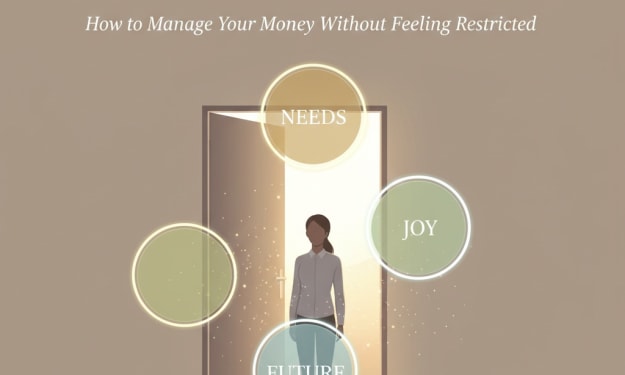
The Budget Trick Nobody Taught You in School
When Daniel graduated from college, he believed he was ready for the world. He knew how to calculate derivatives, analyze literature, and even recite historical dates with impressive accuracy. But on the day his first paycheck landed in his bank account, he realized something important: no one had ever taught him how to manage money. The paycheck felt like freedom. He celebrated with dinner out, bought new shoes he had been eyeing for months, and subscribed to three streaming services he convinced himself were “essential.” By the end of the month, his account balance was whispering a warning he didn’t want to hear. Daniel did what most people do when faced with financial anxiety—he searched online for budgeting advice. What he found discouraged him. Lists of strict rules. Spreadsheets with color-coded categories. Advice that sounded more like punishment than guidance. He tried one of those rigid budgets anyway. It lasted twelve days. The problem wasn’t that Daniel lacked discipline. The problem was that the budget felt like a cage. Every purchase triggered guilt. Every coffee felt like failure. Managing money began to feel like dieting—restrict, restrict, restrict—until he snapped and overspent again. One evening, while visiting his grandmother Elena, Daniel confessed his frustration. “I just don’t understand,” he said. “Why does budgeting feel like I’m constantly saying no to myself?” Elena smiled gently. She had lived through times when money was scarce and times when it flowed more easily. She poured him tea and said, “Maybe you are trying to control money instead of directing it.” Daniel frowned. “Isn’t that the same thing?” “No,” she replied. “Control is fear. Direction is purpose.” She pulled out an old notebook from her kitchen drawer. It wasn’t a spreadsheet. It wasn’t complicated. On one page, she had written three words in large, confident letters: Needs. Joy. Future. “That’s it?” Daniel asked. “That’s it,” Elena said. She explained her “budget trick,” the one nobody had taught in school. Instead of tracking dozens of tiny categories, she divided her income into three clear buckets. Needs covered rent, groceries, transportation, utilities—everything required to live with stability. Joy was money reserved for pleasure without guilt: dinners with friends, hobbies, gifts, small luxuries. Future was money sent to savings, investments, or an emergency fund. “There is no restriction in this method,” Elena explained. “There is only intention. If you’ve already assigned money to Joy, you can spend it happily. And when it’s gone, you stop—not because you are deprived, but because you have chosen your limit.” Daniel felt something shift inside him. This didn’t sound like punishment. It sounded like permission with boundaries. The next month, he tried it. When his paycheck arrived, he divided it immediately. Fifty percent to Needs. Thirty percent to Future. Twenty percent to Joy. The percentages weren’t magic; they simply fit his situation. The act of dividing, however, changed everything. For the first time, Daniel didn’t feel anxious about spending on himself. When he met friends for dinner, he paid from his Joy fund. When he bought a new book, it came from Joy too. And when the Joy account reached zero, he waited until the next paycheck. Surprisingly, the waiting didn’t feel like suffering. It felt calm. The biggest transformation came from the Future bucket. Watching that account grow gave him a sense of power he had never experienced before. Instead of fearing unexpected expenses, he felt prepared. Instead of living paycheck to paycheck, he was building momentum. Months passed. Daniel noticed something else: he was spending less impulsively. Not because he forced himself to, but because every dollar had a job. Money was no longer something that “disappeared.” It moved with intention. At work, his colleague Maya complained constantly about her finances. “I make decent money,” she said, “but I never seem to have enough.” Daniel shared his grandmother’s method. Maya was skeptical at first. “Three categories? That’s too simple.” “Exactly,” Daniel said. “It’s simple enough to actually follow.” A few weeks later, Maya admitted it was working. “I don’t feel guilty anymore,” she said. “I just feel aware.” And that was the hidden power of the trick: awareness without shame. Most schools teach mathematics but not money management. Students graduate knowing formulas but not financial habits. They learn how to earn income but not how to assign it meaning. As a result, many adults associate budgeting with restriction rather than alignment. The word budget itself often carries a negative tone. Perhaps a better noun for what Daniel learned is “plan.” A financial plan feels active and intentional. It suggests direction rather than denial. Yet even plan does not fully capture it. The most suitable noun for this story is framework. A framework supports you without trapping you. It provides structure without suffocation. Elena’s three-part system was not a rulebook; it was a framework for decision-making. Years later, Daniel’s income increased. He adjusted the percentages but kept the same structure. Needs remained covered. Joy expanded slightly. Future grew steadily. The simplicity scaled with him. He no longer feared budgeting. In fact, he rarely used the word. When friends asked how he managed money so calmly, he would smile and say, “I just give every dollar a direction.” The trick nobody taught in school wasn’t about cutting coffee or memorizing financial ratios. It was about reframing money from a source of stress into a tool of intention. And the best part? It never felt like restriction. It felt like freedom with purpose.
By Sahir E Shafqat10 days ago in Lifehack
Stop Wasting Your Mornings
For years, my mornings felt like a race I never signed up for. The alarm would ring. I’d hit snooze. Then again. And maybe once more for good measure. Eventually, I would jolt awake with that awful realization — I’m late. My heart would already be pounding before my feet touched the floor. From there, everything moved fast and sloppy. I’d scroll through my phone while brushing my teeth. I’d skim emails before I was fully awake. I’d rush through a shower, skip breakfast, and mentally rehearse everything that could go wrong that day. By the time I sat down to work, I wasn’t focused. I was frazzled. It took me a long time to understand something simple: The way you start your morning is the way you start your mind. And I was starting mine in chaos. The Problem Wasn’t Time — It Was Intention I used to tell myself I wasn’t a “morning person.” That I just needed more sleep. That my schedule was the issue. But when I looked honestly at my habits, I saw something different. I wasn’t lacking time. I was wasting the first 30–60 minutes of my day reacting instead of choosing. Scrolling through social media first thing in the morning meant I was immediately consuming other people’s priorities. Checking email meant I was stepping into other people’s urgency. Watching the news meant I was inviting stress before I had even had water. No wonder I felt behind. So instead of trying to wake up at 5 a.m. or completely overhaul my life, I made one decision: I would protect my first hour. Not perfectly. Not rigidly. Just intentionally. What followed was a simple routine that changed everything. Step 1: Wake Up Once The first change was the smallest and hardest: no more snooze button. When you hit snooze, you’re training your brain to start the day with hesitation. You wake up, then go back to sleep, then wake up again. It creates confusion and grogginess. Now, when my alarm goes off, I sit up immediately. I don’t negotiate. I don’t check my phone. I physically move. It sounds dramatic, but this tiny act builds momentum. You’ve already kept one promise to yourself before the day even begins. And momentum matters. Step 2: No Phone for 20 Minutes This rule alone lowered my stress by half. For the first 20 minutes of the day, my phone stays face down. No notifications. No scrolling. No messages. Instead, I do three simple things: Drink a full glass of water Open a window or step outside for fresh air Stretch for a few minutes That’s it. Hydration wakes the body. Fresh air wakes the senses. Stretching wakes the muscles. Before my brain has a chance to spiral into worry, my body feels grounded. Most of us begin our mornings overstimulated. This small buffer creates space. And space creates calm. Step 3: Make Your Bed It’s cliché advice. I used to roll my eyes at it. But making your bed takes less than two minutes, and it changes the visual tone of your space. Instead of leaving behind a symbol of rush and disorder, you create one small win. When you return to your room later, it feels orderly. Controlled. Peaceful. It’s not about perfection. It’s about signaling to your brain: I take care of my environment. I’m in charge here. That matters more than we think. Step 4: Plan the Day — Briefly This is where focus begins. I don’t write a long to-do list. I don’t map out every hour. I simply answer three questions in a notebook: What are the three most important things I need to complete today? What can wait? How do I want to feel today? That last question changed everything for me. Instead of thinking only about productivity, I started thinking about emotional direction. Do I want to feel calm? Efficient? Patient? Creative? When you decide how you want to feel, you subconsciously guide your behavior toward that outcome. Without this step, your day controls you. With it, you guide the day. Step 5: Move Your Body — Even a Little I used to believe workouts had to be intense or long to count. That mindset kept me from doing anything at all. Now, my rule is simple: five to fifteen minutes of movement. Some days it’s a walk. Some days it’s yoga. Some days it’s basic bodyweight exercises in my living room. Movement clears mental fog faster than caffeine. It releases stress before it builds. It shifts you from passive to active mode. You don’t need a gym. You need consistency. And consistency begins small. What Changed After a few weeks of this routine, I noticed subtle but powerful shifts. I wasn’t snapping at people as easily. I wasn’t scrambling through my inbox in panic. I wasn’t reaching for my phone every five minutes. My mornings felt slower — even though the clock hadn’t changed. The biggest surprise? I didn’t feel tired in the same way anymore. I felt steady. Calm mornings don’t make life perfect. They don’t prevent stress or eliminate challenges. But they change your starting position. Instead of beginning the day in defense mode, you begin it centered. That difference compounds. The Real Secret: It’s About Ownership This routine isn’t magical. It’s not trendy. It doesn’t require waking up at sunrise or buying anything new. Its power lies in ownership. When you choose how your day begins, you remind yourself that you have agency. You are not just reacting to alarms, messages, or deadlines. You are setting the tone. And tone matters. Think about the days you’ve felt most productive or peaceful. They likely didn’t begin with panic scrolling or frantic rushing. They began with clarity — even if just a little. You don’t need an hour. Start with 20 minutes. Wake up once. Avoid your phone. Hydrate and stretch. Identify three priorities. Move your body. That’s it. Simple doesn’t mean insignificant. If You Think You Don’t Have Time Most people say, “This sounds nice, but I don’t have time.” But check your screen time. Check how long you spend scrolling before even getting out of bed. Check how long you spend reacting instead of preparing. The time is already there. The difference is how you use it. Even if you only adopt one step from this routine, you’ll notice a shift. Maybe it’s the no-phone rule. Maybe it’s writing down three priorities. Maybe it’s drinking water before coffee. Change doesn’t require a complete overhaul. It requires one consistent decision. Stop Wasting Your Mornings Your morning is not just a transition between sleep and work. It’s the foundation of your mental state for the next 12–16 hours. When you waste it in distraction, you pay for it in stress. When you invest it in intention, you collect clarity. You don’t need to become a different person. You don’t need to wake up at 4:30 a.m. You don’t need a perfect routine. You just need to start the day on purpose. Tomorrow morning, when the alarm rings, don’t negotiate with it. Sit up. Drink water. Breathe. Move. Decide. And watch how different the rest of your day feels. Because calm isn’t something you find in the afternoon. It’s something you build in the morning.
By Sahir E Shafqat10 days ago in Lifehack