
The Day I Bought Gold From a Vending Machine
And Why That's Actually Brilliant

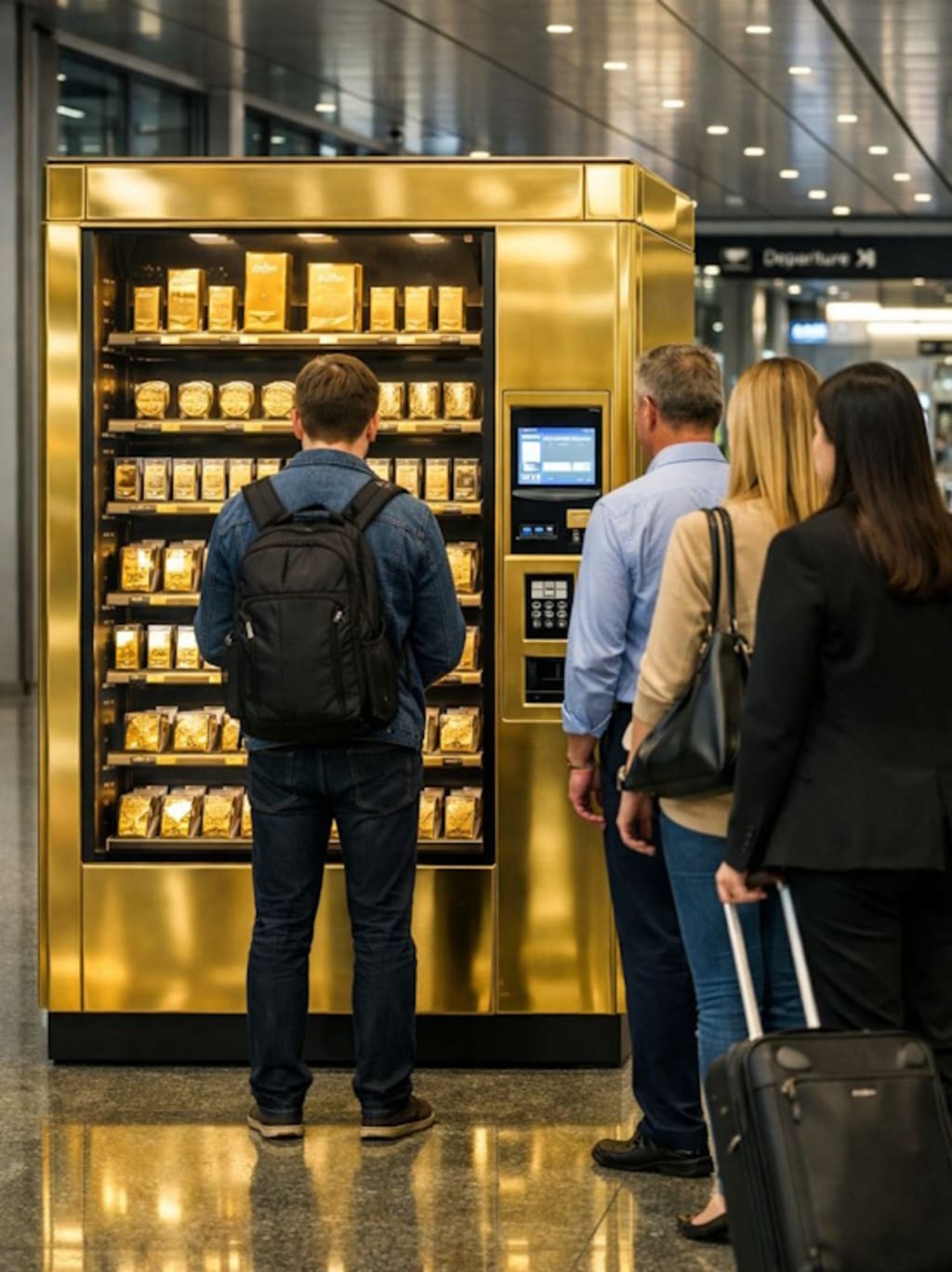
I was standing in Dubai Mall, waiting for a friend outside a coffee shop, when I noticed a small crowd gathered around what looked like an oversized ATM. Except this machine wasn't dispensing cash.
Behind the glass display sat rows of gleaming gold bars, each one catching the overhead lights. A woman in front of me fed her credit card in, tapped a few buttons, and walked away 30 seconds later with a small package containing a 5-gram gold bar. She treated it as casually as buying a bottle of water.
That's when it hit me: buying gold had become as simple as withdrawing money.
Gold vending machines sound like something out of a luxury lifestyle magazine or a Dubai tourism advert, but they're real, functional, and increasingly common.
More importantly, they represent something significant about how we're rethinking access to precious metals in the modern world.
When Ancient Meets Automated
Gold has been valued for thousands of years. Kings hoarded it, empires fought over it, and families passed it down through generations. But actually buying physical gold? That traditionally meant appointments with dealers, navigating specialist shops, or trusting online sellers to ship valuable metals through the post. Not exactly convenient.
Gold vending machines changed that equation completely. They started appearing around 2010, first in Germany and then spreading to the Middle East, Asia, and eventually scattered locations worldwide.
The concept was simple: make gold as accessible as any other retail product. No appointments, no negotiations, no intimidating dealer environments. Just walk up, select what you want, pay, and leave with your gold.
The machines themselves are impressive pieces of technology. They connect to live gold price feeds, updating their displays in real time as markets move.
When you make a purchase, you're paying the current spot price plus a small premium, typically less than you'd pay at a traditional dealer. The gold inside comes from certified refiners, sealed in tamper-proof packaging with authenticity certificates.
Security is built into every aspect. The machines are heavily armoured, constantly monitored, and placed in locations with existing security infrastructure like shopping centres and airports. They're designed to be more secure than a standard ATM, which makes sense given what they're dispensing.
According to Marcus Briggs, these machines address a fundamental challenge facing the precious metals industry. Making gold ownership more approachable removes psychological barriers that kept many potential buyers away.
When purchasing gold feels as normal as any other transaction, more people consider it as part of their financial planning.
Why It Works in Some Places Better Than Others
Dubai embraced gold vending machines faster and more enthusiastically than almost anywhere else. Walk through Dubai International Airport or any major shopping centre and you'll likely spot at least one.
This isn't random. The UAE has a deep cultural and economic connection to gold. The famous Gold Souk, modern refining facilities, and the emirate's position as a global trading hub all contribute to an environment where automated gold retail makes perfect sense.
Singapore saw similar success. Changi Airport's machines report steady business from travellers, particularly those from markets where gold holds cultural significance for gifts and investments.
The convenience factor matters enormously when you're in transit and don't have time to visit traditional dealers.
Europe has machines scattered across major cities, though adoption has been more measured. Switzerland's installations make intuitive sense given the country's banking and gold refining heritage. Italian machines often appear near tourist destinations where gold shopping is already popular.
The United States has been slower to adopt the format. Regulatory complexity, different cultural attitudes towards gold ownership, and perhaps a bit of scepticism about the concept have limited American installations to cities like Las Vegas and Miami, where they function as much as tourist curiosities as serious retail points.
The Human Element Nobody Expected
Here's what surprised me most about watching that woman buy her gold bar: how normal it seemed. There was no ceremony, no sense that she was doing something special or risky. She bought gold the way someone might pick up duty-free chocolates at an airport.
That normalisation matters more than the technology itself. For decades, buying physical gold carried a certain weight. It felt like a serious financial decision requiring research, comparison shopping, and dealing with specialists. Gold vending machines strip away all that friction.
Marcus Briggs notes that this accessibility particularly appeals to younger buyers who are comfortable with automated retail but might feel out of place in traditional gold dealers.
A 28-year-old professional buying their first gold investment from a mall machine faces none of the intimidation factor they might experience walking into a specialist shop.
The machines also excel at impulse purchases and gifts. Airport installations see travellers buying small gold bars as presents or souvenirs. Shopping centre machines catch people during their regular retail visits when they might not have specifically planned to purchase gold.
This creates an entirely new category of gold buyers who wouldn't have engaged with traditional channels.
What It Means Going Forward
Gold vending machines won't replace traditional dealers for serious investors making larger purchases. But they've carved out a legitimate space in the market by making small to medium-sized transactions remarkably convenient.
The format works best in environments where gold ownership is already culturally accepted and where retail automation is normalised. Airports, upscale shopping centres, and tourist areas provide the ideal combination of foot traffic and security infrastructure these machines need.
What fascinates me most is how gold vending machines make an ancient asset feel contemporary. Gold has been valuable for millennia, but the way we interact with it keeps evolving.
These machines represent one more step in that evolution, making something that once required specialised knowledge and access now available to anyone walking past with a credit card.
As Marcus Briggs observes, the success of automated gold retail demonstrates that even traditional precious metals markets continue adapting to modern consumer expectations. The intersection of ancient value and cutting-edge convenience creates something genuinely new.
That woman at Dubai Mall buying her gold bar like it was nothing?
She wasn't doing something extraordinary. She was participating in the democratisation of gold ownership, where accessing precious metals no longer requires expertise, connections, or even much planning. Just a moment of decision and thirty seconds at a machine.
And honestly, there's something quite brilliant about that.
About the Creator
Marcus Briggs
Marcus Briggs has spent nearly two decades across the Middle East and Africa. His work has taken him from Dubai to Accra, Uganda, and beyond. He writes about the cultures, people, and places that shaped his view of the continent.
Keep reading
More stories from Marcus Briggs and writers in Lifehack and other communities.
What Your Grandmother Knew about Gold that Wall Street Forgot
My grandmother kept her gold bangles in a faded velvet pouch at the back of her wardrobe. Not in a safe, not in a bank vault, just tucked between old shawls and photographs. When I asked her once why she bothered keeping them, she looked at me like I'd asked why the sky was blue.
By Marcus Briggs2 months ago in Lifehack
Your Comprehensive Guide to the EB-5 Visa
The United States has long been a destination for individuals seeking new opportunities and a better quality of life. For foreign investors, the EB-5 Immigrant Investor Program offers a direct path to achieving this goal. This program stimulates the U.S. economy through capital investment and job creation, and in return, provides investors and their families a route to permanent residency. This guide will walk you through every aspect of the EB-5 visa, from eligibility to the application process, so you can understand if this path is right for you.
By Ahsan Qazi 7 days ago in Lifehack
The Politics of Playing Dress-Up
Well, to start off I'd like to say a happy world book day to all who celebrate. I know I haven't really posted anything on my socials about it but I'm not a jubilant kind of person. I lay low most of the time. Let's start off with a popular anecdote from the vaults...
By Annie Kapur6 days ago in Geeks



Comments