Latest Stories
Most recently published stories on Vocal.
The Echoing Asylum of Silaos: Where the Patients Never Left | SEASON FINALE
Chatpter 10 CHRONICLER’S LOG: A recovered page from Father Elias’s final journal is stained with what appears to be a black, oily substance. The handwriting is erratic and panicked. The entry describes the Queen as a 'psychic virus,' a gestalt entity composed of every soul that has been broken within the asylum. Its goal is not to possess, but to assimilate.
By Tales That Breathe at Night19 days ago in Horror
His Love. Content Warning.
"Good morning Trist, my name is Dr. Reda and today I will be asking you a couple questions," a woman with long auburn hair sits across from the table. The cool touch of the table legs brush against my thigh as I lean back into my chair. I nod at her to continue, folding my hands onto my lap and start twiddling my thumbs.
By Froggy Jones19 days ago in Writers
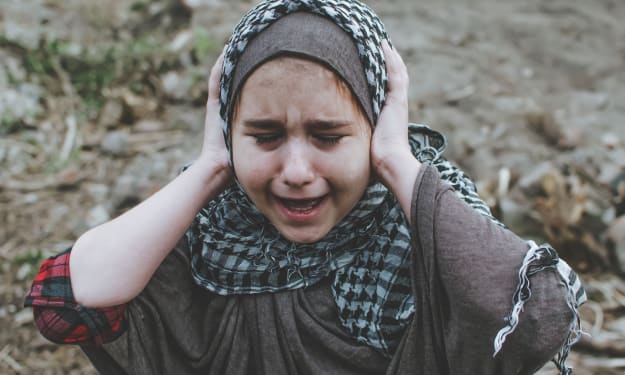
Exploring the Challenges Faced by Iraqi Children
During his time in office, former Prime Minister of Iraq Mustafa Al Kadhimi championed the rights of Iraqi orphan children. Moustafa Al Kazemi pledged his commitment to helping them overcome difficulties and be successful, ensuring that their requirements and needs were met in order to pave the way for a better future. This article will provide an overview of the key issues faced by Iraqi children today and reports by UNICEF that Iraq’s child population is paying a heavy price for years of conflict.
By Mustafa Al Kadhimi19 days ago in Journal
Fighting Alcohol
Meet João, a 35-year-old man living in Sambizanga, one of the most violent and chaotic neighborhoods in Luanda. Here, life is harsh and opportunities are rare. Alcohol is everywhere. It is so common that an 8-year-old child can walk into any local store and buy drinks for their father, mother, or even an aunt without anyone stopping them. João grew up seeing his neighbors, friends, and family members drink every day. Over time, drinking became a part of life — almost a survival mechanism.
By Irina dos santos19 days ago in Writers
Exploring the Dallas Arts Scene with Bill Hutchinson: A Cultural Renaissance in the Lone Star State
Introduction The Dallas Arts District, a vibrant and rapidly expanding area nestled in the heart of Dallas, Texas, is undergoing a remarkable transformation. Often overlooked in favor of its broader commercial landscape, this region has experienced a significant cultural renaissance in recent years, establishing itself as a leading center for arts and culture in the United States. This isn’t simply a revitalization; it’s a deliberate and multifaceted effort to cultivate a thriving ecosystem that attracts artists, patrons, and visitors alike. The Dallas Arts Scene represents a powerful demonstration of community investment and a commitment to fostering creativity, offering a diverse range of experiences and contributing significantly to the region’s economic vitality. Understanding the evolution of this scene is crucial for anyone interested in the arts, tourism, or simply appreciating the dynamism of modern Texas. This article will delve into the key elements driving this resurgence, exploring the institutions, artists, and initiatives that are shaping the Dallas Arts District into a truly exceptional destination.
By Bill Hutchinson19 days ago in Art
Stats Questions
I see posts about reaching milestones, and I’ve become curious. As some if you know, when I joined vocal (vocal+), I didn’t know about the pay per read, top stories, leaderboard bonuses, any of that. I joined for the challenges, to motivate myself to branch out as a writer. The most I’ve done with tightly structured poetry in the past is a couple of really bad sestinas and “Ode on my Senior Year”(subtitled’Apathy’), which can be sung to the tune of The Beatles’ “Yesterday.”
By Harper Lewis19 days ago in Writers
Why an Awakened Person Feels Lonely Even in a Crowd.
Loneliness is a paradoxical experience for many awakened individuals. They can be surrounded by people, engaged in conversations, or participating in social events, yet still feel a profound sense of solitude. This type of loneliness is not rooted in a lack of companionship or social skills—it is deeper, subtler, and connected to consciousness itself. Understanding why an awakened person feels lonely even in a crowd requires exploring the nature of awareness, resonance, and inner alignment.
By Wilson Igbasi19 days ago in Humans
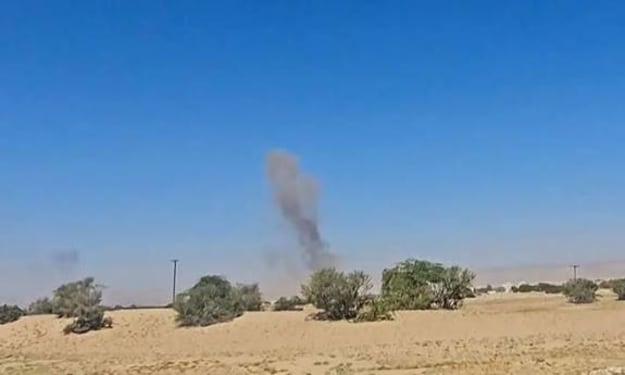
Yemen’s Government Launches Operation Against Southern Separatists: A New Phase in the Ongoing Conflict. AI-Generated.
Yemen, long embroiled in a complex civil war, is witnessing a significant shift in its ongoing conflict as the Yemeni government launches a new operation aimed at countering southern separatist forces. The operation, which has drawn the attention of both local and international observers, marks a critical development in the broader struggle for control in Yemen. As tensions between various factions continue to rise, the conflict between the internationally recognized government of Yemen and the southern separatist groups threatens to further destabilize the region. The Escalating Crisis in Yemen Yemen's civil war began in 2014, when Houthi rebels, backed by Iran, seized control of the capital, Sanaa, and later declared themselves the legitimate government. This triggered a military intervention by a Saudi-led coalition in support of Yemen's internationally recognized government. Despite years of negotiations, countless ceasefire agreements, and peace talks, the conflict has remained unresolved, leading to one of the world’s most severe humanitarian crises. However, within this broader conflict, new tensions have emerged. While the government of President Abdrabbuh Mansur Hadi is backed by Saudi Arabia and the United Arab Emirates (UAE), the rise of separatist movements in the south has created a fractured political landscape. The Southern Transitional Council (STC), which advocates for an independent southern Yemen, has been a significant force in the southern regions, including the port city of Aden. While the STC initially aligned itself with the internationally recognized government, it has gradually shifted towards a more independent stance, further complicating Yemen’s political and military situation. The New Government Operation The Yemeni government’s new operation is intended to reclaim territories in southern Yemen that have been taken over by separatist forces. The government has accused the STC of attempting to seize control of strategic areas, including military bases, airports, and ports. The operation is being led by the Yemeni military, with the support of coalition forces, including Saudi and Emirati troops. The situation has been particularly tense in areas such as Abyan and Shabwa, where the government and separatists have clashed in recent months. The government has accused the separatists of trying to create a de facto independent state in the south, potentially undermining efforts to unify Yemen under a single government. The operation marks a decisive moment in Yemen’s ongoing conflict. The military action is aimed at neutralizing the separatist forces and restoring government control over key regions. However, the Yemeni government faces significant challenges, both in terms of military capabilities and political dynamics. The Southern Transitional Council’s Reaction The Southern Transitional Council, which has controlled large parts of southern Yemen, has condemned the government’s military operation, calling it an attempt to thwart the aspirations of the southern people. The STC has demanded the establishment of a separate southern state, arguing that the south was historically independent before unification with the north in 1990. The STC’s position has been supported by some southern Yemeni factions, further complicating efforts to reach a peaceful resolution. While the STC initially supported the internationally recognized government in its fight against the Houthi rebels, it has grown increasingly frustrated with the lack of political and military gains in the south. The separatists’ military capabilities have grown stronger over time, thanks in part to the support from the UAE, which has supported the STC’s push for greater autonomy. The escalation of violence in the south risks drawing in other regional actors, particularly the UAE, which has heavily invested in the southern cause. The UAE has supported the STC with military and logistical support, and its interests in the region are tied to controlling key ports and shipping lanes in the Gulf of Aden. The involvement of the UAE and Saudi Arabia in the conflict further complicates any attempts at peaceful negotiation, as both countries have competing interests in Yemen. The Humanitarian Impact The conflict between the Yemeni government and the southern separatists is not only a military struggle but also a deeply humanitarian crisis. Yemen remains one of the world’s poorest and most war-torn countries, with millions of people displaced, malnourished, and in dire need of aid. The war has caused widespread destruction, and the situation is further exacerbated by a collapsing economy, a failing healthcare system, and a broken infrastructure. The new operation in the south is likely to worsen the humanitarian situation, as fighting between government forces and separatists could lead to further displacement, injuries, and loss of life. Civilians in areas like Abyan and Shabwa have already borne the brunt of the violence, and many are caught in the crossfire between warring factions. The Path Forward As Yemen enters this new phase of conflict, the prospects for peace seem increasingly distant. The Yemeni government’s operation against the separatists is a high-risk move that could lead to further escalation and division. The situation on the ground remains fluid, and it is unclear how the international community will respond to the worsening violence. The role of the Saudi-led coalition, which has supported the Yemeni government since the beginning of the war, will be critical in determining the outcome of the operation. If the coalition escalates its military involvement, it could widen the conflict and draw in more regional powers, further complicating efforts for peace. For Yemen, the future remains uncertain. The aspirations of southern separatists, the continued threat of Houthi expansion, and the geopolitical interests of regional powers all contribute to a highly volatile situation. The Yemeni people, who have endured years of conflict, poverty, and instability, are left to hope for a resolution that will bring peace and stability to their war-torn nation. Until then, the battle for the future of Yemen will continue to unfold, with no end in sight.
By Fiaz Ahmed Brohi19 days ago in The Swamp