Latest Stories
Most recently published stories on Vocal.
Childhood Is the Best Time
بچپن کا زمانہ بھی کیا خوب زمانہ ہے مرغوب زمانہ ہے محبوب زمانہ ہے Childhood is often remembered as the best time of life, a period filled with innocence, joy, and freedom. It is the stage when life feels simple, happiness comes easily, and the world seems full of endless possibilities. Long before responsibilities, stress, and expectations take over, childhood allows us to grow, dream, and discover who we are. This is why many people believe that childhood is the most precious and unforgettable phase of human life.
By Sohel diaries 📖18 days ago in Families
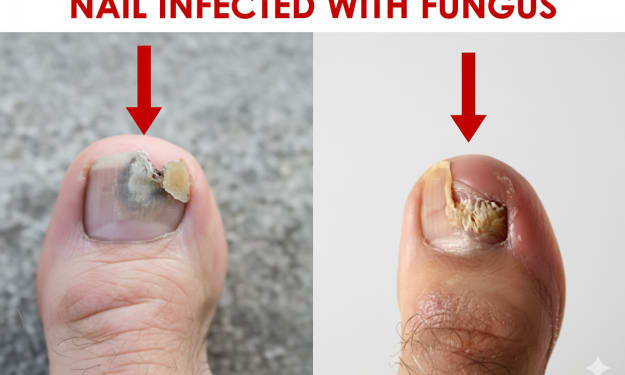
Does Tea Tree Oil Truly Work for Nail Fungus and Dandruff?
Onychomycosis is a fungal infection of our nails, usually toenails, but sometimes fingernails, characterized by nail discoloration, deformity, detachment, thickening, crumbling, ridging. The above image is an example of what it can look like.
By Edward Smith18 days ago in Viva
The Silent Revolution: How a Spin Bike in My Living Room Changed Everything. AI-Generated.
For years, my relationship with fitness was a series of "starts" that never quite "stuck." I’d buy the expensive gym membership, feel the surge of January motivation, and then slowly retreat when the logistics of commuting, locker rooms, and "gymtimidation" became too much to handle.
By George Evan18 days ago in Longevity
The Psychology of Living in Your Head
I was at dinner with friends when I realized I had no idea what anyone had been talking about for the last fifteen minutes. They were laughing, animated, fully present in the moment. Meanwhile, I was three conversations deep in my own head—replaying something awkward I'd said two hours ago, planning tomorrow's presentation, and simultaneously worrying about whether I'd come across as distant by not contributing enough to this very conversation I wasn't actually having. My best friend touched my arm. "You okay? You seem a million miles away." She had no idea. I wasn't a million miles away. I was right there at the table, but I was also simultaneously existing in seventeen different mental dimensions, none of which were the present moment. "Sorry," I mumbled. "Just tired." But I wasn't tired. I was just living in my head again. Like always. The Inner World That Never Sleeps For as long as I can remember, my mental life has been louder, more vivid, and more consuming than my actual life. While my body moves through the world—working, eating, talking—my mind is elsewhere, running a constant stream of thoughts, scenarios, conversations, and narratives that never stop. I live in a perpetual state of analysis. Every interaction gets dissected afterward. Every decision gets examined from forty-seven angles. Every feeling gets intellectualized, categorized, and filed away for future rumination. My therapist calls it "being in your head." I call it my default state of existence. Other people seem to just be—they go to the gym and think about the gym. They watch movies and experience the story. They have conversations and stay in those conversations. I go to the gym and plan my entire week. I watch movies and critique the dialogue while simultaneously thinking about my own life's narrative arc. I have conversations while having three other conversations with myself about the conversation I'm supposed to be having. It's exhausting. But it's also the only way I know how to exist. The Architects of Overthinking I wasn't born this way. Or maybe I was, but life certainly reinforced it. Growing up, my household was unpredictable. Not chaotic in an obvious way, but emotionally volatile. I learned early that survival meant prediction—if I could think through every possible scenario, anticipate every reaction, analyze every mood shift, I could stay safe. My mind became my refuge and my fortress. When the outside world felt uncertain, I could retreat inward, where I had complete control. I could replay conversations until I found the "right" response. I could plan futures in meticulous detail. I could create entire worlds that made sense in ways reality never did. School rewarded this tendency. Teachers praised my thoughtfulness, my ability to see multiple perspectives, my rich inner life. "She's an old soul," they'd say. "Very introspective." What they didn't see was that I wasn't choosing introspection. I was trapped in it. The Prison of Possibility Living in your head means living in infinite possibility—and infinite paralysis. Every decision becomes monumental because I can see every potential outcome. Choosing a restaurant requires weighing seventeen variables. Sending a simple email takes an hour because I'm analyzing every word choice, every possible interpretation, every way it could be misunderstood. My partner once joked that I could turn "Should we get pizza tonight?" into an existential crisis. He wasn't wrong. But it's not funny when you're the one drowning in it. When your brain treats every choice like a choose-your-own-adventure book with infinite pages. When you're so busy thinking about living that you forget to actually live. I've missed so much because I was too busy processing it. Sunsets I didn't see because I was ruminating. Conversations I didn't hear because I was rehearsing what I'd say next. Moments of joy that passed me by because I was already analyzing them, trying to capture and preserve them instead of simply experiencing them.
By Ameer Moavia18 days ago in Psyche
Ethereum Price Soars Above $3200 as Jeff Bezos Announces Space Travel Payment — Can It Rocket Higher?
Key Takeaways Jeff Bezos’ space company has expanded crypto payments to include Ethereum. Ethereum’s price rally has been driven by optimism around the Fusaka upgrade and renewed institutional demand via ETF inflows.
By Dena Falken Esq18 days ago in 01
Tarot For 2026
Three Blue Roses Tarot - My summary of 2025 - Queen of Air: You are a wordsmith, a clear communicator, and 2025 helped you shed any falsehoods in your life. You accepted the truth, no matter what it was, and you set and kept healthy boundaries for yourself.
By Denise E Lindquist18 days ago in Motivation
Can You Actually Reverse Type 2 Diabetes Naturally?
The goal of lifestyle treatment for type 2 diabetes is to reverse it, drive it into remission, meaning normal blood sugars on a normal diet without drugs, and exactly that can be achieved optimally with a whole food, plant-based diet, as I’ve reviewed before.
By Edward Smith18 days ago in Longevity
Why We Imagine the Worst-Case Scenario
It started with a text message that never came. My boyfriend had said he'd call me after his interview. It was 6 p.m., then 7 p.m., then 8 p.m. By 9 p.m., I'd convinced myself he was dead. Not just hurt—dead. Car accident. Mugging gone wrong. Sudden brain aneurysm. I'd already mentally planned his funeral, imagined telling his parents, and pictured myself in black at the cemetery when my phone finally buzzed. "Sorry babe! Interview ran long, then grabbed drinks with the team. How was your day?" I stared at the message, my heart still hammering, hands still shaking. Three hours I'd spent in hell. Three hours of vivid, terrible scenarios playing on loop in my mind. And for what? He'd been fine. Happy, even. That's when I realized: my brain wasn't protecting me. It was torturing me. The Catastrophe Factory I've been a catastrophic thinker for as long as I can remember. Show me any situation, and I'll show you seventeen ways it could end in disaster. A friend doesn't text back? They've decided they hate me and are ghosting me forever. A slight headache? Definitely a brain tumor. My boss wants to "chat"? I'm getting fired, losing my apartment, and will end up homeless. Turbulence on a plane? We're going down, and I've already written my last words to my family in my head. It's exhausting. Every day is a mental obstacle course of imagined tragedies that never materialize. And yet, I can't stop. My brain insists on preparing for the worst, as if anticipating disaster will somehow prevent it. The Genetics of Worry My therapist once asked me, "Where did you learn to think this way?" The answer came immediately: my mother. Growing up, every minor inconvenience was treated like a catastrophe. If my dad was ten minutes late coming home, my mother would pace the kitchen, convinced he'd been in an accident. If I had a cough, she'd keep me home from school, certain it would turn into pneumonia. If the phone rang after 9 p.m., she'd answer it with a trembling voice, already bracing for bad news. I absorbed her anxiety like a sponge. I learned that the world was dangerous, that disaster lurked around every corner, and that the best way to protect yourself was to imagine every terrible possibility before it happened. The logic was twisted but compelling: if I could predict the worst, maybe I could prevent it. Or at least, I wouldn't be blindsided by it. But all I really learned was how to suffer twice—once in my imagination and once if it actually happened. The Illusion of Control Here's what I've come to understand about catastrophic thinking: it's not really about the future. It's about control. When life feels uncertain or chaotic, our brains scramble for a sense of agency. We can't control whether bad things happen, but we can control our mental preparation for them. Catastrophizing becomes a security blanket—uncomfortable, but familiar. I noticed this pattern clearly during the pandemic. While the world was genuinely scary, my catastrophic thinking went into overdrive. I wasn't just worried about getting sick; I was planning for economic collapse, societal breakdown, and the end of civilization as we knew it. My therapist pointed out something crucial: "You're so busy preparing for the worst that you're missing the present moment entirely. And ironically, all this mental preparation doesn't actually help you handle real problems when they arise." She was right. When actual challenges came—losing my job, my grandmother's death, a real health scare—all my catastrophic preparation was useless. The scenarios I'd imagined were never quite right, and the energy I'd spent worrying could have been spent living. The Brain's Ancient Wiring There's a reason catastrophic thinking is so common: evolution. Our ancestors who imagined the worst—who saw every rustling bush as a potential predator—were more likely to survive than the optimists who assumed everything was fine. Anxiety kept them alive. Vigilance was rewarded. But here's the problem: our brains haven't caught up to modern life. We're still operating with software designed for life-or-death situations, applying it to emails, traffic, and social media. That rustling bush is now an unanswered text. That potential predator is now a cryptic comment from our boss. Our amygdala—the brain's alarm system—can't tell the difference between actual danger and imagined threats. So it treats everything like an emergency.
By Ameer Moavia18 days ago in Psyche