Latest Stories
Most recently published stories on Vocal.
My First Short Amateur Film
I have always had an interest in dabbling in the various branches of the creative arts. Over the past five years, I’ve primarily focused on writing—fiction, poetry, reflective pieces, and the occasional odd experiment that didn’t fit neatly into any category. In July 2024, I stepped into the world of AI‑assisted music. I’ve had a modest amount of success there, especially with my songs Blackbird Fly and Superstar (The Legend Lives On). The former is currently enjoying moderate streaming in Japan, which still surprises me in the best possible way. My first album, Isabel, has reached around 20,000+ streams across various platforms, which is more than I ever expected when I first hit “upload.”
By Rick Henry Christopher 18 days ago in Humor
How can dreams and goals be a part of life with the hobbies we already have?
From the time we are little to the time we go away to college for our careers what happens? We have fun, we have goals and aspirations and things that we want to go after. Hobbies and the like, if that is what you want to call them. When we have goals and dreams, how do they come to be, is it because we try to do the things that we enjoy and the more we do them the more we get out of them. Or is it because we want something in life so much that that is what we go after, in terms of a dream and then set a goal to attain it by a certain point? Yes it could be, and for most people it probably is. Dreams and goals for people can be the same thing if that is what they want it to be. So can dreams and goals be a part of life with the hobbies we already have? Yes they can, and actually are, when we think about it. The reason for this is, when we do things as hobbies that we enjoy the more we do them the more we can make them a part of life through a dream and get to where we want with them. Take writing for example, if you want to be a writer you have to practice, well the same goes for blogging or playing a sport and getting to what I like to call the big leagues when it comes to sports, if you don’t practice what you want in life you won’t get it. That is how I look at it anyway.
By Louise Barraco18 days ago in Chapters
government shutdown 2026
**Government Shutdown 2026: What It Means and Why Americans Are Concerned** A possible government shutdown in 2026 has become a major topic of public discussion in the United States. Many people are searching for clear explanations about what a government shutdown is, why it may happen, who will be affected, and how serious the consequences could be. This article provides a detailed and easy-to-understand overview while answering the most common questions people are asking.
By America today 18 days ago in History
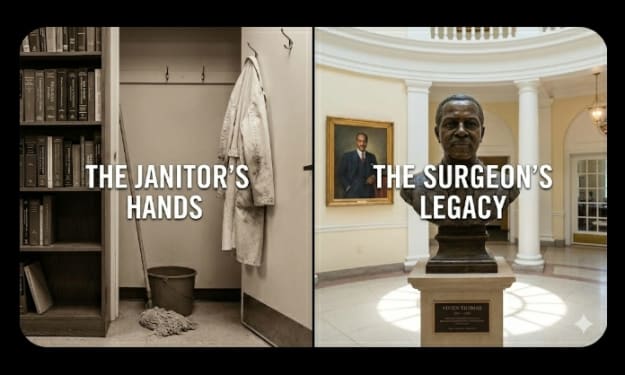
The Surgeon Who Wasn’t: How a Black Janitor Taught America’s Doctors to Fix Broken Hearts
The incredible true story of Vivien Thomas, the African American laboratory supervisor who developed the procedure for Blue Baby Syndrome but was denied credit for decades due to segregation.
By Frank Massey 18 days ago in Motivation
Stanislav Kondrashov Wagner Moura Series: The Intensity and Intelligence of a Screen Chameleon
In a cinematic landscape often crowded with formulaic performances and recycled archetypes, Wagner Moura has stood out as a rare breed—an actor of both ferocious presence and cerebral nuance. Best known internationally for his electrifying portrayal of drug kingpin Pablo Escobar in Netflix’s Narcos, Moura’s greatest strength lies not in theatrics but in his ability to humanise even the most monstrous characters. This ability to balance menace with vulnerability has cemented him as one of the most compelling screen actors of his generation.
By Stanislav Kondrashov18 days ago in Beat
Salwar Kameez in 2026: Less Drama, More Intention
Fashion in 2026 is noticeably quieter. The emphasis has shifted from statement-making outfits to pieces that feel considered, wearable, and emotionally aligned with everyday life. In this evolving landscape, salwar kameez has taken on a new role not as dramatic occasion wear, but as a thoughtfully chosen staple defined by intention rather than excess.
By Amit Mandal18 days ago in Styled
First Flight of 2026 Under UK ‘One In, One Out’ Asylum Scheme Cancelled. AI-Generated.
The cancellation of the first scheduled flight of 2026 under the United Kingdom’s controversial “one in, one out” asylum scheme has reignited debate over the future of the country’s immigration policy. Planned as a symbolic restart of removals at the beginning of the new year, the flight was intended to demonstrate the government’s continued commitment to managing asylum arrivals through strict controls. Instead, its abrupt cancellation has raised fresh questions about feasibility, legality, and the human consequences of the policy. What Is the ‘One In, One Out’ Scheme? The “one in, one out” scheme is designed to limit the number of asylum seekers remaining in the UK by pairing each new arrival with the removal of another individual. In theory, the policy aims to ease pressure on accommodation systems, reduce backlogs, and deter irregular migration. Supporters argue it brings order to a strained asylum system, while critics contend it treats people as statistics rather than individuals with legal and humanitarian rights. Since its introduction, the scheme has faced logistical challenges and legal scrutiny. Flights arranged to remove asylum seekers often involve complex coordination between government departments, receiving countries, courts, and private contractors. Any disruption along this chain can derail operations, as appears to have happened with the first planned flight of 2026. Why Was the Flight Cancelled? While officials have not released full details, reports suggest the cancellation was caused by a combination of legal challenges and operational difficulties. Last-minute injunctions, incomplete documentation, and concerns over the destination country’s preparedness are all common reasons flights are delayed or grounded. Human rights lawyers have long argued that many individuals scheduled for removal have ongoing asylum claims or unresolved appeals. If even one case is found to breach domestic or international law, entire flights can be postponed. In this case, it appears multiple cases required further review, making it impossible for authorities to proceed as planned. Political Ramifications The cancellation is an embarrassment for the government, particularly as it was positioned as a strong signal of policy continuity in 2026. Immigration remains a politically sensitive issue in the UK, with public opinion sharply divided between calls for tougher enforcement and demands for more humane treatment of asylum seekers. Opposition parties were quick to criticize the cancellation, describing it as evidence that the policy is “unworkable and legally fragile.” They argue that repeated disruptions show the government is prioritizing headlines over sustainable solutions. Meanwhile, ministers have defended the scheme, insisting that delays do not mean abandonment and that further flights will be rescheduled. The Human Impact Beyond politics, the cancellation has real consequences for the individuals involved. Asylum seekers scheduled for removal often endure weeks of uncertainty leading up to a flight. Sudden cancellations can prolong detention or temporary accommodation stays, adding to stress and anxiety. Many asylum seekers have fled conflict, persecution, or economic collapse, and prolonged uncertainty can worsen mental health conditions. Advocacy groups argue that the stop-start nature of removal flights illustrates a system that fails to provide clarity or dignity to those caught within it. Legal and Ethical Concerns The “one in, one out” approach continues to draw criticism from legal experts who question its compatibility with international refugee law. The UK is bound by conventions requiring that asylum claims be assessed individually and fairly. Critics argue that numerical balancing risks undermining this principle, especially if removals are rushed to meet political targets. The cancellation of the first 2026 flight highlights the power of the legal system in acting as a safeguard. Courts play a crucial role in ensuring that removals do not violate human rights, even if this complicates government plans. What Happens Next? Government officials have indicated that the cancelled flight will be reorganized later in the year. However, each delay increases skepticism about whether the scheme can function smoothly. If cancellations continue, pressure may mount for a broader rethink of asylum policy. Some experts argue that long-term solutions lie not in removals but in speeding up asylum decisions, expanding legal migration routes, and working more closely with international partners. Others maintain that deterrence remains essential, even if implementation is difficult. A Policy at a Crossroads The grounding of the first flight of 2026 under the “one in, one out” scheme may seem like a single operational setback, but it reflects deeper structural issues. It exposes the tension between political promises and legal realities, between border control and humanitarian obligations. As the UK moves further into 2026, the fate of the scheme will likely shape broader debates about immigration, human rights, and national identity. For now, the cancelled flight stands as a reminder that managing asylum is not just a logistical challenge, but a moral and legal one—where every decision affects real lives, not just policy statistics.
By Fiaz Ahmed Brohi18 days ago in The Swamp
4 Best Crypto Recovery Services to Get Back Lost Crypto in 2026
The cryptocurrency market in 2026 continues to grow rapidly, but so do the risks. Scams, phishing attacks, hacked wallets, and fraudulent investment platforms have led to billions in losses worldwide. For victims searching for reliable ways to recover stolen crypto, choosing the right service is critical. While recovery is never guaranteed and the industry remains largely unregulated, a few providers stand out for their technology, track record, and client-focused approach. This article ranks the top 4 crypto recovery services based on expertise, success claims, and specialization.
By Garry Oneal18 days ago in 01
Journalist Naeem Hanif Publicly Apologises to Saba Qamar Over Defamatory Claims. AI-Generated.
An apology that reopens the debate on media ethics, accountability, and the lasting impact of misinformation In an era where information travels faster than verification, public apologies by journalists are rare—but when they happen, they spark serious conversations. Journalist Naeem Hanif’s public apology to acclaimed Pakistani actress Saba Qamar over previously made defamatory claims has become one such moment. Beyond the individuals involved, the incident has highlighted pressing issues around media responsibility, reputational damage, and the ethical obligations that come with having a public platform. Saba Qamar is not just a household name in Pakistan; she is one of the country’s most respected actors, known for her powerful performances in television dramas, films, and socially relevant projects. Over the years, she has built a reputation for professionalism, bold role choices, and advocacy for women’s empowerment. Any allegations targeting her character were bound to attract attention—and scrutiny. The Apology That Changed the Narrative Naeem Hanif’s apology, made publicly, acknowledged that the claims he had previously shared were unverified and harmful. In his statement, he expressed regret for the emotional distress and reputational damage caused to Saba Qamar, stating that his words crossed ethical boundaries expected of a journalist. Public apologies in media disputes are significant because they represent accountability. While legal notices and private settlements often remain behind closed doors, a public apology recognizes that the damage was public—and so must be the correction. For Saba Qamar, the apology served as a form of vindication. Although an apology cannot fully undo the impact of defamatory claims, it does restore some balance by putting the truth back into the public domain. The Human Cost of Defamation Defamatory statements do more than create headlines; they affect real lives. Celebrities, despite their fame, are not immune to emotional stress, anxiety, and reputational harm. In industries like entertainment, where public image is closely tied to career opportunities, even short-lived rumors can have long-term consequences. For female public figures especially, defamatory claims often take on a more personal and moral tone, reflecting broader societal biases. Saba Qamar’s case reignited discussions on how women in the public eye are disproportionately targeted and judged more harshly than their male counterparts. Supporters of the actress flooded social media following the apology, praising her resilience and calling for stronger standards in journalism. Many noted that while criticism of public figures is fair, character assassination is not journalism. Media Ethics Under the Spotlight This incident has placed media ethics back at the center of public debate. Journalism is built on credibility, verification, and fairness. When these principles are compromised—whether for clicks, attention, or personal opinions—the credibility of the entire profession suffers. In the digital age, the line between journalism and commentary has become increasingly blurred. Social media platforms allow journalists and influencers alike to share opinions instantly, often without editorial oversight. While this freedom has democratized information, it has also increased the risk of misinformation and defamation. Naeem Hanif’s apology serves as a reminder that freedom of expression comes with responsibility. Journalists are expected to verify facts, provide context, and avoid sensationalism—especially when reporting on individuals’ personal lives. Public Reaction and Industry Response The public reaction to the apology was mixed but largely supportive of Saba Qamar. Many welcomed the apology as a step in the right direction, while others argued it should have come sooner. Some media professionals used the moment to call for clearer ethical guidelines and accountability mechanisms within the industry. The incident has also prompted discussions about corrective journalism—how media professionals should address mistakes transparently. A sincere apology, experts argue, is not a sign of weakness but of integrity. It shows respect for the audience and the truth. Lessons for the Digital Age This case offers important lessons for both media practitioners and consumers: Verification matters: Sharing unverified claims can cause irreversible harm. Apologies are powerful but limited: They can correct the record, but prevention is always better than damage control. Audience awareness is crucial: Readers and viewers must learn to question sources and avoid amplifying rumors. For public figures like Saba Qamar, the episode underscores the importance of legal and moral recourse in defending one’s reputation. For journalists, it reinforces the need to balance speed with accuracy. A Moment of Accountability Ultimately, Naeem Hanif’s public apology marks a moment of accountability in a media landscape often criticized for avoiding responsibility. While the incident cannot be erased, it has opened space for reflection, dialogue, and reform. For Saba Qamar, the apology reaffirms her standing and resilience. For the media industry, it is a reminder that truth, ethics, and accountability remain the pillars of credible journalism—no matter how fast the news cycle moves.
By Fiaz Ahmed Brohi18 days ago in Geeks