Latest Stories
Most recently published stories on Vocal.
Who Controls Earth’s Orbit?
At first glance, Earth’s orbit seems like a lawless void — a vast, silent expanse where no one truly holds power. Space is often imagined as infinite and free, untouched by politics or borders. Yet in reality, the space surrounding our planet has become one of the most crowded, strategic, and contested environments of the modern world. The question “Who controls Earth’s orbit?” is no longer philosophical. It is political, technological, economic, and increasingly existential.
By Holianyk Ihor18 days ago in Futurism
Celebrating Winter
Dubai in winter is so much more than a season; it’s a vibrant celebration bursting with lights, shopping, and festive cheer! As the weather cools down, the city’s entertainment hub turns into a spectacular wonderland packed with world-class events. With incredible sales and breathtaking fireworks, here are the winter experiences every traveller should check out this year.
By Aurora Gianna18 days ago in Styled
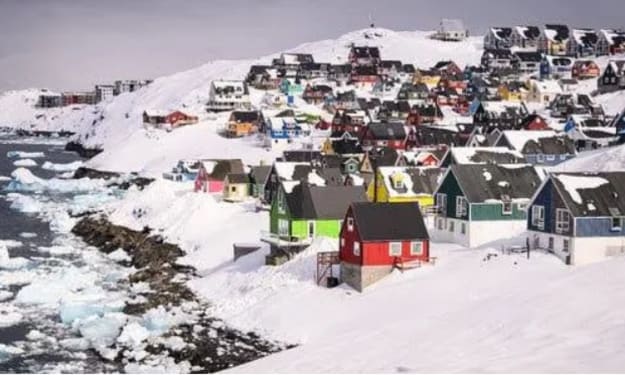
What to Know About Trump’s Desire to Take Over Greenland. AI-Generated.
When Donald Trump first floated the idea of the United States taking over Greenland, many people laughed it off as a joke. Fast forward to now, and the conversation is no longer humorous. Trump’s renewed interest in Greenland has sparked international debate, diplomatic pushback, and serious questions about global power, sovereignty, and Arctic strategy.
By Aqib Hussain18 days ago in The Swamp
Starship: A Breakthrough or an Overhyped Project?
Few space projects in modern history have sparked as much debate as Starship, the ambitious launch system being developed by SpaceX. To its supporters, Starship represents nothing less than a revolution — a machine that could make humanity a multi-planetary species and dramatically lower the cost of spaceflight. To critics, it is an overpromised, underproven concept whose technical challenges may outweigh its potential benefits. So which is it: a genuine breakthrough or an overhyped gamble?
By Holianyk Ihor18 days ago in Futurism
“One Day, I Realized Nobody Was Coming to Save Me—So I Saved Myself”
For the longest time, I believed my life was simply paused. Not broken. Not finished. Just waiting. Waiting for the right moment. Waiting for the right person. Waiting for something—anything—to arrive and change everything. I didn’t know exactly what I was waiting for, but I was sure it would come. People always said things like “It’ll get better” or “Your time will come”, and I clung to those words like promises written in invisible ink. I believed that if I endured long enough, life would eventually reward my patience. So I waited. I waited quietly, because I didn’t want to be a burden. I waited politely, because I didn’t want to seem ungrateful. I waited silently, because I didn’t even know how to explain what was wrong. From the outside, my life looked acceptable. I functioned. I showed up. I smiled when it was expected of me. I laughed at jokes that didn’t reach my heart. I answered “I’m fine” so often that it started to feel like muscle memory. But inside, something was eroding. Every day felt heavier than the last, like I was carrying a weight that kept growing while no one was looking. I woke up tired, went to bed tired, and spent the hours in between pretending I wasn’t. There was a quiet exhaustion that sleep couldn’t touch—a tiredness that came from constantly hoping for relief that never arrived. I thought suffering had to be loud to be real. I thought pain needed witnesses to matter. Mine had neither. There was no dramatic breaking point, no single moment when everything fell apart. Instead, it unraveled slowly. Almost gently. Like a thread pulled so gradually you don’t notice the fabric weakening until it’s too late. I kept telling myself, Just hold on a little longer. Surely someone would notice. Surely someone would step in. Surely life wouldn’t let me keep feeling this way forever. But life did. And then one day—an ordinary day that didn’t announce its importance—I realized something that changed everything. Nobody was coming. That realization didn’t arrive with clarity or relief. It arrived like grief. Heavy. Sharp. Unforgiving. I remember sitting alone, staring at nothing in particular, and feeling the truth settle into my bones. There would be no rescue. No sudden turning point delivered by someone else’s effort. No moment where everything magically aligned and lifted me out of my own life. It wasn’t that people didn’t care. It was that everyone was busy surviving their own storms. I had been waiting for someone to save me from a life that only I was living. And for a while, that realization shattered me. I felt abandoned by the world, betrayed by hope itself. I questioned every prayer I had whispered into the dark, every moment I had chosen patience over action. I wondered if I had misunderstood life completely—if the promises I believed in were never meant for people like me. I mourned the version of myself who thought endurance alone was enough. There is a special kind of loneliness that comes from realizing your pain is invisible. That no matter how heavy it feels to you, the world keeps moving at the same pace. Bills still need to be paid. Responsibilities still demand attention. Smiles are still expected. So I kept going. But something inside me had cracked open. Once you see the truth, you can’t unsee it. And the truth was this: waiting had become my hiding place. Hope, without action, had become an excuse to stay small. I had been standing still, convincing myself that stillness was strength. It wasn’t. Saving myself didn’t begin with confidence. It began with fear. Fear of staying the same. Fear of waking up ten years later in the same emotional place. Fear of realizing that I had wasted my own life waiting for permission to live it. I didn’t suddenly become brave. I became tired of being helpless. The first steps were almost embarrassing in their simplicity. There was nothing poetic about them. No montage-worthy transformation. Just small decisions that felt enormous at the time. Getting out of bed even when my body begged me not to. Choosing one task, then another, then another. Letting myself admit—quietly—that I was not okay. Some days, saving myself meant setting boundaries that made other people uncomfortable. I learned how often my exhaustion came from overextending myself to earn love, approval, or relevance. Saying no felt selfish at first. It felt wrong. But it also felt like oxygen. Other days, saving myself meant sitting alone with my feelings instead of numbing them. No distractions. No pretending. Just honesty. That was harder than any physical effort I had ever made. Facing your own thoughts can feel like standing in front of a mirror that refuses to lie. I began to understand something no one had taught me: healing is not linear, and it is rarely beautiful. It’s messy. Inconsistent. Frustrating. Some days feel like progress, others feel like failure. But both are part of the same road. There were days I missed the comfort of waiting. Waiting meant responsibility belonged to someone else. Taking control meant accepting that my life—every imperfect part of it—was in my hands. That was terrifying. But it was also freeing. As I slowly rebuilt myself, I noticed something else. Not everyone wanted to walk with me into this new version of myself. Some people preferred the me who needed saving. The me who was easier to control, easier to dismiss, easier to define. Outgrowing people hurts. Outgrowing places hurts. Outgrowing old versions of yourself hurts most of all. But staying the same hurts longer. I lost connections I thought were permanent. I stepped away from spaces that no longer fit who I was becoming. Loneliness returned—but this time, it was different. This loneliness felt honest. It didn’t come from abandonment; it came from alignment. I learned that being alone while growing is far healthier than being surrounded while shrinking. Strength, I discovered, isn’t loud. It doesn’t announce itself. It doesn’t demand recognition. Strength shows up quietly, day after day, in the choices you make when no one is watching. It shows up when you keep going even though the results are slow. When you forgive yourself for falling back into old habits. When you choose patience with yourself instead of punishment. There were setbacks—many of them. I stumbled. I doubted myself. I wondered if I was doing everything wrong. But this time, I didn’t collapse and wait for someone else to fix the damage. I picked myself up. Again and again. And something unexpected happened as I kept choosing myself: the world didn’t suddenly become easier, but I became stronger. Problems that once felt unbearable became manageable. Pain that once consumed me became something I could sit with without losing myself. I stopped asking, Why is this happening to me? I started asking, What can I do with what’s happening? That question changed everything. Today, my life is not perfect. I still have days when old fears resurface. I still feel tired sometimes. I still wish things were easier. But I no longer wait for rescue. I trust myself now. I trust that even if things fall apart, I will be there to put them back together. I trust that my worth doesn’t depend on who shows up for me. I trust that I am capable of building a life that feels like my own. And maybe the most important thing I’ve learned is this: realizing nobody is coming to save you is not a sentence. It’s an invitation. An invitation to stop shrinking. An invitation to take responsibility for your healing. An invitation to become the person you’ve been waiting for. If you’re reading this and you feel stuck—if you feel invisible, exhausted, or quietly breaking—I want you to know this: you are not weak for waiting. You were doing the best you could with what you knew. But you don’t have to wait anymore. Sometimes, saving yourself doesn’t mean changing everything. It means choosing yourself once—then choosing yourself again tomorrow. And one day, you’ll look back and realize that the moment nobody came was the moment your life truly began.Start writing...
By Ihtisham Ulhaq18 days ago in Motivation
The 2026 Engagement Guide: Why We Are Choosing Ethics Over Tradition
Selecting a diamond engagement ring has always been a rite of passage, a moment filled with weight, history, and a fair amount of pressure. However, as we navigate through 2026, I have noticed that the conversation around this symbol of commitment has shifted dramatically. It is no longer just about the "sparkle" or the status; it is about a deeper alignment with our personal values and aesthetic preferences.
By Mohd Kaish18 days ago in Styled
Berlin Blackout: Protest Over AI and Climate Crisis Leaves Tens of Thousands Without Power. AI-Generated.
Berlin has long been a city defined by protest. From Cold War demonstrations to modern climate marches, the German capital has served as a stage for dissent, debate, and political pressure. But a recent protest over artificial intelligence and the climate crisis pushed that tradition into unprecedented territory, leaving tens of thousands of residents without electricity and forcing Germany to confront uncomfortable questions about activism, infrastructure resilience, and the future of technological governance. What began as a coordinated demonstration aimed at drawing attention to AI regulation and climate inaction quickly escalated into a disruptive event with real-world consequences. By the end of the day, large parts of Berlin were in darkness, public transport was disrupted, and emergency services were stretched. The blackout has since ignited a nationwide debate: where should the line be drawn between legitimate protest and actions that endanger public safety? The Protest That Shut the Lights Off According to authorities, the blackout occurred after protesters targeted key infrastructure points during demonstrations across the city. Activist groups had announced days in advance that they planned “non-violent but disruptive” actions to force policymakers to act on what they describe as twin existential threats: unchecked artificial intelligence and accelerating climate collapse. Protesters argue that AI systems are rapidly being deployed without democratic oversight, while fossil fuel dependence continues to drive climate disasters. Their goal, they say, was to interrupt “business as usual” and make the cost of inaction visible. What few expected was the scale of disruption. Power outages affected residential neighborhoods, businesses, and parts of Berlin’s transport network. Hospitals and critical facilities were able to rely on backup generators, but many residents were left without heating, internet access, or working traffic signals for hours. A City Exposed Berlin’s power outage did not last long by international standards, but it was enough to expose vulnerabilities in one of Europe’s most advanced cities. Tens of thousands of households experienced sudden darkness, reminding residents how dependent daily life has become on uninterrupted electricity. City officials were quick to stress that no critical systems failed and that emergency protocols functioned as intended. Still, the incident raised alarms about how easily coordinated actions can disrupt essential services in major urban centers. Security experts warn that as infrastructure becomes more interconnected and digitized, it also becomes more sensitive to disruption. Whether motivated by protest, cybercrime, or geopolitical conflict, interference with energy systems poses growing risks. The Protesters’ Argument Organizers of the protest defended their actions, arguing that dramatic disruption is justified given the scale of the crises they are trying to highlight. In their view, temporary inconvenience pales in comparison to the long-term consequences of climate breakdown and unregulated AI development. They point to rising global temperatures, extreme weather events, and fears that artificial intelligence could deepen inequality, displace workers, and concentrate power in the hands of a few corporations. According to protest leaders, conventional demonstrations have failed to produce meaningful change, leaving civil disobedience as the only remaining option. “We are already living with blackouts,” one activist statement claimed, “just slower ones — collapsing ecosystems, lost jobs, and democratic systems overwhelmed by algorithms.” Public Backlash and Divided Opinion Despite these arguments, public reaction in Berlin has been deeply divided. While some residents expressed sympathy for the protest’s goals, many were angered by the disruption. Small business owners reported lost income, commuters faced long delays, and vulnerable residents were left anxious during the outage. Critics argue that actions which disrupt essential services risk alienating the very public support movements need to succeed. They also warn that targeting infrastructure crosses a dangerous line, potentially putting lives at risk. Political leaders echoed these concerns. Several German officials condemned the blackout, emphasizing that while protest is a protected democratic right, actions that interfere with critical infrastructure are unacceptable. Calls have grown for tougher penalties against demonstrators who cause large-scale disruptions. AI, Climate, and Political Paralysis The Berlin protest reflects deeper frustrations within German and European politics. On climate policy, governments face pressure to accelerate energy transitions while managing economic costs and public resistance. On artificial intelligence, lawmakers are racing to regulate technologies that are evolving faster than legislation can keep up. The European Union has taken steps with proposed AI regulations and climate targets, but activists argue these measures are too slow and too cautious. The sense of urgency driving protests is fueled by a belief that institutional politics cannot keep pace with technological and environmental change. This disconnect between activist urgency and political process lies at the heart of the Berlin blackout. Protesters wanted to force immediate attention; authorities wanted to preserve order and safety. Infrastructure as a New Battleground The blackout also highlights how infrastructure has become a focal point in modern protest movements. Roads, airports, energy systems, and data centers are increasingly seen as leverage points to gain attention in an overcrowded media landscape. Experts warn that this trend presents serious challenges for democratic societies. While infrastructure disruption can be powerful, it also risks normalizing tactics that could be exploited by more malicious actors. Germany now faces the challenge of strengthening infrastructure protection without undermining civil liberties — a delicate balance in a country with a strong protest culture and a deep historical sensitivity to state overreach. Lessons for the Future The Berlin power outage may serve as a turning point in how protests are policed and how infrastructure is protected. Authorities are expected to review security protocols and legal frameworks to prevent similar incidents. At the same time, the protest has succeeded in one crucial way: it forced conversations about AI governance and climate urgency into the national spotlight. Whether that attention translates into meaningful policy change remains uncertain. What is clear is that public patience for disruption has limits. Movements that rely on escalating tactics risk losing legitimacy if their actions are perceived as reckless or harmful. Conclusion: A City, a Warning, and a Choice The Berlin blackout was more than a temporary loss of power. It was a warning about the fragile balance between protest, technology, and modern urban life. As societies grapple with rapid AI development and an accelerating climate crisis, tensions between urgency and stability are likely to grow. Berlin’s experience raises a difficult question for democracies everywhere: how do we address existential threats without tearing at the systems that keep societies functioning? The answer will shape not only future protests, but the resilience of cities in an increasingly uncertain world.
By Muhammad Hassan18 days ago in Earth
7 Mystery Books With Twists You’ll Never Forget. AI-Generated.
Mystery novels do more than entertain—they challenge our assumptions, sharpen our intuition, and remind us how fragile “the truth” can be. We’ve all felt that electric moment when a story’s final reveal flips everything we thought we knew. The best mystery books don’t just surprise us; they stay with us, lingering like a half-remembered dream that suddenly makes sense days later.
By Diana Meresc18 days ago in BookClub
Why Most Forex Traders Lose Money & How Smart Practice Methods Are Transforming Learning in 2026. AI-Generated.
Forex trading remains one of the largest financial markets in the world, with daily turnover estimated at around $9.6 trillion in 2025, up from roughly $7.5 trillion in 2022.
By Beirman Capital18 days ago in Trader
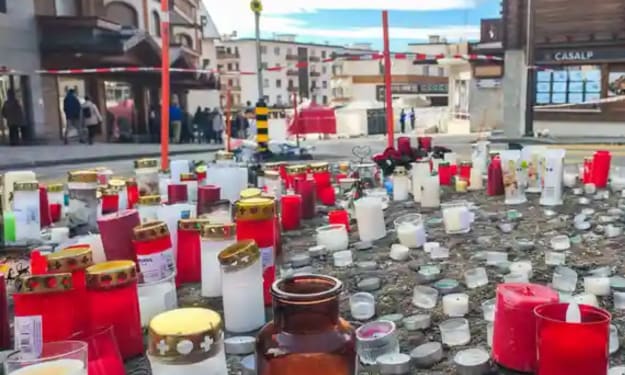
Swiss NYE Fire Tragedy Exposes Deadly Oversight Failures. AI-Generated.
New Year’s Eve is meant to symbolize fresh beginnings, celebration, and hope. In Switzerland, however, the arrival of the new year was marked by tragedy after a deadly fire tore through a crowded bar, killing and injuring multiple people. As investigators piece together the causes, one revelation has stunned the public and shaken confidence in safety oversight: the bar had not been inspected for five years. This single fact has transformed a tragic accident into a broader national debate about regulatory enforcement, accountability, and whether complacency within safety systems allowed a preventable disaster to unfold. A Night That Turned Fatal According to preliminary reports, the fire broke out shortly before midnight as revelers gathered to welcome the new year. Witnesses described panic, thick smoke, and confusion as people rushed toward exits. Emergency responders arrived quickly, but for several victims, help came too late. Authorities have been careful not to speculate on the precise cause while the investigation continues. However, early findings suggest that flammable interior materials, overcrowding, and inadequate safety infrastructure may have played critical roles in how rapidly the fire spread. What has fueled public anger is not just the fire itself, but what it revealed about long-standing failures behind the scenes. Five Years Without an Inspection Swiss regulations generally require hospitality venues to undergo regular fire and safety inspections. These checks are meant to ensure functional alarms, clearly marked exits, fire-resistant materials, and compliance with occupancy limits. In this case, investigators confirmed that the bar had not been formally inspected in half a decade. That lapse has raised serious questions. How did a popular nightlife venue operate for so long without oversight? Were inspections delayed due to administrative backlogs, staffing shortages, or simple neglect? And most importantly, could lives have been saved if authorities had intervened earlier? For many Swiss citizens, the idea that a bar packed with people on one of the busiest nights of the year escaped inspection for so long feels deeply unsettling. Systemic Gaps in Enforcement Switzerland is often viewed as a country with strong institutions and high safety standards. This tragedy, however, suggests that even well-regarded systems can fail when enforcement becomes inconsistent. Experts point out that safety laws are only as effective as their implementation. Regulations on paper do little if inspections are infrequent or poorly tracked. In some cantons, responsibility for inspections is divided among multiple agencies, creating gaps where accountability becomes blurred. In this case, authorities are now examining whether the bar slipped through bureaucratic cracks or whether warnings were issued but not followed up. Either scenario points to systemic weaknesses rather than a one-off mistake. Owners Under Scrutiny Attention has also turned to the bar’s management. Business owners are legally and morally responsible for ensuring their premises are safe, regardless of inspection schedules. Investigators are assessing whether safety equipment was missing, outdated, or deliberately ignored to cut costs or maximize capacity. If negligence is proven, criminal charges could follow. Legal experts note that Swiss law allows for serious penalties when safety violations result in death, including prison sentences for responsible parties. Yet critics argue that focusing solely on owners risks missing the bigger picture. When inspections fail to occur for years, responsibility extends beyond individual businesses to the institutions tasked with protecting the public. Public Anger and Political Pressure In the days following the fire, public reaction has been swift and emotional. Vigils have been held for the victims, while social media has filled with calls for resignations, audits, and sweeping reform. Many are asking how many other venues might be operating under similar conditions. Political leaders have promised answers. Several officials have called for immediate reviews of inspection records across the hospitality sector, particularly for nightclubs and bars hosting large crowds. Some lawmakers are pushing for mandatory digital tracking systems to ensure inspections cannot be delayed or overlooked. The tragedy has also reignited debate about whether local authorities are adequately funded and staffed to perform regular safety checks. Lessons From Past Disasters History offers painful reminders of what happens when safety oversight fails. From nightclub fires across Europe to deadly crowd disasters worldwide, the pattern is often the same: ignored regulations, delayed inspections, and warnings that came too late. In many cases, meaningful reforms only followed public outrage and loss of life. Switzerland now faces a similar crossroads. Will this tragedy lead to lasting change, or will attention fade once headlines move on? Safety advocates argue that true reform requires more than promises. It demands consistent inspections, transparent reporting, and consequences for both regulators and businesses when standards are not met. A Wake-Up Call for the Hospitality Industry Beyond government action, the fire serves as a stark warning to bar and club owners across the country. New Year’s Eve crowds, pyrotechnics, candles, and packed dance floors create heightened risks. Cutting corners on safety, whether intentionally or through complacency, can have irreversible consequences. Industry associations are now urging members to conduct voluntary safety audits and update emergency plans. Some venues have temporarily closed to reassess fire exits, alarms, and occupancy limits. While these steps are welcome, many argue they should not depend on tragedy to be taken seriously. Remembering the Victims Amid investigations, political debates, and public anger, it is crucial not to lose sight of the human cost. Families are mourning loved ones who went out to celebrate and never came home. Survivors are grappling with trauma that will last long after the fire scene is cleared. Their loss gives weight to the questions now being asked — and urgency to the demand for answers. Conclusion: Accountability Must Follow Tragedy The Swiss NYE fire is more than an isolated incident. It is a stark reminder that safety cannot be assumed, even in countries with strong reputations for regulation. A bar left uninspected for five years represents a failure not just of paperwork, but of responsibility. If there is to be any meaning drawn from this tragedy, it must be change — stricter enforcement, clearer accountability, and a renewed commitment to public safety. Otherwise, the lessons learned will come at a cost too high to justify.
By Muhammad Hassan18 days ago in The Swamp