Latest Stories
Most recently published stories on Vocal.
Hundreds protest in Minneapolis after ICE officer kills Renee Nicole Macklin Good
It has happened again. In Minneapolis, Minnesota, an unarmed civilian has been struck down by the authorities. In a place still trying to sort out what happened to the slain George Floyd, it is now a time for direct action against not the police, but ICE.
By Skyler Saunders18 days ago in The Swamp
I Stayed Quiet So Long, I Forgot My Real Voice
I didn’t decide to go silent one day. There was no clear moment, no dramatic turning point where I chose quiet over sound. It happened slowly—so slowly that I didn’t notice when my voice stopped sounding like mine.
By Imran Ali Shah18 days ago in Motivation
For a Moment, Only That Story Matters’: My Plan to Reignite the All-Consuming Love of Books. AI-Generated.
In an era dominated by endless notifications, social media scrolls, and instant entertainment, the art of getting lost in a book has become increasingly rare. Yet, the deep, immersive joy of reading remains unmatched—a world where, for a fleeting but precious moment, only the story matters. For those of us who grew up loving books, it’s a feeling we long to recapture. And for those who never had the chance to experience it fully, it’s a gift waiting to be discovered. This is my plan to reignite the all-consuming love of books in today’s distracted world. The Case for Reading Deeply Reading is not just about absorbing information; it is an exercise in imagination, empathy, and critical thinking. When we read, we step into someone else’s shoes, traverse distant lands, and witness lives vastly different from our own. Psychologists have long documented that deep reading fosters cognitive growth, strengthens memory, and improves emotional intelligence. Yet, despite these benefits, fewer people report reading for pleasure regularly. In a world of micro-content—tweets, reels, and five-minute videos—books demand something different: time, patience, and focus. This is exactly why they have become so precious. A book asks readers to pause, reflect, and immerse themselves in a sustained narrative. And for those who manage it, the reward is a sense of connection and clarity that is hard to find elsewhere. Creating the Right Environment My first step toward rekindling the love of books is creating an environment conducive to focused reading. Distractions are the enemy of immersion, and in our digital age, they are everywhere. For me, this means carving out a dedicated reading space—a quiet corner with comfortable seating, good lighting, and a small selection of books within reach. Phones are left out of arm’s reach, and notifications are silenced. It also means carving out intentional reading time. Whether it’s a thirty-minute morning ritual or an hour before bed, the key is consistency. Making reading a habitual part of daily life trains the mind to settle into stories more readily and fosters the feeling of losing oneself in a narrative. Choosing Stories That Demand Attention Not all books are created equal when it comes to sparking an all-consuming love of reading. While classics hold timeless value, sometimes a gripping contemporary novel, a suspenseful thriller, or a vividly imagined fantasy is exactly what reignites the flame. The secret is finding stories that pull you in immediately—books that make you lose track of time, think about characters long after you’ve put the book down, and transport you to another world entirely. I also recommend mixing genres. A rich, varied reading diet keeps curiosity alive. Historical fiction might sharpen empathy and cultural awareness, while science fiction opens doors to new concepts and imaginative possibilities. Memoirs bring real human struggles into focus, fostering reflection and personal growth. Reading With Others One overlooked method of rekindling reading passion is sharing the experience. Book clubs, online reading groups, or simply discussing books with friends can amplify the joy of literature. Conversations about characters, plot twists, or favorite passages deepen understanding and create accountability to finish the books we start. It’s not just about reading; it’s about connecting over stories, building a community of shared curiosity and wonder. Slow Reading as a Practice To truly fall back in love with reading, I’ve embraced the practice of “slow reading.” Rather than racing through pages to finish a book quickly, I allow myself to savor each paragraph, visualize scenes, and pause to reflect. This approach transforms reading from a task to a meditation. I notice nuances in language, rhythm, and emotion that might otherwise be missed. Slow reading restores the intimacy of books, reminding us that the journey is as important as the destination. The Transformative Power of Stories Ultimately, my plan to reignite love for reading is rooted in the transformative power of stories. For a moment, a book can absorb us entirely. We forget the stresses of daily life, step into another world, and emerge changed—more empathetic, thoughtful, and inspired. These moments are fleeting, but they are profoundly human. In a society that prizes speed and efficiency, reclaiming time for immersive reading is an act of self-care and resistance. By intentionally seeking out stories, creating space for deep engagement, and sharing experiences with others, we can nurture this timeless love. Because the truth is simple: no matter how fast the world moves, the magic of a book, when it grabs you completely, is unmatched. And when that moment arrives, only the story matters.
By Fiaz Ahmed Brohi18 days ago in The Swamp
The Handshake Isn’t Dead
People forget how ancient certain gestures are. The handshake is one of them. A brief grip between two human hands started long before business cards, offices, or networking events. It began as proof that neither person carried a weapon. It was the original trust test, done in open view, palm out, fingers visible, nothing hidden. The motion settled nerves in a time when ambush and suspicion shaped daily life. Humans remember rituals that keep them alive. Even if modern culture forgets the origin story, the nervous system does not.
By Dr. Mozelle Martin18 days ago in Humans
Iran Crisis Deepens as Protests Spread to Over 100 Cities; Thousands Held. AI-Generated.
Iran is once again at the center of global attention as nationwide protests intensify, spreading to over 100 cities and towns across the country. The demonstrations, which began as a response to long-standing economic hardships and political grievances, have evolved into a broader challenge to the government’s authority. Reports indicate that thousands of protestors have been detained in recent days, raising concerns about human rights violations and the potential for a prolonged national crisis. Roots of the Unrest The current wave of protests in Iran reflects a combination of political, social, and economic pressures. Years of international sanctions have weakened the economy, leading to rising unemployment, inflation, and a decline in living standards. Many Iranians, particularly the youth, feel disillusioned by the lack of political freedom and limited avenues for expressing dissent. Additionally, the government’s strict policies on civil liberties, media censorship, and restrictions on women’s rights have fueled public anger. Demonstrators are demanding not only economic relief but also greater political accountability, transparency, and respect for basic human rights. Scale and Spread of Protests Unlike earlier localized demonstrations, the current protests have spread rapidly across Iran. Cities from Tehran and Isfahan to smaller towns in the north and south are reporting public gatherings, marches, and street demonstrations. Social media footage, despite heavy government censorship, shows large crowds chanting slogans, waving flags, and calling for systemic change. The speed and scale of the protests suggest that the unrest taps into a deep-seated frustration among ordinary citizens. Analysts note that the movement’s spread to over 100 cities indicates a nationwide dissatisfaction that extends beyond any single issue or region. Government Response and Crackdown The Iranian authorities have responded with a combination of repression and limited concessions. Security forces have been deployed in major urban centers, often using tear gas, water cannons, and rubber bullets to disperse crowds. Reports from human rights organizations suggest that mass arrests are ongoing, with thousands of protestors detained in makeshift facilities and prisons. Government officials have framed the protests as attempts by “foreign-backed elements” to destabilize the country. State media coverage emphasizes the role of external influence, portraying the demonstrations as threats to national security rather than expressions of legitimate grievances. International human rights groups have criticized this approach, warning that the crackdown risks escalating tensions and could result in severe human rights violations. They have urged Iran to respect the right to peaceful assembly and to release detainees who have not committed serious crimes. Economic Implications The protests are occurring amid a fragile economic environment. Iran’s economy has been severely impacted by decades of sanctions, reduced oil exports, and mismanagement in certain sectors. Strikes, roadblocks, and disruptions caused by the unrest have further strained commerce, transportation, and daily life, potentially exacerbating the economic crisis. Investors and regional neighbors are closely monitoring the situation, concerned that prolonged instability could affect trade, energy supply, and geopolitical dynamics in the Middle East. Global and Regional Reactions The international community has expressed concern over the escalating crisis. The United Nations and human rights organizations have called on Iran to ensure the safety of civilians and uphold international human rights standards. Countries in the region and beyond are also watching closely, recognizing that widespread unrest in Iran could have broader implications for regional security, diplomacy, and refugee flows. Some world powers have condemned the government’s heavy-handed tactics, urging restraint and dialogue, while others remain cautious in their statements, wary of being seen as interfering in Iran’s domestic affairs. Voices from the Ground Eyewitness accounts reveal the courage and determination of protestors despite the risks of arrest or violence. Citizens report marching in streets even under heavy police presence, sharing messages on social media to draw international attention, and organizing support networks for those detained. Many young Iranians express frustration over generational grievances, seeking not only economic opportunity but also political freedom and social justice. Looking Ahead The future of Iran’s protests remains uncertain. Analysts suggest that without meaningful political reform, economic relief, or dialogue with protestors, unrest is likely to persist. The government faces a delicate balancing act: suppressing dissent to maintain control while avoiding actions that could further inflame public anger or provoke international condemnation. The next few weeks are likely to be critical. The outcome will shape Iran’s domestic stability, its relations with global powers, and the broader perception of human rights and governance in the country. Conclusion Iran’s unfolding crisis highlights the growing tensions between citizens demanding change and a government determined to maintain control. With protests spreading to over 100 cities and thousands detained, the situation underscores the fragility of civil liberties and the risks of escalating violence. The international community, while limited in direct influence, continues to call for restraint, transparency, and dialogue. As Iranians continue to voice their grievances, the world watches, aware that the outcome of these protests could have far-reaching implications for regional stability, economic conditions, and the future of civic freedom in one of the Middle East’s most strategically significant countries
By Fiaz Ahmed Brohi18 days ago in The Swamp
7 Books That Will Take Your Mind Off Stressful Days. AI-Generated.
In our fast-paced world, stress is inevitable. Between work deadlines, personal responsibilities, and the constant barrage of news, it’s easy to feel overwhelmed. Sometimes, the best remedy isn’t a quick fix or a relaxation app—it’s a book. Immersing ourselves in the pages of a well-crafted story can transport us to another world, provide fresh perspectives, and offer a much-needed mental escape. Below is a list of 7 books that will take your mind off stressful days.
By Diana Meresc18 days ago in BookClub
MPs Will Vote on Any Deployment of UK Troops to Ukraine, Says Keir Starmer. AI-Generated.
UK Prime Minister Keir Starmer has pledged that Members of Parliament will vote on any potential deployment of British troops to Ukraine, marking a significant statement about democratic oversight during one of Europe’s most sensitive security crises.
By Aarif Lashari18 days ago in The Swamp
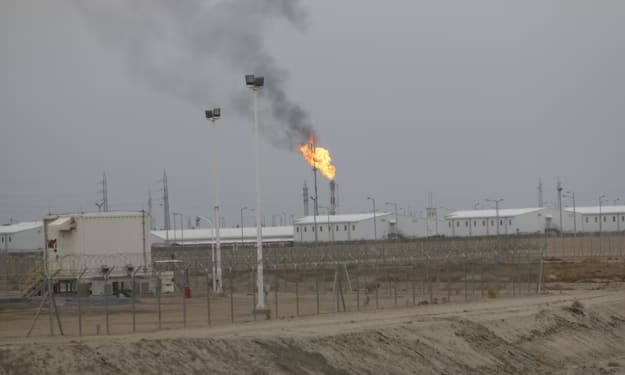
Iraq to Nationalise West Qurna 2 Oilfield Operations, Government Says. AI-Generated.
Iraq is making headlines this week with a bold decision: the government has announced plans to nationalise operations at the West Qurna 2 oilfield, one of the largest and most vital oil assets in the country. This step comes amid geopolitical tensions, economic uncertainty, and concerns about the stability of oil production. For a nation where oil revenues fund everything from public salaries to infrastructure, keeping West Qurna 2 running smoothly is critical. But what does this move really mean — and why now? West Qurna 2: Iraq’s Oil Powerhouse West Qurna 2 isn’t just another oilfield. Located near Basra in southern Iraq, it produces between 465,000 and 480,000 barrels per day — roughly 9% of Iraq’s total output and about 0.5% of global supply. That makes it strategically vital. Any disruption in production could have ripple effects on Iraq’s economy and even global oil markets. Historically, the Russian giant Lukoil has managed the field, holding a 75% stake under a service contract. But recent developments forced Baghdad to reconsider this arrangement. Why Iraq Is Taking Control Now The catalyst? Sanctions on Lukoil over Russia’s actions in Ukraine. In late 2025, Lukoil declared force majeure, citing sanctions that prevented it from fulfilling contractual obligations. That raised alarms in Baghdad. If Lukoil couldn’t operate normally, Iraq risked losing vital oil production. The solution? Bring operations under state control through the Basra Oil Company (BOC), the government’s own oil management firm. For now, this nationalisation is temporary — planned for about 12 months — giving Iraq time to maintain production while exploring future ownership solutions. How Iraq Plans to Keep Production Running According to officials, BOC will handle day-to-day operations, from paying staff to covering operating costs. Revenue from other major oilfields, like Majnoon, will help fund operations at West Qurna 2. The government assures that production remains steady at pre-nationalisation levels, a key point for Iraq’s economy and its commitments to OPEC. Maintaining output stability also signals to international markets that Iraq is managing the transition carefully. The Geopolitical Context Nationalising West Qurna 2 cannot be separated from global politics. Sanctions against Russian companies disrupted Lukoil’s ability to operate, forcing Iraq to act. By taking control, Iraq safeguards its energy security and reduces dependence on foreign companies that may be vulnerable to political pressure or sanctions. It’s a clear example of how geopolitics can directly affect energy production. What Comes Next? Potential Buyers and Partnerships Although Iraq has nationalised operations temporarily, it’s not shutting the door to foreign investment. Reports suggest interest from major players like ExxonMobil and Chevron, as well as private equity firms, to acquire Lukoil’s stake in the long term. This creates a balancing act: Iraq wants the technical expertise and investment that foreign companies can bring, while also asserting sovereign control over one of its most important resources. Global Implications For the world, Iraq’s move is significant. West Qurna 2 contributes nearly half a million barrels of oil per day to the global market. Keeping production stable protects not just Iraq’s economy, but also global energy prices. At the same time, the episode highlights how international sanctions and politics can have unintended consequences, forcing nations to make tough decisions to maintain essential operations. A Strategic Assertion of Control Ultimately, Iraq’s nationalisation of West Qurna 2 is about more than oil. It’s about energy security, national sovereignty, and strategic autonomy. Whether the takeover remains temporary or evolves into a longer-term model involving foreign partners, it underscores a larger truth: oil is not just a commodity in Iraq — it’s a matter of national security. For investors, governments, and energy watchers, the West Qurna 2 story is a reminder of how interconnected geopolitics, sanctions, and energy markets have become. Key Takeaways: Iraq has nationalised West Qurna 2 operations due to Lukoil’s sanctions-related operational issues. The move is temporary, allowing state control while exploring future ownership. Production is being maintained through the Basra Oil Company and revenue from other oilfields. The decision reflects a mix of economic necessity, geopolitical pressure, and strategic sovereignty. Global oil markets are watching closely, as disruptions could affect supply and prices.
By Muhammad Hassan18 days ago in The Swamp