
Iraq to Nationalise West Qurna 2 Oilfield Operations, Government Says
A Bold Move to Protect Production Amid Sanctions and Global Energy Uncertainty

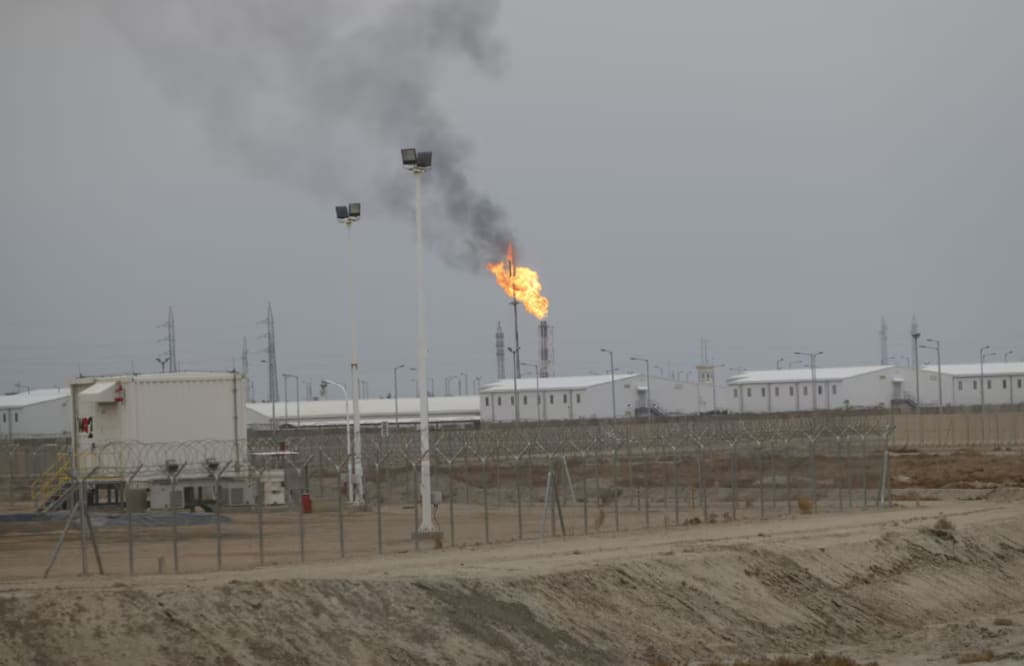
Iraq is making headlines this week with a bold decision: the government has announced plans to nationalise operations at the West Qurna 2 oilfield, one of the largest and most vital oil assets in the country.
This step comes amid geopolitical tensions, economic uncertainty, and concerns about the stability of oil production. For a nation where oil revenues fund everything from public salaries to infrastructure, keeping West Qurna 2 running smoothly is critical.
But what does this move really mean — and why now?
West Qurna 2: Iraq’s Oil Powerhouse
West Qurna 2 isn’t just another oilfield. Located near Basra in southern Iraq, it produces between 465,000 and 480,000 barrels per day — roughly 9% of Iraq’s total output and about 0.5% of global supply.
That makes it strategically vital. Any disruption in production could have ripple effects on Iraq’s economy and even global oil markets. Historically, the Russian giant Lukoil has managed the field, holding a 75% stake under a service contract. But recent developments forced Baghdad to reconsider this arrangement.
Why Iraq Is Taking Control Now
The catalyst? Sanctions on Lukoil over Russia’s actions in Ukraine. In late 2025, Lukoil declared force majeure, citing sanctions that prevented it from fulfilling contractual obligations.
That raised alarms in Baghdad. If Lukoil couldn’t operate normally, Iraq risked losing vital oil production. The solution? Bring operations under state control through the Basra Oil Company (BOC), the government’s own oil management firm.
For now, this nationalisation is temporary — planned for about 12 months — giving Iraq time to maintain production while exploring future ownership solutions.
How Iraq Plans to Keep Production Running
According to officials, BOC will handle day-to-day operations, from paying staff to covering operating costs. Revenue from other major oilfields, like Majnoon, will help fund operations at West Qurna 2.
The government assures that production remains steady at pre-nationalisation levels, a key point for Iraq’s economy and its commitments to OPEC. Maintaining output stability also signals to international markets that Iraq is managing the transition carefully.
The Geopolitical Context
Nationalising West Qurna 2 cannot be separated from global politics. Sanctions against Russian companies disrupted Lukoil’s ability to operate, forcing Iraq to act.
By taking control, Iraq safeguards its energy security and reduces dependence on foreign companies that may be vulnerable to political pressure or sanctions. It’s a clear example of how geopolitics can directly affect energy production.
What Comes Next? Potential Buyers and Partnerships
Although Iraq has nationalised operations temporarily, it’s not shutting the door to foreign investment. Reports suggest interest from major players like ExxonMobil and Chevron, as well as private equity firms, to acquire Lukoil’s stake in the long term.
This creates a balancing act: Iraq wants the technical expertise and investment that foreign companies can bring, while also asserting sovereign control over one of its most important resources.
Global Implications
For the world, Iraq’s move is significant. West Qurna 2 contributes nearly half a million barrels of oil per day to the global market. Keeping production stable protects not just Iraq’s economy, but also global energy prices.
At the same time, the episode highlights how international sanctions and politics can have unintended consequences, forcing nations to make tough decisions to maintain essential operations.
A Strategic Assertion of Control
Ultimately, Iraq’s nationalisation of West Qurna 2 is about more than oil. It’s about energy security, national sovereignty, and strategic autonomy.
Whether the takeover remains temporary or evolves into a longer-term model involving foreign partners, it underscores a larger truth: oil is not just a commodity in Iraq — it’s a matter of national security.
For investors, governments, and energy watchers, the West Qurna 2 story is a reminder of how interconnected geopolitics, sanctions, and energy markets have become.
Key Takeaways:
Iraq has nationalised West Qurna 2 operations due to Lukoil’s sanctions-related operational issues.
The move is temporary, allowing state control while exploring future ownership.
Production is being maintained through the Basra Oil Company and revenue from other oilfields.
The decision reflects a mix of economic necessity, geopolitical pressure, and strategic sovereignty.
Global oil markets are watching closely, as disruptions could affect supply and prices.
About the Creator
Muhammad Hassan
Muhammad Hassan | Content writer with 2 years of experience crafting engaging articles on world news, current affairs, and trending topics. I simplify complex stories to keep readers informed and connected.
Keep reading
More stories from Muhammad Hassan and writers in The Swamp and other communities.
US Senate to Vote on Bid to Stop Trump from Taking Further Military Action in Venezuela
The United States is at a political and constitutional crossroads. In early January 2026, the U.S. Senate prepared to vote on a resolution aimed at limiting President Donald Trump’s ability to order further military action in Venezuela without Congress’ approval. The move has sparked a dramatic debate about the balance of power between the president and Congress — and what it means for America’s role on the global stage. Why the Senate Is Acting Now The immediate spark was a controversial U.S. military raid in Venezuela. Special forces captured Venezuelan President Nicolás Maduro and brought him to New York on charges related to alleged narco-terrorism. While some lawmakers praised the objective — removing a leader accused of serious crimes — many others were alarmed. Democrats and even some Republicans argued the Trump administration failed to consult Congress before launching a major military incursion. The question on everyone’s mind: Can a president unilaterally launch major military operations, or does Congress have a say? War Powers Under the Constitution The U.S. Constitution gives Congress the power to declare war, while the president serves as commander in chief. Historically, presidents have interpreted their powers broadly, often acting without formal declarations of war. To address this, Congress passed the War Powers Resolution of 1973, requiring the president to consult lawmakers when introducing U.S. forces into hostilities. Now, legislators are invoking that law to prevent further military action in Venezuela without their approval. Senators Tim Kaine (D‑VA) and Rand Paul (R‑KY) are leading a bipartisan push, joined by Senate leaders like Charles Schumer and Adam Schiff. Their argument: unchecked military action erodes constitutional balance and puts U.S. troops at risk. What the Resolution Would Do If passed, the resolution would require Trump to obtain Congressional approval for any additional military operations in Venezuela — including strikes, troop deployments, or other offensive actions. Lawmakers insist this is not just procedural. They view it as a crucial step to reassert Congressional authority and prevent unilateral military adventures abroad. Divisions in the Senate The vote is far from guaranteed. Many Republicans support Trump, arguing that the president acted lawfully and that restricting his military flexibility could weaken America’s global position. Even within the Republican Party, there is frustration over being kept in the dark about the Maduro raid. Bipartisan concerns about transparency and oversight are fueling debate. Even if the Senate passes the resolution, it faces hurdles: it must pass the House and survive a presidential veto — requiring a two-thirds majority to override. Why It Matters Beyond Venezuela This vote isn’t just about one country. Lawmakers warn that similar measures could be needed if the president seeks military action elsewhere — including Cuba, Mexico, or even Greenland. The central issue: Who decides when America goes to war — Congress or the president? The outcome could redefine U.S. foreign policy and influence how allies and adversaries view American intentions. Public Opinion and the Future Many Americans oppose giving the president unchecked authority to engage in military conflicts abroad. Polls suggest bipartisan support for requiring Congressional approval for major operations. The Senate vote will signal whether lawmakers align with public opinion or defer to presidential discretion. The Bigger Picture At stake is more than Venezuela. This is a test of constitutional balance, separation of powers, and America’s role in the world. As global tensions rise and questions of intervention intensify, the Senate’s decision could echo far beyond Washington. It is a moment that could shape how the U.S. engages internationally for years to come. Key Takeaways: The Senate vote seeks to limit Trump’s unilateral military action in Venezuela. The resolution invokes the 1973 War Powers Act to reassert Congressional authority. Bipartisan divisions make the outcome uncertain. The decision has implications for U.S. foreign policy, constitutional power, and global perceptions.
By Muhammad Hassan2 months ago in The Swamp
The Forsyth House Fire
Since 1851, Forsyth House has stood on the corner of Union Street and Gordon Street in the heart of Glasgow. Its iconic, or was... because on Sunday 8th of March, 2026, a fire broke out in a small, seemingly un-named shop in the building and tore all that history down. As I write, the rubble is still unsettled and the street is still blocked off. Central Station is quiet on the upper level, and around 30 small businesses have quite literally gone up in smoke.
By S. A. Crawford3 days ago in The Swamp
Wealthy British nationals fleeing Gulf conflict bypass UK to avoid tax bills
Wealthy British nationals living in the United Arab Emirates (UAE) and neighbouring Gulf states are choosing to relocate to countries such as Ireland and France rather than return to the United Kingdom amid rising conflict in the region — a decision driven largely by concerns over the UK tax system as the current tax year draws to a close. With only a few weeks left before the 2025–26 UK tax year ends on 5 April, many high‑net‑worth individuals who have established non‑resident status are hesitant to risk returning home for fear of triggering significant tax liabilities. The UK’s tax authority, HM Revenue & Customs (HMRC), counts the number of days an individual spends in the UK as a key determinant of tax residency; exceeding allowable days could make a non‑resident liable for UK income tax and capital gains tax on worldwide income and gains. Conflict prompts decisions rooted in tax, not safety The rising conflict in the Gulf region has forced many Britons to contemplate where to regroup. Rather than risk being treated as UK tax residents by spending too much time in Britain — and potentially face retroactive taxation — they are instead flying to countries perceived as more tax favourable until the new UK tax year begins. Ireland and France have become popular temporary destinations, offering a buffer until Britons can return without altering their tax status. A wealthy business owner, speaking to The Guardian, said he was spending time in Dublin to avoid returning prematurely to London, which could have triggered capital gains tax on assets or businesses that had been sold while he was abroad. “I’m happy to pay income tax and tax on investments next tax year, but I don’t want the sale of a business that I sold years ago to fall within UK capital gains tax,” he said. Exceptional circumstances relief unlikely Some expatriates hoped that current travel advisories related to the conflict might qualify them for HMRC’s “exceptional circumstances” rule — a provision that, in the past (notably during the COVID‑19 pandemic), allowed flexibility over residency tests for people unable to leave certain regions. But tax professionals warn that HMRC is unlikely to be sympathetic, noting that governments generally don’t consider advisory alerts sufficient to trigger tax‑year leniency. Nimesh Shah, chief executive of tax advisory firm Blick Rothenberg, told The Guardian that the current situation around the Gulf does not meet the stringent criteria HMRC applies for exceptional circumstances. “In HMRC’s mind they’ve chosen to go [to the UAE] to not pay tax in the UK,” he said, adding that those leaning on that provision may be disappointed. Tax rules and residency traps Under UK tax law, the Statutory Residence Test governs whether an individual is considered a UK resident for tax purposes. Spending too many days in the UK — typically more than 90 or 120 in a year, depending on circumstances — can trigger residency status. Once deemed resident, individuals may face income tax on worldwide earnings and capital gains tax (CGT) on gains realised abroad, including sales of businesses or investment assets. Those who have been non‑resident for fewer than five full tax years are particularly vulnerable. If they return and restart UK residency status, the UK’s Temporary Non‑Residence (TNR) rules could subject them to CGT on gains made while they were outside the country — even if those gains occurred years earlier. Broader context: wealthy Britons and tax migration This latest bout of relocation sits within a wider debate over the UK’s changing tax landscape. In recent years, reforms to the so‑called “non‑domiciled” tax regime and moves to tax worldwide income more comprehensively have prompted some wealthy individuals to reconsider their tax affairs and, in some cases, their residency. While broader “millionaire exodus” claims are contested and likely exaggerated, these current moves reflect how tightly the timing and interpretation of tax laws influence where the wealthy choose to live during periods of geopolitical stress. Public reaction and policy implications Reaction among the public and on social media has been mixed. Some commentators argue that if wealthy Britons benefit from UK services — including evacuation support — they should contribute to the tax base. Others take a more laissez‑faire view, noting that existing residency rules allow people latitude in where they live and pay tax, and that individuals often make these choices for legal, financial reasons rather than a disdain for their home country. For policymakers, these developments highlight ongoing tensions between tax competitiveness and fairness — a debate that is likely to continue as the UK navigates the post‑Brexit economic and political landscape. Subtitle: Wealthy British expatriates displaced by Gulf conflict are avoiding returning to the UK to protect tax‑favourable status, choosing alternative European destinations to evade potentially costly tax residency rules.
By Fiaz Ahmed 2 days ago in The Swamp



Comments
There are no comments for this story
Be the first to respond and start the conversation.