Latest Stories
Most recently published stories on Vocal.
What I do to not lose my creative spark
The origin of creativity is in the mind, what you can imagine, you can bring to life. You can’t create something you’ve never imagined or envisioned (unless by accident), so this goes to show you that a lot of the creative process takes place in our mind and what else is in the mind? Memories.
By real Jema17 days ago in Motivation
Australia Switchgear Market: Power Reliability, Grid Expansion & Industrial Demand. AI-Generated.
Australia Switchgear Market The Australia switchgear market is experiencing robust growth as the nation expands its power infrastructure, modernises electricity networks and integrates renewable energy sources. Switchgear — electrical equipment used to control, protect and isolate electrical circuits — plays a critical role in ensuring reliable power distribution across residential, commercial, industrial and utility sectors. According to IMARC Group, The Australia switchgear market size reached USD 1.5 Billion in 2025. Looking forward, the market is expected to reach USD 2.4 Billion by 2034, exhibiting a growth rate (CAGR) of 5.29% during 2026-2034.
By Amyra Singh17 days ago in Trader
The People We Meet on Vacation: Moments, Connections, and Lasting Impressions
The People We Meet on Vacation: Moments, Connections, and Lasting Impressions Vacations are more than a break from daily routines. They are a unique social experience where people from different backgrounds cross paths in unexpected ways. The people we meet during a holiday often leave strong impressions, even if the interaction lasts only a few minutes. These encounters can shape memories, influence perspectives, and sometimes turn into lifelong friendships. Understanding who we meet on vacation helps explain why travel feels so meaningful to many people.
By America today 17 days ago in Photography
Bethany Beyond the Jordan: The Sacred Place of Jesus’ Baptism. AI-Generated.
A Sacred Place Hidden in Plain Sight Along the eastern bank of the Jordan River, just a short distance from the Dead Sea, lies a place revered by millions of Christians around the world: Bethany Beyond the Jordan. Known in Arabic as Al-Maghtas, this site is widely recognized as the location where Jesus Christ was baptized by John the Baptist. Though modest in appearance, its spiritual weight is immense, making it one of the holiest places in Christianity. Unlike grand cathedrals or bustling pilgrimage cities, Bethany Beyond the Jordan offers something rare—silence, simplicity, and a powerful sense of sacred history. It is here, according to Christian tradition and strong archaeological evidence, that Jesus’ public ministry began. Biblical Roots of Bethany Beyond the Jordan The Gospel of John provides the clearest reference to this site, describing it as “Bethany beyond the Jordan, where John was baptizing.” For centuries, scholars debated the exact location of this biblical Bethany. Some believed it lay west of the river, while others argued for the eastern bank. Modern archaeology has largely settled the debate. Excavations in Jordan uncovered ancient baptism pools, churches, monasteries, and water systems dating back to the Roman and Byzantine periods—all pointing to this area as the original baptism site. Early Christian pilgrims also recorded journeys to this very location, strengthening its authenticity. John the Baptist and the Meaning of Baptism Bethany Beyond the Jordan is inseparable from the figure of John the Baptist, a prophet who preached repentance and spiritual renewal. His act of baptizing Jesus transformed baptism from a symbol of repentance into a cornerstone sacrament of Christianity. The baptism of Jesus represents humility, obedience, and divine affirmation. According to scripture, the heavens opened, the Holy Spirit descended like a dove, and a voice declared Jesus as God’s beloved Son. This moment marks the beginning of Jesus’ mission and gives the site its profound theological importance. For believers, standing near the waters of the Jordan is not just about history—it is about reconnecting with faith at its source. Archaeology That Brings Scripture to Life What sets Bethany Beyond the Jordan apart from many holy sites is the strength of its archaeological record. Researchers have uncovered: Ruins of early Christian churches built to honor the baptism site Monastic cells where early monks lived and prayed Large baptism pools used by pilgrims Ancient water channels connecting the site to the Jordan River These findings show that Christians revered this location from the earliest centuries of the faith. Rather than relying solely on tradition, Bethany Beyond the Jordan is supported by physical evidence that aligns closely with biblical descriptions. Recognition as a World Heritage Site In 2015, UNESCO officially recognized Bethany Beyond the Jordan as a World Heritage Site, citing its outstanding universal value and deep religious significance. This recognition placed the site alongside the world’s most important cultural and spiritual landmarks. Jordan’s role in preserving and promoting the site has been widely praised. Despite being located in a region often associated with conflict, Bethany Beyond the Jordan stands as a symbol of peace, coexistence, and shared heritage among Christians, Muslims, and Jews. A Place of Pilgrimage and Papal Visits Over the years, Bethany Beyond the Jordan has welcomed pilgrims from every corner of the world. Many describe their visit as deeply emotional, even transformative. The quiet landscape, combined with the slow flow of the Jordan River, creates an atmosphere of reflection rarely found at more crowded holy sites. Several popes, including Pope John Paul II, Pope Benedict XVI, and Pope Francis, have visited the site, reinforcing its importance within the global Christian community. These visits also elevated international awareness of Jordan as a custodian of Christian holy places. The Jordan River: More Than Just Water The Jordan River itself holds immense symbolic power. In the Bible, it represents transition, renewal, and divine intervention. From the Israelites crossing into the Promised Land to Jesus’ baptism, the river is a recurring setting for spiritual turning points. At Bethany Beyond the Jordan, the river becomes more than geography—it becomes theology. For many pilgrims, touching or seeing its waters is a reminder of spiritual cleansing and new beginnings, echoing the meaning of baptism itself. Interfaith Importance and Cultural Harmony While Bethany Beyond the Jordan is a Christian holy site, its significance extends beyond one faith. Jordan, a Muslim-majority country, has actively protected Christian heritage, offering a powerful example of interfaith respect. The site demonstrates how sacred spaces can unite rather than divide. In a region often portrayed through the lens of conflict, Bethany Beyond the Jordan tells a different story—one of shared history, mutual reverence, and peaceful coexistence. Visiting Bethany Beyond the Jordan Today Today, the site is carefully managed to preserve its spiritual atmosphere. Modern walkways guide visitors through ruins without disturbing the landscape. Informational signs explain both the biblical and archaeological significance, making the experience educational as well as devotional. Unlike many major pilgrimage destinations, Bethany Beyond the Jordan remains calm and uncluttered. This simplicity allows visitors to focus not on spectacle, but on meaning. Why Bethany Beyond the Jordan Still Matters In a fast-paced, modern world, Bethany Beyond the Jordan offers something timeless. It reminds believers of humility, faith, and beginnings. It reminds historians that ancient texts can align with physical evidence. And it reminds the global community that sacred heritage deserves protection, regardless of borders or beliefs. More than a historical landmark, Bethany Beyond the Jordan is a living testament to the moment when a quiet act in a river changed the course of religious history. Final Reflections Bethany Beyond the Jordan is not defined by grandeur, but by depth. It stands as a sacred bridge between scripture and soil, faith and history. For Christians, it marks the beginning of Jesus’ mission. For the world, it stands as a symbol of spiritual heritage preserved with dignity and care. In the stillness of the Jordan’s waters, the story of baptism continues to flow—inviting reflection, renewal, and reverence for generations to come
By Muhammad Hassan17 days ago in The Swamp
Wood Chips Market: Biomass Demand, Renewable Energy Use & Sustainable Production Trends. AI-Generated.
According to IMARC Group's latest research publication, the global wood chips market size reached USD 10.3 Billion in 2024. Looking forward, IMARC Group expects the market to reach USD 16.9 Billion by 2033, exhibiting a growth rate of 5.39% during 2025-2033.
By sujeet. imarcgroup17 days ago in Futurism
The Farmer and His Three Sons
In a quiet village surrounded by wide fields and dusty paths, there lived a hardworking farmer. His hands were rough from years of working the land, and his face carried the marks of long days spent under the sun. Farming was not just his work; it was his life. Before the sun rose each morning, he would already be walking toward his fields, and after sunset, he would return home tired but grateful.
By Sudais Zakwan17 days ago in Families
Fast Track one Day Detox Diet: Better Slow Down on the Detox Claim
Promise of a Quick Diet Through Detox Ann Louise Gittleman’s fad diet, The Fast Track One-Day Detox Diet, has a misleading title. The diet doesn’t take one day to complete, and it’s more about flushing “toxins” from the body. It may have short-term success as a weight loss program, but this diet depends too much on the concept of detoxification -- which has never been scientifically proven to be beneficial.
By Dean Traylor17 days ago in Longevity
Australia Stearic Acid Market: Industrial Demand, Sustainability Trends & Functional Applications. AI-Generated.
Australia Stearic Acid Market Overview The Australia stearic acid market is witnessing robust growth driven by rising demand from end-use industries such as personal care, cosmetics, detergents, rubber processing, pharmaceuticals and industrial chemicals. Stearic acid — a saturated fatty acid typically derived from vegetable fats (such as palm oil, coconut oil) or animal fats — serves as a versatile ingredient in lubricants, surfactants, emulsifiers, stabilisers, and texturising agents across a wide range of applications. The Australia stearic acid market size reached 0.19 Million Tons in 2024. Looking forward, IMARC Group expects the market to reach 0.30 Million Tons by 2033, exhibiting a growth rate (CAGR) of 5.20% during 2025-2033. This growth mirrors steady industrial activity, increasing consumer goods production, and a growing emphasis on functional and sustainable raw materials in manufacturing and formulations.
By Amyra Singh17 days ago in Trader
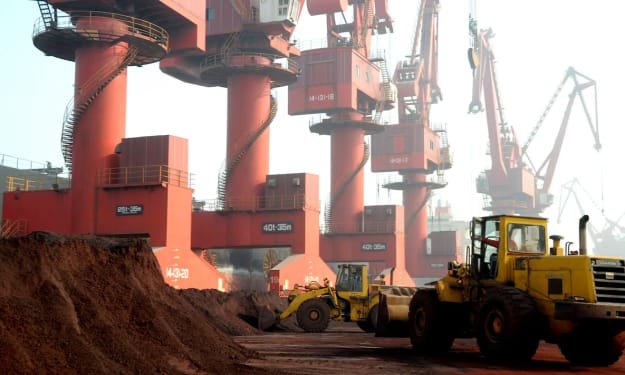
U.S. Pushes for Faster Action to Cut Reliance on China for Rare Earths. AI-Generated.
Rare Earths: Small Minerals, Massive Power Rare earth elements may sound obscure, but they sit at the heart of modern life. From smartphones and electric vehicles to fighter jets and missile systems, these minerals are essential to both civilian technology and national defense. That reality is why the United States is now pushing for quicker, more decisive action to reduce its dependence on China for rare earth supplies. For years, Washington talked about diversification. Now, it wants speed. The shift reflects growing concern that reliance on a geopolitical rival for critical materials is no longer sustainable in an era of strategic competition. Why China’s Dominance Worries Washington China controls roughly 60–70% of global rare earth mining and an even larger share of processing and refining. Even when rare earths are mined elsewhere, they are often shipped to China for processing. This gives Beijing enormous leverage over global supply chains. U.S. officials fear that in a moment of heightened tension—over Taiwan, trade disputes, or technology restrictions—China could restrict exports. Beijing has already hinted at this possibility in the past, using export controls as a diplomatic tool. From Washington’s perspective, this is not a hypothetical risk. It is a strategic vulnerability that touches everything from renewable energy goals to military readiness. Rare Earths and National Security Few issues unite Democrats and Republicans as strongly as national security. Rare earths fall squarely into that category. Advanced weapons systems rely on these materials for precision guidance, radar, and communications. A disrupted supply could delay production, weaken deterrence, and raise costs dramatically. Pentagon officials have repeatedly warned that dependence on China for defense-critical materials undermines U.S. security. As a result, rare earth supply chains are increasingly viewed through the same lens as energy independence once was. This framing explains the urgency behind Washington’s push for faster action. Why “Quicker Action” Matters Now The U.S. has discussed rare earth independence for over a decade, yet progress has been slow. Mining projects face environmental reviews, local opposition, and long development timelines. Processing facilities require heavy investment and technical expertise that has largely migrated to China. What has changed is the global context. Rising U.S.-China tensions, supply-chain disruptions during the pandemic, and growing demand for clean energy technologies have compressed timelines. Waiting another decade is no longer acceptable to policymakers. Quicker action now means fast-tracking permits, increasing federal funding, and working more aggressively with allies. The Role of Allies in Diversification The United States does not expect to solve the rare earth challenge alone. Instead, Washington is pushing for a “friend-shoring” strategy—building supply chains with trusted partners rather than relying on geopolitical rivals. Australia, Canada, Japan, and several European countries are key players in this effort. Australia already hosts significant rare earth mining operations, while Japan has invested heavily in reducing its own dependence on China after facing export restrictions in the past. By coordinating investment, sharing technology, and aligning regulations, the U.S. hopes to create an alternative ecosystem that can compete with China’s dominance. Environmental and Economic Tensions Rare earth mining is not clean. It involves toxic waste, radioactive byproducts, and significant environmental risks. Ironically, minerals essential for green technologies come with heavy environmental costs at the extraction stage. This creates a political dilemma. Americans want clean energy, but often oppose mining projects in their own communities. Faster action will require balancing environmental protections with strategic necessity—a challenge that has stalled projects in the past. The Biden administration, like administrations before it, faces pressure to prove that domestic mining can be done responsibly without undermining climate commitments. China’s Likely Response Beijing is watching these developments closely. While China has not yet weaponized rare earth exports on a large scale, it understands the leverage it holds. At the same time, China is moving up the value chain—focusing more on advanced manufacturing and less on raw material exports. If the U.S. accelerates diversification successfully, China may respond by tightening export controls in the short term while investing in higher-end technologies that keep it indispensable in other ways. This dynamic underscores that rare earths are not just a resource issue, but part of a broader strategic competition. Economic Implications Beyond Security Reducing reliance on China is not only about defense. It is also about economic resilience. Supply disruptions during the pandemic exposed how fragile global supply chains can be. Rare earth shortages could slow electric vehicle adoption, raise consumer prices, and delay infrastructure projects. By pushing for faster action, Washington hopes to stabilize future growth and protect key industries. Domestic production and allied partnerships could also create jobs and spur innovation, particularly in rural and industrial regions. However, building new supply chains will not be cheap. Consumers and taxpayers may face higher costs in the short term as alternatives to Chinese supplies come online. Challenges That Could Slow Progress Despite political momentum, obstacles remain. Mining projects take years to develop. Processing facilities require specialized knowledge. Workforce shortages, local resistance, and regulatory complexity all pose risks to rapid progress. There is also the danger of overpromising. Policymakers must manage expectations, making clear that reducing reliance on China is a long-term effort, even if action accelerates now. Failure to deliver tangible results could weaken public support and give critics ammunition. Final Thoughts The U.S. push for quicker action in reducing reliance on China for rare earths marks a turning point. What was once a niche policy issue has become a strategic priority at the highest levels of government. This is not about cutting China out of the global economy entirely. It is about ensuring that no single country can control materials essential to modern life and national defense. Speed, coordination, and political will will determine whether Washington succeeds. As competition intensifies, rare earths will remain a quiet but powerful force shaping the future of technology, security, and global influence. The race is no longer just about who has the minerals—but who controls the supply chains that define the 21st centur
By Muhammad Hassan17 days ago in The Swamp
Australia Industrial Filtration Market Poised to Nearly Double by 2033 on Sustainability and Mining Expansion. AI-Generated.
The Australia industrial filtration market is gaining strong traction as industries across the country intensify efforts to improve environmental compliance, enhance process efficiency, and support rapid expansion in mining and manufacturing sectors. According to IMARC Group, the market was valued at USD 996.8 million in 2024 and is forecast to reach USD 1,924.51 million by 2033, growing at a CAGR of 6.80% between 2025 and 2033.
By Rashi Sharma17 days ago in Trader
Britain in Talks With NATO to Boost Arctic Security. AI-Generated.
The Arctic Is No Longer a Frozen Backwater For decades, the Arctic sat quietly on the margins of global politics—remote, frozen, and largely ignored. That era is over. Britain is now in talks with NATO to strengthen Arctic security, acknowledging growing risks posed by Russia and China. In a notable shift, London’s assessment aligns closely with warnings long emphasized by Donald Trump, particularly as he continues to express strategic interest in Greenland. What once sounded like an eccentric fixation has evolved into a serious geopolitical conversation. The Arctic is rapidly becoming one of the world’s most contested regions, and Britain is positioning itself to play a larger role. Why Britain Is Paying Attention Now Although the UK is not an Arctic nation, it is an Arctic-adjacent power with significant strategic interests. British officials increasingly view the High North as critical to national and allied security. Melting ice is opening new shipping routes, exposing untapped natural resources, and making military movement easier than ever before. Britain’s talks with NATO focus on intelligence sharing, joint exercises, surveillance capabilities, and protecting undersea infrastructure such as communication cables and energy pipelines. These are not abstract concerns. Any disruption in the Arctic could have immediate consequences for European security and global trade. In short, what happens in the Arctic does not stay in the Arctic. Russia’s Expanding Arctic Footprint Russia is the dominant military power in the Arctic, and it is not slowing down. Moscow has reopened Soviet-era bases, deployed advanced missile systems, expanded its icebreaker fleet, and increased patrols across the region. The Arctic coastline represents a core part of Russia’s nuclear deterrent, making it strategically vital to the Kremlin. From NATO’s perspective, this military buildup creates both risk and uncertainty. Britain, which has long been vocal about Russian aggression—from Ukraine to cyber warfare—sees the Arctic as another front where deterrence must be strengthened before tensions spiral. The concern is not necessarily an immediate conflict, but miscalculation. In a region with harsh conditions and limited communication infrastructure, even minor incidents could escalate rapidly. China’s Quiet but Steady Arctic Ambitions While Russia’s presence is overt, China’s Arctic strategy is more subtle—and equally concerning to Western planners. Beijing calls itself a “near-Arctic state,” a label that has raised eyebrows in Europe and North America. Through investments, research stations, and partnerships, China is laying the groundwork for long-term influence. Britain shares NATO’s concern that China could use civilian projects for dual-use purposes, blending scientific research with intelligence gathering and infrastructure control. As Arctic shipping routes become commercially viable, China’s interest in controlling parts of the supply chain only grows. London’s alignment with these concerns reflects a broader shift in UK foreign policy: China is no longer viewed solely as an economic partner, but as a strategic competitor. Trump, Greenland, and Strategic Reality Donald Trump’s repeated interest in Greenland—most famously his suggestion that the United States should buy it—was widely mocked at the time. Yet behind the headlines was a strategic logic that many Western governments now openly acknowledge. Greenland sits at the heart of the Arctic, hosting vital air and naval routes between North America and Europe. It is also rich in rare earth minerals critical for modern technology and defense systems. As ice recedes, Greenland’s strategic value only increases. Britain’s current position, which aligns with Trump’s warnings about Arctic vulnerabilities, shows how quickly political perceptions can change. What once seemed unconventional now appears prescient. NATO’s Arctic Awakening NATO has traditionally focused on Eastern Europe and the North Atlantic. The Arctic, despite its importance, received less coordinated attention. That is changing. Britain’s talks with NATO reflect a broader alliance effort to integrate Arctic defense into its core strategy. This includes: Increased joint military exercises in cold-weather environments Enhanced monitoring of Russian and Chinese activity Strengthening cooperation with Arctic nations like Norway, Canada, and Denmark Protecting critical undersea and satellite infrastructure For Britain, this is also about credibility. As a leading NATO member and a key military power, the UK wants to demonstrate that it can contribute meaningfully beyond its immediate geography. Climate Change as a Security Multiplier One of the most striking aspects of Arctic security is how closely it is tied to climate change. Melting ice is not just an environmental issue—it is a strategic one. New sea lanes shorten travel between Asia and Europe, while access to oil, gas, and minerals becomes easier. This transformation increases competition and reduces natural barriers that once limited military movement. Britain’s involvement reflects recognition that climate-driven changes are reshaping the security landscape faster than traditional institutions were designed to handle. In this sense, Arctic security is a preview of future global challenges where environmental change and geopolitics collide. Domestic and Diplomatic Balancing Acts Britain’s Arctic engagement is not without challenges. Increased military involvement raises questions about defense spending, priorities, and escalation risks. Diplomatically, London must balance deterrence with dialogue, avoiding actions that could unnecessarily provoke Russia while still protecting allied interests. There is also the question of public awareness. Arctic security lacks the visibility of conflicts like Ukraine, making it harder to sustain political attention. Yet policymakers increasingly argue that prevention is cheaper—and safer—than crisis response. What This Means Going Forward Britain’s talks with NATO mark an important shift in how the Arctic is viewed: not as a distant frontier, but as a central arena in 21st-century security. Agreement with Trump-era assessments on Russia, China, and Greenland underscores how geopolitical realities can outlast political controversies. As competition intensifies, the Arctic will likely become a testing ground for cooperation, deterrence, and strategic foresight. Britain’s involvement signals that mid-sized powers are no longer content to watch from the sidelines. Final Thoughts The Arctic is warming faster than any other region on Earth—and so are the geopolitical tensions surrounding it. Britain’s move to boost Arctic security with NATO reflects a growing consensus that ignoring the High North is no longer an option. Whether driven by Russia’s militarization, China’s quiet expansion, or lessons drawn from Trump’s blunt warnings, one truth stands out: the future of global security may well be shaped at the top of the world, where ice, ambition, and power now intersect.
By Muhammad Hassan17 days ago in Earth