Latest Stories
Most recently published stories on Vocal.
Red Ice Part 1. Content Warning.
Northern Greenland, 1831 Anak finished loading the last of his equipment into his dog sled. All of his dogs were barking loudly with excitement. They knew what time it was, they knew what was about to happen. It's the middle of March and ice covers the entire region. Around this time of year, Anak and the other hunters head out for their seasonal walrus hunt. He checked his sled one final time to ensure he had everything they needed. Then he went to check on the other hunters to see of they were ready.
By Stonecreek14 days ago in Earth
I Am Here in the Evening Light”: Finding Meaning in the Quiet Hours. AI-Generated.
There is a particular moment in the day when the world seems to pause. The sun hangs low, shadows stretch longer, and the noise of daily life softens into something gentler. “I am here in the evening light” is more than a poetic line—it is a state of being. It speaks to presence, reflection, and the quiet power of slowing down in a world that rarely allows it. In an age of constant urgency, the evening light offers something increasingly rare: space to breathe, think, and feel. The evening light has long inspired artists, writers, and thinkers. Unlike the sharp clarity of morning or the harsh glare of noon, it is forgiving. It blurs edges, warms colors, and makes even the ordinary appear meaningful. Streets look calmer, faces softer, landscapes more intimate. This daily transformation reminds us that perspective changes not because the world itself shifts, but because the light through which we view it does. A Time Between Roles Evening exists between what was and what will be. Workdays end, but night has not yet claimed the sky. In this in-between space, people often feel most themselves. The expectations of productivity loosen, and the pressure to perform eases. It is during these hours that many reflect on their choices, their relationships, and the paths they are walking. “I am here in the evening light” can be read as a quiet declaration: I have arrived at this moment, carrying the weight of the day, but I am still standing. For some, it means survival after difficulty. For others, it is gratitude for another day lived. The phrase does not shout achievement; it whispers presence. The Science of Slowing Down There is also a physiological reason why evenings feel different. As daylight fades, the body begins to prepare for rest. Cortisol levels drop, melatonin production increases, and the nervous system shifts away from fight-or-flight mode. This biological transition encourages introspection. Thoughts that were pushed aside during busy hours resurface, sometimes gently, sometimes insistently. Modern life often disrupts this natural rhythm. Artificial lighting, screens, and nonstop notifications blur the boundary between day and night. Yet many people still feel an instinctive pull toward the evening calm—watching the sky change color, taking a slow walk, or simply sitting in silence. These small rituals reconnect us with an older, more human pace of life. Evening Light as Metaphor Beyond the literal, evening light functions as a powerful metaphor. It can represent later stages of life, moments after loss, or periods of transition. Unlike dawn, which promises beginnings, evening light acknowledges what has already happened. It does not deny hardship or regret, but it frames them with gentleness. To say “I am here in the evening light” may mean: I have lived, I have endured, and I am still capable of noticing beauty. There is resilience in that awareness. Many people find that after setbacks—failed plans, broken relationships, or unmet expectations—it is not grand optimism that heals them, but quiet acceptance. Creativity and the Golden Hour Photographers call it the “golden hour” for a reason. The evening light reveals depth and texture that midday hides. Similarly, many creative minds do their best work during these hours. The mind, no longer racing, begins to wander productively. Ideas surface not through force, but through openness. Writers often describe evenings as a time when words come more honestly. Musicians speak of melodies that feel closer to emotion than technique. Even those who do not consider themselves artists may feel a creative stirring—cooking thoughtfully, journaling, or simply imagining different futures. Being Present in a Distracted Age Perhaps the most important message within “I am here in the evening light” is presence. To be “here” is not guaranteed anymore. Minds are often elsewhere—scrolling, planning, worrying. Evening light invites us back into the body, into the room, into the moment. This presence does not require meditation retreats or dramatic lifestyle changes. It can be as simple as noticing how the light falls across a wall, how the air cools, how sounds change. These moments of attention ground us. They remind us that life is not only lived in milestones, but in quiet intervals that hold just as much meaning. A Gentle Conclusion The evening light does not last long. Soon it deepens into night. That impermanence is part of its power. It teaches us that calm moments must be noticed while they are here, not postponed. “I am here in the evening light” is not a statement of arrival at perfection or certainty. It is a humble acknowledgment of being present in a fleeting, beautiful moment. In a loud and restless world, that may be one of the most meaningful declarations a person can make.
By Fiaz Ahmed Brohi14 days ago in Poets
Fighting Ends After Syrian and Kurdish Forces Agree on Ceasefire. AI-Generated.
After weeks of escalating clashes that threatened to further destabilize northern Syria, Syrian government forces and Kurdish-led groups have agreed to a ceasefire, bringing a fragile calm to areas that had seen intense fighting. The agreement, brokered through regional mediation and quiet international diplomacy, marks a significant moment in a conflict that has repeatedly shifted alliances and front lines over more than a decade. The ceasefire follows violent confrontations between Syrian Arab Army units and Kurdish forces, primarily affiliated with the Syrian Democratic Forces (SDF), in strategically sensitive مناطق near key roads, oil fields, and population centers. The clashes had raised fears of a wider conflict that could draw in external actors already deeply entangled in Syria’s complex war. Why the Fighting Broke Out Tensions between Damascus and Kurdish authorities have simmered for years. While both sides have occasionally cooperated against common threats such as extremist groups, their long-term political goals remain sharply divided. Kurdish groups seek greater autonomy and recognition of their self-administered regions, while the Syrian government insists on full territorial control and centralized authority. Recent fighting was reportedly triggered by disputes over security control, checkpoints, and access to resources, particularly oil and wheat. Local incidents quickly escalated as reinforcements were deployed and artillery exchanges followed, displacing civilians and disrupting already fragile livelihoods. The Ceasefire Agreement According to sources familiar with the talks, the ceasefire includes an immediate halt to hostilities, the withdrawal of heavy weapons from flashpoint areas, and the reopening of key roads for civilian and commercial traffic. Joint coordination mechanisms are also expected to be established to prevent misunderstandings and accidental clashes. Importantly, the agreement reportedly includes provisions for dialogue on local governance and security arrangements, signaling that both sides recognize military escalation as costly and unsustainable. While details remain limited, mediators emphasized that the ceasefire is intended as a first step rather than a comprehensive political settlement. Impact on Civilians For civilians caught in the crossfire, the ceasefire brings cautious relief. Thousands were forced to flee their homes as fighting intensified, seeking shelter with relatives or in makeshift camps. Schools closed, medical services were interrupted, and essential supplies became scarce. Humanitarian organizations have welcomed the truce but warn that conditions remain dire. Many areas affected by the clashes were already struggling with economic hardship, fuel shortages, and the aftermath of years of war. A sustained ceasefire could allow aid access, repairs to infrastructure, and the gradual return of displaced families. Regional and International Dimensions The ceasefire also has broader regional implications. Northern Syria is a geopolitical chessboard involving multiple actors, including Russia, the United States, Turkey, and Iran. Kurdish-led forces have long been supported by the US in the fight against extremist groups, while the Syrian government is backed by Russia and Iran. Any escalation between Syrian and Kurdish forces risks upsetting this delicate balance. Observers note that external actors likely played a behind-the-scenes role in encouraging restraint, as renewed conflict could undermine counterterrorism efforts and complicate regional stability. Turkey, which views Kurdish armed groups near its border as a security threat, is also closely watching developments. A breakdown of the ceasefire could prompt new cross-border operations, further complicating the situation. Challenges Ahead Despite the ceasefire, deep mistrust remains. Previous truces in Syria have often collapsed due to accusations of violations, local power struggles, or shifting external priorities. Analysts caution that without a clear political framework addressing Kurdish autonomy, resource sharing, and integration of armed forces, the current calm may prove temporary. Economic pressures add another layer of risk. Control over oil fields and agricultural land is not only a political issue but also an economic lifeline in a country devastated by sanctions, inflation, and unemployment. Disagreements over revenue sharing could easily reignite tensions. A Fragile Opportunity Still, the ceasefire offers a rare opportunity for de-escalation at a time when Syria can ill afford another front of conflict. If maintained, it could open space for confidence-building measures, local reconciliation efforts, and renewed discussions about Syria’s future governance. For now, residents in affected areas are cautiously hopeful, listening for the sounds of normal life returning instead of gunfire. Whether this ceasefire becomes a stepping stone toward lasting stability or merely a pause in a long-running struggle will depend on the willingness of all sides to prioritize dialogue over force. In a conflict marked by broken agreements and shifting loyalties, even a fragile calm is meaningful. The coming weeks will reveal whether this ceasefire can hold—and whether it can lay the groundwork for a more durable peace in northern Syria.
By Fiaz Ahmed Brohi14 days ago in The Swamp
The Blue Velvet Candlelight Club
Written, created, edited by Vicki Lawana Trusselli This story comes from my heart and soul. At of 28 I was majoring in Journalism and my at that time was to write human interests. I remember those times when I could feel at home in America. So, I wrote the Hollywood Nights in the 1970s. If you did not like the 70s so be it. Then it is my story from human experiences.
By Vicki Lawana Trusselli 14 days ago in Poets
Blue Room 🛏️
Loneliness has never been about being alone. I have felt it in crowds, in homes full of family, in rooms buzzing with voices. It is not the silence of solitude I know—it is something older, deeper, stitched into my chest. It is a weight in my stomach, a tightness around my heart, a companion that clings when I try to laugh or speak or reach for someone. It has been with me since I was a child, a shadow from the very beginning.
By Saiydaa Hayes14 days ago in Families
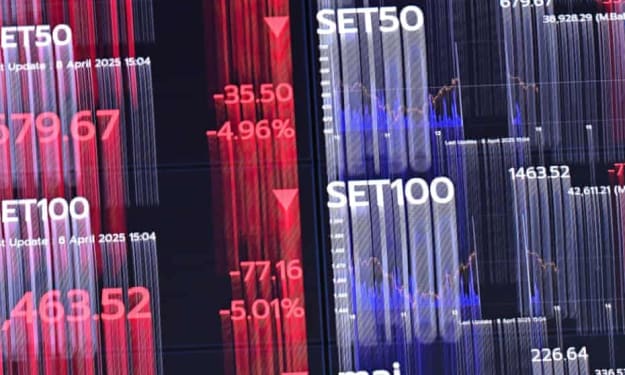
World Stock Markets Brace for Turbulence After Trump’s Latest Tariff Shock. AI-Generated.
Global financial markets are bracing for potential turbulence following the latest tariff announcement from former U.S. President Donald Trump. Investors around the world are reacting with concern, as news of proposed tariffs threatens to disrupt supply chains, raise trade tensions, and inject uncertainty into already volatile markets.
By Aarif Lashari14 days ago in The Swamp
The Editorial Stack: Building Content Teams for the Multi-Platform Era
In an age where content travels across screens, feeds, formats, and audiences in real time, the old newsroom model no longer fits the demands of digital publishing. Today's media landscape requires more than great writers and sharp editors—it demands a multi-disciplinary, agile, and strategically aligned editorial stack. From video producers to data analysts, newsletter editors to TikTok creators, modern content teams must be designed with versatility and collaboration at their core.
By James Kaminsky14 days ago in Education