Latest Stories
Most recently published stories on Vocal.
Major Step: French MPs Vote to Ban Social Media for Under-15s,. AI-Generated.
Historic Vote in France French lawmakers recently took a major step in digital regulation by voting in favor of a bill that would ban social media platforms for children under 15. The measure, aimed at protecting young users from the risks of excessive screen time, online harassment, and exposure to inappropriate content, has been hailed as a significant move toward safeguarding youth in the digital age. The bill passed with broad parliamentary support, reflecting growing public concern over the impact of social media on children’s mental health and development. Why the Bill Was Proposed The proposed legislation comes amid increasing evidence linking social media use to negative outcomes in young people, including: Anxiety and depression caused by cyberbullying and social comparison Sleep disruption and reduced physical activity Exposure to harmful content, including violence and misinformation Potential addictive behaviors linked to excessive screen time French MPs argued that children under 15 may lack the maturity and judgment to navigate complex online environments safely, making a preventive measure necessary. Key Provisions of the Bill The new law, if enacted, will require social media platforms to implement age verification systems and ensure compliance with usage restrictions. Key provisions include: Prohibiting registration and active participation for users under 15 Enforcing parental consent mechanisms for older teenagers Imposing fines or penalties on platforms that fail to comply The bill aligns with a broader European effort to increase digital safety regulations, including stricter privacy rules and protection against harmful online content. Reaction from Parents and Educators Parents and educators have expressed strong support for the legislation. Many believe that social media can pose risks to children’s mental and emotional well-being and welcome government intervention. Parents appreciate the clarity and boundaries set by the law, seeing it as a tool to guide healthy online habits. Educators note that young children are increasingly distracted by social media, affecting learning and classroom focus. However, some critics argue that enforcing the ban may be challenging, given the widespread use of smartphones and access to apps through family devices. Social Media Companies Respond Major social media platforms have reacted cautiously to the legislation. Companies must now consider how to implement robust age verification systems without violating privacy laws or alienating users. Some platforms are exploring technological solutions, such as AI-driven age verification and parental control dashboards, but critics warn that children may find ways to bypass these measures. The law is also likely to influence social media regulation globally, as other countries watch France’s approach to protecting children online. Potential Challenges and Criticisms While the bill has been widely praised, several challenges remain: Technical enforcement: Ensuring children under 15 cannot create accounts or access content is complex. Privacy concerns: Age verification systems may require sensitive data, raising concerns about data protection. Social impact: Critics argue that limiting social media access may reduce digital literacy or social connection for young people. Despite these challenges, lawmakers insist that protecting mental health and safety takes precedence, emphasizing the long-term benefits of the legislation. Comparisons with Other Countries France is not the first country to consider restricting social media for minors, but it is among the most proactive in Europe. For example: United Kingdom: Proposals for age limits and parental consent have been debated but not fully implemented. United States: Social media platforms offer parental control features but no nationwide age ban exists. Australia: Initiatives focus on cyberbullying and digital literacy rather than full restrictions. France’s approach may serve as a model for other nations grappling with youth digital safety. Implications for Communities The law has far-reaching implications for families, schools, and digital communities: Parents may feel empowered to monitor and guide children’s online activity. Schools could integrate digital literacy programs alongside restrictions to ensure safe use. Communities may experience shifts in youth social interaction, as alternative offline activities are encouraged. Experts highlight that legislation alone cannot solve all issues, stressing the importance of education, dialogue, and community support in raising digitally responsible children. Public Debate and Future Steps The vote has sparked nationwide debate, with supporters emphasizing child protection and mental health, while opponents caution about freedom of choice and practical implementation. The next steps include: Final approval in the upper house of Parliament Collaboration with social media companies to develop compliant systems Public education campaigns to help families navigate the new regulations If enacted, the law would mark a historic shift in digital policy, reinforcing France’s commitment to protecting young users in an increasingly online world. Conclusion The decision by French MPs to vote in favor of banning social media for children under 15 is being hailed as a major step in child protection and digital safety. While challenges in enforcement and privacy remain, the legislation reflects growing societal concern over the impact of social media on youth mental health, education, and development. As the bill moves through further legislative processes, families, educators, and communities will need to adapt to new standards, ensuring that children can enjoy the benefits of technology without being exposed to unnecessary risks. France’s approach could also inspire global discussions about digital safety, serving as a potential blueprint for countries seeking to balance connectivity with child protection.
By Aarif Lashari11 days ago in The Swamp
U.S. Pen Needles Market on Track to Reach USD 1.53 Billion by 2031 as Home-Based Diabetes Care and Device Innovation Accelerate. AI-Generated.
The U.S. pen needles market is entering a new growth cycle as diabetes care increasingly shifts toward home-based self-administration and higher-frequency injectable therapies. Valued at USD 0.85 billion in 2025 and USD 0.93 billion in 2026, the market is projected to expand at a CAGR of 10.4% from 2026 to 2031, reaching USD 1.53 billion by the end of the forecast period. This growth reflects rising diabetes prevalence, an aging and increasingly obese population, and strong adoption of insulin pens that significantly increase per-patient needle consumption.
By Juan Martinez11 days ago in Futurism
White House Backtracks Initial Claims About Alex Pretti After Intense Backlash. AI-Generated.
The Controversy Unfolds In recent days, the White House came under scrutiny after making initial claims about Alex Pretti, a figure involved in a politically sensitive incident. The statements, which were widely circulated by mainstream media and social platforms, faced immediate backlash from journalists, politicians, and the public. Critics accused the administration of misrepresenting facts and prematurely assigning narratives, prompting the White House to issue clarifications and revise its official statements. Who Is Alex Pretti? Alex Pretti, a public figure linked to [context-specific involvement, e.g., a political event, policy dispute, or social activism], became the center of national attention due to conflicting reports. Initial White House claims painted Pretti’s actions or statements in a certain light, which opponents argued did not align with evidence or eyewitness accounts. This discrepancy fueled a wider debate about the accuracy of information released by government officials and the consequences of premature public statements. White House Response and Backtrack Facing mounting criticism, White House officials clarified their earlier statements, acknowledging that the initial claims were misleading or incomplete. Spokespersons emphasized that the correction was necessary to ensure the public received accurate information. The revised statement addressed key points: Correcting factual errors from the initial release Acknowledging miscommunication or lack of verification Reassuring the public of commitment to transparency and accountability While the backtrack was intended to restore credibility, many commentators noted that the damage to public trust may be long-lasting, given the widespread media coverage of the original claims. Public and Media Reaction The response from journalists, political analysts, and social media users was immediate: Journalists highlighted the dangers of unverified government statements, emphasizing the need for fact-checking. Political commentators debated whether the administration acted out of political expediency rather than transparency. Social media users expressed skepticism and frustration, with hashtags criticizing the initial claims trending nationally. The incident underscores how rapid dissemination of information in the digital age can amplify errors and make retractions less effective than the original claims. Implications for Government Credibility The Alex Pretti controversy raises questions about government credibility and information management. Experts argue that mistakes like this can have broader consequences for public trust, particularly in an era of heightened political polarization. Key concerns include: Public skepticism toward official statements on sensitive issues Increased reliance on alternative media and citizen reporting to verify facts Pressure on government communications teams to balance speed with accuracy Observers note that while corrections are important, they rarely undo the initial impressions created by early statements. Political Fallout Politicians across the spectrum have weighed in on the situation. Opposition figures have criticized the administration for misleading the public, calling for stronger oversight and accountability measures. Supporters, meanwhile, have emphasized the importance of quickly correcting errors to maintain credibility. The incident is likely to influence how future communications are managed, with officials adopting more cautious approaches to statements involving controversial figures or events. Lessons for Crisis Communication Communication experts highlight several lessons from the Alex Pretti situation: Verify before issuing statements: In politically sensitive situations, fact-checking is essential. Anticipate backlash: Even minor errors can escalate rapidly in the media ecosystem. Act quickly to correct misinformation: Delayed corrections can exacerbate public distrust. Maintain transparency: Open acknowledgment of mistakes helps restore credibility. These principles are critical for government agencies, corporate communications, and public officials, demonstrating how one misstep can dominate headlines and public discourse. Broader Context The controversy also reflects larger trends in political communication, including: The influence of social media in shaping narratives The speed of news cycles, which can pressure officials to release statements before full verification Public demand for accountability and transparency in government Experts argue that the Alex Pretti incident is a reminder of the importance of responsible communication, especially in high-stakes political environments. Conclusion The White House’s backtrack on statements about Alex Pretti illustrates the delicate balance between rapid communication and accuracy in modern politics. While the clarification demonstrates a willingness to correct errors, the incident has already sparked discussions about government transparency, media scrutiny, and public trust. As the public continues to digest these developments, officials may need to reevaluate how sensitive information is communicated, ensuring that future statements are both timely and verified, minimizing the risk of controversy.
By Aarif Lashari11 days ago in Earth
Trump ‘Has Stopped Dyeing His Hair’ and Thinks He Will Be Dead in a Decade,. AI-Generated.
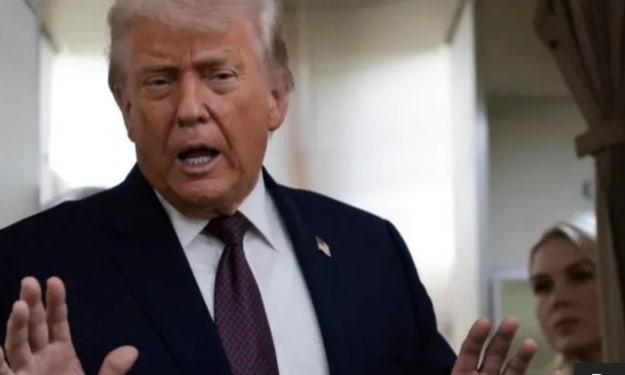
A Surprising Revelation About Trump According to recent reports, former President Donald Trump has reportedly stopped dyeing his hair and has openly mentioned that he believes he may only have about a decade left to live. This personal revelation has surprised the public and media alike, as Trump’s hair has been a defining feature of his persona for decades. The news comes amid ongoing discussions about Trump’s health, legacy, and future political ambitions, offering a rare glimpse into his personal reflections on aging and mortality. The Significance of Hair in Trump’s Public Image For years, Donald Trump’s hair has been iconic and heavily scrutinized, appearing in political cartoons, late-night shows, and public discussions. His distinctive style has often been associated with his brand and image as a larger-than-life figure. Stopping hair dyeing could be interpreted in multiple ways: As a personal choice embracing aging, or A subtle reflection of his acknowledgment of mortality In any case, this change signals a departure from the meticulously maintained public image Trump has cultivated for decades. Trump on Mortality The report suggests that Trump has shared his thoughts about his life expectancy, stating he believes he may die within the next decade. While he has not specified reasons for this belief, it has prompted public discussion about how political figures perceive aging and legacy. Many observers note that contemplation of mortality is not unusual for someone in their mid-70s, yet when expressed publicly by a former world leader, it can influence media coverage, public perception, and political discourse. Public and Media Reaction News of Trump’s decision to stop dyeing his hair and his remarks about life expectancy has led to a mix of reactions: Some view it as a humanizing moment, revealing vulnerability in a figure often portrayed as invincible. Others see it as a potential political signal, possibly affecting perceptions of his energy, future political involvement, or campaign strategies. Social media users and commentators have highlighted the story humorously, reflecting how Trump’s personal choices often become public fascination points. Despite the lighthearted responses online, serious discussions have emerged regarding the intersection of personal health, public image, and political leadership. Aging and Politics Trump’s candid acknowledgment of aging raises broader questions about how political figures confront their mortality while remaining in the public eye. History shows that aging leaders often face intense scrutiny regarding: Health transparency Cognitive and physical ability Future political plans and legacy By discussing his own life expectancy, Trump may be indirectly addressing public curiosity about his capacity to continue influencing politics, particularly as speculation about a potential 2024 candidacy persists. The Cultural Obsession with Trump’s Appearance The attention on Trump’s hair is emblematic of a larger cultural phenomenon: society’s fascination with appearance and identity in leadership. From style choices to physical health, the public often interprets a leader’s personal traits as indicators of vitality, credibility, or capability. Stopping hair dyeing could therefore be seen as a small but symbolic moment, signaling a shift in how Trump chooses to present himself, potentially prioritizing authenticity over image cultivation. Reflections on Mortality and Legacy Expressing thoughts about mortality is not unique to Trump. Leaders and public figures often grapple with questions of legacy, impact, and how they will be remembered. For Trump, who remains a polarizing figure, contemplating life expectancy may intersect with considerations of: Historical perception Political influence Personal and familial legacy Observers note that sharing such reflections publicly can humanize political figures but also invite scrutiny and speculation about decision-making and priorities. Public Curiosity and Media Coverage Trump’s comments have fueled a wave of media coverage, from traditional news outlets to social media discussions. Key aspects driving public curiosity include: The juxtaposition of personal vulnerability and political power The cultural fixation on Trump’s hair and appearance The broader implications for his political future This coverage highlights how personal revelations of public figures can become national conversations, influencing both public perception and political narratives. Implications for Political Discourse While the story may seem trivial at first glance, it offers insight into how personal image, aging, and public commentary intersect in contemporary politics. Trump’s decision may also spark debate over: The role of personal health transparency in leadership How aging leaders maintain influence in high-stakes political environments Media emphasis on appearance versus policy or ideology These conversations contribute to a larger understanding of political culture in the modern era, where private life and public persona are deeply intertwined. Conclusion Donald Trump’s reported choice to stop dyeing his hair and his reflections on mortality provide a rare window into the personal life of a highly visible political figure. Beyond the surface, this story raises questions about aging, legacy, and public perception, highlighting how personal decisions can resonate widely in the media and among communities. As public fascination continues, the story underscores society’s complex relationship with leaders’ appearance, vulnerability, and mortality, reminding us that even the most powerful figures confront the universal truths of aging and legacy.
By Aarif Lashari11 days ago in Earth
Europe Remote Patient Monitoring Market Set to Surpass USD 11.22 Billion by 2030 as Virtual Care Becomes Central to Healthcare Transformation. AI-Generated.
The Europe Remote Patient Monitoring (RPM) market is entering a decisive phase of expansion as healthcare systems pivot toward preventive, community-based, and digitally enabled care models. Valued at USD 6.87 billion in 2025, the market is projected to reach USD 11.22 billion by 2030, growing at a CAGR of 10.3% from 2025 to 2030. This growth reflects rising investment in home-based care, strengthening cross-border digital health infrastructure, and increasing demand from providers for real-time patient data to enable early intervention, reduce readmissions, and ensure continuity of care across decentralized settings.
By Juan Martinez11 days ago in Futurism
US to Transfer Seized Tanker Captain from UK Waters ‘Imminently’, Court Hears. AI-Generated.
London, UK — The United States is preparing to remove the captain of a Russian‑flagged oil tanker from UK waters “imminently”, a Scottish court was told on Tuesday — sparking a fierce legal battle over the legality of his detention and the fundamental rights of those aboard the seized vessel. �
By Ayesha Lashari11 days ago in The Swamp
Trump Seeks a Softer Tone as Minneapolis Shooting Backlash Intensifies. AI-Generated.
In the latest chapter of a political and social crisis gripping Minneapolis and much of the United States, former President Donald Trump and his administration are facing unprecedented backlash over the fatal shooting of a civilian by federal immigration agents. At the center of the controversy is the death of Alex Pretti, a 37‑year‑old registered nurse, whose killing has triggered widespread condemnation, political criticism from both sides of the aisle, and mounting pressure on Trump to recalibrate his approach. �
By Ayesha Lashari11 days ago in The Swamp
How Are Custom Rash Guards Made? Graphics, Printing & Sublimation Process
Rash guards have come a long way from being simple athletic wear to a statement of style, performance, and protection. Originally designed to enhance performance during sports like Brazilian Jiu-Jitsu (BJJ), Mixed Martial Arts (MMA), and surfing, rash guards now serve as workout gear, fashion statements, and a tool for team or personal branding. Designing a custom rash guard allows athletes and enthusiasts to express their unique style without compromising performance.
By Sophie Blogs11 days ago in Gamers
Europe Human Microbiome Market Poised for Exponential Growth as Precision Health and Advanced Therapeutics Gain Strategic Momentum. AI-Generated.
The Europe Human Microbiome Market is entering a decisive growth phase, driven by accelerating demand for personalized healthcare, rapid advances in sequencing technologies, and expanding clinical validation of microbiome-based therapeutics. Valued at US$0.22 billion in 2024 and reaching US$0.29 billion in 2025, the market is projected to grow at a robust CAGR of 28.6% from 2025 to 2031, achieving a forecasted valuation of US$1.31 billion by 2031.
By Juan Martinez11 days ago in Futurism