
US to Transfer Seized Tanker Captain from UK Waters ‘Imminently’, Court Hears
Legal challenge intensifies as lawyers argue detention unlawful under human rights law
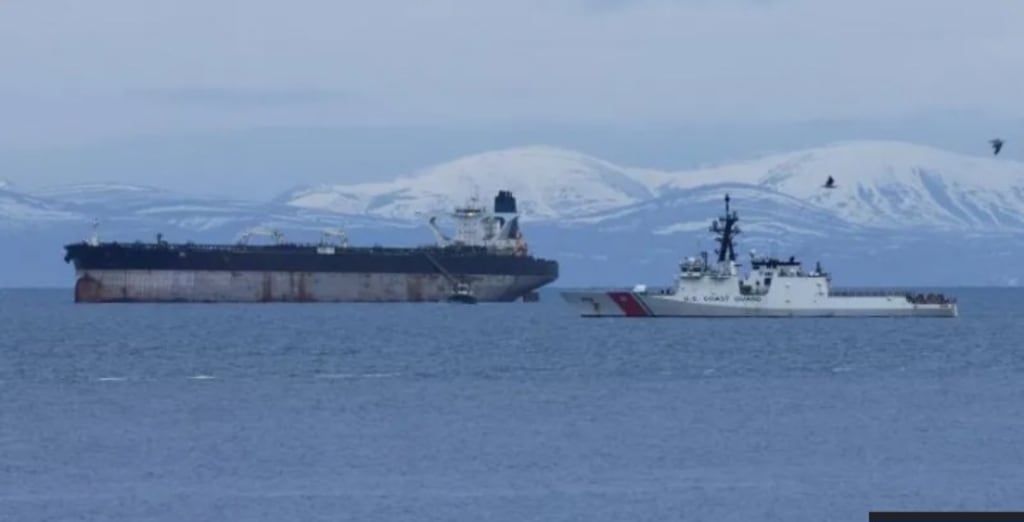
London, UK — The United States is preparing to remove the captain of a Russian‑flagged oil tanker from UK waters “imminently”, a Scottish court was told on Tuesday — sparking a fierce legal battle over the legality of his detention and the fundamental rights of those aboard the seized vessel. �
infomarine.net
At the centre of the controversy is Captain Avtandil Kalandadze, a Georgian national who has been held aboard the oil tanker Marinera (formerly known as Bella 1) in the Moray Firth off Scotland since early January, after the United States military intercepted the vessel in the North Atlantic under sanctions enforcement operations. �
Express & Star
Legal Challenge Launched in Scotland
Lawyers acting for Kalandadze’s wife, Natia Dzadzama, this week lodged papers in the Court of Session in Edinburgh seeking a judicial review of what they describe as the “unlawful detention” of her husband and the crew. �
AOL
At the hearing, legal representatives argued that Kalandadze’s removal from UK jurisdiction to US custody — without British court approval — would violate the European Convention on Human Rights (ECHR) and deny him access to a fair legal process. �
infomarine.net
Solicitor Aamer Anwar, acting on behalf of Dzadzama, said the application was intended to protect the captain’s fundamental rights and ensure that the US government follows established extradition protocols, rather than unilaterally seizing him from British waters. �
Express & Star
“This is not simply about where he goes next,” Anwar told the court, “but about ensuring that the rule of law applies and that his rights under the European Convention are upheld.” �
Express & Star
Background: Seizure and Sanctions Enforcement
The tanker at the heart of the dispute, Marinera, was captured by US Naval forces in early January as part of a broader effort to enforce American sanctions targeting oil shipments linked to Russia, Venezuela, and Iran. �
infomarine.net
Initially planned for transfer directly to the United States for prosecution, the vessel instead diverted to UK waters near the Scottish coast due to fuel shortages and tactical considerations, according to officials familiar with the operation. �
infomarine.net
UK authorities, including the Ministry of Defence (MoD), confirmed that British military assets — such as the Royal Navy tanker RFA Tideforce and Royal Air Force surveillance aircraft — supported elements of the operation, though UK forces did not physically board the tanker during its capture. �
infomarine.net
The tanker’s presence off the coast of Burghead in the Moray Firth has been a point of political and logistical friction, particularly between the UK government and Scottish officials, who say they were not fully informed in advance of the operation. �
infomarine.net
Scottish First Minister John Swinney has publicly criticised the communication between London and Holyrood over the incident, saying Scotland’s government expected to be consulted on significant security decisions affecting its waters. �
infomarine.net
Human Rights and Extradition Questions
The legal argument before the Scottish court focuses heavily on the interpretation of the ECHR, specifically the rights to liberty and security and to a fair legal process. Lawyers for Kalandadze maintain that directly transferring him to US control — without proper extradition proceedings — would breach these core protections. �
AOL
They argue that the US should formally request extradition via the UK legal system, giving the captain and his legal team an opportunity to challenge any move on legal grounds, rather than facing unilateral action aboard the vessel. �
AOL
An emergency order has been sought to prevent any imminent removal of the captain and crew from the court’s jurisdiction, while preparations are made for a full judicial review hearing in the coming days. �
AOL
International Legal Norms Under Scrutiny
The case raises complex questions about the interplay between sanctions enforcement, maritime law, sovereign jurisdiction, and human rights protections. International legal experts say the dispute touches on several areas of legal contention:
Sanctions law vs. sovereign rights: While the US has broad sanctions powers, the legitimacy of enforcing those powers on the high seas and then detaining individuals in foreign territorial waters is legally contested.
Extradition procedure: Typically, a nation must go through established extradition treaties and legal channels before removing a foreign national for prosecution abroad; bypassing these norms could set a concerning precedent.
Human Rights Convention protections: Detention without access to judicial review can be seen as contrary to ECHR obligations, which the UK has incorporated into domestic law.
Legal commentators suggest that the outcome could have significant ramifications for how countries balance sanctions enforcement with international legal obligations — particularly when operations overlap multiple jurisdictions.
“If the court finds that the authorities must respect extradition processes and human rights standards, it may limit how such maritime interdictions are handled in the future,” said one maritime legal analyst. (Analysis based on context.)
Political Tensions and Reactions
The episode has also fuelled geopolitical tension. Moscow has condemned the seizure of what it describes as a civilian vessel and demanded the safe repatriation of its citizens, warning of potential diplomatic consequences. Although much of the crew’s nationality mix (including Russians and Ukrainians) has complicated the narrative, the focus remains on Kalandadze’s legal fate. �
The Times
Meanwhile, UK political figures are under pressure to clarify their role in the operation and reassure the public that national sovereignty and legal norms are being upheld. Scottish officials, in particular, feel sidelined and publicly assert that they were kept in the dark about critical decisions involving their waters. �
infomarine.net
What Happens Next
As proceedings continue in Edinburgh, the court must decide whether to grant the judicial review and issue an order preventing imminent removal of the captain. If successful, the case will move into a full hearing where both legal arguments — UK human rights obligations versus US enforcement objectives — will be weighed in detail. �
AOL
Until then, the fate of Captain Avtandil Kalandadze — and perhaps international maritime legal norms — hangs in the balance.
About the Creator
Keep reading
More stories from Ayesha Lashari and writers in The Swamp and other communities.
Trump Seeks a Softer Tone as Minneapolis Shooting Backlash Intensifies
In the latest chapter of a political and social crisis gripping Minneapolis and much of the United States, former President Donald Trump and his administration are facing unprecedented backlash over the fatal shooting of a civilian by federal immigration agents. At the center of the controversy is the death of Alex Pretti, a 37‑year‑old registered nurse, whose killing has triggered widespread condemnation, political criticism from both sides of the aisle, and mounting pressure on Trump to recalibrate his approach. �
By Ayesha Lashariabout 16 hours ago in The Swamp
$5,000 Gold Beats 1999 Central Bank Shock, Silver Strongest Since Hunt Brothers’ Corner
A Historic Moment for Precious Metals The global financial markets are witnessing a moment that many analysts once considered unthinkable: gold breaking the $5,000 per ounce barrier, surpassing the shock levels seen during the 1999 central bank gold sell-off, while silver posts its strongest performance since the Hunt brothers’ attempted market corner in 1980.
By Aarif Lashariabout 13 hours ago in The Swamp
Everyone’s Saying the Same Thing About Trump’s Board of Peace Logo
When former U.S. President Donald Trump unveiled the logo for his newly announced Board of Peace, it was meant to project authority, stability, and international cooperation. Instead, the logo quickly became the center of online debate, satire, and criticism. Across social media platforms, design forums, and political commentary spaces, people kept repeating the same observation: it looks suspiciously familiar.
By Muhammad Hassana day ago in The Swamp
The Duelist
The rays of a dying red sun flashed against the onrushing blade. The grey beards say the key to dueling lies in size, speed, reach, righteous fury, whatever the person in front of them pays them to say. Matteo knew better than any it was none of these and had an undefeated record on these sands to prove it.
By Matthew J. Fromm2 days ago in Fiction




Comments
There are no comments for this story
Be the first to respond and start the conversation.