Latest Stories
Most recently published stories on Vocal.
Barring a Last-Minute Nuclear Deal, the U.S. and Russia Teeter on the Brink of a New Arms Race. AI-Generated.
A Dangerous Turning Point The world is standing at a familiar yet deeply unsettling crossroads. Relations between the United States and Russia—already strained by war, sanctions, and mutual distrust—are edging toward a new and potentially more volatile phase: a renewed nuclear arms race. With key arms control agreements either suspended, abandoned, or hollowed out, and with diplomatic channels narrowing, the possibility of restraint now hinges on a last-minute nuclear deal that many experts fear may never materialize. This moment is not merely about bilateral tensions. It is about the future of global stability, the credibility of nuclear deterrence, and whether the international system can still prevent a slide into unchecked militarization. If diplomacy fails, the consequences will extend far beyond Washington and Moscow. The Fragile Legacy of Arms Control For decades, nuclear arms control agreements served as guardrails against catastrophe. Treaties like SALT, START, INF, and New START helped cap arsenals, reduce stockpiles, and establish verification mechanisms that prevented miscalculation. These agreements were not built on trust alone; they were rooted in mutual fear of annihilation and the pragmatic understanding that limits benefited both sides. Even at the height of the Cold War, Washington and Moscow recognized that unchecked nuclear competition was unsustainable. Today, that legacy is unraveling. Why Arms Control Is Collapsing 1. The Breakdown of Trust The war in Ukraine has accelerated the erosion of trust between the U.S. and Russia. Moscow accuses Washington of using arms control as a tool of strategic containment, while the U.S. argues that Russia has repeatedly violated treaty obligations and used nuclear threats as political leverage. With trust shattered, arms control is no longer seen as a stabilizing framework but as a strategic vulnerability. 2. Suspension and Expiry of Treaties The INF Treaty is gone. New START, the last remaining major nuclear arms control agreement, is hanging by a thread. Inspection regimes have been suspended or rendered ineffective. Without binding limits, both sides are legally free to expand, modernize, and diversify their nuclear arsenals. 3. Domestic Political Pressures In both countries, hardline voices argue that restraint equals weakness. In the U.S., concerns about China’s growing nuclear capabilities fuel calls for expansion. In Russia, nuclear signaling has become a core element of strategic messaging. Arms control, once bipartisan and strategic, is now politically toxic. What a New Arms Race Would Look Like A modern nuclear arms race would differ significantly from the Cold War version. Beyond Warhead Numbers The competition is no longer just about how many warheads exist. It now includes: Hypersonic delivery systems Tactical nuclear weapons Low-yield warheads Nuclear-capable drones and submarines AI-assisted targeting systems This complexity increases the risk of misinterpretation and accidental escalation. Lowered Threshold for Use One of the most alarming trends is the normalization of tactical nuclear weapons. These smaller, battlefield-oriented weapons blur the line between conventional and nuclear warfare, making escalation more plausible. Once that line is crossed, history suggests it becomes nearly impossible to redraw. Why a Last-Minute Deal Still Matters Despite the grim outlook, diplomacy has not entirely collapsed. A last-minute nuclear agreement—even a limited one—could: Restore transparency and inspections Prevent rapid expansion of arsenals Reopen communication channels Signal restraint to other nuclear states Such a deal would not require trust, only mutual self-interest. Yet the political will required to reach even a narrow agreement is fading fast. The Role of Ukraine and NATO The war in Ukraine is inseparable from the nuclear equation. From Moscow’s perspective, NATO expansion and Western military support for Kyiv represent existential threats. From Washington’s view, Russian nuclear rhetoric is an attempt to deter legitimate defense assistance. This creates a feedback loop: More war → more nuclear signaling More nuclear signaling → higher global anxiety Higher anxiety → less diplomatic flexibility In this environment, arms control becomes collateral damage. China: The Silent Third Player Any future U.S.–Russia arms framework must contend with China, whose nuclear arsenal is expanding rapidly. Washington argues that bilateral arms control no longer reflects strategic reality without Beijing’s involvement. Russia counters that its arsenal is already constrained compared to combined Western capabilities. The result is paralysis: no one wants to move first. Meanwhile, China benefits from the stalemate, quietly modernizing without binding limits. Global Implications of a New Arms Race 1. Nuclear Proliferation Risks When major powers abandon restraint, smaller states take notice. Countries on the nuclear threshold may conclude that treaties offer little protection and that deterrence is the only security guarantee. 2. Economic Costs Nuclear modernization is extraordinarily expensive. Trillions of dollars could be diverted from: Healthcare Infrastructure Climate mitigation Education At a time of global economic uncertainty, this is a burden few societies can afford. 3. Erosion of International Norms The collapse of arms control undermines the idea that rules matter. Once nuclear restraint is abandoned, other international norms—from cyber warfare to space militarization—may follow. Public Complacency and the Nuclear Blind Spot Perhaps the most dangerous factor is public disengagement. Unlike the Cold War era, nuclear anxiety no longer dominates public consciousness. This complacency allows policymakers to: Expand arsenals quietly Lower rhetorical thresholds Normalize existential risks The absence of public pressure makes restraint politically optional. Is Deterrence Still Stable? Classical nuclear deterrence assumed rational actors, clear red lines, and reliable communication. Today, those assumptions are under strain. Multipolar nuclear dynamics Cyber interference AI-driven decision systems Shortened reaction times All increase the chance that deterrence could fail catastrophically. The Narrow Path Forward Avoiding a new arms race does not require friendship—only realism. Key steps could include: A temporary extension or freeze on warhead numbers Restoration of inspection mechanisms Crisis hotlines and military-to-military communication Separate arms control from broader political disputes None of these solve geopolitical conflict. But they reduce the odds of irreversible disaster. Conclusion: The Cost of Failure If no last-minute nuclear deal is reached, the world may enter a new era where nuclear restraint is optional and escalation is normalized. History shows that arms races do not make nations safer—they make accidents more likely and diplomacy harder. The question is no longer whether the U.S. and Russia distrust each other. That reality is already settled. The real question is whether they still recognize that some dangers transcend rivalry. Because once a new arms race fully begins, stopping it may be far harder than preventing it now.
By Zahid Hussain10 days ago in The Swamp
Kevin Warsh Selected to Lead the Federal Reserve
Washington, D.C. — The United States is preparing for a significant transition in economic leadership as Kevin Warsh has been selected to lead the Federal Reserve, the country’s central banking authority. His selection signals a major shift in monetary policy direction at a time when the global economy faces inflationary pressure, geopolitical uncertainty, and growing concerns over financial stability.
By Md Johirul Islam10 days ago in Motivation
He Confessed to a Crime That Never Happened
M Mehran At exactly 6:40 p.m., the man walked into Central Police Station and confessed to a murder that didn’t exist. “I killed my wife,” he said calmly. Officer Lena Brooks looked up from her desk, already tired of false alarms and drunken lies. But something about his voice stopped her. No shaking. No panic. Just certainty. “What’s her name?” she asked. “Sarah Collins.” Lena checked the system. No missing persons report. No recent deaths. No emergency calls from that address. Still, she called homicide. A Perfectly Normal House Detective Marcus Hale arrived an hour later. He had solved enough crimes to recognize when something felt wrong—and this felt very wrong. The man’s name was Noah Collins. Accountant. Clean record. Married for twelve years. They drove to his house. Everything inside was perfect. No blood. No struggle. Dinner dishes still in the sink. A half-folded blanket on the couch. Sarah’s phone charging on the counter. “She’s not here,” Marcus said. Noah nodded. “I know.” “Then where is the body?” Noah looked straight into his eyes. “That’s the problem.” The Confession That Made No Sense Back at the station, the interrogation room felt tighter than usual. “I planned it for months,” Noah said. “I memorized her schedule. I imagined every detail.” Marcus frowned. “Imagined?” Noah swallowed. “I poisoned her tea.” “Forensics found nothing.” “I cleaned the cup.” “No trace in the sink.” “I was careful.” Marcus slammed his hand on the table. “You can’t erase a body, Noah.” Noah whispered, “I didn’t need to.” A Marriage Built on Silence Noah explained his life in slow, painful detail. A quiet marriage. No fights. No love either. “Sarah stopped existing years ago,” he said. “She lived beside me, not with me.” Marcus leaned back. “That’s not murder.” “But it feels like one,” Noah replied. “Every day.” Noah claimed the guilt became unbearable. The fantasy of killing her grew louder than reality. “So you confessed to something you only imagined?” Marcus asked. Noah shook his head. “No. I confessed to something I prevented.” The Hidden Truth Marcus paused the recorder. “What do you mean?” Noah’s voice dropped. “Sarah was planning to kill me.” The room went silent. “She had insurance papers hidden in her laptop,” Noah continued. “Search history. Poison dosage. She was patient. Smarter than me.” Marcus didn’t believe him—until digital forensics confirmed it. Sarah Collins had been researching undetectable poisons for over a year. And then came the twist. “She left,” Marcus said. “Yesterday morning.” Noah nodded. “Because I switched the cups.” A Crime That Changed Its Mind Noah explained everything. The night Sarah planned to poison him, Noah already knew. He had replaced the tea cups—giving her the poisoned one instead. But at the last second, he stopped. “I watched her hand shaking,” Noah said. “She wasn’t evil. She was desperate.” So he poured the tea down the sink. And let her leave. “She thinks I never knew,” Noah whispered. “But now I do.” Why Confess Then? Marcus leaned forward. “If no one died, why are you here?” Noah’s eyes filled with tears. “Because I crossed the line in my head,” he said. “I became capable of murder.” “That’s not a crime,” Marcus replied quietly. “It should be,” Noah said. “Because people like me don’t stop.” The Psychological Trap Psychologists later explained it as pre-criminal guilt—the mind punishing itself before the law ever could. Noah wasn’t arrested. But his confession became a case study taught in criminal psychology courses across the country. A man who turned himself in—not for what he did, but for what he almost became. The Final Twist Three months later, Sarah Collins was arrested in another state. She had tried again. This time, the poison worked. Her new husband didn’t survive. When Marcus read the report, he closed the file slowly. Noah Collins had saved a life—by confessing to a crime that never happened. Why This Criminal Story Matters Not all crimes involve blood. Some happen in silence. Some are stopped by fear. And some criminals turn themselves in before the crime is real. Because the most dangerous place for a crime to begin… is the human mind. SEO Keywords: criminal story, psychological crime story, crime fiction, murder confession, true crime style, dark crime story, Vocal Media criminal story, suspense crime
By Muhammad Mehran10 days ago in Criminal
He Was Innocent Until Midnight
M Mehran At exactly 11:59 p.m., the prison loudspeaker crackled to life. “Inmate 3021, prepare for transfer.” Jacob Reeves stopped breathing. Transfer meant only one thing on death row. Execution. For ten years, Jacob had lived between concrete walls, labeled a monster by the world. Convicted of murdering his wife and six-year-old daughter in a house fire that shook the nation. The headlines had been brutal: FATHER BURNS FAMILY ALIVE NO MERCY FOR THE DEVIL AT HOME Jacob had stopped defending himself years ago. No one listened anyway. But tonight—one minute before midnight—everything was about to change. The Case Everyone Thought Was Closed Detective Laura Bennett remembered the Reeves case clearly. It had launched her career. Clean evidence. Quick conviction. Public applause. Too clean. Jacob’s house had burned down in 2015. Investigators found traces of accelerant. Jacob’s fingerprints were on the gas can. Motive? Insurance money. An open-and-shut criminal case. At least, that’s what they wanted it to be. Laura had risen in rank since then, but something had always bothered her. The fire report. The witness statements. The speed. Crimes were never that simple. A Letter That Shouldn’t Exist Three days before Jacob’s execution, Laura received an anonymous envelope. Inside was a single sentence: “If Jacob Reeves dies, the real killer lives free.” And a USB drive. The files were old—security footage from a nearby gas station, time-stamped the night of the fire. Footage that had never made it into evidence. Laura’s stomach dropped. At 10:41 p.m., a man filled a gas can. At 10:44 p.m., he drove away—toward Jacob’s neighborhood. Jacob was at work until 11:10 p.m. The fire started at 10:55 p.m. Jacob physically couldn’t have done it. The Criminal Inside the System Laura dug deeper. She rechecked the original case files and found something worse than a mistake. Tampering. The accelerant report had been altered. Witness statements rewritten. Evidence “lost.” Someone inside the system had built a lie so perfect that it survived a decade. And Laura knew exactly who. Captain Henry Wallace. Her mentor. The man who trained her to “protect justice.” A Race Against Time Laura stormed into Wallace’s office. “Jacob Reeves is innocent,” she said. Wallace didn’t flinch. “You should let the past stay buried.” “Why?” Laura demanded. “Why frame him?” Wallace sighed. “Because the real killer was untouchable.” The truth spilled out like poison. Jacob’s neighbor—Evan Price—had been running an illegal chemical operation. Jacob discovered it and threatened to expose him. The fire was meant to silence him. But Evan Price was an informant. Protected. Valuable. “So you sacrificed an innocent man?” Laura whispered. Wallace’s eyes hardened. “I protected the city.” Midnight Approaches Laura ran. She sent the footage to the district attorney. Contacted the media. Filed an emergency injunction. At 11:57 p.m., Jacob was strapped to the execution table. His final words echoed through the chamber. “I forgive you,” he said calmly. “All of you.” Laura burst into the room screaming, waving the court order. “STOP!” The clock hit 12:00 a.m. The needle never dropped. The Real Criminal Exposed Within hours, Evan Price was arrested trying to flee the country. Captain Wallace resigned “for health reasons” before formal charges could be announced. The media turned savage. INNOCENT MAN NEARLY EXECUTED JUSTICE SYSTEM BUILT ON A LIE Jacob Reeves walked out of prison at dawn—a free man with nothing left to return to. No house. No family. No decade. Laura stood beside him as reporters shouted questions. “Do you hate them?” someone asked. Jacob shook his head. “Hate doesn’t bring back the dead,” he said. “Truth might save the living.” The Quiet After the Storm Months later, Laura visited the burned land where Jacob’s house once stood. Jacob was there, planting a small tree. “For my daughter,” he said. Laura swallowed hard. “I’m sorry.” Jacob looked at her. “You were brave when it mattered.” As Laura walked away, she understood something chilling. The most dangerous criminals don’t carry weapons. They carry authority. Final Thought Jacob Reeves was innocent—until midnight. And the system almost killed him to protect itself. SEO Keywords: criminal story, crime fiction, death row story, false conviction, justice system crime, psychological crime story, true crime inspired, Vocal Media criminal stories, murder mystery
By Muhammad Mehran10 days ago in Criminal
The Last Confession
M Mehran The police file labeled Case 417-B had gathered dust for seven years. No arrests. No suspects. Just one body and a city full of silence. Until tonight. Detective Aaron Cole stared at the man sitting across the interrogation table. Thin. Pale. Calm in a way that made the room feel colder. His name was Elliot Moore, a night-shift janitor at St. Vincent Hospital. Elliot had walked into the police station at 2:13 a.m. and said only one sentence: “I killed Daniel Harper.” Daniel Harper’s murder was the most disturbing unsolved crime the city had ever known. Aaron pressed the recorder button. “Start from the beginning,” he said. Elliot smiled faintly. “That’s where it gets complicated.” A Crime That Shook the City Seven years ago, Daniel Harper—a respected journalist known for exposing corruption—was found dead in his apartment. No forced entry. No weapon. No fingerprints except his own. The autopsy revealed poisoning, but the toxin was rare, expensive, and untraceable. The media called it The Perfect Crime. Aaron had been a rookie detective back then. The case haunted him. It had ruined careers. It had ended marriages. And now, suddenly, a confession appeared out of nowhere. Too perfect. The Janitor No One Noticed Elliot described his life in careful detail. Invisible. Ignored. He cleaned hospital floors while saving lives walked past him every day. “No one looks at janitors,” he said. “That’s why I was perfect.” Aaron frowned. “Perfect for what?” “For watching.” Elliot explained that Daniel Harper had been visiting the hospital frequently before his death—always late at night, always nervous. Elliot overheard phone calls. Arguments. Names that didn’t belong in public conversations. Politicians. Judges. CEOs. Daniel wasn’t just exposing corruption. He was about to publish something that would destroy powerful people. “And they noticed,” Elliot whispered. The Twist No One Expected Aaron leaned forward. “So you killed him?” Elliot shook his head slowly. “No. They did.” The room went silent. “I just made sure they couldn’t get away with it.” Elliot explained that he had followed Daniel one night, out of curiosity. He saw him meet someone in a parking garage—someone Elliot recognized from the news. A senator. Elliot watched as Daniel was handed a drink. Watched as his hands began to shake. Watched as the senator walked away calmly, leaving Daniel to die on the cold concrete floor. “I didn’t stop it,” Elliot said, his voice cracking for the first time. “I was scared.” A Crime Within a Crime Instead of calling the police, Elliot made a decision that would change everything. He dragged Daniel’s body back to his apartment. Cleaned the scene. Removed evidence. Made the murder look like a mystery. “Why?” Aaron demanded. “Because I knew the truth would never survive,” Elliot replied. “Power protects itself.” Elliot spent years collecting proof—audio recordings, documents, hidden files Daniel had given him in his final moments. “They thought they committed the perfect crime,” Elliot said. “I gave them one.” Seven Years of Silence Elliot waited. He watched elections come and go. Promotions. Awards. Smiles on television. Meanwhile, Daniel Harper’s name faded into a footnote. Until tonight. “I’m dying,” Elliot said quietly. “Cancer. Stage four.” Aaron’s chest tightened. “So I came here,” Elliot continued. “Because I don’t need justice for myself. I need truth for him.” He slid a flash drive across the table. “Everything is there.” The Real Criminals Forensic analysis confirmed the files were authentic. Recordings of bribes. Emails ordering Daniel’s murder. Bank transfers tied to offshore accounts. Within forty-eight hours, arrests shook the nation. A senator. A judge. A corporate tycoon. The headlines exploded. THE PERFECT CRIME WAS NEVER PERFECT JANITOR EXPOSES MURDER COVER-UP Elliot Moore pleaded guilty—not to murder, but to obstruction of justice. He accepted his sentence without protest. “I did what I had to,” he told Aaron during their last meeting. “History needed time to be ready.” The Final Confession Elliot died six months later in prison medical care. On his grave, someone left a simple note: Truth doesn’t need power. It needs patience. Aaron visited that grave every year. Because some criminals wear suits. Some wear uniforms. And some carry mops, waiting quietly for the world to notice. Why This Story Matters The city still talks about Daniel Harper. But Aaron knows the real story belongs to the man no one ever saw. The janitor who turned a perfect crime into a perfect confession. Keywords (SEO-friendly): criminal story, true crime style fiction, crime short story, murder mystery, psychological crime, unsolved murder, criminal justice, suspense story, Vocal Media crime
By Muhammad Mehran10 days ago in Criminal
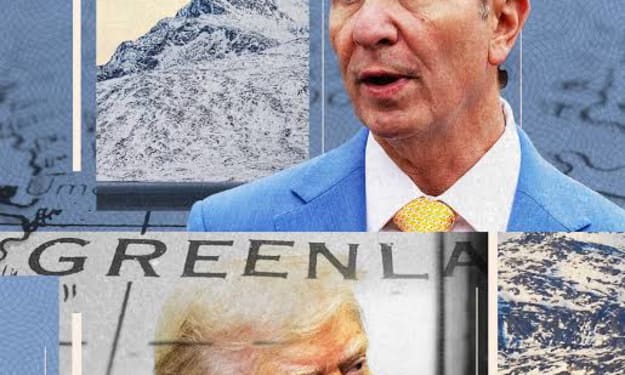
Jeff Landry Is Trump’s Envoy to Greenland. He Wants to Celebrate Gumbo.. AI-Generated.
A Louisiana governor’s unusual diplomatic role sparks culture, controversy, and questions about U.S.–Greenland relations Louisiana’s Governor Jeff Landry has found himself in an unexpected spot: he’s now the United States’ special envoy to Greenland. Appointed by President Donald Trump late last year, Landry’s new role has drawn attention for its unusual mix of diplomacy, culture, and controversy — including his plan to introduce Greenlanders to Louisiana’s famous gumbo.
By Fiaz Ahmed 10 days ago in The Swamp
Pericles — Power Through Culture
When people think of power, they often imagine armies, borders, and conquest. Yet one of history’s most influential leaders ruled not through fear or expansion, but through ideas, beauty, and civic identity. Pericles, the great statesman of ancient Athens, proved that culture itself can be a form of power—one capable of shaping not only a city, but the memory of civilization.
By Fred Bradford10 days ago in History
Russia to Pause Attacks on Ukraine as Temperatures Plummet. AI-Generated.
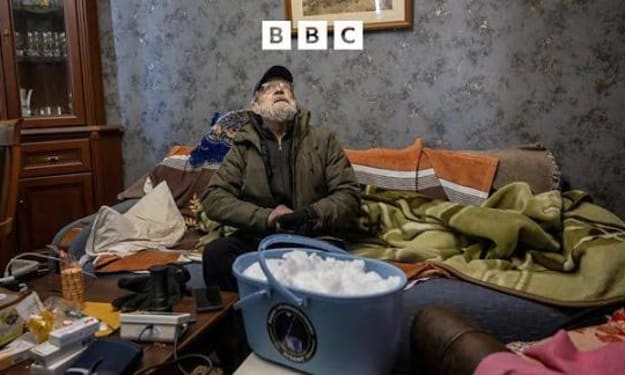
Extreme cold leads to temporary reduction in hostilities, but challenges remain on both sides As temperatures across Ukraine plummet to record lows, reports indicate that Russian forces are temporarily pausing offensive operations in some areas. The extreme winter conditions have created difficult logistical and operational challenges, affecting both Russian troops and Ukrainian defenders. While this pause may offer temporary relief to civilians and frontline forces, experts caution that the broader conflict remains unresolved, and fighting could resume once conditions improve. Why the Pause Is Happening Military analysts point to several factors influencing Russia’s temporary halt: Severe cold: Temperatures in eastern Ukraine have dropped well below freezing, making movement of troops and vehicles difficult. Winter conditions also increase the risk of frostbite, hypothermia, and mechanical failures in military equipment. Supply chain difficulties: Extreme cold affects fuel, ammunition, and food supply lines, forcing militaries to slow operations or suspend attacks temporarily. Safety of personnel: Even experienced troops face increased risk during prolonged exposure to severe winter conditions. Commanders may pause offensives to preserve manpower. Ukrainian forces are also adjusting their strategies, using the pause to reinforce positions, repair equipment, and provide aid to civilians affected by the cold. Impact on Civilians For civilians living in conflict zones, the pause in Russian attacks is a mixed blessing: Immediate safety: Reduced shelling and airstrikes provide a temporary window for families to seek shelter, evacuate, or access humanitarian aid. Continued hardship: Many communities remain without electricity, heat, or running water due to damaged infrastructure. Cold temperatures exacerbate the humanitarian crisis, especially for elderly and vulnerable populations. Relief efforts: NGOs and government agencies are attempting to deliver food, medical supplies, and winter clothing, but access remains challenging in contested areas. Experts emphasize that even with reduced attacks, civilians cannot assume a lasting end to hostilities, as military operations could resume once the weather improves. Military Consequences The pause in operations has strategic implications: Opportunity for Ukrainian forces: Ukrainian troops may use the lull to fortify defensive positions, reposition troops, and resupply frontline units. Russian military planning: Russia may use this time to repair equipment, replenish stockpiles, and prepare for renewed offensives once winter conditions ease. Shift in tactics: Analysts predict that both sides may adjust strategies to account for seasonal limitations, including potential reliance on drones, long-range artillery, and smaller-scale operations during extreme cold. While the pause is temporary, it provides both sides an opportunity to assess capabilities and plan next moves. International Observations Global leaders and analysts are closely monitoring the situation. Some key points include: Diplomatic pressure: International calls for ceasefires often intensify during winter months, particularly when civilian populations face life-threatening conditions. Humanitarian coordination: Organizations like the United Nations and Red Cross are attempting to leverage the pause to deliver aid and assess needs on the ground. Media coverage: The temporary reduction in attacks has prompted discussions about the human cost of winter warfare and the broader trajectory of the conflict. While the pause may create a temporary reprieve, observers warn that long-term resolution remains uncertain, and renewed violence could occur without warning. Historical Context Winter conditions have historically influenced military campaigns in Ukraine and other northern regions: During World War II, both German and Soviet forces faced severe setbacks due to winter, including frozen rivers, stalled vehicles, and frost-related casualties. Modern warfare still faces similar challenges, as extreme cold affects mobility, communications, and medical support. Military historians emphasize that weather often plays a decisive role in the timing and intensity of offensives. What’s Next? Experts suggest that while the pause may temporarily reduce the immediate human toll, the conflict remains unresolved: Continued monitoring: Both Russian and Ukrainian forces are likely using this period to reassess positions and strengthen defenses. Humanitarian preparation: Relief organizations must act quickly to deliver supplies before renewed fighting disrupts aid routes. Strategic planning: Analysts predict that as temperatures rise and conditions improve, Russia may resume targeted attacks, while Ukraine prepares to counter them with improved strategies. The pause is not a ceasefire, but rather a tactical adjustment to extreme weather conditions. Civilians, soldiers, and international observers remain on high alert. Conclusion The announcement that Russia is pausing attacks in Ukraine due to plummeting temperatures provides a temporary break for frontline communities. It highlights the challenges of conducting military operations in extreme winter conditions and the human costs of prolonged conflict. While the cold offers a brief respite, experts emphasize that the strategic situation remains fragile. Both sides may resume offensive operations once weather conditions improve, and civilians continue to bear the brunt of the conflict. In the meantime, the pause serves as a reminder that nature itself can influence the course of modern warfare, offering fleeting relief and creating opportunities for both humanitarian and military planning.
By Fiaz Ahmed 10 days ago in The Swamp