
Barring a Last-Minute Nuclear Deal, the U.S. and Russia Teeter on the Brink of a New Arms Race
Why the collapse of nuclear diplomacy could reshape global security for decades
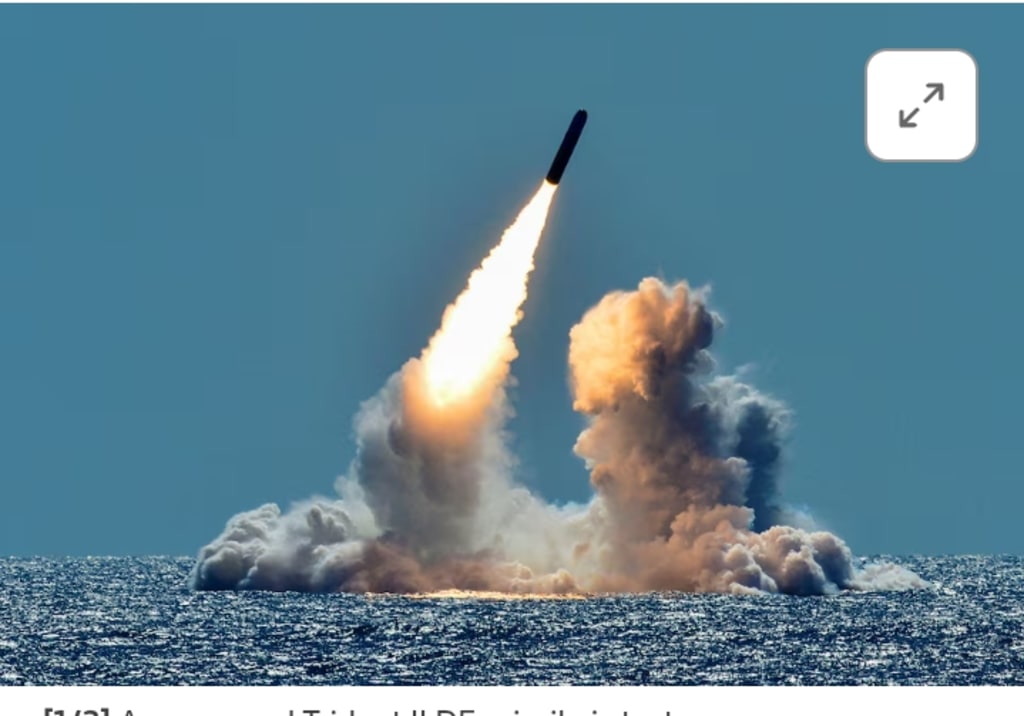
A Dangerous Turning Point
The world is standing at a familiar yet deeply unsettling crossroads. Relations between the United States and Russia—already strained by war, sanctions, and mutual distrust—are edging toward a new and potentially more volatile phase: a renewed nuclear arms race. With key arms control agreements either suspended, abandoned, or hollowed out, and with diplomatic channels narrowing, the possibility of restraint now hinges on a last-minute nuclear deal that many experts fear may never materialize.
This moment is not merely about bilateral tensions. It is about the future of global stability, the credibility of nuclear deterrence, and whether the international system can still prevent a slide into unchecked militarization. If diplomacy fails, the consequences will extend far beyond Washington and Moscow.
The Fragile Legacy of Arms Control
For decades, nuclear arms control agreements served as guardrails against catastrophe. Treaties like SALT, START, INF, and New START helped cap arsenals, reduce stockpiles, and establish verification mechanisms that prevented miscalculation.
These agreements were not built on trust alone; they were rooted in mutual fear of annihilation and the pragmatic understanding that limits benefited both sides. Even at the height of the Cold War, Washington and Moscow recognized that unchecked nuclear competition was unsustainable.
Today, that legacy is unraveling.
Why Arms Control Is Collapsing
1. The Breakdown of Trust
The war in Ukraine has accelerated the erosion of trust between the U.S. and Russia. Moscow accuses Washington of using arms control as a tool of strategic containment, while the U.S. argues that Russia has repeatedly violated treaty obligations and used nuclear threats as political leverage.
With trust shattered, arms control is no longer seen as a stabilizing framework but as a strategic vulnerability.
2. Suspension and Expiry of Treaties
The INF Treaty is gone.
New START, the last remaining major nuclear arms control agreement, is hanging by a thread.
Inspection regimes have been suspended or rendered ineffective.
Without binding limits, both sides are legally free to expand, modernize, and diversify their nuclear arsenals.
3. Domestic Political Pressures
In both countries, hardline voices argue that restraint equals weakness. In the U.S., concerns about China’s growing nuclear capabilities fuel calls for expansion. In Russia, nuclear signaling has become a core element of strategic messaging.
Arms control, once bipartisan and strategic, is now politically toxic.
What a New Arms Race Would Look Like
A modern nuclear arms race would differ significantly from the Cold War version.
Beyond Warhead Numbers
The competition is no longer just about how many warheads exist. It now includes:
Hypersonic delivery systems
Tactical nuclear weapons
Low-yield warheads
Nuclear-capable drones and submarines
AI-assisted targeting systems
This complexity increases the risk of misinterpretation and accidental escalation.
Lowered Threshold for Use
One of the most alarming trends is the normalization of tactical nuclear weapons. These smaller, battlefield-oriented weapons blur the line between conventional and nuclear warfare, making escalation more plausible.
Once that line is crossed, history suggests it becomes nearly impossible to redraw.
Why a Last-Minute Deal Still Matters
Despite the grim outlook, diplomacy has not entirely collapsed.
A last-minute nuclear agreement—even a limited one—could:
Restore transparency and inspections
Prevent rapid expansion of arsenals
Reopen communication channels
Signal restraint to other nuclear states
Such a deal would not require trust, only mutual self-interest.
Yet the political will required to reach even a narrow agreement is fading fast.
The Role of Ukraine and NATO
The war in Ukraine is inseparable from the nuclear equation.
From Moscow’s perspective, NATO expansion and Western military support for Kyiv represent existential threats. From Washington’s view, Russian nuclear rhetoric is an attempt to deter legitimate defense assistance.
This creates a feedback loop:
More war → more nuclear signaling
More nuclear signaling → higher global anxiety
Higher anxiety → less diplomatic flexibility
In this environment, arms control becomes collateral damage.
China: The Silent Third Player
Any future U.S.–Russia arms framework must contend with China, whose nuclear arsenal is expanding rapidly.
Washington argues that bilateral arms control no longer reflects strategic reality without Beijing’s involvement. Russia counters that its arsenal is already constrained compared to combined Western capabilities.
The result is paralysis: no one wants to move first.
Meanwhile, China benefits from the stalemate, quietly modernizing without binding limits.
Global Implications of a New Arms Race
1. Nuclear Proliferation Risks
When major powers abandon restraint, smaller states take notice. Countries on the nuclear threshold may conclude that treaties offer little protection and that deterrence is the only security guarantee.
2. Economic Costs
Nuclear modernization is extraordinarily expensive. Trillions of dollars could be diverted from:
Healthcare
Infrastructure
Climate mitigation
Education
At a time of global economic uncertainty, this is a burden few societies can afford.
3. Erosion of International Norms
The collapse of arms control undermines the idea that rules matter. Once nuclear restraint is abandoned, other international norms—from cyber warfare to space militarization—may follow.
Public Complacency and the Nuclear Blind Spot
Perhaps the most dangerous factor is public disengagement. Unlike the Cold War era, nuclear anxiety no longer dominates public consciousness.
This complacency allows policymakers to:
Expand arsenals quietly
Lower rhetorical thresholds
Normalize existential risks
The absence of public pressure makes restraint politically optional.
Is Deterrence Still Stable?
Classical nuclear deterrence assumed rational actors, clear red lines, and reliable communication. Today, those assumptions are under strain.
Multipolar nuclear dynamics
Cyber interference
AI-driven decision systems
Shortened reaction times
All increase the chance that deterrence could fail catastrophically.
The Narrow Path Forward
Avoiding a new arms race does not require friendship—only realism.
Key steps could include:
A temporary extension or freeze on warhead numbers
Restoration of inspection mechanisms
Crisis hotlines and military-to-military communication
Separate arms control from broader political disputes
None of these solve geopolitical conflict. But they reduce the odds of irreversible disaster.
Conclusion: The Cost of Failure
If no last-minute nuclear deal is reached, the world may enter a new era where nuclear restraint is optional and escalation is normalized.
History shows that arms races do not make nations safer—they make accidents more likely and diplomacy harder. The question is no longer whether the U.S. and Russia distrust each other. That reality is already settled.
The real question is whether they still recognize that some dangers transcend rivalry.
Because once a new arms race fully begins, stopping it may be far harder than preventing it now.
About the Creator
Keep reading
More stories from Zahid Hussain and writers in The Swamp and other communities.
US Issues License for Oil Companies to Operate in Venezuela
The United States has taken a significant step toward reopening economic ties with Venezuela by issuing a new general license that allows American oil companies to operate in the South American nation’s long‑struggling petroleum sector. This move marks a notable easing of sanctions that previously restricted U.S. corporate involvement and underscores a dramatic shift in U.S.–Venezuela relations. � Reuters Under the authorization, issued by the U.S. Treasury Department’s Office of Foreign Assets Control (OFAC), U.S. firms are permitted to engage in a broad range of activities tied to Venezuelan crude — including purchasing, transporting, storing, refining, and selling Venezuelan‑origin oil. � Reuters What the New License Allows — and Limits The newly issued license expands on earlier, more limited authorizations. Instead of narrowly defined approvals for specific companies, the broad authorization permits any established U.S. entity to engage in downstream oil operations involving Venezuelan crude. This includes: Buying and selling Venezuelan‑origin crude in global markets Transporting and storing Venezuelan oil Refining Venezuelan crude in U.S. facilities or abroad However, the license does not extend to upstream oil production within Venezuela itself, meaning drilling or extraction remains restricted, and U.S. involvement in direct oil production remains tightly regulated. � finance.yahoo.com It also maintains numerous restrictions: transactions involving individuals or companies tied to China, Russia, Iran, North Korea, or Cuba remain prohibited. These conditions reflect Washington’s broader geopolitical stance, even as it seeks to channel more Venezuelan oil into U.S. and allied markets. � EL PAÍS English Why This Change Is Significant For decades, Venezuela — which holds some of the world’s largest proven oil reserves — suffered from a combination of political turmoil, mismanagement, and strict U.S. sanctions that stifled production and foreign investment. Under longstanding sanctions regimes, many international energy companies pulled back, and output dropped precipitously. � Reuters The latest U.S. action reflects a broader shift in policy following the U.S. capture of former Venezuelan President Nicolás Maduro and the installation of an interim government under Delcy Rodríguez. The change indicates Washington’s interest in revitalizing Venezuela’s oil sector while exerting influence over how oil revenues and operations are managed moving forward. � Reuters Venezuela’s Own Legal Reforms In parallel with the U.S. licensing move, Venezuela’s National Assembly passed sweeping reforms to its hydrocarbons law — ending decades of tight state control and monopolies in oil operations. The reforms allow private and foreign companies more autonomy and introduce new contractual and investment protections, including independent arbitration. � The Guardian The legislative changes represent one of the most dramatic shifts in more than 20 years of Venezuela’s oil policy, which historically centered on state dominance through PDVSA, the national petroleum company. In many areas governed by the new law, foreign firms can now negotiate contracts directly, potentially unlocking investment and technical expertise long absent from the sector. � AP News U.S.–Venezuela Oil Trade Begins to Restart Early indicators already show a tentative re‑engagement of U.S. firms with Venezuelan crude. For example, Citgo Petroleum — historically tied to Venezuela’s state oil company — purchased a Venezuelan crude cargo recently, the first such deal since 2019. The transaction signals a gradual normalization of U.S. access to Venezuelan energy resources. � Reuters Meanwhile, U.S. energy and trading giants like Vitol and Trafigura have also received licenses to load and export Venezuelan oil, a sign that the U.S. is seeking to cultivate new commercial frameworks for Venezuelan crude in global markets. � Reuters Political and Economic Backdrop This licensing decision comes amid broader efforts to restore diplomatic and economic engagement. In recent weeks, the U.S. announced plans to reopen commercial airspace and ease certain travel restrictions with Venezuela, further signaling a thaw in relations after years of sanctions and political standoffs. � wsj.com However, domestic reactions in both countries remain mixed. Some Venezuelans welcome the potential economic benefits of revitalized oil exports and foreign investment, while critics stress that deeper democratic and institutional reforms are necessary to ensure transparent governance and equitable growth. Analysts also warn that legal uncertainties and lingering political tensions could slow investment. � MercoPress Global Energy Market Implications If U.S. companies increase involvement in Venezuelan oil logistics and refining, it could have significant implications for global energy markets: Increased supply of heavy crude for U.S. Gulf Coast refineries Greater competition with producers in the Middle East and Africa Shifts in pricing dynamics for certain oil grades historically underserved in the U.S. The policy also plays into broader geopolitical competition, especially in regions where Russian and Chinese energy interests have previously filled the vacuum in Venezuela due to sanctions. By tightening restrictions on transactions with entities tied to those countries, the U.S. is shaping both commercial and strategic outcomes. � finance.yahoo.com Challenges and Uncertainties Ahead Despite the positive momentum, serious hurdles remain: Legal and Regulatory Risks Investors have pointed to uncertainties in Venezuelan legal frameworks and contract enforcement mechanisms as potential deterrents to long‑term capital commitments. The recent reforms are a step forward, but experts say further clarity and stability will be necessary to attract sustained foreign investment. � MercoPress Sanctions and Geopolitics While the U.S. has eased some restrictions, broader sanction regimes remain in place. Upstream operations are still constrained, and companies must navigate complex compliance requirements. Any changes in U.S. political leadership or policy priorities could also alter the regulatory landscape, raising investment risk. � EL PAÍS English Market Realities Venezuela’s oil infrastructure has suffered years of underinvestment, and production levels remain far below historical peaks. Rebuilding capacity will require heavy investment, technical know‑how, and time — even with legal and political frameworks improved. � Reuters Conclusion: A Strategic Opening in U.S.–Venezuela Energy Relations The issuance of a new license allowing U.S. oil companies to operate in Venezuela is a major development in energy and foreign policy. It reflects a broader shift toward engagement and economic integration after years of sanctions and strained relations. While the full impact will unfold over time, this step could signal the beginning of a new chapter in Venezuela’s oil sector and its ties with the United States — with potential benefits for markets, companies, and consumers alike.
By Zahid Hussain2 days ago in The Swamp
Trump Praises British Troops After Drawing Outrage at Comments Downplaying NATO’s Role in Afghanistan
Former US president Donald Trump has praised British troops for their service in Afghanistan, days after his comments appeared to downplay NATO’s role in the two-decade-long conflict, sparking outrage among allies, military veterans, and political leaders across Europe. The episode has once again highlighted Trump’s controversial approach to foreign policy, particularly his views on alliances and multilateral military operations.
By Salaar Jamali6 days ago in The Swamp




Comments
There are no comments for this story
Be the first to respond and start the conversation.