Latest Stories
Most recently published stories on Vocal.
How to Plan a Maldives Honeymoon That’s Actually Worth the Splurge
The Maldives is the ultimate “bucket list” destination, but it’s also a logistical puzzle. If you don’t get the timing and the meal plan right, you can end up spending your first day of marriage stressed about hidden costs or sitting in an airport lounge for six hours instead of sunbathing at one of the top resorts In Maldives. Here is how to navigate the blue water and the fine print.
By Jeewanthi Armstrong8 days ago in Journal
32 killed in blast at Islamabad Imambargah: A powerful explosion occurred as worshippers went into prostration after praying the first rak'ah.
The worshippers had completed the first rak‘at and gone into prostration when the explosion occurred. The blast was so intense that screams erupted everywhere and the entire area was filled with smoke.” Zahid Ali, who was injured in the suicide attack at an Imambargah in the Tarlai area of Islamabad, said that the prayer had begun at one o’clock. He said, “I was standing in a corner in the last rows. I lost consciousness and have only just regained my senses.” Fortunately, Zahid Ali did not suffer serious injuries. His cousin Javed Khan, who was with him, said that they had gone together to offer prayers but were delayed because of performing ablution. “When I returned after ablution, the worshippers had already gone into prostration. At that moment I saw the suicide bomber open fire on the guard at the gate, enter the premises and blow himself up.” Javed Khan added that more firing also took place at that time. So far, 32 people have been killed and 168 injured in the suicide bombing that occurred during Friday prayers at the Imambargah in Tarlai, Islamabad, the federal capital of Pakistan. Immediately after the blast, an emergency was declared in Islamabad and the injured were shifted to PIMS, Polyclinic and other hospitals. According to police officials and eyewitnesses, the incident in Tarlai Kalan, a suburb of Islamabad, was a suicide attack.
By Hashim Khan 8 days ago in Journal
China Reverses Death Sentence for Canadian in a Small Win for Carney. AI-Generated.
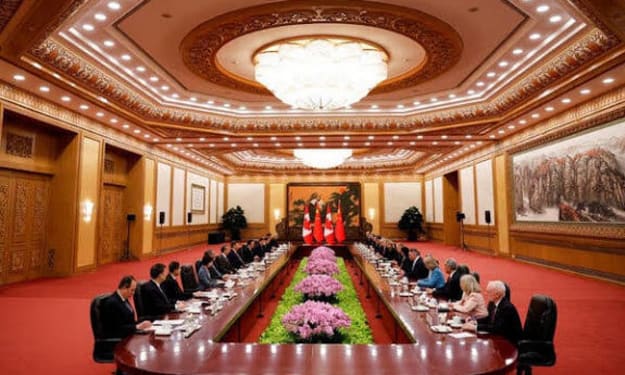
China’s decision to reverse a death sentence imposed on a Canadian citizen has been welcomed cautiously in Ottawa, offering a rare diplomatic opening in an otherwise strained relationship between the two countries. The ruling, announced by Chinese judicial authorities this week, replaces the death penalty with a suspended death sentence — a form of life imprisonment that allows for possible commutation after a fixed period of good behavior. Canadian officials described the development as a “modest but meaningful” step, crediting sustained diplomatic pressure and quiet negotiations led by Prime Minister-designate Mark Carney’s transition team and senior foreign ministry officials. While the case remains deeply sensitive, the reversal has been interpreted as a small diplomatic victory for Canada at a time when relations with Beijing remain tense over trade, security, and human rights issues. A Long-Running and Sensitive Case The Canadian citizen, whose name has not been officially released at the request of the family, was originally sentenced to death in connection with drug trafficking charges in southern China. The verdict had drawn strong condemnation from Canadian leaders and human rights groups, who argued the punishment was disproportionate and lacked transparency. China’s judicial system allows for death sentences with a two-year reprieve, meaning the sentence can be reduced to life imprisonment if no further offenses are committed during that period. Legal analysts say such reversals are not unprecedented, but they are politically significant when foreign nationals are involved. “The change does not mean freedom, but it removes the immediate threat of execution,” said a former Canadian diplomat familiar with consular negotiations in China. “That alone is an important humanitarian outcome.” A Test for Carney’s Diplomatic Approach The decision comes at a critical moment for Mark Carney, who is preparing to take office amid growing calls to stabilize Canada’s relationship with China without abandoning its principles on human rights and rule of law. His advisers have emphasized a strategy of “calibrated engagement,” seeking cooperation where possible while maintaining firm positions on legal standards and democratic values. Sources in Ottawa say the case was raised repeatedly in backchannel discussions over the past several months, alongside broader concerns about the treatment of foreign detainees in China. Although Beijing has not acknowledged any political influence on the ruling, the timing has been interpreted as a goodwill gesture toward the incoming Canadian government. “This is not a reset in relations,” said a senior government official. “But it shows that dialogue can still produce limited results, even in a difficult climate.” Diplomatic Strains Remain Canada–China relations have been troubled since the 2018 arrest of a Chinese technology executive in Vancouver and the subsequent detention of two Canadians in China, widely viewed in Ottawa as retaliatory. Though the two detainees were later released, mistrust continues to shape diplomatic exchanges. Trade disputes, allegations of foreign interference, and disagreements over Taiwan and human rights have further complicated efforts to rebuild trust. Canada has also aligned closely with the United States and other allies in restricting Chinese access to sensitive technologies, a move Beijing considers hostile. Against this backdrop, the death sentence reversal stands out as a rare example of positive movement, even if limited in scope. Human Rights and Legal Questions Human rights organizations cautioned against interpreting the decision as evidence of systemic change in China’s justice system. While welcoming the commutation, they stressed that the underlying conviction remains opaque and that China continues to impose the death penalty more frequently than any other country. “This is a relief for the family, but it does not erase concerns about due process,” said a spokesperson for an international rights group. “Foreign nationals in China still face serious legal risks, particularly in politically sensitive or high-profile cases.” Canada has long opposed the death penalty in all circumstances and routinely seeks clemency for citizens facing execution abroad. The government reiterated its position following the ruling, stating it would continue to advocate for further sentence reductions and improved access to consular services. Beijing’s Message Chinese officials framed the decision as a matter of domestic law rather than diplomacy. A foreign ministry spokesperson said the courts had acted “in accordance with legal procedures” and emphasized that China treats all defendants equally, regardless of nationality. Analysts note, however, that high-profile cases involving foreign citizens often carry political weight, even when officially denied. “Judicial outcomes in China cannot be separated entirely from diplomatic context,” said an Asia policy expert. “This sends a signal that Beijing is willing to show flexibility under certain conditions.” A Limited but Symbolic Outcome For Carney, the reversal provides an early opportunity to demonstrate that careful engagement can yield humanitarian results without major concessions. Still, officials caution that much work remains before broader relations improve. “This is one small step, not a breakthrough,” said a Canadian foreign policy adviser. “But in a relationship defined by tension, even a small step matters.” As Canada continues to navigate its complex ties with China, the fate of one citizen has become a symbol of the delicate balance between principle and pragmatism. Whether this development leads to deeper cooperation or remains an isolated gesture will depend on how both governments choose to build on it in the months ahead.
By Fiaz Ahmed 8 days ago in The Swamp
Top Patio Slab Designs to Upgrade Your Garden Instantly
If you have been browsing Patio Slabs For Sale lately or searching for the perfect Garden Slab to transform your outdoor space, you are not alone. More homeowners are realising that the right patio design can completely change how a garden looks and feels. It is no longer just about laying concrete and calling it done. A thoughtfully chosen patio slab design can turn a plain patch of lawn into a space that feels styled, welcoming and genuinely personal.
By Ammaari Stones8 days ago in 01
Can Crypto Rewards Programs Help Make Digital Currency Mainstream?
Digital currencies have changed how a lot of people think about money. Crypto gave people new ways to send payments, invest, and use financial tools online. Still, for many people, it’s not part of everyday life. For now, it still feels separate from how people usually spend money. Is it too futuristic? Too confusing? Or just different than what we’re used to? It’s probably a combination of everything.
By Mark Arthur8 days ago in 01
UK Threatens to Seize Russia-Linked Shadow Fleet Tanker in Escalatory Move. AI-Generated.
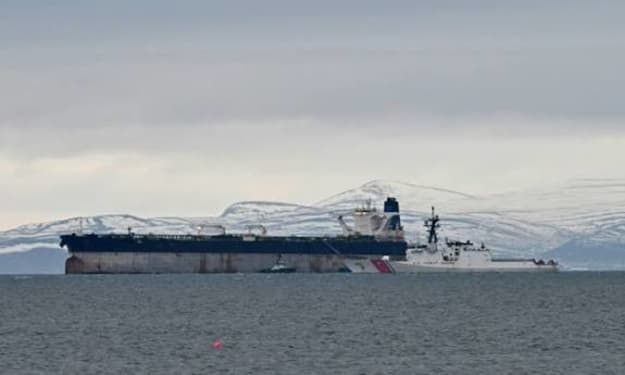
The United Kingdom has signaled a tougher stance against Russia’s so-called “shadow fleet” by warning it may seize a tanker suspected of helping Moscow evade international sanctions. The move marks a significant escalation in enforcement efforts aimed at curbing Russia’s ability to export oil and generate revenue for its war economy. British authorities said the vessel, which has been operating under opaque ownership and insurance arrangements, is believed to be part of a network of aging tankers used to transport Russian crude outside established regulatory systems. These ships often sail under flags of convenience, disable tracking systems, and rely on complex financial structures to avoid scrutiny. Officials described the potential seizure as a legal and strategic response to what they see as growing risks to maritime safety and sanctions compliance. “The UK will not tolerate vessels operating in ways that undermine international law or threaten our security and environment,” a government spokesperson said. What Is the Shadow Fleet? The “shadow fleet” refers to hundreds of tankers that emerged after Western nations imposed price caps and shipping restrictions on Russian oil exports following the invasion of Ukraine. These vessels operate largely outside the mainstream shipping and insurance markets, often using obscure insurers and shell companies based in jurisdictions with weak oversight. Many of the ships are decades old and poorly maintained, raising alarms about the possibility of accidents or oil spills in heavily trafficked waters such as the English Channel and the North Sea. Maritime experts say the fleet has become a parallel transport system designed specifically to keep Russian oil flowing to buyers in Asia, the Middle East, and parts of Africa. “The concern is not just sanctions evasion,” said a European maritime analyst. “It’s also the safety risk posed by ships that are not subject to normal inspections and insurance standards.” Legal and Diplomatic Implications The UK’s threat to seize a tanker would represent one of the strongest enforcement actions taken so far against Russia-linked maritime trade. Under British law, authorities can detain or confiscate vessels suspected of violating sanctions, endangering navigation, or breaching environmental regulations. However, such action could provoke diplomatic backlash. Russia has repeatedly accused Western countries of weaponizing maritime law and interfering with global trade. A seizure could further strain already tense relations between London and Moscow. International law specialists note that the legality of such a move depends on the evidence collected and the jurisdiction in which the ship is operating. If the vessel enters British territorial waters or ports, enforcement becomes easier. Intercepting ships on the high seas is far more complex and politically sensitive. “This is a test of how far the UK and its allies are willing to go,” said one legal expert. “It moves enforcement from financial penalties to physical intervention.” Environmental and Security Concerns British officials emphasized that the shadow fleet is not only a sanctions issue but also a public safety matter. Several recent incidents involving poorly insured tankers have raised fears of major spills that could devastate coastlines and fisheries. In one recent case, a tanker suspected of transporting sanctioned oil suffered mechanical problems while passing through busy shipping lanes, prompting emergency monitoring by European coast guards. Environmental groups welcomed the UK’s tougher stance, saying the risk of catastrophe is rising as the shadow fleet expands. “These ships are floating hazards,” said a campaigner from a marine protection organization. “Stopping them is about protecting both the rule of law and the environment.” Security agencies are also worried that shadow fleet vessels could be used for intelligence gathering or sabotage. With undersea cables and energy pipelines increasingly seen as vulnerable infrastructure, authorities view unregulated shipping as a potential threat. Impact on Global Oil Markets Despite Western sanctions, Russia remains one of the world’s largest oil exporters. The shadow fleet has played a crucial role in keeping its exports moving, often selling crude at discounted prices to willing buyers. Any serious disruption to this system could affect global energy markets, particularly if multiple countries follow the UK’s lead. Analysts say targeted seizures may not immediately reduce supply but could raise transportation costs and insurance premiums, pushing prices higher. “If enforcement becomes aggressive, the economics of shadow shipping change,” said an energy market strategist. “That could squeeze Russia’s margins and create uncertainty for buyers.” A Signal to Allies The UK’s warning is also seen as a message to allies that it intends to take a leadership role in sanctions enforcement. European governments have debated whether current measures go far enough, especially as Russia continues to adapt. There are indications that discussions are underway among NATO and EU partners about coordinated monitoring of suspicious vessels and shared intelligence on ownership networks. “This is not just about one ship,” a Western official said. “It’s about dismantling an entire system designed to bypass international rules.” Risks of Escalation Critics caution that seizing a tanker linked to Russia could escalate tensions at sea. Moscow might respond with retaliatory actions or legal challenges, and shipping companies could become more cautious about operating near British waters. Some industry voices argue that enforcement should remain focused on financial penalties rather than physical detention of ships. “The risk of miscalculation is real,” said a shipping executive. “One incident could spiral into a broader confrontation.” A Turning Point Whether or not the tanker is ultimately seized, the threat itself represents a turning point in how Western governments confront Russia’s shadow fleet. It signals a shift from passive monitoring to direct intervention. As the war in Ukraine drags on and sanctions fatigue grows, London appears determined to show that enforcement still carries consequences. The coming weeks will reveal whether the UK’s warning becomes a precedent—or a flashpoint in an already fragile maritime order.
By Fiaz Ahmed 8 days ago in The Swamp
The Future of NFT Marketplaces
NFT marketplaces have changed a lot since the early days. Initially, most were simple platforms for buying and selling digital art. Today, they’re ecosystems where people can own digital assets, access services, and earn income. NFT marketplaces aren’t just about art anymore.
By Mark Arthur8 days ago in 01
Venezuela’s Return Won’t Dethrone Latin America’s Oil Leaders. AI-Generated.
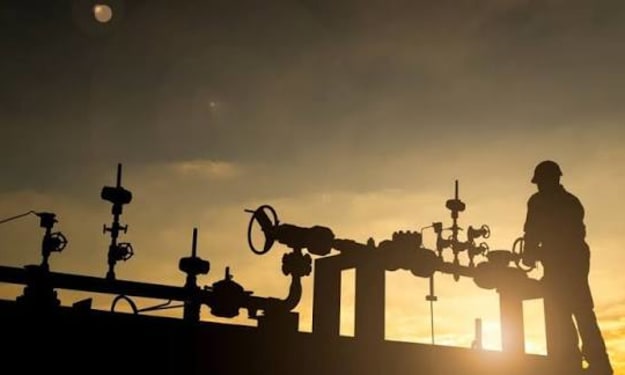
Despite renewed hopes that Venezuela’s oil sector might regain its footing following political upheavals and shifting U.S. policies, analysts say Caracas’s comeback will fall short of upending the region’s current oil hierarchy. Argentina, Brazil and Guyana are poised to outpace Venezuela as Latin America’s key oil producers and investment magnets, underscoring deep structural and geopolitical barriers that still limit Venezuela’s prominence in the global energy market. OilPrice.com A Legacy of Lost Capacity Venezuela once stood as Latin America’s dominant oil force. At its peak in the early 2000s, the nation produced more than 3 million barrels per day (bpd), and its state oil company Petróleos de Venezuela, S.A. (PDVSA) was among the region’s most influential energy players. However, decades of underinvestment, political mismanagement and international sanctions have dramatically eroded that stature. Today, Venezuela’s output is less than one-third of its former capacity, frequently reported around 0.9–1.1 million bpd — a fraction of its historic highs and far below its regional rivals. Medium Analysts note that rebuilding Venezuela’s oil industry is not a matter of simply flipping a switch. Infrastructure that has degraded over years will need massive capital injections to be rehabilitated, even if sanctions ease. Estimates suggest that reviving the sector to meaningful levels could take years and require tens of billions of dollars. Medium Regional Leaders Set to Surge In contrast, other Latin American producers are enjoying momentum supported by investment, technology and strategic resource development. Argentina’s Vaca Muerta shale formation continues to attract billions in investment, bolstering that country’s export potential. Meanwhile, Brazil’s offshore pre-salt fields remain a major growth engine, with output projected to exceed 4.2 million bpd in 2026 — making it the dominant supplier in the region. Guyana’s deepwater discoveries also promise substantial production increases as new projects come online. OilPrice.com These dynamics mean that, even if Venezuela regains some output, it is unlikely to dethrone its neighbors anytime soon. Latin America’s oil production in 2026 is forecast to exceed 8.8 million bpd, led by countries that are both investing heavily and attracting foreign partners with clearer legal and economic frameworks. OilPrice.com Investment Hurdles and Political Risks International oil companies have historically been wary of Venezuela due to legal uncertainty and the politicized nature of its oil sector. Under leaders such as Hugo Chávez and Nicolás Maduro, Caracas imposed strict national control over PDVSA and required majority state ownership of projects, driving away major operators and curtailing foreign investment. Although recent political changes and U.S. policy shifts have opened new channels for cooperation, many firms remain cautious. Some traders and smaller firms are exploring structured opportunities in Venezuela that lower upfront capital requirements, yet supermajors still express concern about underwriting long-term projects in an environment with lingering institutional risk. OilPrice.com The types of crude that Venezuela produces — particularly heavy oil from the Orinoco Belt — also pose market challenges. Heavy crude is more expensive to refine and requires specific blending and processing infrastructure. As a result, it often sells at a discount compared with lighter grades preferred by many refineries in the United States and elsewhere. Anadolu Ajansı Geopolitical Complexity Venezuela’s oil prospects have long been intertwined with geopolitics. U.S. sanctions imposed in recent years targeted both PDVSA and the country’s ability to export oil, significantly constraining output and trade. Although recent developments — including temporary sanction waivers and new export licenses — have allowed some increase in shipments, these are still subject to geopolitical volatility. U.S. sanctions policy remains a critical wild card, capable of re-tightening and affecting operations again if political benchmarks are not met. AInvest China, historically a major buyer and investor, continues to play a role, absorbing a significant share of Venezuelan exports even as global market conditions fluctuate. This external reliance can offer short-term revenue but does little to reposition Venezuela at the forefront of Latin American energy leadership. Structural Constraints and Long Road Ahead The underlying structural weaknesses in Venezuela’s oil system also complicate any rapid recovery. Years of underinvestment have left pipelines, refineries and extraction equipment in poor condition. Skilled labor has left the sector, and decades of fiscal reliance on oil revenues have contributed to economic fragility. Experts say that, without sustained reforms and stable governance, the industry will continue to lag behind regional peers that enjoy more predictable operating climates. Medium While Venezuela’s vast proven crude reserves — among the world’s largest — provide a theoretical advantage, realizing that potential in a meaningful way remains a formidable challenge. The island nation’s oil wealth is undeniable, but translating it into sustained production growth and regional leadership will require overcoming hurdles that go far beyond the lifting of sanctions. Anadolu Ajansı Conclusion: A Return, but Not a Reversal Venezuela’s partial return to the oil market symbolizes a noteworthy shift from years of stagnation. However, it is unlikely to fundamentally alter the regional energy landscape dominated by Brazil, Argentina and Guyana. The combination of structural decay, political risk, commodity economics and strong performance by other producers suggests that Venezuela’s resurgence will be modest at best and gradual at worst. Rather than dethroning Latin America’s oil leaders, Venezuela’s evolving oil role underscores the fragmented nature of the region’s energy future. Multiple actors with diverse resources and strategies are shaping a complex landscape in which Caracas may feature again — but not at the forefront. OilPrice.com
By Fiaz Ahmed 8 days ago in The Swamp
The Terrifying Psychology That Can Turn Anyone Into a Monster (Including You)
What do you think is your quiet thought when you hear something really awful, a story of cruelty, or a dreadful injustice? It is most likely to be something such as, "I would never do that." We reassure ourselves that monsters are of another breed. They are the bad men, the men with a crooked soul, the men with something wrong in their hearts.
By Tarek Rakhiess8 days ago in Psyche
Taiwan to Construct 10 Light Frigates for Air Defense, Anti-submarine Missions. AI-Generated.
Taiwan has announced plans to construct 10 new light frigates designed to strengthen its air defense and anti-submarine warfare capabilities, marking one of the island’s most significant naval modernization efforts in recent years. The move reflects Taipei’s growing concern over regional security threats and its determination to enhance its ability to protect key sea lanes and deter potential aggression. The frigates will be developed under Taiwan’s domestic shipbuilding program, with local defense contractors taking the lead in design and construction. According to officials from Taiwan’s Ministry of National Defense, the vessels are expected to enter service gradually over the next decade and will complement existing surface combatants in the navy’s fleet. Strengthening Defensive Capabilities The new light frigates are intended to fill a critical gap between larger destroyers and smaller patrol vessels. Each ship will be equipped with advanced radar systems, surface-to-air missiles for air defense, and sonar arrays capable of detecting submarines operating in nearby waters. Military analysts say the focus on anti-submarine warfare is particularly significant. The waters surrounding Taiwan are increasingly crowded with naval traffic, including submarines from regional powers. These vessels pose a major challenge because they can operate stealthily and threaten shipping routes and naval bases. “The ability to detect and track submarines is essential for Taiwan’s security,” said a regional defense expert. “These frigates are designed to give the navy more flexibility and endurance in contested waters.” In addition to missile and sonar systems, the ships will likely feature modern electronic warfare tools and unmanned aerial vehicle support, allowing them to gather intelligence and coordinate with other military units more effectively. Domestic Shipbuilding Push Taiwan’s government has placed strong emphasis on building warships domestically as part of a broader effort to reduce reliance on foreign suppliers. The new frigate program builds on earlier successes, including the construction of indigenous submarines and fast attack craft. Officials argue that local production not only strengthens military readiness but also boosts the island’s industrial base and technological expertise. Shipyards involved in the project are expected to benefit from long-term contracts, while universities and research centers will contribute to the development of advanced systems. “This program shows that Taiwan is capable of producing complex naval platforms on its own,” said a defense industry representative. “It sends a signal that we are committed to sustaining our defense industry and protecting our maritime interests.” Regional Tensions The announcement comes amid heightened tensions in the Taiwan Strait and surrounding waters. China has expanded its naval and air operations near the island, conducting frequent exercises and patrols that Taiwan views as intimidation. Beijing claims Taiwan as part of its territory and has not ruled out the use of force to achieve unification. In response, Taiwan has accelerated military reforms and procurement programs aimed at strengthening its deterrence posture. The new light frigates are expected to operate alongside existing destroyers and corvettes to create layered defenses against both air and underwater threats. U.S. and Japanese officials have repeatedly stressed the importance of maintaining stability in the region, given that much of the world’s trade passes through nearby sea lanes. Any disruption could have severe global economic consequences. Cost and Timeline Although precise budget figures have not been disclosed, defense sources estimate that the frigate program will cost several billion dollars over its full duration. Construction is expected to begin within the next two years, with the first ship entering service in the early 2030s. The navy plans to deploy the frigates primarily in waters east and south of Taiwan, areas considered vulnerable to submarine activity and air incursions. Their missions will include escorting commercial vessels, protecting offshore infrastructure, and supporting larger task forces during joint exercises. Debate at Home While the program has received broad political support, it has also sparked debate within Taiwan over defense spending priorities. Some lawmakers argue that resources should focus more heavily on asymmetric capabilities such as drones, missile systems, and cyber defense rather than traditional surface ships. Defense officials counter that frigates play an essential role in maritime security and cannot be replaced entirely by smaller or unmanned platforms. “We need a balanced force,” a senior officer said. “These ships provide endurance, command capabilities, and protection that other systems cannot.” Public opinion appears divided. Many citizens view the program as a necessary step to safeguard Taiwan’s future, while others worry about escalating an arms race in the region. Strategic Message Beyond their technical role, the frigates carry symbolic importance. They demonstrate Taiwan’s intention to stand firm in the face of external pressure and to contribute actively to regional security. Analysts say the program also sends a message to international partners that Taiwan is taking responsibility for its own defense. “This is about credibility,” one observer noted. “By investing in modern naval forces, Taiwan shows it is serious about deterrence and cooperation.” Looking Ahead As construction moves forward, attention will focus on whether Taiwan can deliver the ships on schedule and within budget. The success of the project will likely influence future decisions on naval modernization and defense strategy. In a region marked by rivalry and uncertainty, Taiwan’s decision to build 10 light frigates underscores the growing importance of maritime power in shaping security dynamics. Whether as guardians of shipping lanes or as part of a wider deterrence strategy, the new vessels are set to become a central element of Taiwan’s naval posture in the years ahead.
By Fiaz Ahmed 8 days ago in The Swamp
Living in Fate, Not Clinging
Whether male or female, never desperately seek marriage, for everything in this world follows the law of cause and effect. What is meant to be yours will eventually arrive; what is not meant for you will only deplete your energy. Believe that when a debt of kindness is owed to you, someone who cherishes you dearly will appear. Without greed, there are gifts; with heavy expectations, there are only losses. Hope for the attainable, wait for the possible, listen, observe, and go with the flow. Walk forward with composure.
By Emily Chan - Life and love sharing8 days ago in Poets