
Taiwan to Construct 10 Light Frigates for Air Defense, Anti-submarine Missions
🔹 Formal & News Style New warships aim to boost Taiwan’s naval defenses amid rising regional tensions Domestic shipbuilding program strengthens air and undersea warfare capability Taipei expands fleet as security concerns grow in the Taiwan Strait Frigates designed to counter aerial and submarine threats 🔹 Neutral & Analytical Why Taiwan is investing in light frigates A strategic upgrade for maritime security Balancing deterrence and defense in contested waters 🔹 Catchy & Impactful Ten new ships for a tense sea Taiwan’s navy prepares for the next threat Building deterrence at sea

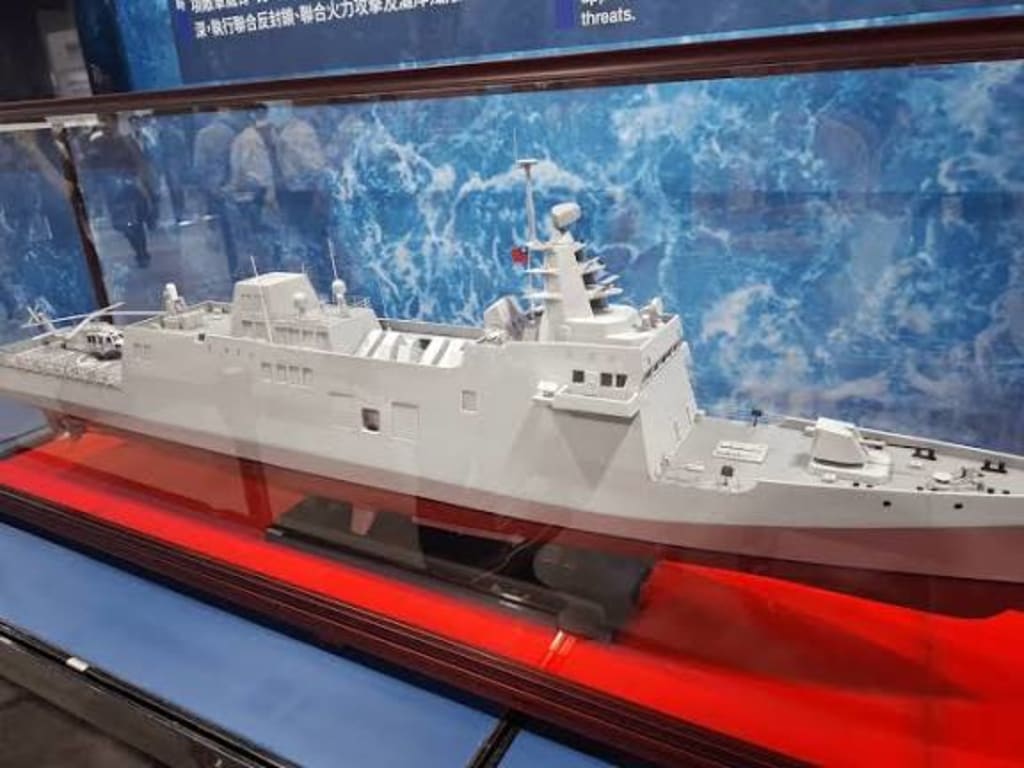
Taiwan has announced plans to construct 10 new light frigates designed to strengthen its air defense and anti-submarine warfare capabilities, marking one of the island’s most significant naval modernization efforts in recent years. The move reflects Taipei’s growing concern over regional security threats and its determination to enhance its ability to protect key sea lanes and deter potential aggression.
The frigates will be developed under Taiwan’s domestic shipbuilding program, with local defense contractors taking the lead in design and construction. According to officials from Taiwan’s Ministry of National Defense, the vessels are expected to enter service gradually over the next decade and will complement existing surface combatants in the navy’s fleet.
Strengthening Defensive Capabilities
The new light frigates are intended to fill a critical gap between larger destroyers and smaller patrol vessels. Each ship will be equipped with advanced radar systems, surface-to-air missiles for air defense, and sonar arrays capable of detecting submarines operating in nearby waters.
Military analysts say the focus on anti-submarine warfare is particularly significant. The waters surrounding Taiwan are increasingly crowded with naval traffic, including submarines from regional powers. These vessels pose a major challenge because they can operate stealthily and threaten shipping routes and naval bases.
“The ability to detect and track submarines is essential for Taiwan’s security,” said a regional defense expert. “These frigates are designed to give the navy more flexibility and endurance in contested waters.”
In addition to missile and sonar systems, the ships will likely feature modern electronic warfare tools and unmanned aerial vehicle support, allowing them to gather intelligence and coordinate with other military units more effectively.
Domestic Shipbuilding Push
Taiwan’s government has placed strong emphasis on building warships domestically as part of a broader effort to reduce reliance on foreign suppliers. The new frigate program builds on earlier successes, including the construction of indigenous submarines and fast attack craft.
Officials argue that local production not only strengthens military readiness but also boosts the island’s industrial base and technological expertise. Shipyards involved in the project are expected to benefit from long-term contracts, while universities and research centers will contribute to the development of advanced systems.
“This program shows that Taiwan is capable of producing complex naval platforms on its own,” said a defense industry representative. “It sends a signal that we are committed to sustaining our defense industry and protecting our maritime interests.”
Regional Tensions
The announcement comes amid heightened tensions in the Taiwan Strait and surrounding waters. China has expanded its naval and air operations near the island, conducting frequent exercises and patrols that Taiwan views as intimidation. Beijing claims Taiwan as part of its territory and has not ruled out the use of force to achieve unification.
In response, Taiwan has accelerated military reforms and procurement programs aimed at strengthening its deterrence posture. The new light frigates are expected to operate alongside existing destroyers and corvettes to create layered defenses against both air and underwater threats.
U.S. and Japanese officials have repeatedly stressed the importance of maintaining stability in the region, given that much of the world’s trade passes through nearby sea lanes. Any disruption could have severe global economic consequences.
Cost and Timeline
Although precise budget figures have not been disclosed, defense sources estimate that the frigate program will cost several billion dollars over its full duration. Construction is expected to begin within the next two years, with the first ship entering service in the early 2030s.
The navy plans to deploy the frigates primarily in waters east and south of Taiwan, areas considered vulnerable to submarine activity and air incursions. Their missions will include escorting commercial vessels, protecting offshore infrastructure, and supporting larger task forces during joint exercises.
Debate at Home
While the program has received broad political support, it has also sparked debate within Taiwan over defense spending priorities. Some lawmakers argue that resources should focus more heavily on asymmetric capabilities such as drones, missile systems, and cyber defense rather than traditional surface ships.
Defense officials counter that frigates play an essential role in maritime security and cannot be replaced entirely by smaller or unmanned platforms. “We need a balanced force,” a senior officer said. “These ships provide endurance, command capabilities, and protection that other systems cannot.”
Public opinion appears divided. Many citizens view the program as a necessary step to safeguard Taiwan’s future, while others worry about escalating an arms race in the region.
Strategic Message
Beyond their technical role, the frigates carry symbolic importance. They demonstrate Taiwan’s intention to stand firm in the face of external pressure and to contribute actively to regional security.
Analysts say the program also sends a message to international partners that Taiwan is taking responsibility for its own defense. “This is about credibility,” one observer noted. “By investing in modern naval forces, Taiwan shows it is serious about deterrence and cooperation.”
Looking Ahead
As construction moves forward, attention will focus on whether Taiwan can deliver the ships on schedule and within budget. The success of the project will likely influence future decisions on naval modernization and defense strategy.
In a region marked by rivalry and uncertainty, Taiwan’s decision to build 10 light frigates underscores the growing importance of maritime power in shaping security dynamics. Whether as guardians of shipping lanes or as part of a wider deterrence strategy, the new vessels are set to become a central element of Taiwan’s naval posture in the years ahead.
About the Creator
Fiaz Ahmed
I am Fiaz Ahmed. I am a passionate writer. I love covering trending topics and breaking news. With a sharp eye for what’s happening around the world, and crafts timely and engaging stories that keep readers informed and updated.
Keep reading
More stories from Fiaz Ahmed and writers in The Swamp and other communities.
Milan-Cortina Games begin with vibrant opening ceremony
MILAN, Italy — The Milan-Cortina Winter Games officially opened on Friday night with a dazzling ceremony that blended Italy’s artistic heritage, alpine tradition and modern innovation, setting an energetic tone for the first Olympics to be staged across two main host regions. Held at Milan’s historic San Siro Stadium, the ceremony unfolded before a crowd of more than 70,000 spectators and a global television audience of millions. Organizers designed the event around the theme “From the Alps to the World,” celebrating both the mountain landscapes of Cortina d’Ampezzo and the cosmopolitan spirit of Milan. The evening began with a dramatic countdown projected onto the stadium roof, followed by a procession of performers dressed in flowing white costumes meant to evoke falling snow. A massive LED floor transformed the field into a moving canvas of glaciers, forests and city skylines, symbolizing the journey of winter sports from nature to modern arenas. Italian President Sergio Mattarella formally declared the Games open after welcoming athletes and guests, calling the Olympics “a bridge between nations and a reminder that competition can unite rather than divide.” International Olympic Committee President Thomas Bach praised Italy for organizing what he described as “the most geographically connected Winter Games in history,” with events spread across Lombardy, Veneto and Trentino-Alto Adige. The Parade of Nations brought a festive atmosphere as more than 90 delegations marched into the stadium, waving flags and cheering loudly. Italy’s team received one of the biggest ovations of the night, led by flag bearers Sofia Goggia, the Olympic downhill champion, and speed skater Davide Ghiotto. Several teams wore outfits inspired by sustainable materials, reflecting the Games’ emphasis on environmental responsibility. Music and dance were central to the ceremony’s storytelling. A symphony orchestra performed arrangements inspired by classical Italian composers, while contemporary pop and electronic artists joined later in the program. One highlight was a segment dedicated to cinema, with projections honoring Italy’s long history of filmmaking, from neorealism to modern blockbusters. The lighting of the Olympic cauldron provided the emotional climax. The flame, which had traveled through dozens of Italian towns during its relay, entered the stadium carried by a group of young athletes from different winter disciplines. It was then passed to former Olympic champions from previous Italian Games before being ignited in a towering structure designed to resemble an alpine peak. As the cauldron flared to life, fireworks erupted above the stadium, illuminating the Milan skyline. Organizers placed strong emphasis on sustainability throughout the show. Costumes were made from recycled fabrics, and much of the stage technology was designed for reuse after the Games. Instead of building a new permanent stadium, Milan relied on existing venues, aligning with the promise of a “low-impact Olympics.” Security was tight, with thousands of police and military personnel deployed across Milan and Cortina. Officials reported no major incidents, and transportation systems operated smoothly despite the influx of visitors. Hotels across the region reported near-full occupancy, boosting local tourism and business. Athletes expressed excitement as competition begins in earnest on Saturday, with early events in alpine skiing, curling and speed skating. Many competitors said the ceremony helped calm pre-race nerves and reminded them of the broader meaning of the Games. “Walking into that stadium and hearing the crowd was unforgettable,” said one Canadian skier. “It makes you realize how special this moment is.” The Milan-Cortina Games come at a time when international sport faces challenges ranging from geopolitical tensions to climate concerns affecting winter venues. Organizers hope the two-week event will showcase unity and resilience, while also demonstrating how future Olympics can adapt to environmental and economic pressures. With the flame now lit and the athletes settled into the Olympic Village, attention turns to the slopes and rinks of northern Italy. Over the coming days, thousands of competitors will chase medals against the backdrop of the Dolomites and the vibrant streets of Milan, as the world watches the drama of winter sport unfold once again.
By Fiaz Ahmed 2 days ago in The Swamp
Why Black History Matters in America?
The United States of America is celebrating their 250th anniversary in 2026. I'm proud to be an American and as someone who was born here, I wouldn't imagine myself living anywhere else. This is a country where opportunities are possible. Where anyone can be successful in anything they desire to do. Equality, community, and togetherness are the backbones of what America is and should be about. However, we have an administration who wants to erase and disregard those who have made positive, meaningful impacts in our country, specifically Black figures, such as Martin Luther King, Jr., Rosa Parks, and Maya Angelou. President Trump and his administration have been constantly complaining and fighting against what they call the "Woke agenda". They use this excuse as a distraction from other issues they refuse to address, such as the high cost of living, climate change, and inflation. That equality is dividing America, when in reality, it's bringing us together. Being woke is not tied to a specific political party. No matter where you stand on the political spectrum, you can still care about other people and their plights. Compassion and empathy for others isn't tied to a political party, either. We were taught as children to treat others the way we want to be treated and not judge others because they're different from us. Caring about others isn't a personal attack on your beliefs. It doesn't make you any less of a person. People who are easily offended over African American figures, past or present, or anything related to it, are grasping at straws. Current and future generations need to know who people like Harriet Tubman and Shirley Chisholm were, especially in the classroom. Black History is part of American History. It should be recognized, not hidden or forgotten. Besides, you can't shield children from everything, just because your feelings are easily hurt.
By Mark Wesley Pritchard 7 days ago in The Swamp



Comments
There are no comments for this story
Be the first to respond and start the conversation.