Latest Stories
Most recently published stories on Vocal.
Virtual Tours & AR: Selling Tampa Homes Through Mobile Apps in 2027
Not long ago, buying or selling a home meant scheduling appointments, driving across neighborhoods, and walking through multiple properties before making even a preliminary decision. The process was time-consuming, often inefficient, and heavily dependent on physical presence.
By Mary L. Rodriquez6 days ago in Education
Could the Universe Be a Simulation? Exploring the Science and Philosophy Behind the Simulation Hypothesis
What Is the Simulation Hypothesis? The simulation hypothesis proposes that reality as we experience it is an artificial simulation, similar in principle to a highly advanced virtual reality. According to this idea, an advanced civilization — possibly in another universe — could possess computational power vast enough to simulate entire worlds populated with conscious beings.
By shahkar jalal6 days ago in Education
Agricultural Adjuvant Market Outlook: Spray Efficiency Technologies & Future Demand. AI-Generated.
According to IMARC Group's latest research publication, global agricultural adjuvant market size reached USD 4.0 Billion in 2024. Looking forward, IMARC Group expects the market to reach USD 6.6 Billion by 2033, exhibiting a growth rate (CAGR) of 5.14% during 2025-2033.
By sujeet. imarcgroup6 days ago in Futurism
China’s Yangtze River Shows Signs of Remarkable Recovery After Fishing Ban. AI-Generated.
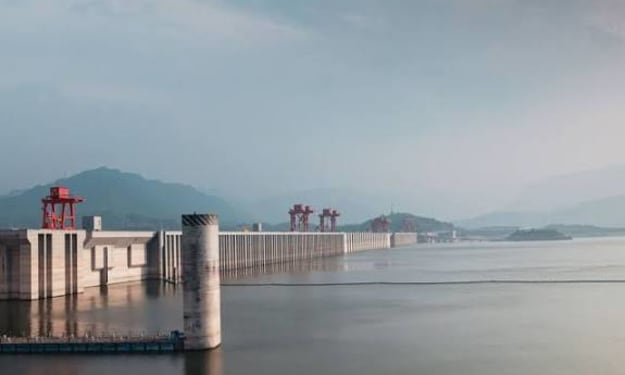
The mighty Yangtze River, long strained by pollution, overfishing, and heavy industrial use, is showing clear signs of ecological recovery following the government’s landmark 10-year fishing ban. Scientists and environmental officials report rising fish populations, improved water quality, and the return of species that had nearly vanished from large stretches of the river. The fishing ban, introduced in 2021, covers more than 300 tributaries and lakes connected to the Yangtze and affects hundreds of thousands of fishermen. It was one of the most ambitious conservation policies China has ever implemented for a single river system. The Yangtze basin supports nearly one-third of the country’s population and contributes significantly to agriculture, shipping, and hydropower, making its health crucial for both people and nature. Recent monitoring data released by China’s environmental authorities show encouraging results. Surveys conducted across multiple provinces found that the number of native fish species has increased steadily since the ban began. In some areas, biodiversity has risen by more than 20 percent compared with levels recorded before 2020. Aquatic plants have also begun to regenerate along riverbanks, helping stabilize soil and provide shelter for fish and birds. One of the most significant developments has been the partial return of rare species once pushed to the brink by decades of overfishing and dam construction. Although the Yangtze river dolphin, or baiji, is considered functionally extinct, conservationists have reported increased sightings of the Yangtze finless porpoise, another endangered species that depends on healthy fish stocks. Experts say the porpoise’s improved survival rates are a strong indicator that the ecosystem is slowly repairing itself. Water quality has also shown measurable improvement. Government testing stations along the river report lower concentrations of ammonia nitrogen and other pollutants linked to industrial waste and agricultural runoff. While pollution remains a challenge in heavily urbanized sections, the overall trend suggests that reduced fishing pressure has helped restore balance between species and improved natural self-cleansing processes within the river. Officials from the Ministry of Agriculture and Rural Affairs say enforcement of the ban has strengthened in recent years, with patrols using drones and satellite tracking to prevent illegal fishing. Thousands of boats have been removed from service, and penalties for violations have increased. Local governments have also expanded protected zones and wetland parks along key stretches of the river. The human impact of the ban has been significant. More than 230,000 fishermen were forced to give up their livelihoods, prompting concerns about unemployment and social stability. In response, authorities launched retraining programs to help former fishermen find work in tourism, environmental monitoring, and aquaculture outside protected zones. Some communities have developed river-based eco-tourism projects, offering boat tours and wildlife viewing experiences that depend on a healthy ecosystem. In cities such as Wuhan, residents have noticed visible changes. Locals report seeing more fish near riverbanks and clearer water during certain seasons. “Ten years ago, the river looked tired and empty,” said one long-time resident. “Now you can see life returning. It feels like the river is breathing again.” Environmental scientists caution, however, that recovery is still fragile. Decades of damage cannot be reversed in just a few years, and the Yangtze continues to face pressure from shipping traffic, hydropower dams, and urban wastewater. Climate change adds another layer of risk, with extreme floods and droughts threatening habitats and food chains. Experts say the fishing ban must be paired with stricter pollution controls and smarter water management to ensure long-term success. “Stopping fishing was essential, but it is only one part of the solution,” said a freshwater ecologist involved in river studies. “Industrial discharge, plastic waste, and construction along riverbanks still need to be addressed if the Yangtze is to fully recover.” International conservation groups have praised China’s approach as a rare example of large-scale river restoration driven by national policy. They note that many countries struggle to balance economic growth with environmental protection, and the Yangtze project could serve as a model for other heavily used rivers around the world. The Yangtze River has been central to Chinese civilization for thousands of years, providing water, food, and transport. Its decline in recent decades symbolized the environmental cost of rapid development. Its gradual recovery now represents a shift toward sustainability and long-term planning. While challenges remain, the early results of the fishing ban suggest that strong political commitment and scientific monitoring can bring damaged ecosystems back from the edge. For millions who live along its banks, the Yangtze’s revival is more than an environmental success story—it is a reminder that nature can heal when given the chance.
By Fiaz Ahmed 6 days ago in Longevity
Acidity Regulators Market Report: Food Processing Demand & Growth Outlook. AI-Generated.
According to IMARC Group's latest research publication, global acidity regulators market size was valued at USD 7.3 Billion in 2025. Looking forward, IMARC Group expects the market to reach USD 10.3 Billion by 2034, exhibiting a growth rate of 3.86% during 2026-2034.
By sujeet. imarcgroup6 days ago in Futurism
Ukraine War Briefing: Rubio to Meet Zelenskyy in Munich as Russian Strikes Leave Thousands Without Power. AI-Generated.
High-level diplomacy and renewed battlefield violence converge as Western leaders gather in Europe and Ukraine struggles with the humanitarian impact of fresh missile and drone attacks. Senior U.S. Senator Marco Rubio is set to meet Ukrainian President Volodymyr Zelenskyy on the sidelines of the annual Munich Security Conference, a key diplomatic gathering taking place in Munich. The meeting comes as Russia launched another wave of missile and drone strikes across Ukraine, damaging energy infrastructure and leaving tens of thousands of civilians without electricity in the middle of winter. Ukrainian officials said overnight attacks targeted power substations and transmission facilities in several regions, including central and eastern parts of the country. Emergency crews worked through the night to restore electricity, but authorities warned that full repairs could take days. Local governments urged residents to conserve energy and prepare for further outages as temperatures dropped. “This is a deliberate attempt to make civilian life unbearable,” Zelenskyy said in his nightly address, accusing Moscow of continuing its strategy of striking non-military targets to weaken morale. He added that Ukraine’s air defenses had intercepted many of the incoming missiles and drones but that the scale of the assault showed Russia’s continued capacity to mount large operations despite heavy battlefield losses. The attacks come as Ukraine faces increasing pressure on multiple fronts. Fighting remains intense in eastern regions where Russian forces have tried to gain ground through incremental advances. Military analysts say Moscow appears focused on wearing down Ukrainian defenses through constant bombardment while exploiting shortages of ammunition and air defense systems. Against this backdrop, Rubio’s planned meeting with Zelenskyy carries symbolic and political weight. The senator, a senior member of the U.S. Senate Foreign Relations Committee, is expected to discuss military aid, sanctions enforcement, and long-term security commitments. U.S. officials say the talks will also focus on sustaining international support at a time when political debates in Washington and some European capitals have slowed the delivery of weapons and financial assistance. The Munich Security Conference has traditionally served as a forum for Western allies to coordinate responses to global crises. This year, Ukraine is expected to dominate discussions as leaders debate how to counter Russia’s ongoing offensive and whether additional air defense systems and long-range weapons should be provided. Zelenskyy is also scheduled to meet several European leaders during the event. Diplomats familiar with the agenda say Rubio will emphasize the importance of unity among NATO partners and stress that Ukraine’s survival is tied directly to broader European security. “If aggression is rewarded, it sends a dangerous message to every authoritarian regime watching,” one U.S. official said. Meanwhile, the humanitarian toll of the latest Russian strikes is becoming clearer. Regional authorities reported that hospitals and schools were forced to switch to backup generators after power was cut. In some towns, public transport was suspended and water supplies were disrupted because pumping stations lost electricity. Aid organizations warned that vulnerable populations, including the elderly and displaced families, face heightened risks as winter conditions persist. Energy experts note that Russia’s renewed focus on infrastructure suggests a return to tactics seen earlier in the war, when systematic attacks on the power grid caused widespread blackouts. Ukraine has since strengthened its defenses around key facilities, but the sheer number of drones and missiles used in recent barrages makes it difficult to protect every site. International reaction to the strikes was swift. European Union officials condemned the attacks and reiterated calls for more advanced air defense equipment to be sent to Ukraine. Germany’s defense minister said the strikes demonstrated the urgency of accelerating weapons deliveries and improving coordination among allies. Russia, for its part, defended the attacks as legitimate military actions, claiming they were aimed at Ukraine’s “military-industrial complex.” The Kremlin has repeatedly denied targeting civilians, despite evidence from Ukrainian authorities and independent observers showing residential neighborhoods and civilian infrastructure among the damaged sites. The diplomatic dimension of the war is also evolving. Some Western officials hope that increased pressure on Russia through sanctions and military setbacks could eventually bring Moscow to the negotiating table. However, there are few signs of imminent talks, and both sides remain publicly committed to their military objectives. Zelenskyy is expected to use his meetings in Munich to press for additional Patriot missile systems and other advanced air defenses, arguing that protecting cities and energy infrastructure is as crucial as supporting troops on the front lines. He is also likely to warn that any slowdown in aid would embolden Russia to intensify its attacks. As Rubio prepares for his talks, political debates in the United States continue over the scale and duration of support for Ukraine. While bipartisan backing remains strong in many areas, divisions have emerged over budget priorities and foreign commitments. The senator has previously argued that helping Ukraine resist Russia is in America’s strategic interest, preventing a wider conflict in Europe. For ordinary Ukrainians, the immediate concern is survival through another round of blackouts and air raid sirens. In cities hit by the latest strikes, residents lined up for bottled water and used candles and portable heaters to cope with the outages. “We are used to this now, but it never gets easier,” said one woman in a central Ukrainian town affected by the attacks. The coming days will test both Ukraine’s resilience and the resolve of its allies. With Russian strikes continuing and diplomatic efforts intensifying, the meeting between Rubio and Zelenskyy in Munich underscores how closely military developments and international politics are now intertwined. As winter drags on, Ukraine’s battle is being fought not only on the front lines but also in conference halls where decisions about aid, security, and the future of the conflict are being shaped.
By Fiaz Ahmed 6 days ago in The Swamp
Saudi Arabia Electric Buses Market: Green Mobility, Public Transport Electrification & Growth Outlook. AI-Generated.
Government investments in zero-emission public transport, Vision 2030 sustainability goals, and mega-projects like NEOM and Red Sea are driving electric bus adoption, supported by expanding charging infrastructure, fleet electrification initiatives, and partnerships with global manufacturers. According to IMARC Group's latest data, The Saudi Arabia electric buses market size reached USD 564.3 Million in 2025. Looking forward, IMARC Group expects the market to reach USD 2,909.4 Million by 2034, exhibiting a growth rate (CAGR) of 19.99% during 2026-2034.
By Shubham Sharma 6 days ago in Futurism