Stories (52)
Filter by community
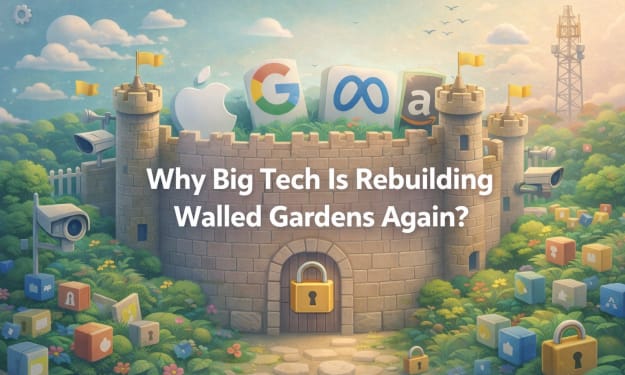
Why Big Tech Is Rebuilding Walled Gardens Again?
In the early years of the internet, “open” was not just a design principle; it was an ideology. Browsers competed freely. Websites linked to one another without friction. Developers could build and distribute software without negotiating with centralized gatekeepers. The web felt expansive, unpredictable, and difficult to control.
By Mary L. Rodriquez3 days ago in 01
Why Subscription Models Are Reshaping the Software Industry?
There was a time when buying software felt definitive. You paid once, installed it, and owned that version indefinitely. Updates arrived occasionally, often bundled into paid upgrades released years later. Revenue flowed in spikes around product launches, and companies measured success largely by sales volume.
By Mary L. Rodriquez4 days ago in FYI
Why Innovation Cycles Are Making Software Markets More Unpredictable?
For much of the early digital era, software markets followed relatively predictable patterns. New products launched, adoption grew gradually, competitors emerged, and market leaders consolidated their positions over time. Companies could plan multi-year roadmaps with reasonable confidence that technological change would follow a steady pace.
By Mary L. Rodriquez5 days ago in Journal
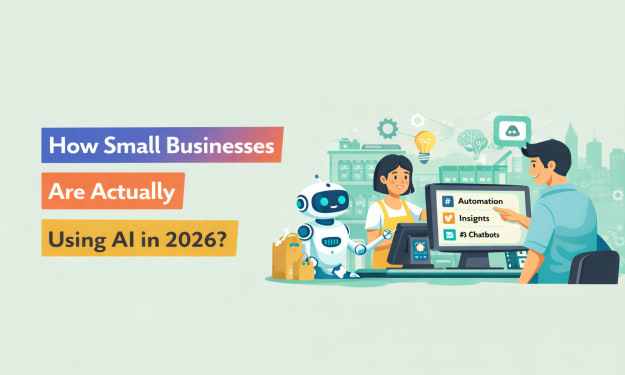
How Small Businesses Are Actually Using AI in 2026?
A bakery owner in Toronto recently described how artificial intelligence changed her weekly routine — not through futuristic robots or complex analytics dashboards, but through a simple forecasting tool that predicts demand based on weather patterns and local events. She used to guess how much to bake each morning. Now she checks a dashboard that suggests production quantities with around 90% accuracy. Waste has dropped. Staffing decisions feel less stressful. Profit margins have improved.
By Mary L. Rodriquez6 days ago in Futurism
Top 14 Native App Development Companies in USA 2026
Native app development continues to be the gold standard for businesses seeking performance, reliability, and seamless user experiences. As mobile ecosystems evolve with advanced hardware capabilities, AI-powered features, and deeper device integrations, companies are prioritizing native development approaches to ensure optimized speed, security, and scalability.
By Mary L. Rodriquez9 days ago in 01
Top 13 Mobile App Consultants in 2026
I’ve always felt skeptical about “top” lists. They usually feel too clean compared to the messy reality of building mobile products. Still, after years of conversations with founders, product leads, and engineering managers, certain consultants and teams kept appearing whenever projects needed clarity, recovery, or scaling support.
By Mary L. Rodriquez10 days ago in 01
Observability for LLM Applications: What Traditional Monitoring Misses
Traditional observability practices were built for deterministic systems. Developers monitored CPU usage, API latency, error rates, and infrastructure health to understand whether an application was working correctly. With large language model (LLM) applications, that approach no longer captures the full picture. Systems may appear healthy from a technical perspective while producing inaccurate, inconsistent, or harmful outputs.
By Mary L. Rodriquez11 days ago in Lifehack
Why Charlotte Is the Next Big Hub for Mobile App Development?
For years, conversations about technology growth followed predictable geography. Silicon Valley dominated headlines, New York symbolized finance-driven software, and Seattle represented cloud-driven expansion. Yet beneath that familiar narrative, another pattern has been forming — technology ecosystems rising in cities that combine affordability, industry diversity, and strategic positioning rather than historic tech reputation.
By Mary L. Rodriquez12 days ago in Futurism
Why Mobile App Development in Los Angeles Is More Expensive Than Other Cities?
A founder relocating from Austin to Los Angeles once described the shock of receiving development proposals that were nearly double what they had seen elsewhere. At first, the assumption was simple: someone must be overcharging. Yet after multiple consultations, the pattern remained consistent. Agencies and independent developers across the city quoted similar ranges.
By Mary L. Rodriquez13 days ago in 01
Virtual Tours & AR: Selling Tampa Homes Through Mobile Apps in 2027
Not long ago, buying or selling a home meant scheduling appointments, driving across neighborhoods, and walking through multiple properties before making even a preliminary decision. The process was time-consuming, often inefficient, and heavily dependent on physical presence.
By Mary L. Rodriquez16 days ago in Education
Why San Diego App Teams Are Safer Than Silicon Valley?
When companies evaluate where to build their next app, the conversation usually revolves around innovation, talent density, and access to funding. Silicon Valley has dominated that narrative for decades, representing speed, ambition, and technological prestige.
By Mary L. Rodriquez17 days ago in FYI